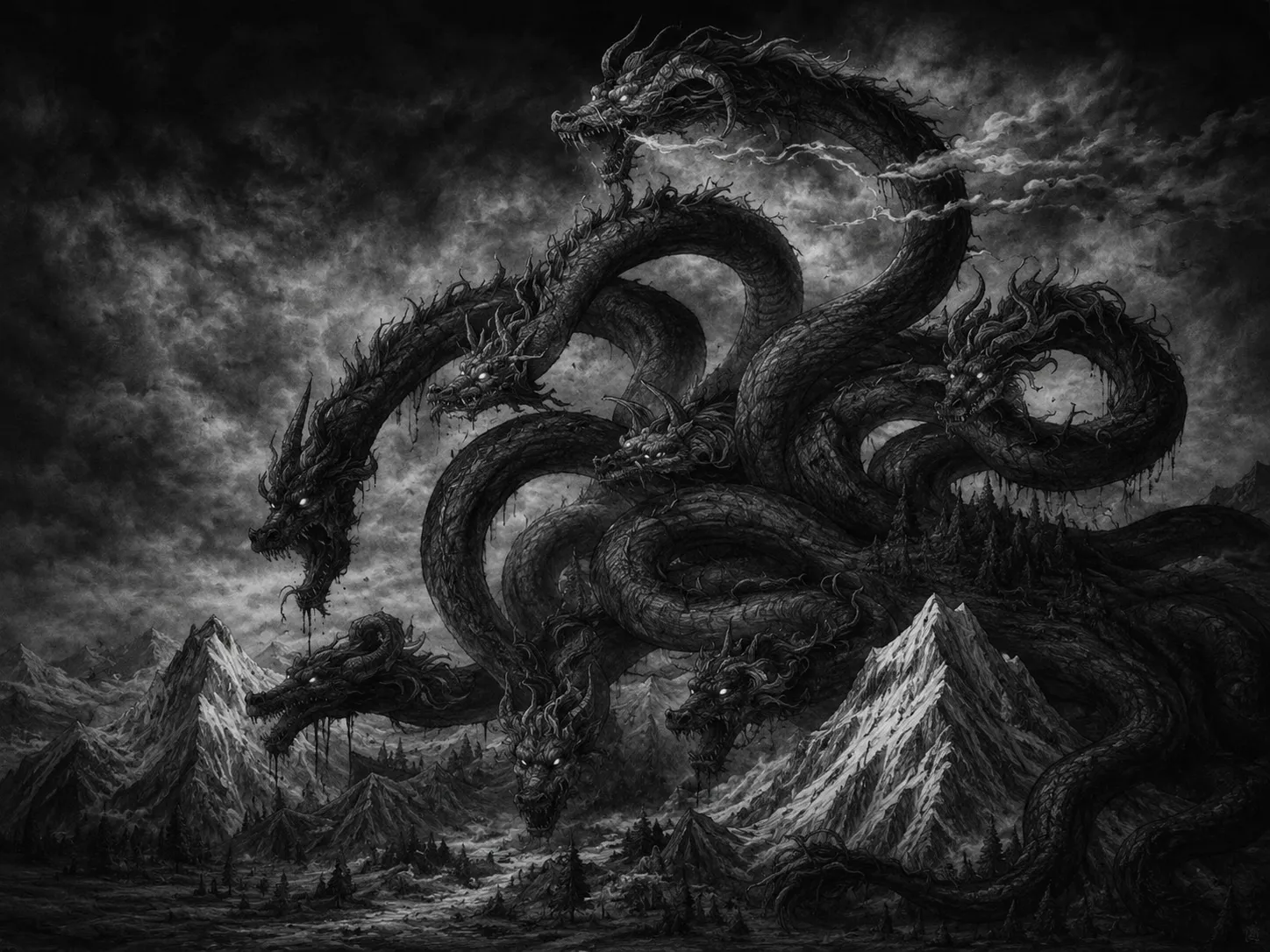
The Vourdalak is a vampiric revenant from Eastern European folklore, especially in Slavic traditions found in Russia, Serbia, Bulgaria, and Montenegro. What sets it apart from other undead creatures is one devastating trait: it preys only on the people it loved most in life.
Unlike the anonymous blood-drinker of Western myth, the Vourdalak comes back from death remembering its family and uses that knowledge as a weapon.
Its name is a linguistic ghost, a phonetic corruption that passed through several languages before becoming part of Russian literary culture thanks to Alexander Pushkin and Aleksey Konstantinovich Tolstoy. The creature’s defining horror is not violence; it is trust.
Summary
Overview
| Attribute | Details |
|---|---|
| Names & Etymology | Vourdalak (primary); also spelled Wurdalak, Vurdalak, Wurdulac, Verdilak, Vurdulak. Russian вурдалак. Corrupted form of the West Slavic volkodlak — literally “wolf-fur” or “wolf-hide,” originally denoting a werewolf. The name traveled through Lord Byron’s rendering of the Greek vrykolakas (“Vardoulacha”) before re-entering Russian literary language via Pushkin in 1836. |
| Classification | Undead revenant; vampiric entity. Subtype of the broader Slavic vampire tradition, distinct from the upyr (упырь) with which it is now often conflated. |
| Species | Humanoid (reanimated corpse) |
| Origin | Arises from the death of any person under cursed or spiritually unresolved circumstances. Anyone killed by a Vourdalak — specifically, family members drained of blood — rises as one in turn. The myth likely developed in Slavic peasant communities as an explanation for sequential deaths within families during epidemic outbreaks, where one death followed by others in close succession suggested a supernatural chain reaction originating from the first deceased. |
| Earliest Record | Pre-Christian Slavic oral tradition; related creatures (upyri) referenced in the 1047 Old East Slavic anti-pagan treatise Word of Saint Grigoriy. The word “vourdalak” first appears in written Russian in Alexander Pushkin’s 1836 poem Vurdalak (part of the Songs of the Western Slavs cycle). Aleksey Konstantinovich Tolstoy’s novella La Famille du Vourdalak, written in French in 1839 and published in Russian translation in 1884, is the foundational literary text. |
| Habitat | Rural villages and family homesteads of Eastern Europe — principally Serbia, Montenegro, Bulgaria, and the western Russian countryside. The Vourdalak does not haunt forests or wilderness; it returns to the domestic interior: the family home, the hearth, the table where it once sat. |
| Diet | Blood — exclusively from family members and those with whom the Vourdalak shared close emotional bonds in life. Cannot feed on strangers. |
| Physical Details | Appears recognizably human — retains the face, voice, and mannerisms of the deceased. Notably emaciated, with unnatural stillness in movement. In deeper South Slavic tradition (vukodlak variants), the body may be covered in excessive dark hair — a literalization of the “wolf-fur” etymology. The undead body carries the smell of the grave: decay beneath the familiar. Eyes are described as flat or wrong, avoiding direct contact. The creature does not rush or rampage; it settles back into a domestic routine. |
| Strengths | Exploits emotional bonds and grief as its primary weapon; it operates through familiarity rather than brute force. Spreads vampirism in a chain reaction through entire family lines. Resistant to conventional weapons. Retains full memory and speech of the deceased person it was, enabling psychological manipulation of survivors. Fine in daylight (unlike later Western vampire traditions). |
| Weaknesses | Aspen stake driven precisely through the heart (aspen holds purifying properties in Slavic Christian belief). Decapitation followed by burning the body to ash. Holy water blessed by an Orthodox priest causes harm on contact. Christian religious icons and silver crosses repel it. Garlic hung on doors or worn as an amulet deters an approach. Proper burial rites with prayers and salt prevent the initial creation. Crucially: the creature’s power collapses entirely against those who have no emotional bond with the deceased — unattached community members performing destruction rituals are immune to its primary psychological weapon. |
| Warning | If a family member dies under suspicious circumstances and others in the household begin to fall ill in sequence — particularly in rural areas of Serbia, Montenegro, or Bulgaria — do not allow the recently deceased back across your threshold after dark, regardless of how familiar they appear or what they say. The Vourdalak does not announce itself as a monster. It knocks, as it always did. |
| Threat Level | Level 4 (Regional Scourge) [See the Threat Level Guide] |
| Survival Odds | 5% — Survival requires immediate, collective action before the chain reaction spreads beyond the first victim. Individual encounters, especially with someone the survivor loved, are almost universally fatal due to the creature’s exploitation of grief and denial. |
Who or What Is the Vourdalak?
The Vourdalak (Russian: вурдалак; also spelled wurdalak, vurdalak, verdilak, or wurdulac) is a type of undead creature from Slavic folk belief. It is not a single named monster, but a kind of vampiric revenant that can be created from any deceased person under the right cursed circumstances. In its purest folkloric form, it is a corpse reanimated by an unclean spirit that rises from the grave not to feed on strangers, but to methodically drain the blood of every family member it once knew.
What separates the Vourdalak from other Slavic vampires, especially the upyr (упырь), which was the more common Russian term for a blood-drinking undead, is centered on its focus on family. The upyr was believed to be a former witch, werewolf, or excommunicated sinner, and it preyed on anyone. The Vourdalak, on the other hand, specifically targets its own family.
According to the tradition codified in the folklore and later in 19th-century literature, every person the Vourdalak drains becomes one in turn — creating a cascading undead infection that can hollow out an entire bloodline within days.
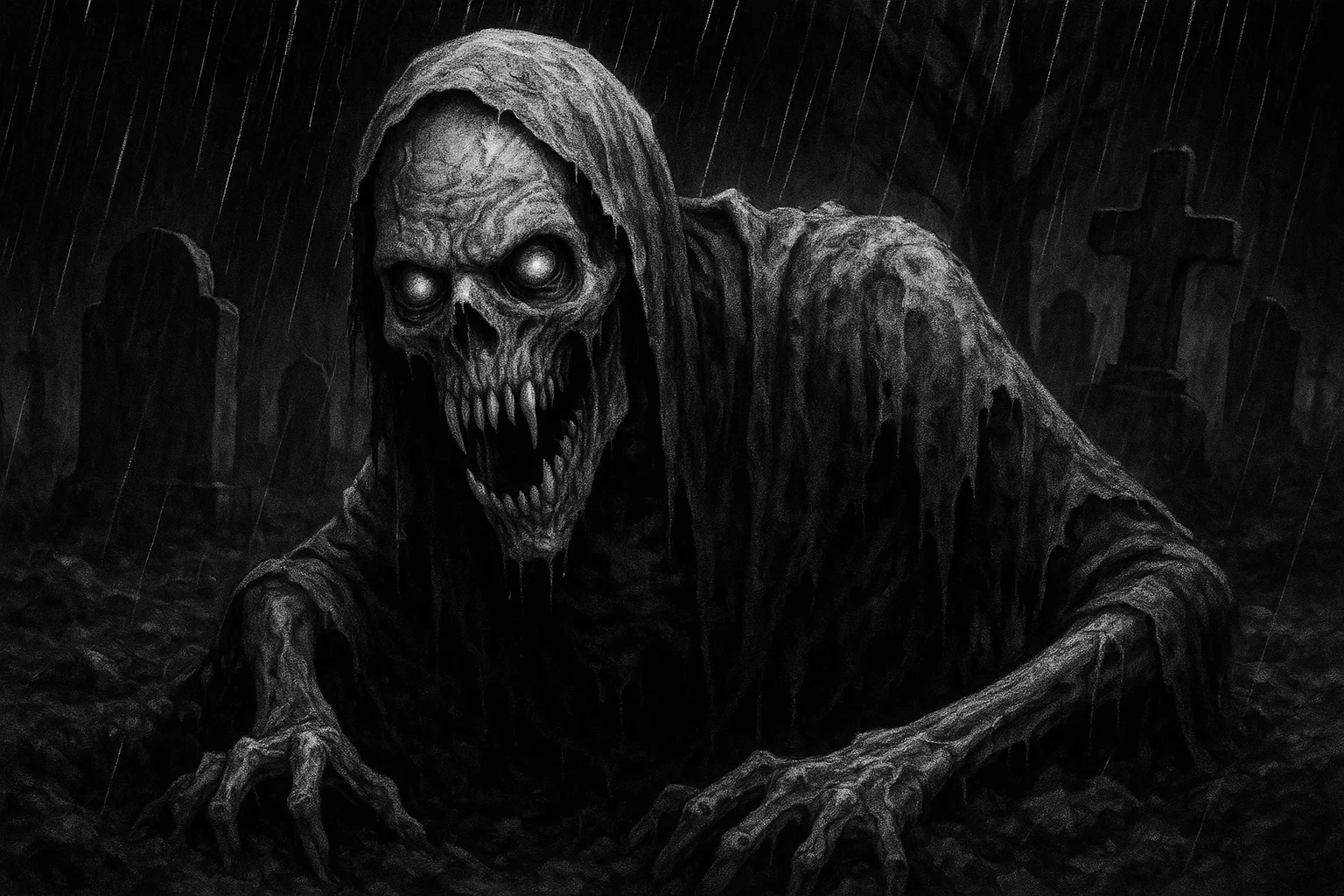
The creature keeps its human appearance well enough to fool grieving relatives. It does not arrive shrieking at the door. It knocks, just as it always did. It speaks in the voice you remember. This is what makes it so horrifying: it takes advantage of the living’s refusal to accept that someone they loved is gone.
The Vourdalak does not overpower its victims with brute force; instead, it seduces them through familiarity, returning to the home it once lived in and using grief against those still mourning.
You may also enjoy:
14 Most Famous Mediums of All Time
July 6, 2026
Succubus: The Demon That Haunts Dreams
August 28, 2025
What Is the Agogwe? The Mysterious Hairy Dwarf of East Africa
November 10, 2025
What Is the History of the Vourdalak?
The Vourdalak, as a named entity, is a relatively recent version of much older Slavic beliefs about the undead. The basic idea—a dead person returning to harm loved ones and spreading vampiric corruption through a family—comes from a wider tradition of Slavic vampire and revenant beliefs that existed before Christianity in the region.
Early written records mention related creatures. The 1047 document known as the Word of Saint Grigoriy, an Old East Slavic anti-pagan treatise, references upyri as objects of forbidden worship, establishing that blood-drinking revenants were already embedded in the pre-Christian worldview of Eastern Slavic peoples.
The regions most closely linked to Vourdalak lore—Serbia, Montenegro, Bulgaria, and parts of western Russia—were places in which belief in the undead was far more than superstition. It actually served as a way for communities to manage problems and fears.
In rural Serbian villages, the vampire belief served a practical explanatory purpose: when a person died and family members began falling ill and dying in sequence, the explanation of vampiric contagion originating from the first deceased provided a coherent (if terrifying) model for epidemic illness.
The 18th-century Austrian administration of Serbian territories produced some of the earliest documented European vampire investigations precisely because their bureaucrats encountered communities conducting rituals — disinterment, staking, burning — to deal with suspected revenants.
The Vourdalak is closely related to the vukodlak tradition of western Serbia, Bosnia, Herzegovina, and Montenegro. The word vukodlak originally meant werewolf, but over time, it merged with vampire beliefs until the two creatures became almost the same. In eastern Serbia and Bulgaria, the word vampir was more common. The boundary between these two traditions shows where the werewolf and vampire legends came together in South Slavic culture.
This is not a coincidence. The wolf was the most important totem animal in Serbian mythology, and a revenant linked to wolves or serpents represented both the frightening strength of nature and the unforeseeability of the dead.
The Vourdalak tradition also has strong connections to the Greek vrykolakas, which is a loanword from the same South Slavic root. The vrykolakas is a revenant linked to improper burial or a sacrilegious life, and is known for knocking on doors, calling people by name, and causing illness or death to those who answer.
Etymology
The name Vourdalak is, from a language perspective, a mess—and that mess tells its own account. The word is a phonetically corrupted form of the West Slavic compound volkodlak (Russian: волкодлак), made from two Proto-Slavic roots: volk (wolf) and dlak (hair, fur, or hide). The literal meaning is “wolf-fur” or “wolf-hide,” a term that originally described someone wearing a wolf’s skin. In mythology, this meant a werewolf, a shapeshifter, a creature that existed between human and beast.
The word transitioned a lot before reaching its current form. The South Slavic word vukodlak underwent several sound changes as it entered Russian, dropping syllables and shifting sounds until it became vurdalak. In the process, it lost almost all of its original wolf imagery.
There is a second proposed etymology: scholars have noted that Alexander Pushkin, who first used vourdalak in Russian literary writing in his 1836 poem of the same name (part of the Songs of the Western Slavs cycle), may have encountered and adapted the word not from Slavic folk sources directly, but from a footnote in Lord Byron’s 1813 poem The Giaour.
Byron wrote that the Greek word for vampire was “Vardoulacha,” which is actually a corruption of vrykolakas, itself coming from the same Slavic vukodlak root. If this is correct, the word made an important journey: it started in Slavic as a werewolf term, became a vampire term in Greek, was introduced into English through Byron’s footnote, and then returned to Russian as something entirely new.
Regional cognates spread across languages: Lithuanian vilkolakis, Latvian vilkacis, Romanian vârcolac, Bulgarian vrkolak — all descending from the same Proto-Slavic root, all carrying traces of the earliest wolf-creature identity.
You may also enjoy:
What Does the Vourdalak Look Like?
In its original folklore and literary sources, the Vourdalak does not appear to be a monster. That is exactly the point. Aleksey Tolstoy’s important 1839 novella describes the transformed Gorcha as still looking human.
Still, something is off—he is thin to the point of emaciation, moves with a troubling stillness. His eyes have an unnatural quality that his loved ones try to explain away. The horror is in the subtlety, not in dramatic effects. The creature’s face is familiar. That voice is the one you remember.
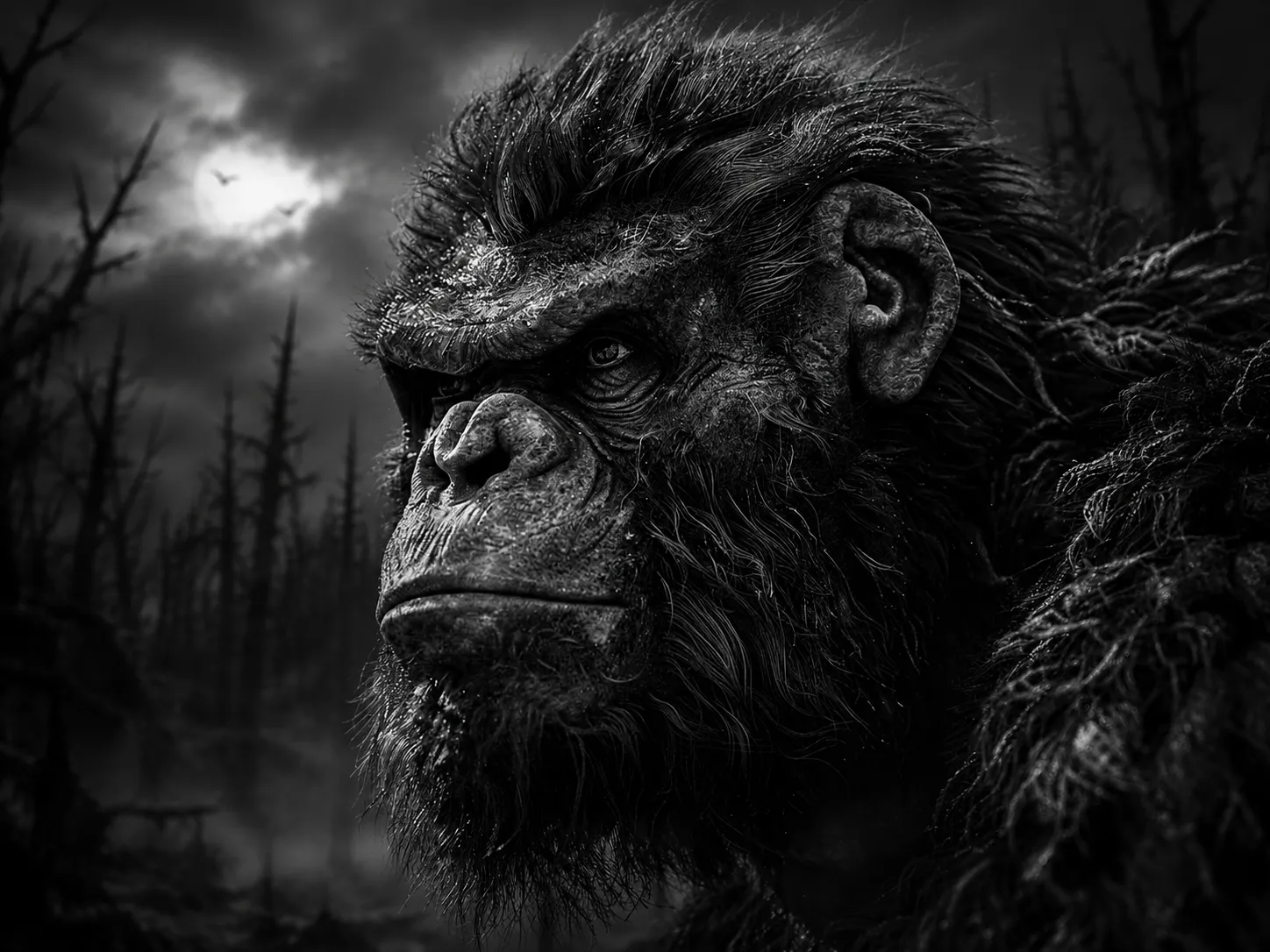
Looking more closely, the broader Slavic tradition presents a darker picture. In South Slavic belief, the vukodlak was sometimes described as a human corpse covered in thick dark hair, making the wolf-fur in its name a literal part of its appearance.
In Montenegro, documented tradition held that a vampire had to spend time in a wolf-like form to survive; the animal nature was not fully shed even when the creature walked as a person. The undead body in Slavic folklore was generally bloated from death, its skin discolored and smelling of decay — the grave never fully leaves it.
Modern movies often show the Vourdalak as a pale, thin aristocrat like Dracula, or as a monstrous beast. Both versions miss the point. The creature’s main weapon is how much it still looks like the person it once was.
A little-known detail from deeper in the lore is that the Vourdalak reportedly returns to the family home still knowing its routines. It sits in its usual chair, reaches for its usual tools, and resumes interrupted conversations. It does not go on a rampage. Instead, it blends in. The feeling of wrongness comes from the common routines, not from any physical change.
What Is the Difference Between a Vampire and a Vourdalak?
The Vourdalak and the classical vampire share the same basic features: they are undead corpses, drink blood, and can turn their victims into more of their kind. However, they are fundamentally different in who they target, what motivates them, and how they fit into their cultures.
A typical vampire, in both Slavic and Western stories, is an opportunistic predator. It hunts strangers, travelers, or anyone it can find. Its connection to its former life is usually broken; it returns as a threat from outside.
The Vourdalak, on the other hand, is emotionally tied to the living. It must target those it loved in life. It cannot just feed on a random person; it is drawn to the familiar. This makes it both more limited and much more devastating, since one Vourdalak with a large family can turn an entire bloodline.
The vampire inside broader Slavic tradition (the upyr) was usually connected to specific sinners, such as people excommunicated from the church, heretics, suicides, witches, or werewolves. Becoming a vampire was seen as a punishment for personal wrongdoing.
The Vourdalak, however, can come from anyone who dies under the wrong circumstances. The curse is external, not always a punishment for sin. This removes the moral explanation and replaces it with something all the more unsettling: randomness. Any loved one who dies could come back.
Additionally, the Vourdalak causes a chain reaction in a way that ordinary vampires do not. Each person it drains and kills becomes a Vourdalak too, and then targets their own loved ones. This creates a rapidly spreading outbreak within families that can devastate entire villages.
Myths, Legends, and Stories
The main literary account of the Vourdalak is found in Aleksey Konstantinovich Tolstoy’s 1839 novella La Famille du Vourdalak (The Family of the Vourdalak). Tolstoy wrote it in French while traveling from Frankfurt, and it was first published after his death, in Russian translation, in The Russian Messenger in January 1884.
The earliest French version was not printed until 1950. This story came 33 years before Sheridan Le Fanu’s Carmilla and 58 years before Bram Stoker’s Dracula, making it a key but often overlooked work in European vampire literature.
The story is told as a confession. An elderly French diplomat, the Marquis d’Urfé, tells guests at a Vienna salon in 1815 about something that happened to him in 1759, in a remote Serbian village. He had arrived seeking shelter at a peasant family’s home, but the father, Gorcha, was not there. Gorcha had left ten days earlier to hunt a Turkish bandit named Alibek, and before leaving, he warned his sons: if he returned after exactly ten days, they should treat him as a Vourdalak and destroy him without mercy. If he came back within ten days, he was still human.
He returns on the tenth day, right at midnight. He brings the head of Alibek as proof of his victory, but something about him is wrong. He is thin, silent, and distant. He avoids looking at his family and refuses to eat. His daughter-in-law Zdenka, whom the Marquis has fallen in love with during his short stay, insists nothing is wrong. However, that night, the first of Gorcha’s grandchildren dies.
The horror escalates methodically. One by one, family members die and return. The sons. The daughters-in-law. The children. Each time, the grieving survivor refuses to believe what they are becoming, because refusing is easier than destroying the face of someone you love. The Marquis escapes, but he cannot forget Zdenka — and she returns for him.
Tolstoy, drawing on deep Serbian folk tradition, understood the real heart of the Vourdalak myth: it does not defeat its victims through strength, but through the inability of love to let go. The story isn’t only about a monster. It is about how grief can be turned into a weapon.
Beyond Tolstoy’s novella, Pushkin’s 1836 poem Vurdalak (from the Songs of the Western Slavs cycle) presents a shorter, more viscerally folkloric encounter — a traveler stumbles on a freshly dug grave at midnight and witnesses the dead walking. The poem is less psychologically complex than Tolstoy’s work but represents the first literary use of the word in Russian.
You may also enjoy:
How to Unlock Psychic Abilities
January 15, 2026
The Mysterious Almas Cryptid: 600 Years of Sightings
July 20, 2026
Who Is Kimaris, the 66th Demon in Ars Goetia?
August 29, 2025
Cyclops Myths and Real History: Were the Giants of Greece Real?
October 30, 2025
Can You Defeat a Vourdalak? Powers and Weaknesses
The Vourdalak’s power follows a specific and logical pattern: it is brought to life by the emotional ties it had with the living. The creature is not simply a predator that happens to prefer family members; in folklore, it actually exists because of those bonds.
The affection that once connected the dead to their family is not broken by death. Instead, it is turned upside down and becomes the way the curse spreads. This is why the Vourdalak cannot just move on to new victims after killing its relatives—the emotional bond is what keeps it going. It feeds specifically where it was loved.
This logic also explains why defeating the Vourdalak is not mainly a physical challenge. Killing it requires something the living find very hard to do: the emotional act of total rejection.
You must treat the Vourdalak not as the person you knew, but as a complete foreigner wearing that person’s face. Every instant of hesitation, every hopeless attempt to prove the creature is still human, isn’t simply a mistake—it actually feeds the Vourdalak. It lives on the grief and denial of survivors as much as on their blood.
In practical folklore, the main way to destroy a Vourdalak is to drive an aspen stake through its heart. Aspen wood is important in Slavic Christian belief as a purifying material with sacred properties.
In Tolstoy’s novella, this detail proves vital when the characters realize there is no aspen tree nearby, leaving them unable to fight the spreading infection. The stake must go through the heart, which is seen as the seat of the unclean spirit that animates the body.
Decapitation, followed by burning the body to ash, is considered the most thorough method of making certain the creature cannot regenerate or return. The order of operations matters: staking alone may immobilize, but burning eliminates. Holy water blessed by an Orthodox priest weakens the creature on contact, expressing the essential spiritual logic of the Vourdalak as a creature at war with consecrated existence.
Garlic and Christian religious icons — particularly those associated with protective saints — function as deterrents rather than weapons, preventing the Vourdalak from entering spaces where they are prominently displayed.
A deeper loophole in folklore is that survival depends on the community. No single person can effectively defeat a Vourdalak because it exploits personal grief. The defenses that work are collective—community members who have no emotional bond with the deceased perform the destruction rituals. Their lack of attachment protects them from the creature’s main weapon.
Vourdalak vs. Other Similar Monsters
| Creature & Lore | Danger Level | Details |
|---|---|---|
| Strigoi Romania | Severe. Rises from improperly buried graves to drain the blood and life force of family members and livestock, capable of shape-shifting and sending its soul out at night while its body remains in the coffin. | Romanian folklore recognizes two distinct types — the strigoi vii (a living witch-like person with a vampiric soul) and the strigoi mort (a reanimated corpse) — making it both a creature of the living and the dead simultaneously. |
| Upyr Russia / Ukraine / Poland | Severe. Feeds on blood and flesh indiscriminately, operating with calculated patience — targeting specific victims and returning to the same household night after night rather than attacking at random. | One of the oldest named vampiric entities in the historical record, the word upyr appears in an Old East Slavic manuscript as early as 1047, predating the Western popularization of the word “vampire” by several centuries. |
| Vrykolakas Greece | High. Roams villages at night, knocking on doors and calling out names; anyone who answers on the first knock falls ill and dies, eventually becoming a vrykolakas themselves. | Greek Orthodox tradition held that the vrykolakas was specifically the result of dying under excommunication or being buried in unconsecrated ground — making the church itself both the cause of and the cure for the creature’s existence. |
| Jiangshi China | High. Hops stiffly toward victims with arms outstretched — rigor mortis having locked its joints — and drains the living qi (life force) from their bodies through physical contact rather than blood-drinking. | The Jiangshi cannot see; it tracks its prey entirely by detecting the breath of the living, which is why folklore held that survivors could escape by holding their breath completely still. |
| Aswang Philippines | Extreme. Lives within the community as a normal person by day, then shifts at night into a predatory form to stalk pregnant women and children, using a proboscis-like tongue to extract blood and unborn fetuses. | The Aswang uses an auditory deception unique in world folklore — its approach is heralded by a loud ticking sound that grows quieter as it gets closer, tricking victims into believing it is retreating when it is actually right beside them. |
| Penanggalan Malaysia | High. Detaches its head and trailing organs from its body each night to hunt, preferring to infiltrate homes as a midwife by day so it can feed on newborns and pregnant women without suspicion. | After each night of hunting, the Penanggalan must soak its dangling intestines in a vat of vinegar to shrink them enough to fit back inside its body before dawn — the scent of vinegar was considered a warning sign in Malaysian villages. |
| Loogaroo Caribbean / Louisiana | High. Sheds its skin at night to become a ball of fire and enters homes through any gap to drain sleeping victims of blood, which it then offers to the Devil in exchange for supernatural powers. | The Loogaroo can be neutralized by scattering sand, rice, or seeds outside your door — it is compelled to count every grain before it can enter, and if dawn breaks before it finishes, it must flee or die. |
| Revenant Medieval England / France / Germany | High. Returns as a bloated, plague-bearing corpse to terrorize the community it lived in, causing epidemic illness through proximity and spreading death through villages before being exhumed and burned. | The 12th-century chronicler William of Newburgh documented multiple English revenant cases in detail, establishing some of the earliest written records of vampire investigations in Western Europe — predating the Gothic literary tradition by six centuries. |
| Shtriga Albania | High. Appears as an old woman who enters homes at night to drain the life force of sleeping children through their breath, leaving them to waste away over days while she retains their stolen vitality. | Albanian folklore held that a Shtriga could only be permanently identified by spitting on a silver coin and pressing it against a church door after midnight on the Sunday following Easter — revealing the creature’s footprints in the morning. |
| Vampir (Slavic) Serbia / Bulgaria / Bosnia | High. Rises bloated and ruddy from an improperly buried grave to spread disease and death indiscriminately through its community, causing livestock deaths and epidemics attributed to its nightly wandering. | The 1718 transfer of Serbian territories to Austrian administration brought the word “vampir” into mainstream European consciousness for the first time, as Habsburg bureaucrats were legally required to document the staking and burning of suspected vampires by local peasants. |
| Cihuateteo Aztec / Mexico | Severe. The spirit of a woman who died in childbirth descends to crossroads at night to cause seizures and madness in children and to possess adults who pass by unprotected. | In Aztec cosmology, the Cihuateteo were not villains but honored dead — women who died in childbirth were considered equivalent to warriors fallen in battle and were given the same sacred status as soldiers escorting the sun across the sky. |
My Take
What is remarkable to me about the Vourdalak is how closely it matches a psychological reality that is not supernatural at all. The creature, deep down, is a model for how the dead can keep hurting the living through our own refusal to let them go. The Vourdalak cannot enter your home unless you open the door—and you open the door because it has your father’s face and voice, and you have been awake for three days, hoping you were wrong.
Most vampire myths are about fears of outsiders: the stranger at the gate, the aristocrat preying on peasants, or a foreign infection. The Vourdalak, however, is about something much more personal and harder to ignore—the fear that the people you love most can destroy you exactly because you love them, and that your own grief makes you vulnerable.
Slavic folk communities living with high mortality rates, epidemic illness, and the grinding intimacy of extended family households understood this intuitively.
When people died in clusters, when a whole family seemed to fall within weeks of each other, the Vourdalak explained not just the deaths but the emotional experience of watching those deaths: the way survivors kept returning to the same house, the same face, the same person, unable to act decisively even when they knew they should.
It is no accident that this creature’s name began as a word for a wolf in human skin and came to describe something that wears the skin of a loved one. The Slavic imagination understood that the most dangerous predator is the one you have already let inside.
You may also enjoy:
The Loveland Frog Mystery: Real Cryptid or Local Hoax?
September 25, 2025
Demon Naberius Explained: Origins, Powers, and Myths
August 26, 2025
What Is the Agogwe? The Mysterious Hairy Dwarf of East Africa
November 10, 2025
What Is a Basilisk? Origins, Mythology, and Powers
January 28, 2026
Sources
- ERMAN, IRINA. (2020). Nation and Vampiric Narration in Aleksey Tolstoy’s “The Family of the Vourdalak”. The Russian Review. 79. 7-27. 10.1111/russ.12254.
- Butler, Francis. Russian ‘Vurdalak’ ‘vampire’ and Related Forms in Slavic. Journal of Slavic Linguistics, vol. 13, no. 2, 2005, pp. 237–50. JSTOR, http://www.jstor.org/stable/24599657. Accessed 11 June 2026.
- Dokras, Dr. Uday. Slavic Vampires. International Institute of Historiography, 2025. Academia.edu.
- Bennett, Adelaide (2015). Global Legends and Lore: Vampires and Werewolves Around the World. Mason Crest.