Are ghosts real? I’ve asked myself that question more times than I can count, usually at 2 a.m. after hearing a floorboard creak in an empty hallway, and the honest answer is: nobody has ever proven it either way. Not scientists with infrasound detectors, not physicists with electromagnetic field meters, not theologians poring over Scripture for two thousand years, and not the thousands of psychical researchers who have spent entire careers chasing the question.
What we do have is over a century of serious investigation, some genuinely strange data, a handful of debunked frauds, and a few cases that still make hardened skeptics pause. I want to walk through all of it with you — the science, the paranormal research, and the biblical perspective — without pretending the matter is settled, because it isn’t.
Summary
Are Ghosts Real? The Honest Answer
The most accurate answer is this: there is no scientific evidence that meets the standard of proof — no controlled, repeatable experiment has ever demonstrated that a discarnate human consciousness can be detected, measured, or interacted with.
At the same time, the experiences people report as “ghosts” are not fabricated out of thin air. They are real perceptual and psychological events happening inside real human brains and real haunted-feeling buildings, even when there is no spirit causing them.
That distinction matters, and it’s where most articles on the topic go wrong. They treat “are ghosts real” as a single yes-or-no question, when it’s actually two separate questions stacked on top of each other:
- Do human beings have genuine, unexplained experiences that feel like encounters with the dead? Yes — overwhelmingly. An 1894 survey by the Society for Psychical Research (SPR), one of the earliest attempts to measure this scientifically, sent written questionnaires to roughly 17,000 people asking whether they had ever had a vivid impression of seeing, hearing, or being touched by something with no physical cause. After filtering out answers that were clearly dreams, 9.9% answered yes. More recent American polling has found similar or higher numbers — a 2021 survey of 1,000 U.S. adults found 41% said they believed in ghosts and 20% said they had personally experienced one, which extrapolated across the population would represent tens of millions of individual encounters.
- Is a surviving, conscious spirit of a dead person the correct explanation for those experiences? This is where the evidence runs out. Every controlled scientific test designed to detect a discarnate consciousness — using cameras, electromagnetic field meters, thermal sensors, or audio equipment — has failed to produce a result that can’t also be explained by equipment error, environmental conditions, or the psychology of perception.
What Science Has Actually Done to Test Whether Ghosts Exist
It’s a common misconception that science has ignored ghosts. It hasn’t. Since the late 19th century, a surprising number of credentialed scientists — physicists, engineers, neuroscientists, and physicians — have taken haunting reports seriously enough to investigate them with real instruments.
None of them found a ghost. But several of them found something else hiding inside the ghost stories, and those discoveries are some of the most interesting and least reported in the entire field.
The Infrasound Hypothesis: Vic Tandy’s Vibrating Sword
In the early 1980s, a British engineer named Vic Tandy was working late in a medical equipment laboratory in Warwickshire, England, when he felt an overwhelming sense of dread and cold, and glimpsed a grey, indistinct figure in his peripheral vision that vanished when he turned to look at it directly. The next day, Tandy — a competitive fencer — was clamping his fencing sword in a vice to polish it and noticed the blade was vibrating on its own.
That observation sent him looking for a physical cause. He traced it to a newly installed extractor fan that was generating a standing wave of infrasound (sound below the 20 Hz threshold of human hearing) at almost exactly 19 Hz — coincidentally close to the resonant frequency of the human eyeball, which some researchers have linked to visual disturbances.
Tandy and a colleague, Dr. Tony Lawrence, published their findings in the Journal of the Society for Psychical Research, concluding that infrasound at that frequency range is known to cause physiological effects including anxiety, chills, a sense of being watched, and blurred peripheral vision. In 2001, Tandy was invited to investigate a 14th-century cellar beneath Coventry’s Tourist Information Center where visitors had long reported a sense of presence and apparitions — and he again measured infrasound at 19 Hz. He later found comparable readings during an investigation at Warwick Castle.
Infrasound in old buildings can come from traffic, wind against structural features, or mechanical equipment like fans and boilers, all of which are common in the kind of centuries-old buildings that accumulate ghost stories in the first place.
The Carbon Monoxide Connection
One of the most remarkable pieces of pre-internet-era evidence against a paranormal explanation for hauntings has nothing to do with parapsychology at all — it comes from a 1921 case report published in the American Journal of Ophthalmology by physician W. H. Wilmer.
Wilmer documented a family who had moved into an older house and, over nine years, began experiencing what they described as a full haunting: strange footsteps, furniture that seemed to move on its own, a long fearful wailing sound, apparitions of a man and woman sitting at the foot of a bed, and episodes of sleep paralysis where family members felt physically pinned down.
The children grew pale, sluggish, and chronically unwell. It was the father’s brother who suspected poisoning rather than a haunting, and an inspection found the truth: the home’s furnace was leaking carbon monoxide into the house instead of venting it through the chimney.
Once the furnace was repaired, the “haunting” stopped. Wilmer’s ophthalmology exams later confirmed physical eye damage in the children consistent with chronic CO exposure. The British Medical Journal covered the case the same year, remarking that the report “throws light on the question of haunted houses.”
That case isn’t an isolated curiosity — carbon monoxide, along with toxic mold and certain solvent fumes, remains a documented cause of hallucinations, dread, and a sensed presence today. Modern toxicologists have specifically pointed to Victorian-era gas lighting as a plausible contributor to the huge surge of ghost reports and hauntings recorded in 19th-century Britain, an era with far less understanding of indoor air quality than we have now.
The “God Helmet” and the Temporal Lobes
In the early 1990s, Canadian neuroscientist Michael Persinger, working with researcher Stanley Koren at Laurentian University, built a modified helmet fitted with solenoids that delivered extremely weak, patterned magnetic fields (about one microtesla — far below the strength of a household magnet) to the wearer’s temporal lobes, the brain regions involved in memory, emotion, and self-perception.
Persinger reported that a majority of his test subjects — by his own account, at least 80% — experienced a “sensed presence,” a feeling that someone or something else was in the room with them, along with sensations some described as spiritual or ghostly.
His hypothesis was that many so-called paranormal and religious experiences are the result of unusual, naturally occurring instability in the temporal lobes, sometimes triggered by environmental magnetic fields (including, he argued, fluctuations in the Earth’s own geomagnetic activity), rather than genuine contact with an external spirit or deity.
The “God Helmet,” as it became known after media coverage, has had a complicated scientific legacy. Independent research teams that tried to replicate Persinger’s results using double-blind protocols found mixed outcomes — one such replication found that the helmet itself didn’t reliably predict who reported a sensed presence, but that a person’s suggestibility and prior belief in the paranormal did.
That doesn’t erase the underlying finding that temporal lobe activity is strongly associated with sensed-presence experiences; it does suggest that psychological expectation plays as large a role as the magnetic field itself, which is a theme that comes up again and again in ghost research.
Discover More Hauntings:
The Myrtles Plantation Haunting: Real Ghost Encounters
October 22, 2025
Borley Rectory: England’s Most Haunted House?
April 12, 2025
Is the Brown Lady of Raynham Hall’s Real?
May 5, 2025
Gwodz Road Haunting: Alabama’s Most Terrifying Ghost Story
September 17, 2025
Is the Kali Oka Plantation Haunting Real?
May 13, 2025
The 9 Most Haunted Hotels in Arkansas You Can Still Visit
October 8, 2025
Sleep, Perception, and the Brain’s Pattern-Matching Problem
Separately from Persinger’s work, a large share of classic “ghost in the bedroom” reports match the clinical profile of sleep paralysis. This state occurs during the transition into or out of REM sleep, in which a person’s mind wakes up. At the same time, the body remains temporarily paralyzed, frequently accompanied by a vivid hallucinated entity in the room and a crushing sense of pressure on the chest.
This is a well-documented neurological phenomenon, not a fringe theory. It accounts for a significant share of “night visitor” and “old hag” style hauntings reported across many cultures throughout history, long before anyone had a name for the condition.
Human visual and auditory pattern recognition compounds the problem. The brain is built to find faces and figures in ambiguous stimuli (a tendency called pareidolia) and to fill in missing sensory information with the most contextually likely explanation—which, in a location a person already believes is haunted, tends to be a ghost.
Combined with poor lighting, unfamiliar sounds in old buildings (settling wood, pipes, drafts), and the psychological arousal that comes from expecting something scary, researchers who study haunting reports have found that nearly every category of paranormal claim overlaps with a known perceptual or environmental explanation.
However, none of this proves ghosts don’t exist — it proves that the human nervous system is fully capable of generating a convincing ghost experience without one.
The Biblical View on Ghosts and Spirits
Scripture takes the reality of the spirit world seriously, but it does not straightforwardly endorse the modern idea of ghosts as the wandering, unfinished souls of the dead who linger in houses. The biblical picture is more specific, and in places, more debated among theologians than popular culture usually acknowledges.
Do Not Try to Contact the Dead
The most direct biblical instruction on this subject isn’t really about whether ghosts exist — it’s a prohibition. Deuteronomy 18:10–12 and Leviticus 20:27 forbid necromancy (attempting to consult the dead) and mediumship outright, and under the Mosaic law those who practiced it faced the death penalty.
Whatever the biblical authors believed was happening in these practices, they treated it as spiritually dangerous enough to ban entirely rather than dismiss as harmless superstition.
The Witch of Endor: the Bible’s Only Detailed Séance
The one full narrative account of an attempted contact with the dead in the Old Testament is 1 Samuel 28.
King Saul, terrified before a battle with the Philistines and unable to get guidance from God through dreams, prophets, or the Urim, disguises himself and visits a medium at Endor — the same practice he had previously outlawed — and asks her to summon the deceased prophet Samuel. According to the text, an entity appears, the medium reacts with shock, and “Samuel” delivers an accurate prophecy of Saul’s defeat and death the next day.
Theologians have never fully agreed on what actually happened in that cellar. Some read it as God permitting the real spirit of Samuel to appear for this one specific purpose, despite the general prohibition on necromancy. Others argue the medium was a fraud and the “apparition” was a trick or a psychological event experienced only by Saul.
A significant number of biblical commentators — citing 2 Corinthians 11:14, where Paul warns that Satan can disguise himself as an “angel of light” — argue the entity was a deceiving spirit impersonating Samuel, not Samuel himself, since Scripture elsewhere treats necromancy as incapable of actually reaching the departed.
What almost everyone agrees on is that the passage’s central point isn’t a lesson about the mechanics of the afterlife — it’s an illustration of Saul’s spiritual collapse and disobedience at the end of his reign.
Where the Dead Actually Go
The Bible does not describe deceased people as free agents who can choose to haunt a location. Instead, different passages describe a fixed destination.
In Luke 16:19–31, Jesus tells the account of a rich man and a beggar named Lazarus: after death, Lazarus is carried to “Abraham’s side” while the rich man suffers in Hades, with the text describing a “great chasm” fixed between them that prevents anyone from crossing over in either direction — the rich man’s request to warn his living brothers is explicitly denied.
Taken at face value, the passage teaches that the dead are conscious after death but permanently separated from the world of the living, unable to return, appear, or communicate — which would rule out ghosts as commonly imagined.
It’s worth being transparent that not all Christian traditions read the passage the same way. Ecclesiastes 9:5 states plainly that “the dead know nothing.” This verse is central to a competing view within Christianity — sometimes called “soul sleep” — which claims that death is a state of complete unconsciousness until a future resurrection, making any appearance of a deceased person, whether in Luke 16 or 1 Samuel 28, something other than the literal, conscious soul of that person.
Advocates of the conscious-afterlife reading counter that Ecclesiastes reflects an earlier, more limited Old Testament understanding of death that Jesus’ teaching in the Gospels clarifies and expands on. This is a genuine, long-running theological disagreement, not a fringe dispute. It means there isn’t a single “the Bible says” answer to whether a human spirit could linger on Earth—different Christian traditions land in different places on it.
One more data point worth including: in Matthew 17:1–3, Moses and Elijah — both dead for well over a thousand years by that point — appear and speak with Jesus during the Transfiguration, witnessed by Peter, James, and John.
Whatever this event was theologically, it is the clearest instance in the New Testament of deceased individuals appearing and being visually recognized, and it’s treated in the text as a unique, divinely orchestrated event rather than a normal or repeatable occurrence — nothing in Scripture suggests ordinary people can expect similar visitations from their own deceased loved ones.
How the Paranormal Field Approaches the Question
Long before “ghost hunting” became a cable television genre, there was a serious, if divided, tradition of formal research into hauntings, and it’s worth understanding how that field actually operates rather than the caricature of it.
The Birth of Organized Ghost Research
The Society for Psychical Research was founded in London in February 1882 by a group that included Cambridge philosophy professor Henry Sidgwick, physicist William F. Barrett, and researchers Edmund Gurney, Frederic W. H. Myers, and Frank Podmore — the first organization in history dedicated to applying rigorous, scientific methodology to claims of telepathy, apparitions, mediumship, and life after death, rather than treating them as pure folklore or pure fraud.
In 1886, Gurney, Myers, and Podmore published Phantasms of the Living, which collected and statistically analyzed more than 700 cases of people who reported vivid visions of a friend or relative at the exact moment of that person’s death or crisis, attempting to work out whether the timing correlation was too strong to be coincidence. That effort fed directly into the 1894 Census of Hallucinations described earlier — one of the first attempts anywhere to measure, at a population level, how common these experiences actually are, rather than relying on anecdote alone.
The SPR’s method set the template still used today: take reports seriously, interview witnesses directly, document conditions carefully, and remain willing to conclude fraud or misperception when the evidence points that way — which it frequently did.
The Society’s early investigators exposed many celebrated mediums of their era as frauds using the same rigor they applied to unexplained cases, a tradition of self-skepticism that distinguishes formal psychical research from the more credulous ghost-hunting culture that developed later, particularly after paranormal reality television became popular in the 2000s.
Discover More Hauntings:
The Complete List of All Haunted Places in Connecticut
December 2, 2025
Inside the Lizzie Borden House Haunting: Real Ghost Encounters?
October 22, 2025
Is the Kali Oka Plantation Haunting Real?
May 13, 2025
The Enfield Poltergeist: the Most Documented Modern Case
Between 1977 and 1979, a council house on Green Street in Enfield, North London, became the site of one of the most extensively documented poltergeist cases in modern history.
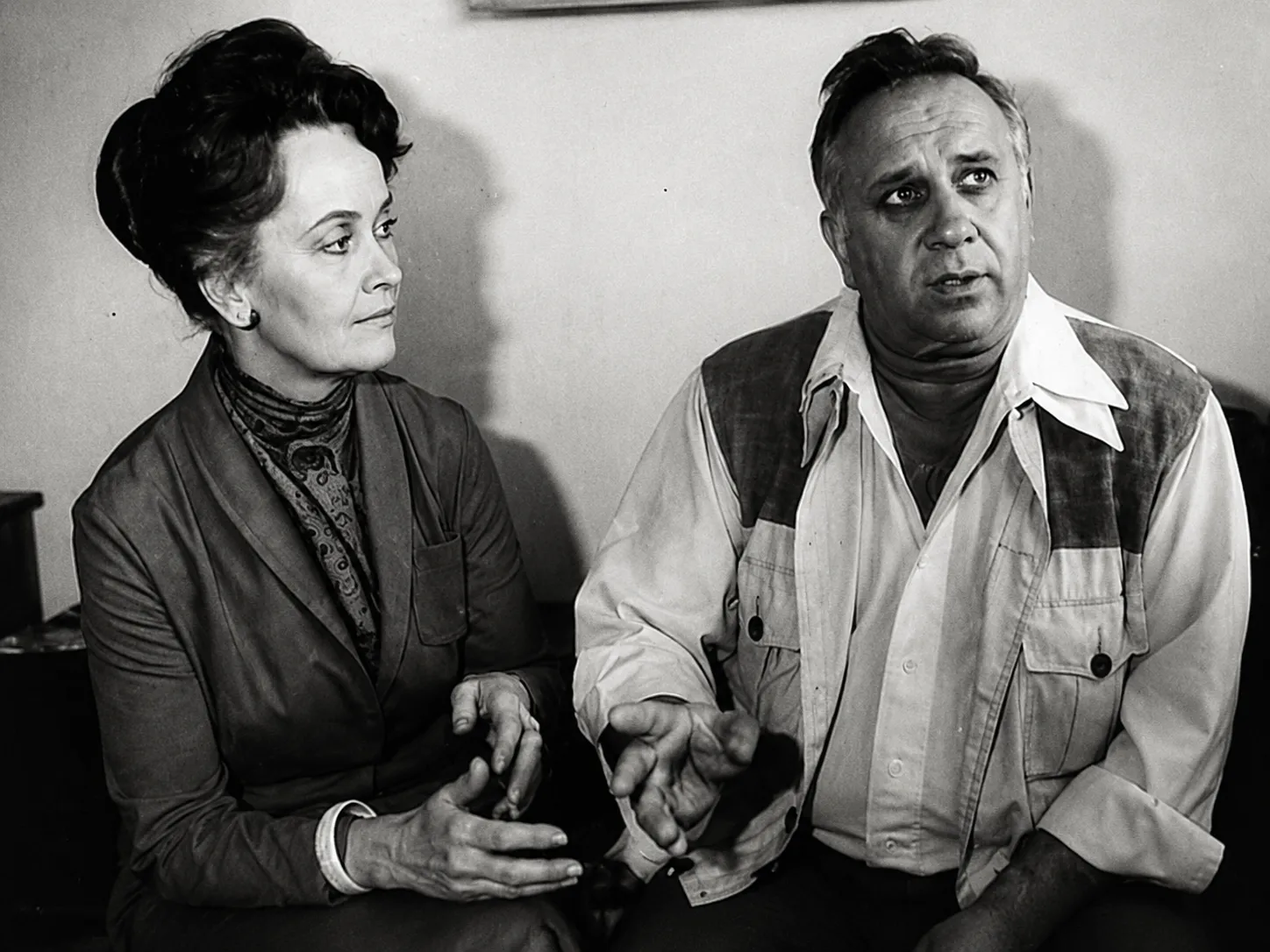
The Enfield Poltergeist — furniture moving, objects thrown, knocking sounds, and two young sisters in the household reportedly speaking in a deep, adult male voice — was investigated by SPR member Maurice Grosse, an engineer and inventor who had joined the Society for Psychical Research after the death of his own daughter, along with writer and fellow SPR investigator Guy Lyon Playfair.
Grosse and Playfair lived in and out of the house for extended periods over roughly eighteen months, using tape recorders and cameras, and documented more than 2,000 individual incidents witnessed by neighbors, journalists, and police officers.
The case remains genuinely contested even within the SPR itself. Grosse and Playfair concluded that while the two girls at the center of the case were caught faking some incidents — including one recorded on hidden camera bending a spoon and an iron bar — a core of phenomena could not be explained by trickery, and they published their conclusions in Playfair’s 1980 book This House Is Haunted.
Other SPR investigators who worked the case independently, including Anita Gregory and former SPR president John Beloff, concluded the entire episode was likely explainable, with Beloff specifically proposing that the deep “male voice” was produced by one of the girls through ventriloquism. That division of expert opinion, within the very organization built to adjudicate such cases, is itself an important piece of information: even trained investigators looking at identical evidence can reach opposite conclusions.
One remarkable postscript appeared decades later. The unexplained gravelly voice heard in the Enfield recordings, which the family attributed to a spirit calling itself “Bill Wilkins,” was played on a British radio talk show years after the case ended — and a listener recognized it as the voice of his own father, William Charles Wilkins, a man who had lived in that exact house, gone blind, suffered a hemorrhage, and died in a chair downstairs in June 1963, long before the Hodgson family ever moved in.
This detail, confirmed and broadcast in a 2024 BBC documentary series revisiting the case, is rarely mentioned in older write-ups of Enfield and remains one of the case’s most difficult-to-explain elements, whatever one makes of the rest of it.
The Scole Experiment
Between 1993 and 1998, a small group of mediums in the village of Scole, Norfolk, England, conducted a five-year series of séances in a converted cellar, claiming to produce physical phenomena in complete darkness — lights, mysterious voices, and images that appeared on unexposed photographic film that had never been loaded into a camera.
What sets Scole apart from typical séance claims is that it was formally observed over an extended period by three senior, credentialed members of the Society for Psychical Research: Professor David Fontana, Professor Arthur Ellison, and Montague Keen, who eventually published their findings as the Scole Report.
Their conclusion was cautiously in favor of the phenomena being genuine, while explicitly acknowledging they could not rule out fraud under fraud-proof conditions, because the mediums controlling the sittings refused to allow video recording and insisted on total darkness — a condition that, by definition, prevents the kind of independent verification a modern controlled experiment requires.
The group stopped sitting together in November 1998. Scole is frequently cited by paranormal researchers as one of the more serious pieces of evidence for survival after death, and just as frequently cited by skeptics as a textbook example of why uncontrolled conditions can never produce real proof, no matter how credentialed the witnesses are.
Weighing the Most Compelling Evidence on Both Sides
If you strip away the reality-TV orbs and shaky night-vision footage — which investigators on both the scientific and paranormal side generally dismiss as dust particles, camera straps, insects, or moisture rather than spirits — the strongest material on each side looks like this:
What favors a paranormal explanation: The sheer consistency of certain experience-types across cultures, centuries, and individuals who have never spoken to one another; long-term, multi-witness cases like Enfield and Scole that were documented in real time by trained investigators rather than reconstructed after the fact; and specific, hard-to-dismiss details, like the belated identification of “Bill Wilkins” as a real, previously deceased former resident of the Enfield house whom none of the investigating family had any known way of knowing about in advance.
What favors a natural explanation: Every documented case in which a haunting had a discoverable physical cause — infrasound, carbon monoxide, mold, drafts, structural settling — turned out, once the cause was fixed, to make the haunting stop; the demonstrated ability of both magnetic fields and ordinary suggestion to produce a convincing “sensed presence” in a laboratory setting; the total lack, after 140-plus years of organized investigation, of a single instance of spirit contact that has held up under fully controlled, fraud-proof conditions; and the fact that even paranormal researchers’ own internal reviews — such as the SPR’s own members disagreeing sharply about Enfield — routinely find that a meaningful share of reported “evidence” was staged, misperceived, or exaggerated.
So, Are Ghosts Real?
After all of that, I land back where I started: I don’t know, and neither does anyone else with total certainty. What I can tell you is that the question deserves better than it usually gets. It isn’t a campfire joke, and it isn’t settled science either.
It’s an open case with real physicists, real theologians, and real investigators still working it, using tools that range from infrasound meters to two-thousand-year-old scripture. None of them have closed the file yet. If you’ve had an experience you can’t explain, you’re in enormous company — millions of people, across every era of recorded history, have stood exactly where you’re standing now.
Explore More Mysteries:
Sources
- The Holy Bible. Holman Bible Publishers, 2017.
- Gurney, Edmund, et al. Phantasms of the Living. Trübner and Co., 1886.
- Playfair, Guy Lyon. This House Is Haunted: The True Story of the Enfield Poltergeist. Souvenir Press, 1980.
- Sidgwick, Henry, et al. Report on the Census of Hallucinations. Proceedings of the Society for Psychical Research, vol. 10, 1894, pp. 25-422.
- Keep, Christopher. Evidence in Matters Extraordinary: Numbers, Narratives, and the Census of Hallucinations. Victorian Studies, vol. 61, no. 4, 2019, pp. 582–607. JSTOR, https://doi.org/10.2979/victorianstudies.61.4.02. Accessed 25 July 2026.
- Tandy, Vic. Something in the Cellar. Journal of the Society for Psychical Research, vol. 64, no. 3, 2000, pp. 129-140.
- Persinger, Michael A., and Stanley A. Koren. Predicting the Characteristics of Haunt Phenomena from Geomagnetic Factors and Brain Sensitivity: Evidence from Field and Experimental Studies. Hauntings and Poltergeists: Multidisciplinary Perspectives, edited by James Houran and Rense Lange, McFarland, 2001, pp. 179-194.
- Pirvulescu, Sergiu. (2021). The existence of paranormal phenomena. ResearchGate.
- Ventola, Annalisa, and Bryan Williams. Poltergeist Phenomena: A Primer on Parapsychological Research and Perspectives. Publicparapsychology.org. Academia.edu.
- Ingram, John H. The Haunted Homes and Family Traditions of Great Britain. W.H. Allen & Co., 1897. Internet Archive.
- Kiley Seymour, Philipp Sterzer, Natalie Soto. Believing is seeing: The link between paranormal beliefs and perceiving signal in noise. Consciousness and Cognition. Volume 106, 2022, 103418, ISSN 1053-8100.
- Keen, Montague, Arthur Ellison, and David Fontana. The Scole Report. Proceedings of the Society for Psychical Research, vol. 58, pt. 220, 1999, pp. 147–455. Internet Archive.
- Lohr, Annaleise Azevedo, and Talia Wiseman. Over a Third of Americans Believe in Ghosts and U.F.O’s. Ipsos, 20 Oct. 2021.
- Jalal, Baland. The neuropharmacology of sleep paralysis hallucinations: serotonin 2A activation and a novel therapeutic drug. Psychopharmacology vol. 235,11 (2018): 3083-3091. doi:10.1007/s00213-018-5042-1.