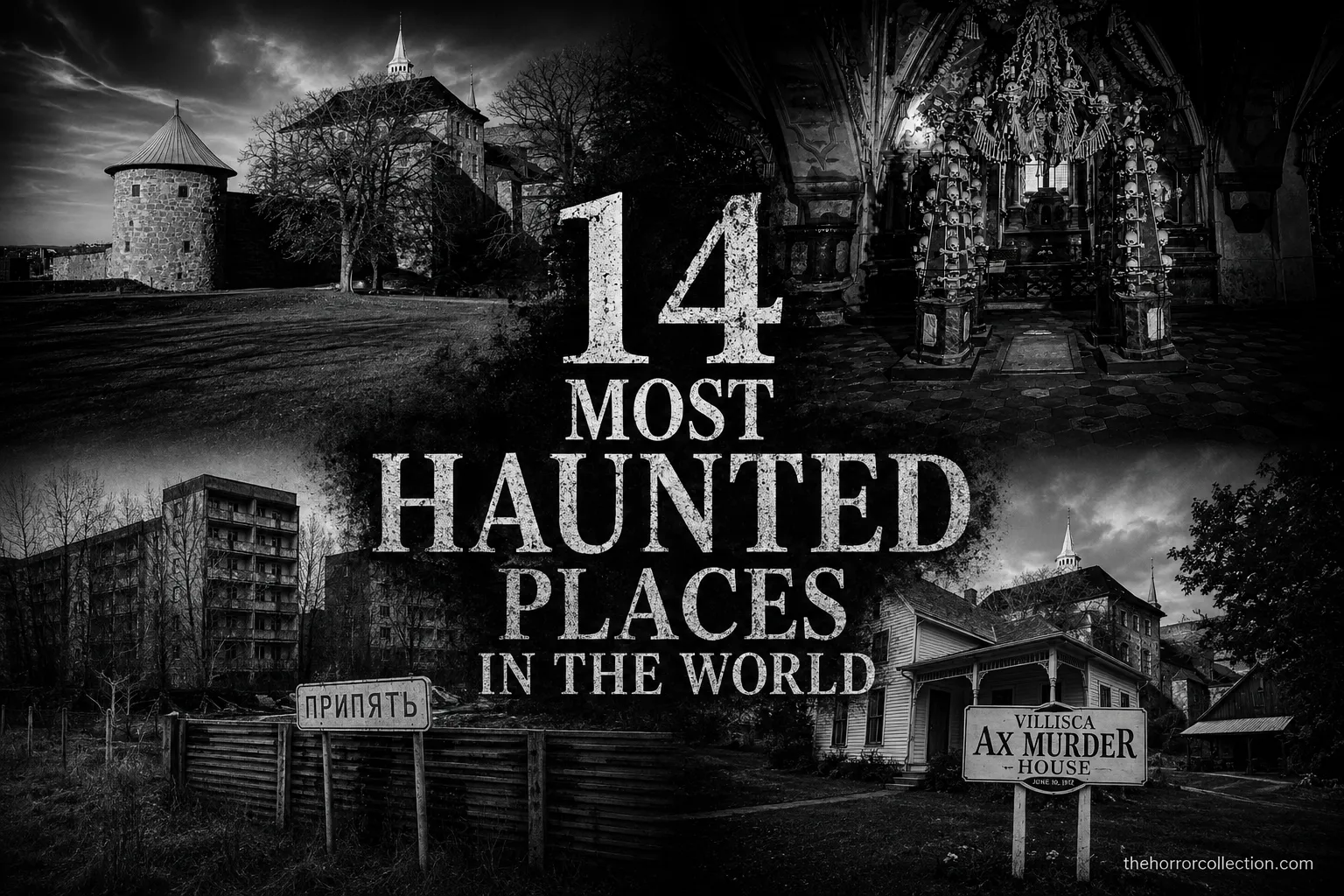
The most haunted places in the world rarely earn that reputation from a single ghost story — they earn it from centuries of plague, war, madness, and violence stacked so profoundly into the ground that visitors, staff, and even skeptical historians keep reporting the same unexplained cold spots, voices, and shadows decade after decade.
Beyond the handful of castles and cemeteries that show up on every “spooky travel” list, there is a second tier of locations — forests where hundreds of people have vanished, sanatoriums that processed more corpses than patients, forts abandoned so completely that a government agency had to legislate against entering them after dark — that are arguably more disturbing precisely because they’re less sanitized for tourism.
What follows are 14 of these locations, chosen specifically because each one combines two things: a long, well-documented history of tragedy, and an ongoing, present-day reputation for paranormal activity that hasn’t faded with time.
Summary
1. Hoia Baciu Forest, Romania
| Category | Details |
|---|---|
| THC Scale | L-4 [See the THC Scale Explanation] |
| Threat Level | 3/10 (mildly threatening) [See the Threat Level Explanation] |
| Known for | UFO sightings dating to the 1960s; unexplained rashes and burns reported by visitors |
| Best time to visit | Guided daytime hikes are far safer than the popular but riskier night tours |
| Nickname | “The Bermuda Triangle of Transylvania” |
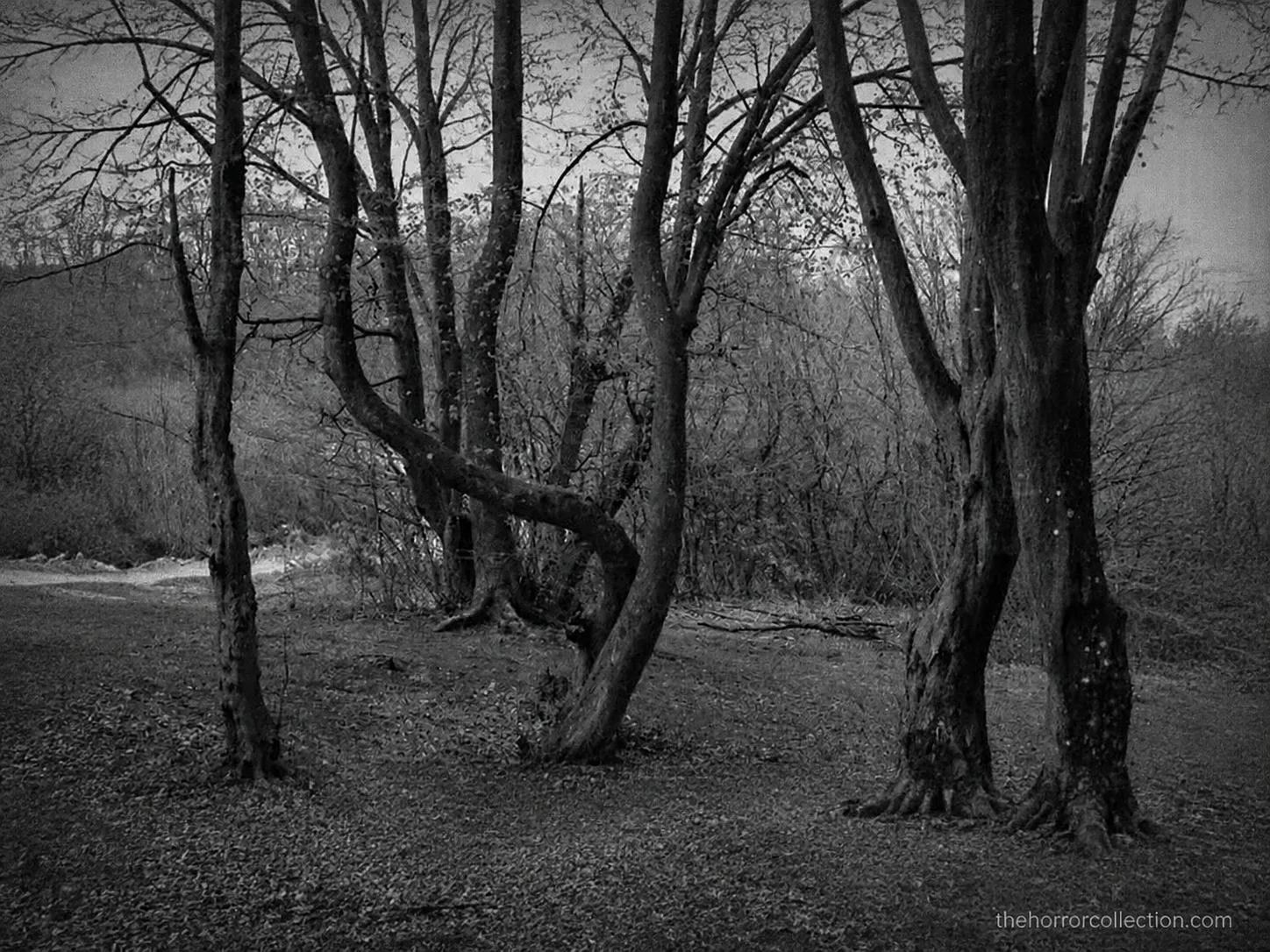
Just outside Cluj-Napoca in Transylvania, Hoia Baciu Forest covers roughly 250 hectares and has been nicknamed the “Bermuda Triangle of Transylvania.” Archaeological digs in the area have uncovered evidence of human habitation dating back to the Paleolithic era.
The forest is also home to one of the region’s oldest known Neolithic settlements, with archaic houses and a burial ground believed to originate from around 6500 BCE — meaning the ground itself has been continuously inhabited, and continuously buried in, for well over eight thousand years. The forest’s name carries its own folk tragedy: legend claims that a shepherd once entered the forest with his flock of two hundred sheep and mysteriously disappeared, never to be seen again.
What keeps Hoia Baciu on paranormal investigators’ radar today and among the most haunted places in the world is the sheer consistency of the reports. Visitors and local villagers alike describe strange physical symptoms after entering the woods, including burns and rashes, along with sensations of being watched, sudden anxiety, and the eerie twisted, charred-looking trunks of the trees themselves — a visual detail botanists attribute to soil conditions and wind stress rather than anything supernatural. However, it does little to calm visitors walking through it at dusk.
Since the 1960s, the forest has also become associated with unexplained aerial lights; a widely referenced UFO sighting from that decade, later investigated by television crews, cemented its reputation. Reports commonly describe balls of light, ghostly apparitions, mysterious voices, and giggling heard deep in the trees.
At the heart of the woodland sits a bare, almost perfectly circular clearing where locals say nothing will grow — a literal “clearing of the deceased” that many refuse to enter even in daylight, and which remains one of the most photographed and least explained features of any forest in Europe.
2. Poveglia Island, Italy
| Category | Details |
|---|---|
| THC Scale | L-3 [See the THC Scale Explanation] |
| Casualties & Deaths | Historical estimates range up to roughly 160,000 plague-era deaths across centuries of use as a quarantine island; no verified deaths have been attributed directly to a haunting or entity. |
| Threat Level | 2/10 (harmless) [See the Threat Level Explanation] |
| First recorded use | 421 AD, as a Roman-era refuge from Alaric the Goth and Attila the Hun |
| Later use | Converted into a psychiatric hospital in 1922, closed in 1968 |
| Current status | Abandoned and officially off-limits to visitors |
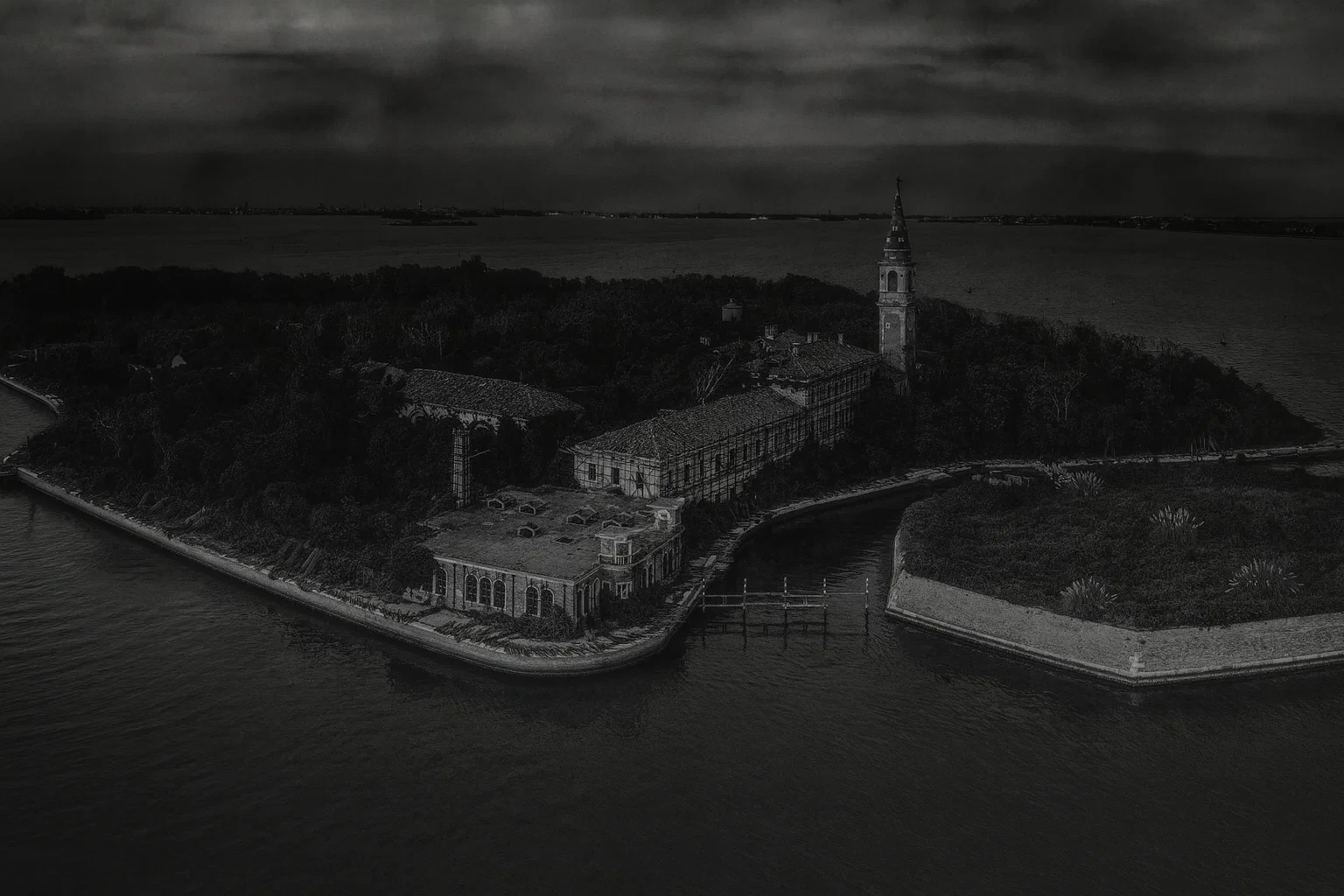
If any single square mile of earth in Europe has absorbed more death than Poveglia, it’s hard to find. Sitting in the Venetian Lagoon between Venice and Lido, the island’s grim transformation began during outbreaks of the Black Death, when Venetian authorities turned it into a lazzaretto. At this quarantine station, plague victims were isolated, and being sent to the island was effectively a sign that death was approaching.
Historical accounts hold that the island housed more than 160,000 plague victims over the centuries, and that human ash from the mass cremations makes up a significant portion of the island’s soil even today.
A 16th-century Venetian chronicler named Rocco Benedetti left behind a firsthand account of conditions on the lagoon’s plague islands, describing the sick lying three or four to a bed, with corpses and the dying alike carted off and dumped into pits without distinction — one of the earliest surviving eyewitness descriptions of a European quarantine crisis, predating germ theory by roughly three centuries.
The island’s second era of horror came in 1922, when its buildings were converted into a psychiatric hospital. Disturbing accounts describe crude, unauthorized experimentation on patients during the period, including allegations of unlicensed lobotomies performed by a resident physician.
One persistent story tells of a doctor at the asylum who allegedly jumped to his death from the island’s converted bell tower — itself originally repurposed from the ruins of the demolished Church of San Vitale under Napoleon’s orders in 1805 — in the 1930s, after claiming he had been driven mad by the ghosts of the plague dead. The psychiatric facility eventually became a nursing home before closing entirely in 1968, after which the island was abandoned outright.
Today Poveglia is officially off-limits to visitors, and even Italy’s own attempts to auction off a long-term lease on the property have repeatedly stalled — a rare case where the government restriction is about genuine structural safety rather than superstition. However, that hasn’t stopped it from being called the most haunted island in the world by paranormal researchers who’ve gone ashore illegally.
Discover More Hauntings:
Is the LaLaurie Mansion Haunting Real?
October 24, 2025
Inside the Lizzie Borden House Haunting: Real Ghost Encounters?
October 22, 2025
The Myrtles Plantation Haunting: Real Ghost Encounters
October 22, 2025
Rocky Hill Castle Ghosts: The 1935 Photograph No One Can Explain
September 18, 2025
Is My Home Haunted or Just Old? How to Tell the Difference
September 5, 2025
3. Bhangarh Fort, India
| Category | Details |
|---|---|
| THC Scale | L-4 [See the THC Scale Explanation] |
| Threat Level | 4/10 (mildly threatening) [See the Threat Level Explanation] |
| Legal status | The only site in India where the Archaeological Survey of India has posted an official notice banning entry between sunset and sunrise |
| Built | 1573, by Raja Bhagwant Das for his son Madho Singh |
| Annual visitors | More than 200,000 |
In the Alwar district of Rajasthan, Bhangarh Fort is the only site in India where the Archaeological Survey of India (ASI) has posted an official sign forbidding entry between sunset and sunrise — a detail that has done more to cement its reputation than any ghost story.
The fort was built in 1573 by Raja Bhagwant Das for his son Madho Singh, once home to more than 10,000 people, and its two competing legends both end the same way: total, sudden abandonment.
Why is Bhangarh Fort on our list of the most haunted places in the world? One legend involves a curse laid by a sorcerer named Singhia; the other involves an ascetic, Guru Balu Nath, who had allegedly permitted the fort’s construction only on condition that no building’s shadow ever fall across his meditation spot — a condition later violated by one of Madho Singh’s successors, who raised the fort’s walls too high.
The historical record tells a less mystical but equally tragic story. Researchers point to a combination of Mughal political disruption, frequent famine, and a gradual regional economic collapse in the late 17th century as the most likely explanation for Bhangarh’s abandonment — the city did not fall in a single dramatic night, but emptied out over time as people simply left.
Political rivalry also played a role: Chatr Singh’s son, Ajab Singh, built a competing fort just seven kilometers away at Ajabgarh, splitting the population and steadily draining Bhangarh’s strategic importance until the site was fully deserted by the early 19th century.
Whatever the true cause, visitors today report strange screams, the sound of bangles jingling in empty rooms, sudden temperature drops, and shadowy figures moving through the roofless ruins — the ASI has never attempted to restore roofing to any of the fort’s structures during its conservation work, a detail believers point to as suspicious and skeptics attribute simply to budget and heritage-preservation priorities.
4. Beelitz-Heilstätten, Germany
| Category | Details |
|---|---|
| THC Scale | L-2 [See the THC Scale Explanation] |
| Casualties & Deaths | Precise death toll unrecorded, but tuberculosis was the leading cause of death for Germans aged 15–40 during the facility’s peak operation; thousands of patients passed through its wards over six decades. |
| Threat Level | 3/10 (mildly threatening) [See the Threat Level Explanation] |
| Opened | 1898, as a tuberculosis sanatorium for Berlin’s overcrowded working class |
| Notable patient | A young Austrian corporal named Adolf Hitler, treated there in 1916 |
| Later occupants | Soviet military hospital, 1945–1994 |
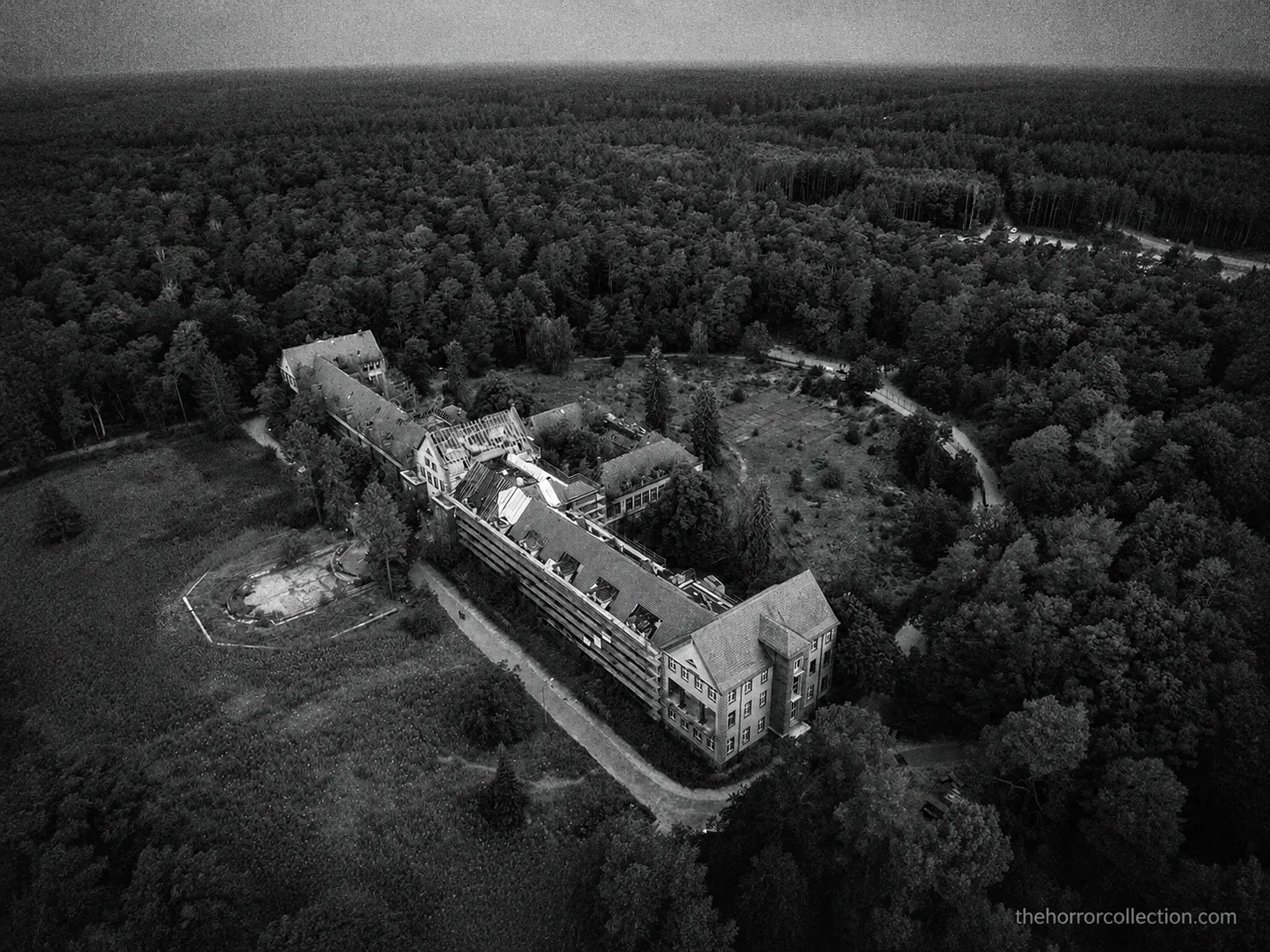
South of Berlin, the sprawling sixty-building sanatorium complex of Beelitz-Heilstätten was built starting in 1898 to combat a genuine public-health catastrophe: tuberculosis was, at the time, the single most common cause of death among Germans aged 15 to 40.
The complex was designed to be almost entirely self-sufficient, with its own power station, bakeries, butcher shops, and farmland — and its own on-site power plant generated so much residual heat that, according to local accounts, snow reportedly never settled on parts of the grounds even in the depths of winter.
What makes Beelitz historically unique isn’t just the scale of suffering inside its wards, but the roster of infamous patients who passed through it. During the First World War, the complex became a military hospital, and among the more than 12,000 soldiers treated there during the war was a young Austrian corporal named Adolf Hitler, wounded in the thigh at the Battle of the Somme. After his rise to power, the room where he had recuperated was turned into a kind of shrine in 1934.
The site’s tragic layering continued for decades. It served as a Wehrmacht military hospital again during WWII, when several of its buildings were damaged by Allied bombing, before the Soviet army occupied it in 1945 and ran it as their largest military hospital outside the USSR for the next fifty years.
Even East Germany’s final head of state, Erich Honecker, was treated there for cancer in the chaotic months after the fall of the Berlin Wall, using the site’s unusual extraterritorial legal status — comparable to that of a foreign embassy — as a base before fleeing toward Moscow. Since the Soviet withdrawal in 1994, the majority of the complex has sat abandoned, its surgical wards, morgue, and patient corridors slowly collapsing into the surrounding forest.
Reported paranormal activity here tends to be more atmospheric than dramatic — cold spots, oppressive dread, and a sense of being watched — rather than the aggressive physical encounters reported at some other sites on this list of most haunted places in the world, which is reflected in its comparatively low THC rating.
Discover More Hauntings:
The Stockwell Poltergeist: Who Was the Stockwell Ghost?
April 11, 2025
Inside the Infamous Amityville Haunting: What Really Happened?
October 21, 2025
Gaines Ridge Dinner Club Haunting: Why Do Diners Hear Babies Crying?
September 3, 2025
5. Waverly Hills Sanatorium, United States
| Category | Details |
|---|---|
| THC Scale | L-5 [See the THC Scale Explanation] |
| Casualties & Deaths | Highest documented death toll in a single year: 152, according to former assistant medical director Dr. J. Frank Stewart. Widely circulated figures of 63,000 total deaths are not supported by hospital records; historians estimate the real cumulative total is far lower. No deaths are officially attributed to a haunting. |
| Threat Level | 5/10 (potentially aggressive) [See the Threat Level Explanation] |
| Opened | 1910, expanded to five stories in 1926 |
| Signature feature | A 500-foot underground “body chute” tunnel |
| Closed | 1961 (as a TB hospital); reopened as a geriatric facility until 1981 |
In Louisville, Kentucky, Waverly Hills opened in 1910 as a modest facility for 40 to 50 tuberculosis patients, at a time when Louisville had the highest TB death rate in the country.
As the epidemic worsened, patient numbers swelled past 140, forcing a major 1926 expansion that turned the original two-story building into a five-story, roughly 400-bed facility considered one of the most modern hospitals of its day, complete with large open-air porches used for the era’s standard “fresh air” treatment protocol.
According to Dr. J. Frank Stewart, the facility’s own assistant medical director, the highest number of deaths recorded at Waverly Hills in a single year was 152 — a number that, while lower than the inflated urban-legend totals of “63,000 dead” that still circulate online, is grim enough on its own, especially given some estimates that during the epidemic’s worst stretches, a patient died roughly every hour.
The building’s most infamous architectural feature is the 500-foot underground “body chute,” officially built as a supply tunnel and covered staff walkway connecting the hospital to the railroad tracks at the bottom of the hill, but which staff used, according to numerous accounts, to discreetly move deceased patients out of the building without exposing the living population to the psychological trauma of a constant parade of corpses.
After the discovery and rollout of the antibiotic streptomycin — first isolated by Rutgers doctoral student Albert Schatz in October 1943 — brought tuberculosis under control, Waverly Hills closed as a TB hospital in 1961. Its darkness didn’t end there, however: it reopened as Woodhaven Geriatrics Hospital, where allegations of patient abuse and neglect became rampant before the facility finally shut down for good in 1981 and fell into two decades of vandalism and decay.
Today the sanatorium is widely considered on of the most haunted places in the world and one of the most frequently investigated paranormal sites in North America, with the body chute and the notorious “Room 502” singled out most often as the locations most likely to send visitors running.
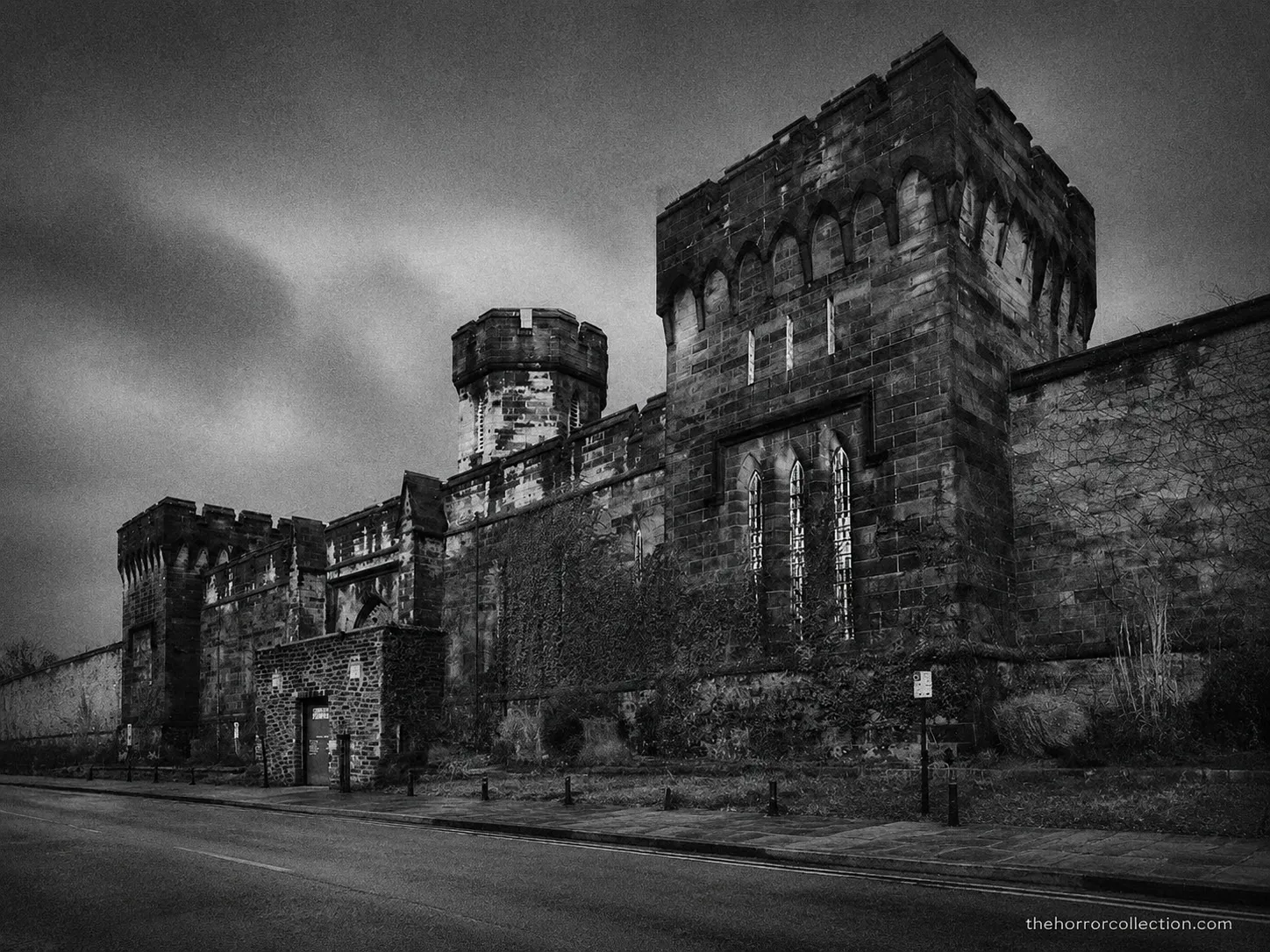
6. Eastern State Penitentiary, United States
| Category | Details |
|---|---|
| THC Scale | L-4 [See the THC Scale Explanation] |
| Threat Level | 3/10 (mildly threatening) [See the Threat Level Explanation] |
| Opened | 1829, pioneering solitary confinement as prison policy |
| Famous inmate | Al Capone, incarcerated for roughly 8 months in 1929 |
| Capacity by 1926 | Expanded to hold 1,700 prisoners |
When Eastern State Penitentiary opened in Philadelphia in 1829, it was radical by design — a Quaker-influenced experiment intended to reform criminals through absolute isolation rather than corporal punishment. It was one of the first buildings in America to have central heating and running water, at a time when even the White House lacked those amenities, and its walls were 20 inches thick.
The system, known as the Pennsylvania System, kept inmates alone almost every hour of the day, forbidden from speaking to anyone but the chaplain and their guards — a method meant to inspire genuine penitence but that instead drove countless inmates into severe psychological distress. Solitary confinement as the default regime finally ended in 1935, 106 years after the prison opened, and by 1926 the facility’s capacity had been expanded to roughly 1,700 prisoners as Philadelphia’s crime rate grew during Prohibition.
The building’s most famous inmate was Al Capone, who served roughly eight months there in 1929 after a concealed-weapons conviction, and — unusually for the facility’s original design — was granted an armchair, an Oriental rug, decorative lamps, a personal radio, and other comforts denied to earlier prisoners.
Despite the luxury, staff and fellow inmates reported that Capone was tormented at night by what he believed was the ghost of James Clark, a man murdered during the 1929 St. Valentine’s Day Massacre, in which Capone was implicated. He reportedly hired a medium to try to rid himself of the presence; it didn’t work, and by the end of his life he had been committed to a mental institution.
In 1945, the prison saw its most daring real-world escape, when twelve inmates — including bank robber Willie Sutton, who later took credit for planning it — tunneled their way out to the street, only to be recaptured within minutes as a police patrol happened to pass by.
Eastern State operated until 1971 and today is preserved as a museum, narrated on its audio tour by actor Steve Buscemi — but paranormal investigation teams, including television crews using thermal and audio equipment, have repeatedly documented what they describe as apparitions moving through the cellblocks.
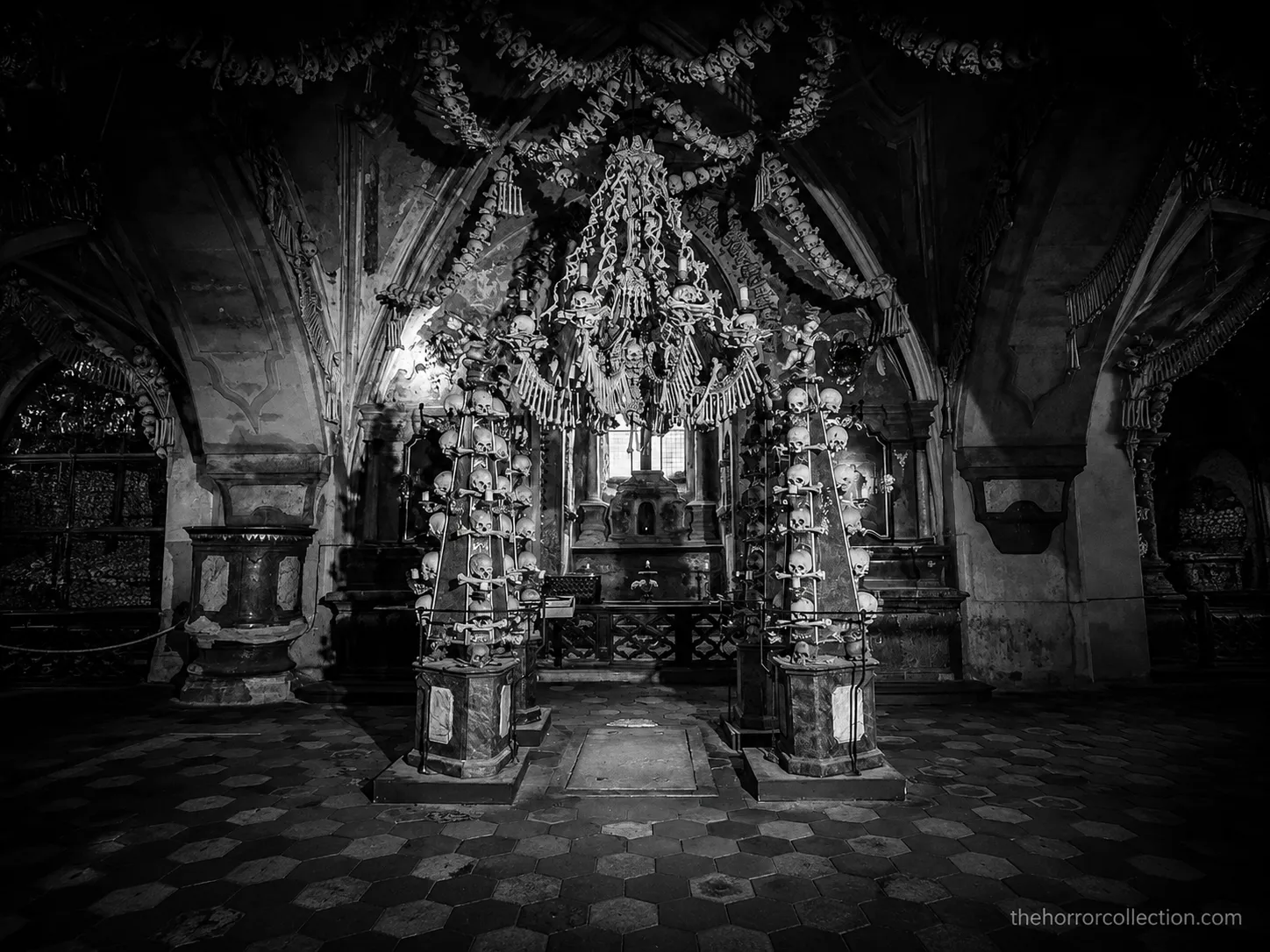
7. Sedlec Ossuary, Czech Republic
| Category | Details |
|---|---|
| THC Scale | L-1 [See the THC Scale Explanation] |
| Casualties & Deaths | Estimated 40,000–70,000 individual remains housed on site, primarily from the 14th-century Black Death (approximately 30,000) and the 15th-century Hussite Wars (approximately 10,000). No deaths are attributed to a haunting. |
| Threat Level | 1/10 (harmless) [See the Threat Level Explanation] |
| Reopened to scholarship | 1910, by Czech anthropologist Jindřich Matiegka |
| Famous feature | A chandelier said to contain at least one of every bone in the human body |
| Annual visitors | Roughly 400,000 |
Beneath an unassuming Gothic church in Sedlec, a suburb of Kutná Hora, lies one of the most disquieting religious sites in Europe: a chapel decorated almost entirely with human bones.
The origin story begins in the 13th century, when a local abbot made a pilgrimage to Jerusalem and, after returning, scattered soil from Golgotha — the traditional site of the Crucifixion — over the monastery’s cemetery, instantly making it one of the most desirable burial grounds in Central Europe. That reputation turned catastrophic in the 14th century: when the Black Death swept through Bohemia, an estimated 30,000 plague victims were buried in the Sedlec cemetery, followed by roughly another 10,000 dead from the Hussite Wars in the following century.
With the cemetery vastly overcrowded, the remains eventually had to be exhumed to make room for new burials. In 1511 the task of organizing the disinterred bones was given to a half-blind monk, who stacked them into towering, ordered piles within the ossuary crypt — some reportedly as high as 15 feet. Centuries later, around 1870, the aristocratic Schwarzenberg family — who had purchased the property — commissioned woodcarver František Rint to rework the bone piles into deliberate decoration.
Rint disinfected and bleached the bones with chlorinated lime before arranging them into chandeliers, garlands, and coats of arms, including the Schwarzenberg family’s own coat of arms covered entirely in bone. In 1780, ossuaries across the region were declared a public health risk due to their disease-linked origins. The Sedlec crypt was sealed and essentially forgotten for roughly 230 years until Czech anthropologist Jindřich Matiegka reopened and formally cataloged it in 1910.
Today the ossuary draws roughly 400,000 visitors a year, and while the atmosphere is undeniably heavy, reported paranormal activity here is almost entirely residual and non-interactive — a place of solemn silence rather than active haunting.
Discover More Hauntings:
What Is Residual Ghost Energy?
September 4, 2025
Top 10 Most Haunted Hotels and Inns in Connecticut
December 3, 2025
The Haunting of Edmund King House: Alabama’s Most Storied Ghost
September 3, 2025
Gaineswood Plantation’s Haunting: Fact, Folklore, or Both?
September 18, 2025
8. Château de Brissac, France
| Category | Details |
|---|---|
| THC Scale | L-2 [See the THC Scale Explanation] |
| Casualties & Deaths | 2 confirmed historical deaths (Charlotte de Brézé and Pierre de Lavergne, murdered May 31, 1477). The alleged “Green Lady” is the victim of the tragedy, not an aggressor — no deaths are attributed to her presence. |
| Threat Level | 2/10 (harmless) [See the Threat Level Explanation] |
| Height | Seven stories — the tallest château in France |
| Owning family | Cossé-Brissac, continuously since 1502 |
| Ghost name | La Dame Verte (“The Green Lady”) |
Rising above the Loire Valley, Château de Brissac is officially “the tallest castle in France” at seven stories, but locally it is better known for a 15th-century murder so violent it produced one of the country’s most long-lasting ghost stories: la Dame Verte, the Green Lady. The victim was Charlotte de Brézé, the illegitimate daughter of King Charles VII, married to Jacques de Brézé, grand seneschal of Normandy.
On the night of May 31, 1477, Jacques returned from a hunting trip, had dinner with his wife, and later that night discovered her in bed with a huntsman named Pierre de Lavergne. Accounts of exactly what followed vary — some sources describe roughly a hundred blows delivered to each victim with a hunting axe, while others describe Pierre being killed outright and Charlotte strangled — but every version agrees the couple was killed on the spot. Their bodies were never publicly recovered or given a documented burial.
The murder’s aftermath is almost as strange as the crime itself. According to the legend, Jacques moved out of the château not long after, unable to bear the sound of his victims’ ghosts moaning through the halls at night. Because Jacques was the king’s own son-in-law by marriage, he was never formally punished for the killings — a detail of impunity that only deepens the story’s unresolved, restless quality.
The château itself has an equally turbulent architectural history: it was originally built in the 11th century by Fulk III of Anjou, torn down in 1455 on the order of King Louis XI as punishment against the Duke of Brittany, and rebuilt from 1502 onward by the Cossé-Brissac family, who have owned the property continuously ever since.
Generations of that same family are believed to have grown accustomed to strange nighttime cries echoing from the tower room where the murders reportedly took place, and visitors touring the château today have reported the same unexplained moaning in that same corner of the building.
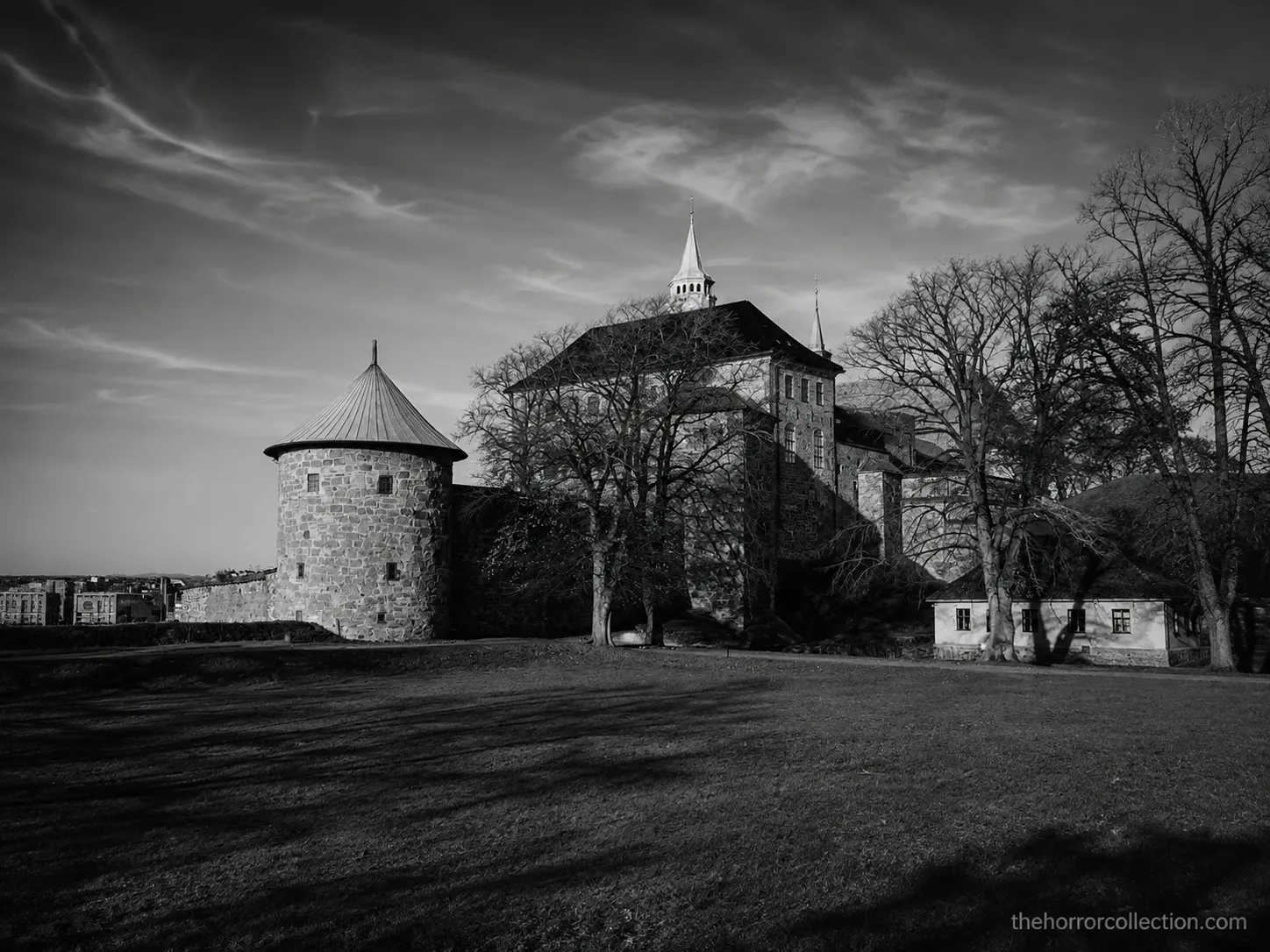
9. Akershus Fortress, Norway
| Category | Details |
|---|---|
| THC Scale | L-4 [See the THC Scale Explanation] |
| Casualties & Deaths | Documented executions include Nazi-era killings during the WWII occupation and 8 Norwegian collaborators executed after liberation, including Vidkun Quisling. Additional deaths recorded among prisoners from the 1852 Kautokeino Sámi uprising. |
| Threat Level | 4/10 (mildly threatening) [See the Threat Level Explanation] |
| Built | Circa 1290–1299, under King Haakon V |
| Military record | Never successfully breached by a foreign siege in over 700 years |
| WWII memorial | Honors approximately 40 Norwegian patriots executed on-site |
Overlooking Oslo’s harbor, Akershus Fortress has stood since the late 1290s, built by King Haakon V, and claims the distinction of never having fallen to a foreign siege in over 700 years of continuous defense — including repeated assaults by Swedish forces under King Charles XII in 1716. That military resilience, though, coexisted with a long, grim history as a prison.
A section of the fortress became known locally as “The Slavery,” because prisoners held there could be rented out for forced labor in the city. Conditions inside were notoriously harsh, involving iron shackles, chains, and prolonged isolation. Following the 1852 Sámi uprising in Kautokeino, all of the male participants were imprisoned in the fortress’s cells. Most of them died there, with the important exception of Lars Hætta, who went on to produce the first translation of the Bible into the Sámi language.
The 20th century added a new, darker chapter. When Germany invaded Norway in 1940, Akershus surrendered without a fight, and the occupying Nazi forces used the fortress as a site of execution during the war. After liberation on May 11, 1945, the fortress became the site of executions again — this time of Norwegian collaborators, including political leader Vidkun Quisling, among a group of eight traitors executed on the fortress grounds.
A memorial at the site today honors roughly 40 individuals executed there during the war, and the fortress now also houses the Norwegian Armed Forces Museum and the country’s Resistance Museum.
Staff and visitors report whispers along the dungeon corridors, sudden pushes from unseen hands, and the specific legend of a demon guard dog named Malcanisen said to haunt the main gate — encountering it, according to local tradition, was once believed to foretell death within three months, a folk belief distinct from the fortress’s well-documented, very real history of imprisonment and execution.
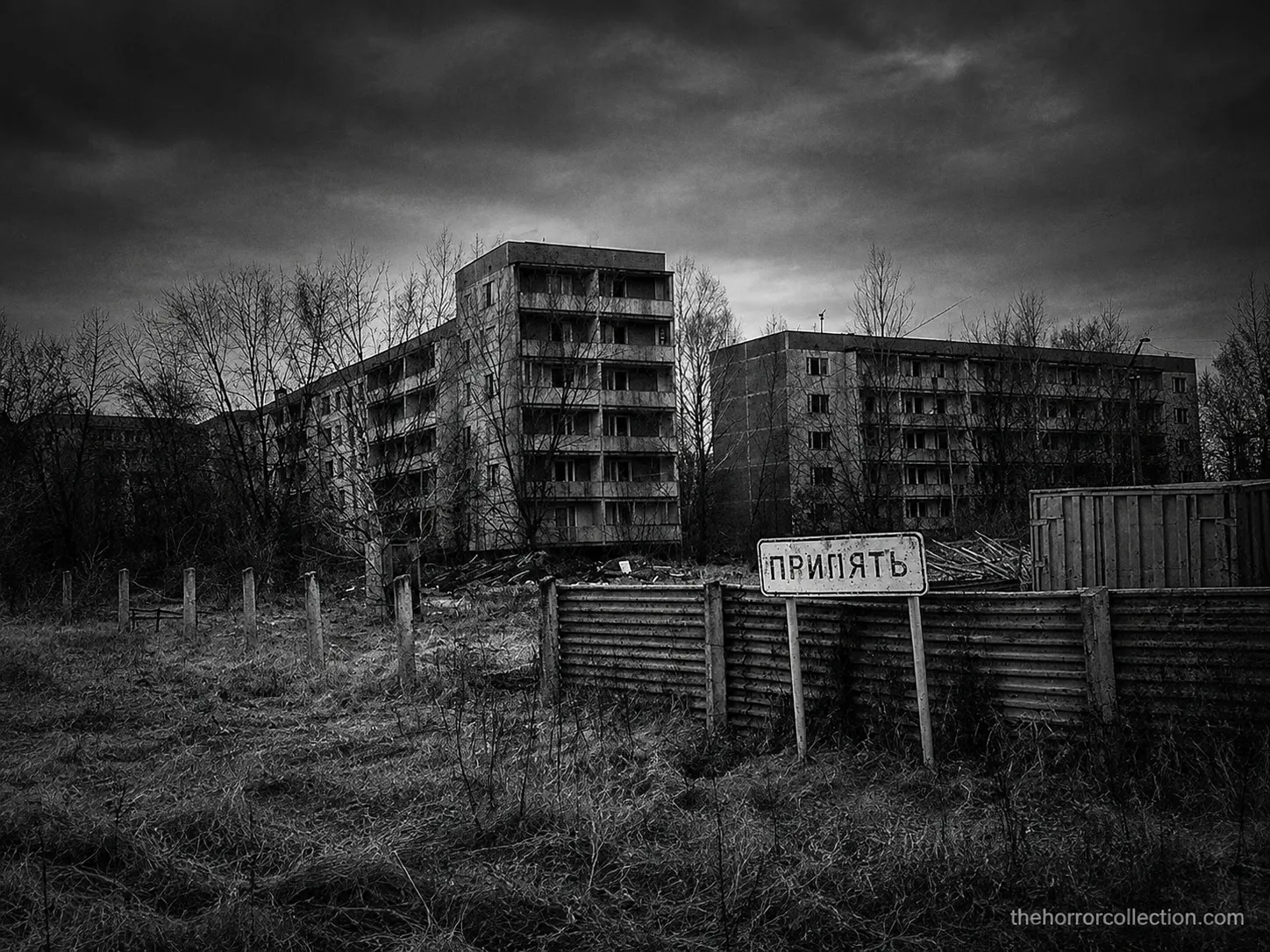
10. Pripyat, Ukraine
| Category | Details |
|---|---|
| THC Scale | L-1 [See the THC Scale Explanation] |
| Casualties & Deaths | 2 plant workers died the night of the explosion; 28 more died within three months from acute radiation syndrome; the World Health Organization estimates roughly 4,000 eventual deaths linked to the disaster. Reported paranormal activity is minimal — the site’s real ongoing danger is radiological, not supernatural. |
| Threat Level | 6/10 (potentially aggressive) [See the Threat Level Explanation] |
| Founded | 1970, as a purpose-built city for Chernobyl plant workers |
| Population at time of disaster | Approximately 49,000–50,000 |
| Evacuation | Ordered 36 hours after the April 26, 1986 explosion |
Pripyat isn’t haunted by folklore in the traditional sense — it’s haunted by the abrupt, total silencing of an entire modern city. Founded in 1970 to house workers at the nearby Chernobyl nuclear power plant, Pripyat had grown into a model Soviet city of more than 49,000 residents by 1986, complete with schools, hospitals, parks, and an amusement park scheduled to open on May 1 of that year — an opening that never happened.
On April 26, 1986, Reactor No. 4 at the plant exploded during a botched safety test, the worst nuclear accident in history. Residents were not informed of the disaster for a full 36 hours. When the evacuation order finally came at 11:00 AM on April 27, officials described it as temporary. Hence, most people packed only light bags, expecting to return within days.
That return never happened. Roughly 49,000 people were evacuated by 1,200 buses in a matter of hours — the entire population gone by 5:00 PM that same day — and Pripyat has stood empty ever since, its apartment buildings, hospital, and iconic Ferris wheel, which never officially operated for a single paying customer, left almost exactly as they were on the day of the disaster.
The World Health Organization estimates roughly 4,000 people eventually died from radiation exposure connected to the disaster in the years that followed, with 28 confirmed deaths from acute radiation syndrome in the immediate aftermath. Clocks in the city are famously frozen at the time power was cut, and Soviet propaganda posters still cling to crumbling walls.
Visitors who tour the Exclusion Zone today — permits are required, and radiation levels are monitored continuously — routinely describe the city’s total, unnatural silence as more unsettling than any staged haunted attraction could be. As recently as February 2022, Ukrainian troops were photographed training in the abandoned streets just before the Russian invasion, a grim reminder that Pripyat’s tragedy is not confined to its distant past.
Discover More Hauntings:
The 16 Most Haunted Places in Alabama
September 17, 2025
The 15 Most Haunted Places in Arizona
October 7, 2025
Is the George Wythe House Haunted by Multiple Spirits?
January 8, 2026
11. Clinton Road, New Jersey, United States
| Category | Details |
|---|---|
| THC Scale | L-3 [See the THC Scale Explanation] |
| Casualties & Deaths | The road has a confirmed connection to at least one real homicide victim, Daniel Deppner, whose frozen body was recovered along the route. |
| Threat Level | 3/10 (mildly threatening) [See the Threat Level Explanation] |
| Length | Approximately 10 miles, through West Milford, New Jersey |
| Historical backdrop | An 18th- and 19th-century iron-mining and milling industrial hub |
| Real crime link | Connected to mob hitman Richard “The Iceman” Kuklinski |
A ten-mile stretch of dark, poorly lit roadway through West Milford in northern New Jersey, Clinton Road has been called “the most haunted road in the world.” Even a local police chief has publicly admitted the place “makes the imagination go nuts.”
Its most famous legend involves a young boy said to have drowned near a bridge by a notoriously dangerous curve locals call Dead Man’s Curve; as the story goes, if you throw a coin into the water beneath the bridge, the ghost of the boy will return it to you — and generations of visitors have left enough coins on the creek bed that they’re clearly visible from the bridge above, a rare case of a ghost legend leaving behind literal, photographable physical evidence, even if that evidence only proves how many people believe the story rather than the story itself.
But Clinton Road’s reputation for tragedy runs deeper than folklore. The road cuts through what was once an 18th- and 19th-century industrial hub for iron mining, milling, and waterworks, whose stone foundations and crumbling bridges still line the route today, running alongside Clinton Reservoir and through sections of Long Pond Ironworks State Park.
It also has a documented connection to real organized crime: the body of Daniel Deppner, a mob associate murdered by contract killer Richard “The Iceman” Kuklinski, was discovered along the road, and an autopsy revealed ice crystals in his veins, proving the body had been frozen for days before being dumped there to disguise the actual time of death — the case that gave Kuklinski his infamous nickname.
Combined with persistent local stories of phantom vehicles, a spectral hitchhiking girl, and reported cult and gathering activity in the surrounding woods over the decades, Clinton Road has accumulated a genuinely unusual concentration of both real crime and ghost lore for a single stretch of pavement.
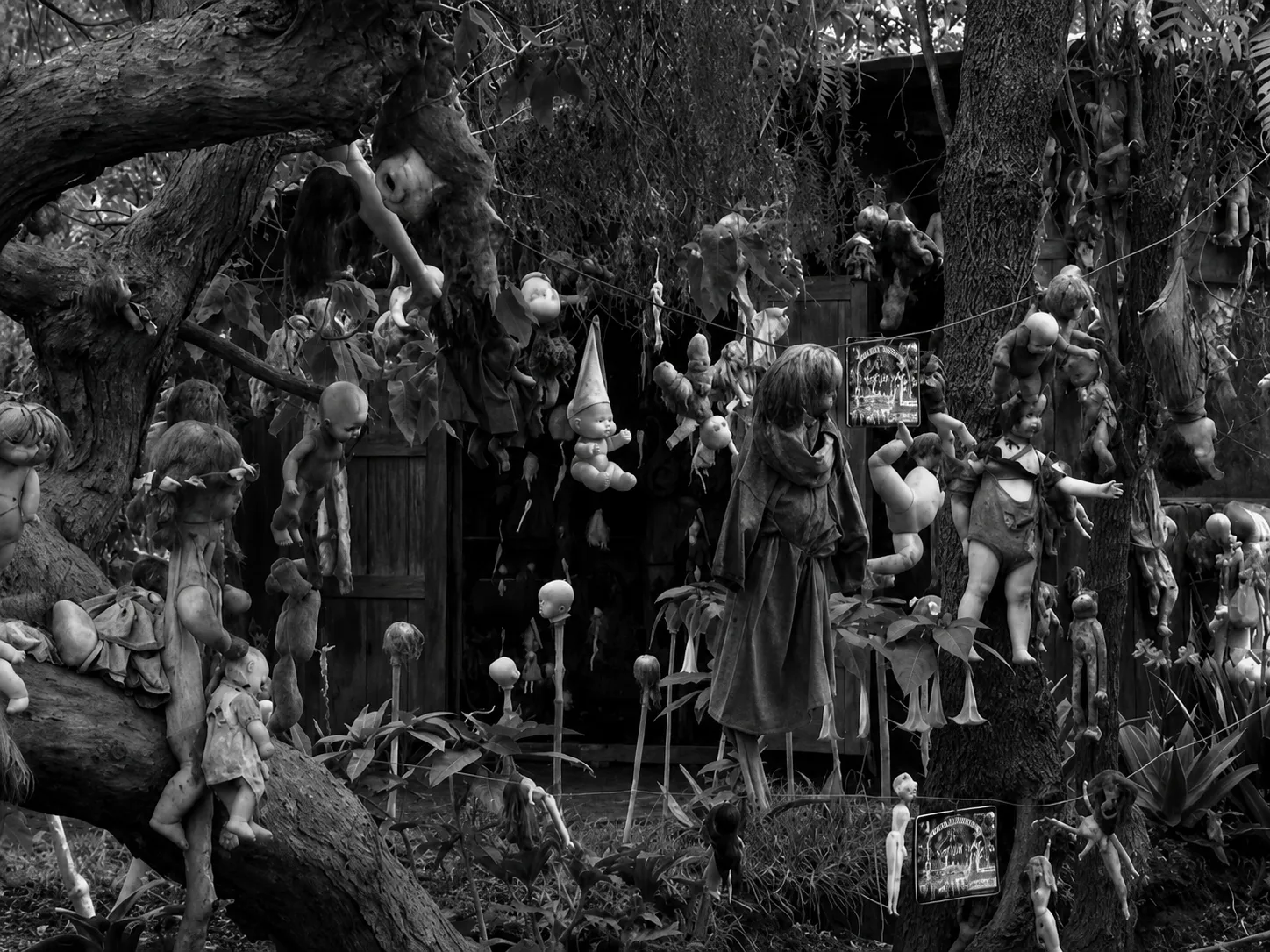
12. Isla de las Muñecas (Island of the Dolls), Mexico
| Category | Details |
|---|---|
| THC Scale | L-5 [See the THC Scale Explanation] |
| Casualties & Deaths | 1 confirmed death directly connected to the site’s origin story: caretaker Don Julián Santana Barrera, found drowned in 2001 in the same spot where he claimed a girl had drowned decades earlier. The existence of the original drowned girl is disputed even by her own family. |
| Threat Level | 3/10 (mildly threatening) [See the Threat Level Explanation] |
| Origin | Mid-20th century, when Don Julián began hanging found dolls in tribute |
| Recognition | Named by Guinness World Records (2022) as the largest collection of haunted dolls |
| Current access | Reportedly closed to public tours as of early 2025 |
In the canal network of Xochimilco, south of Mexico City, a small artificial island became one of the most unsettling shrines in the world, built entirely by one grieving, reclusive man. In the mid-20th century, Don Julián Santana Barrera left his wife and family and moved alone onto the island.
According to the story he told for the rest of his life, he discovered the body of a young girl who had drowned under mysterious circumstances near his home. Shortly afterward, he found a doll floating in the canal, which he hung from a tree as a tribute to her—and, he believed, to appease her restless spirit.
That single doll became an obsession that consumed the rest of his life: for the next fifty years, Don Julián scavenged dolls from trash heaps and traded produce for more, hanging hundreds of them — often missing limbs, heads, or eyes — throughout the island’s trees and his own cabin, dressing some in headdresses and sunglasses as if they were living companions.
The island’s story took its final, circular turn in 2001. Don Julián’s nephew stepped away briefly and returned to find him lying face down in the canal, dead — in the exact spot where he had always claimed the girl had drowned decades earlier. Notably, even his own family expressed doubt that the drowned girl had ever existed at all, suggesting the entire, decades-long project may have grown from a delusion rather than a documented tragedy — which, if anything, makes the story more unsettling rather than less.
Since the island opened to the public, visitors have reported the evil dolls appearing to move their heads and arms and open their eyes. Some claim to hear the dolls whispering to one another.
In 2022, Guinness World Records officially recognized the island as home to the world’s largest collection of haunted dolls, cementing its status as a dark-tourism landmark decades after Don Julián’s death — though as of early 2025, the original island has reportedly been closed to public tours, with several imitation “doll islands” now operating nearby to meet continued demand.
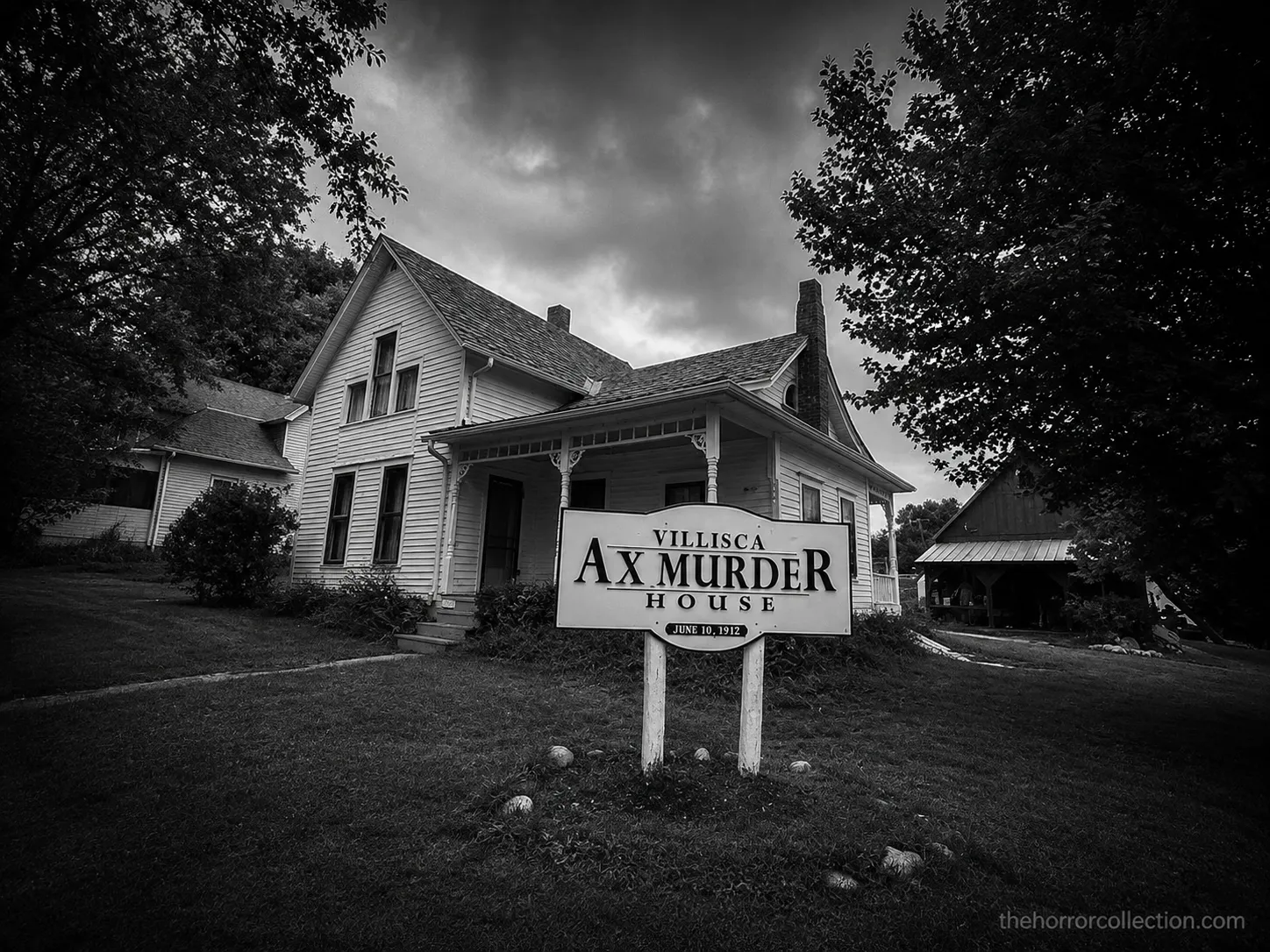
13. Villisca Axe Murder House, United States
| Category | Details |
|---|---|
| THC Scale | L-5 [See the THC Scale Explanation] |
| Casualties & Deaths | 8 confirmed historical deaths: Josiah Moore (43), Sarah Moore (39), their children Herman (11), Mary Katherine (10), Arthur (7), and Paul (5), and overnight guests Lena (11) and Ina Stillinger (8). No deaths have been officially attributed to the reported haunting itself. |
| Threat Level | 4/10 (mildly threatening) [See the Threat Level Explanation] |
| Date of crime | Night of June 9–10, 1912 |
| Case status | Officially unsolved, over a century later |
| Suspects tried | Rev. George Kelly (tried twice, acquitted both times) |
A list of the most haunted places in the world cannot be complete without the infamous Villisca Axe Murder House. On the night of June 9 into June 10, 1912, someone entered a modest two-story home in the small town of Villisca, Iowa, and killed everyone inside using an axe taken from the family’s own coal shed.
The victims were Josiah and Sarah Moore, their four children — Herman, 11; Mary Katherine, 10; Arthur, 7; and Paul, 5 — along with two young overnight guests, sisters Ina and Lena Stillinger, aged 8 and 11, who had been invited to stay over after a church children’s program earlier that evening.
The crime scene, preserved by investigators’ notes, was deliberately, ritualistically strange: the killer covered every mirror in the house with cloth — a traditional funeral practice of the era — closed all the blinds, draped clothing over the two windows without coverings, and left the murder weapon leaning against a wall in the room where the Stillinger girls had been killed. Doctors determined the attacks began in the master bedroom and concluded the killer struck Josiah Moore with more blows than any other victim, an estimated 30, disfiguring his face so severely his eyes were no longer visible.
Despite a lengthy, high-profile investigation — including a local reverend, George Kelly, who was tried twice for the murders and acquitted both times after the first trial ended in a hung jury, plus Iowa state senator Frank F. Jones and other suspects who were investigated and eventually cleared or never charged — the case remains officially unsolved to this day, more than a century later.
The house was painstakingly restored in the 1990s by historians Martha and Gavin Linn to appear exactly as it did on the night of the murders, deliberately without electricity or running water, and it now operates as a museum and overnight paranormal-investigation site. Locals have historically shown a marked reluctance to discuss the case.
The town’s 100th-anniversary commemoration of the murders was deliberately held in a different, larger town twenty-five miles away rather than in Villisca itself — a telling detail about how profoundly the tragedy still affects the community more than 110 years later.
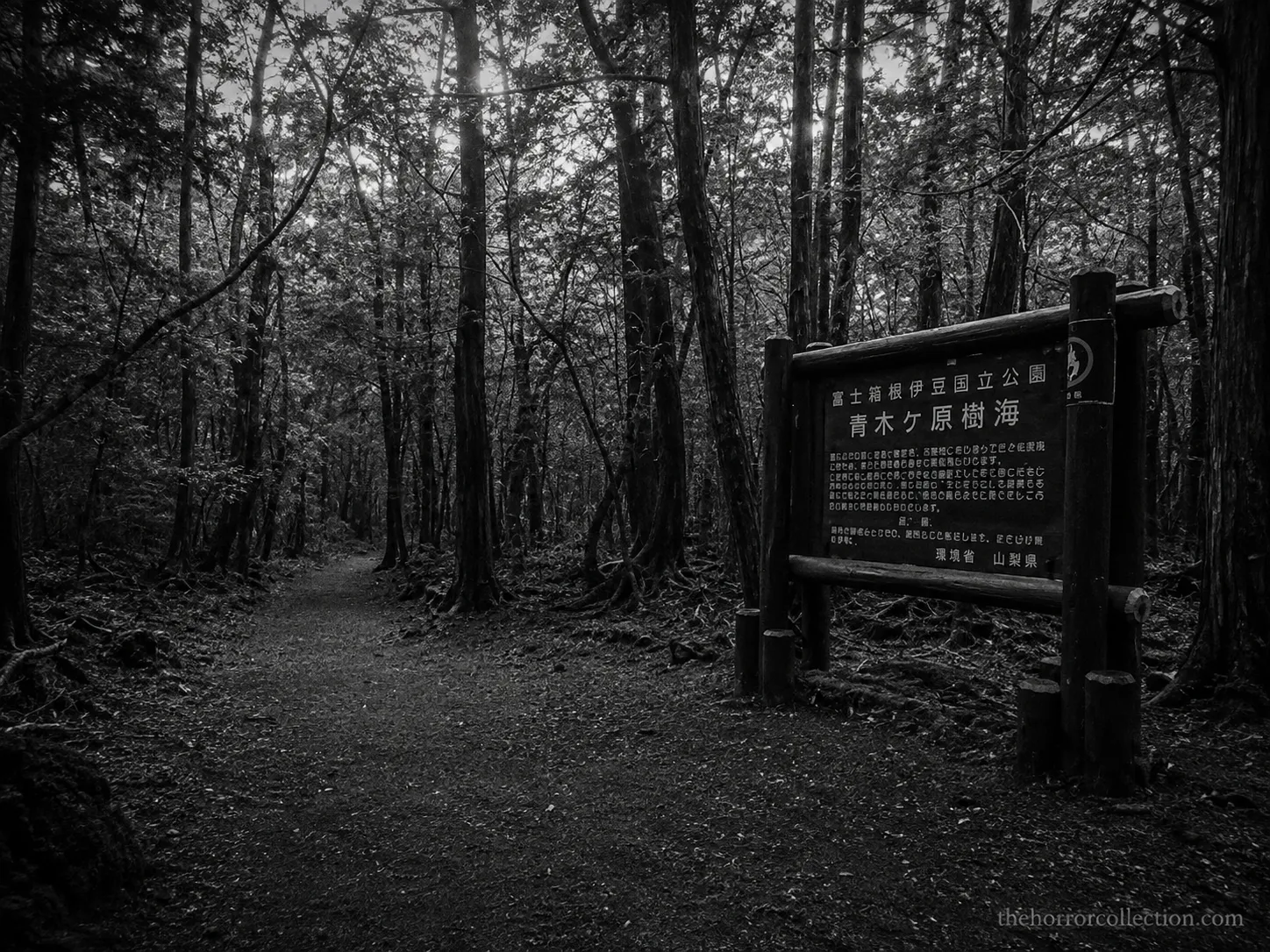
14. Aokigahara Forest, Japan
| Category | Details |
|---|---|
| THC Scale | L-3 [See the THC Scale Explanation] |
| Casualties & Deaths | Precise cumulative figures are no longer published by Japanese authorities; one recorded year (2001–2002 reporting period) recovered 78 bodies, and Yamanashi prefectural officials reported over 100 suicides between 2013 and 2015. |
| Threat Level | 7/10 (dangerous) [See the Threat Level Explanation] |
| Formed | 864 AD, from a Mount Fuji lava eruption |
| Size | Approximately 30 square kilometers |
Finally, at the base of Mount Fuji, Aokigahara — literally the “Sea of Trees” — grew up over a lava field left behind by a violent volcanic eruption in the year 864.
The forest’s porous volcanic bedrock absorbs sound almost completely, which contributes to an unnatural, total silence that visitors consistently describe as disorienting — a detail with a real geological cause rather than a supernatural one, and one that also explains a related piece of local folklore: compasses are commonly said to malfunction inside the forest, a claim linked to the genuine magnetic properties of its iron-rich volcanic rock rather than any ghostly interference.
Historically, some local folklore connected the forest to ubasute, a purported and disputed feudal-era practice in which elderly or infirm family members were left to die in remote locations during famine. However, many researchers now dispute how widespread, or even real, this practice actually was.
In the modern era, Aokigahara has become internationally notorious as one of the most haunted places in the world, as well as one of the most frequent suicide locations on Earth. The reputation intensified after a popular 1960s novel featured a character taking her own life there. Japanese police began conducting organized annual searches of the forest in 1971, and one particularly grim year saw the bodies of 78 people who had died by suicide recovered from the woods.
Yamanashi prefectural authorities reported over 100 suicides in the forest between 2013 and 2015 alone. However, Japan’s government stopped publicly releasing detailed annual figures out of concern that publishing the numbers might be inadvertently encouraging more people to travel there.
Volunteer patrols now regularly walk the trails, and signs posted along the forest’s paths read messages like “Life is a precious thing that your parents gave to you,” alongside phone numbers for suicide and debt-counseling hotlines.
Final Thoughts on the Most Haunted Places in the World
I put this list together because I was tired of seeing the same ten locations recycled across every “most haunted places in the world” article, usually with the history flattened into a two-sentence footnote under a spooky photo.
What struck me most while researching these fourteen sites wasn’t any single ghost story — it was how much verifiable tragedy sits underneath almost every one of them. A plague quarantine that processed something like 160,000 bodies. A five-story sanatorium where a patient reportedly died roughly once an hour at the epidemic’s peak. A city of nearly 50,000 people emptied in a single afternoon and never resettled. You don’t need to believe in spirits to find that history unsettling on its own.
That said, I’ve tried not to overcorrect into pure skepticism either. Paranormal research has a longer and more organized history than most people assume — the Society for Psychical Research, founded in London in 1882, is still the oldest organization in the world dedicated to investigating claims like these, and it’s been publishing a peer-reviewed journal on the subject since 1884.
Some of the physical sensations reported at haunted sites also have partial scientific explanations worth knowing about: in 1998, Coventry University engineer Vic Tandy traced the “presence” his coworkers kept reporting in a supposedly haunted lab to a 19Hz infrasound wave produced by a fan, a frequency low enough to sit below human hearing but high enough to make the eyeball vibrate in its socket, producing exactly the kind of shadowy, peripheral-vision “figure” ghost witnesses often describe.
It’s a genuinely interesting piece of research. It may explain a fraction of reported hauntings — but it doesn’t explain everything visitors and staff have described at places like Waverly Hills or Villisca. I don’t think it’s honest to pretend otherwise in either direction.
So I’ll leave you where I landed: the most haunted places in the world earn that label because real people suffered and died there in numbers large enough to be historically documented, and because something about those specific locations keeps generating the same kinds of reports, generation after generation, long after the original tragedy should have faded from memory.
Whether that “something” is residual trauma imprinted on a place, a trick of infrasound and suggestion, or an active presence that hasn’t left, is genuinely up to you to decide. I’d rather hand you the real history and let you draw your own conclusion than tell you what to believe.
Discover More Hauntings:
The Complete List of All Haunted Places in Connecticut
December 2, 2025
Kenworthy Hall Haunting and Alleged Ghost: The Full Story
September 3, 2025
Stanley Hotel Haunting: What Really Inspired The Shining?
October 21, 2025
The Stockwell Poltergeist: Who Was the Stockwell Ghost?
April 11, 2025
Sources
- Crawshaw, J.S. (2014). Families, medical secrets and public health. Renaissance Studies, 28: 597-618. https://doi.org/10.1111/rest.12081.
- Epperly, Edgar V. Fiend Incarnate: Villisca Axe Murders of 1912. Independently published, 2021.
- Sceurman, Mark, and Mark Moran. Weird N.J.: Your Travel Guide to New Jersey’s Local Legends and Best Kept Secrets. Barnes & Noble, 2003.
- Lazzari, Gianrocco et al. A digital reconstruction of the 1630-1631 large plague outbreak in Venice. Scientific Reports vol. 10,1 17849. 20 Oct. 2020, doi:10.1038/s41598-020-74775-6.
- Martini, M et al. The history of tuberculosis: the social role of sanatoria for the treatment of tuberculosis in Italy between the end of the 19th century and the middle of the 20th. Journal of Preventive Medicine and Hygiene vol. 59,4 E323-E327. 15 Dec. 2018, doi:10.15167/2421-4248/jpmh2018.59.4.1103.
- WHO. Health effects of the Chernobyl accident: an overview.
- Legreid, Ann M. Vidkun Quisling. EBSCO, 2024.
- Atwal, Sanj. The haunting story of the man who built the Island of Dolls. Guinness World Records, 2022.
- Joshua J. Mark. Hussite Wars. World History Encyclopedia, 18 Nov. 2021.