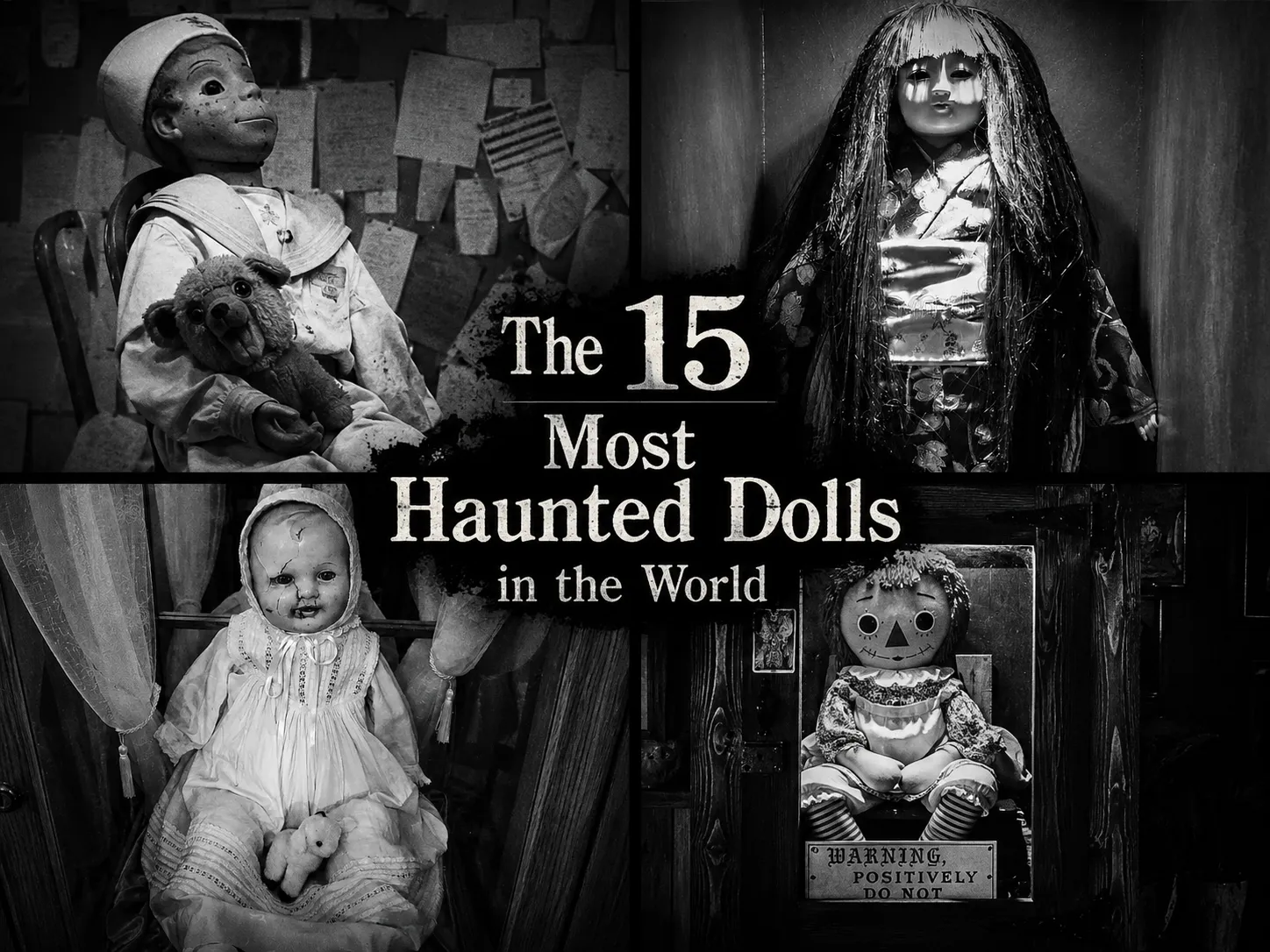
The world’s most haunted dolls can turn a simple childhood toy into a nightmare. These dolls are so legendary that museums keep them behind glass, families treat them like cursed heirlooms, and visitors are often told to ask before taking photos. Some have even inspired major horror movies.
Others have never made it into a single movie, yet their stories are just as unsettling, if not more so, than those of the famous names everyone already knows. Below is a list of the 15 most haunted dolls in the world, starting with the most obscure and working down to the single doll most often singled out as the most haunted doll on the planet.
Summary
Famous Haunted Dolls: A Brief History
The belief that a doll can hold a spirit, a curse, or something even worse goes back much further than horror movies. Some of the earliest stories about haunted objects come from ancient Egypt, where enemies of Pharaoh Ramses III reportedly used wax effigies to try to curse him. This is one of the first examples of people treating a human-shaped object as a vessel for intent, malice, or spirit.
In Japan, ningyo (human-shaped dolls) are part of old beliefs that a doll can absorb part of a person if it is loved deeply or left alone for a long time. In West Africa and the Caribbean, carved figures are used in voodoo and fetish traditions as containers for protective or vengeful spirits.
The practice is still common today, especially at places like Togo’s Akodessawa Fetish Market, the world’s largest voodoo market. In Europe, folk magic used ‘poppets,’ doll-like figures, in rituals for healing or harm.
In the twentieth century, things changed due to improved documentation and greater publicity. Paranormal investigators started writing books, museums began accepting ‘cursed’ objects, and eBay let anyone with a spooky antique and a good story turn a cheap find into an internet sensation. Now, there’s a mix of doll legends: some are truly old and linked to real family tragedies, while others were created online in just the last twenty years.
Most people know the names Annabelle and Robert the Doll, mostly because of The Conjuring movies. But these aren’t the oldest or most well-documented cases. Dolls like Mandy, Letta, Pupa, and Joliet have scared museum staff, paranormal investigators, and families for decades, even though they aren’t as famous as some of the world’s most haunted dolls, which shows that some of the world’s most haunted dolls became legends without ever being in a movie.
The most haunted dolls in the world can be found everywhere, from a quiet shrine on a Singaporean island to a glass case in a Civil War-era fort in Florida. Their stories cover many continents and centuries, with claims of dolls that cry, grow hair, change expressions, or carry curses that families say have lasted for generations.
Whether every detail holds up to scrutiny is almost beside the point; what persist is the very human instinct to look at a small, human-shaped object sitting perfectly still in the dark and wonder, just for a second, whether it might be looking back.
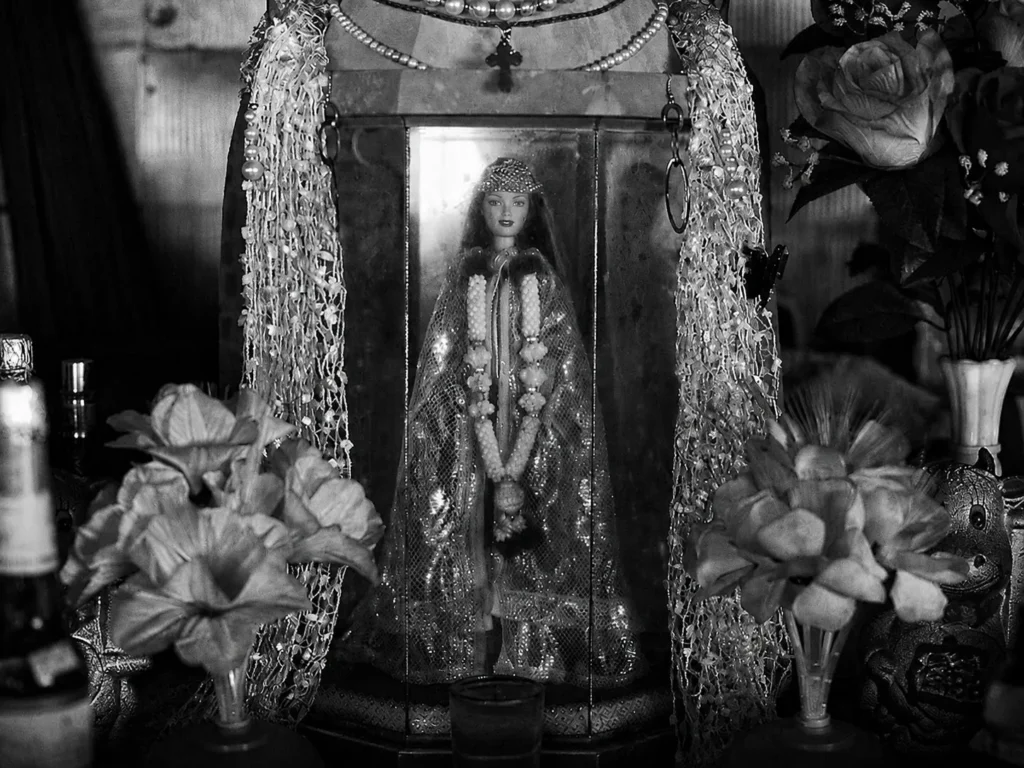
15. The German Girl Shrine Doll (Pulau Ubin, Singapore)
On the small, mostly undeveloped Singaporean island of Pulau Ubin sits a modest yellow shrine known as Berlin Heiligtum, or the “Berlin Shrine.” According to the most widely repeated version of its origin story, a German family was living on the island around 1914, operating a coffee plantation, when British colonial forces arrived to detain German nationals at the outbreak of the First World War.
The family’s teenage daughter is said to have fled into the surrounding hills and fallen to her death from a cliff. Local workers later found and buried her remains, building a small shrine that, over the decades, grew into a folk-deity site known as “Na Du Gu Niang,” or the Datuk Maiden — visited mainly by gamblers hoping for good luck.
The doll enters the story decades later. Sometime in the mid-2000s, a former Ubin resident living in Australia reportedly dreamed of the girl for three consecutive nights, in which she asked him to buy a specific Barbie doll and bring it to her shrine. He did exactly that, and the doll has remained on the altar ever since, surrounded by offerings of perfume, makeup, and nail polish left by visitors hoping for blessings.
What makes this entry genuinely unusual among most haunted doll legends is that it has been the subject of serious historical scrutiny. Researcher William L. Gibson spent years digging through colonial-era property and shipping records and found no evidence that a German family or a missing girl ever existed on Pulau Ubin in 1914.
His research instead points to the shrine likely originating from a far older Malay tradition of “datuk keramat” worship, in which sacred ant or termite mounds were venerated as guardian spirits — meaning the German girl backstory, and the doll along with it, may be a twentieth-century invention layered on top of a much older form of folk worship. It remains one of the most peaceful entries on this list: no reports of violence, only good fortune sought by visitors who leave a doll as an offering rather than fear one.
You may also enjoy:
Glasya-Labolas: The Griffin-Winged Demon of Blood and Wisdom
August 21, 2025
Complete Guide to Oregon Bigfoot Sightings (1904–2025)
August 6, 2025
The Edmund King House Haunting: Montevallo’s Most Terrifying Legend
September 3, 2025
What Is a Vila? The Beautiful Yet Deadly Spirit of Slavic Myth
September 11, 2025
14. The “Voodoo Doll” of Galveston, Texas
Far less documented than most entries on this list, this doll’s story circulated widely online in the mid-2000s. According to the story, a doll originating from New Orleans arrived at the home of a woman in Galveston, Texas, in 2004, shipped in a sealed metal box with handwritten instructions warning the recipient never to remove it, since the doll was “almost alive.” Curiosity won out, and the woman opened the box anyway.
She later claimed the doll began attacking her and haunting her dreams almost immediately, prompting her to list it for resale on eBay. The story took an even stranger turn from there: according to her account, buyers who purchased the doll repeatedly received an empty box in the mail, while the doll itself supposedly turned up back on her own doorstep days later. The cycle reportedly continued several times before a paranormal investigator eventually took permanent possession of it.
Unlike the museum-housed dolls on the list, there is no independent institution preserving records of the case, and the story exists mostly through secondhand retellings rather than firsthand documentation — which is precisely why it sits near the bottom of our list rather than higher up. Still, it remains a frequently cited example of how quickly a single eBay listing could spawn an entire urban legend in the early days of online paranormal communities.
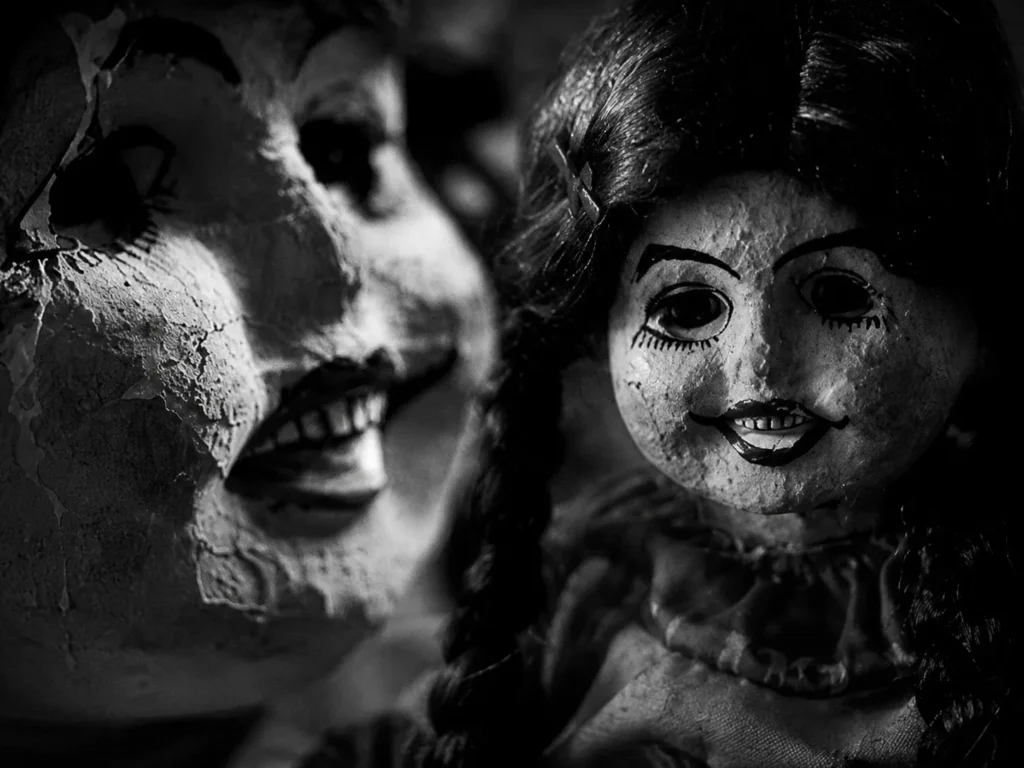
13. The Suzy Doll
In 1983, in West Haven, Connecticut, six-year-old Heather Platt received a handmade, life-sized doll from her aunt as a birthday gift. The doll, made to resemble Heather herself, was named Suzy.
According to the Platt family’s account, strange activity began almost immediately: a low growling sound outside the house at night, a kitchen found completely overturned with no explanation, and unusually heavy furniture stacked on top of a coffee table in configurations the children could not have managed on their own.
The haunting reportedly escalated over time. Heather’s sister Lisa said she once woke up with a perfectly circular bald patch on the back of her head and a fistful of her own hair in her hand.
Family members described the doll repositioning itself around the house — once supposedly found sitting on the toilet — and reported scratches, bruising, and a general sense that the disturbances were always centered on the room where the doll was found. The family eventually contacted demonologist Lorraine Warren, who recommended an exorcism; a priest performed the ritual, after which the family threw the doll away for good.
The Platts’ story was later turned into an episode of Syfy’s documentary series Paranormal Witness, titled “Suzy Doll,” which aired on September 16, 2015.
Unlike most entries on the list of the most haunted dolls in the world, no physical doll survives in a museum or private collection — by the family’s own account, it was discarded decades ago, making Suzy one of the only dolls on the most haunted dolls in the world list that, as far as anyone knows, no longer exists in any traceable form.
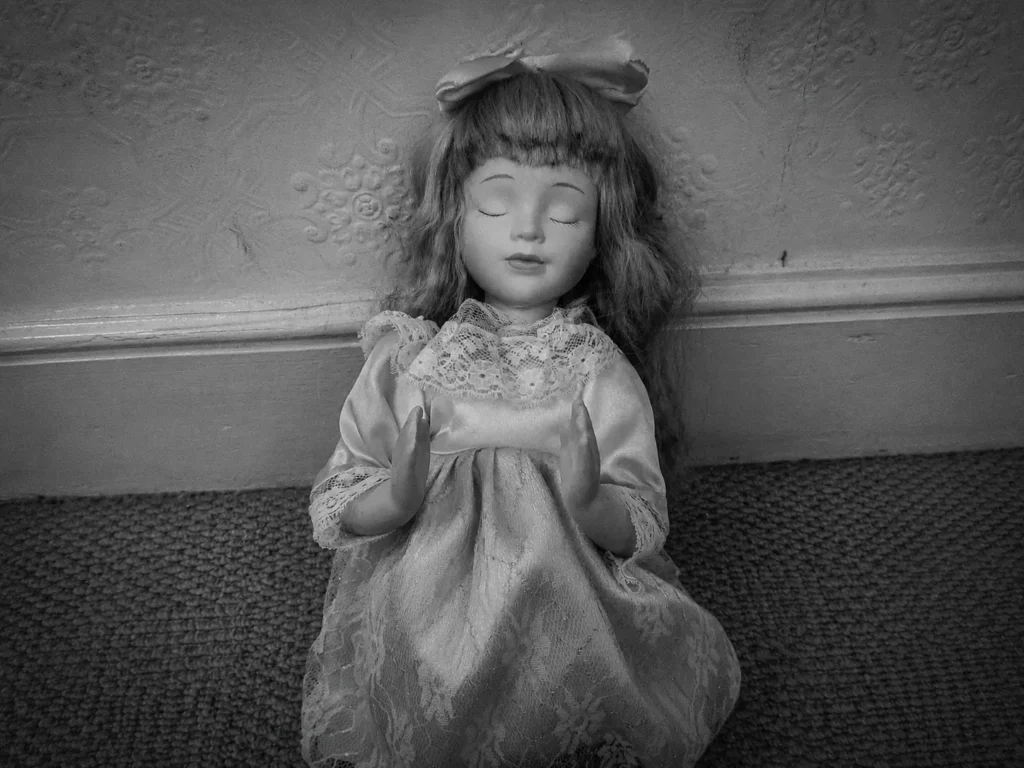
12. Amanda the Doll
Amanda’s bisque head is attributed to the German dollmaking firm of Heinrich Handwerck, a manufacturer active in the late nineteenth century whose doll heads were typically supplied by the Simon & Halbig porcelain factory beginning in the 1880s — although this particular doll’s head reportedly doesn’t have the maker’s mark usually found on authenticated pieces, leaving some doubt about its precise origin.
What is better documented is her more recent history: Amanda was first listed for sale on eBay in 2003 and has, according to multiple accounts, changed hands more than twenty times since.
A pattern allegedly repeats with each new owner: the doll reportedly relocates herself between rooms overnight, causes vivid nightmares, and has even been blamed for unexplained scratches appearing on people while they sleep. Several owners have also claimed her expression appears to shift from neutral to a distinctly unpleasant grin when she is, as some put it, “in tormentor mode.”
The doll’s reputation grew enough to earn her a dedicated chapter in author John Harker’s book True Tales Trilogy: Nightmarish Accounts of Paranormal Activity, helping cement her status within paranormal collecting circles even without the institutional backing of a museum.
11. The Watkins Family “Dollhouse” Dolls
Most haunted-doll cases involve a single object passed down by accident or discovered by chance.
The Watkins family’s collection is different: a husband-and-wife team of paranormal investigators based in Pennsylvania deliberately sought out and purchased eight separate dolls — named Chrystal, True, Monika, Sharla, Isaac, Lilly, Ashley, and Cameron — specifically because each one already carried a reputation for being haunted before it ever entered their home.
Rather than keep the dolls apart, the Watkins family brought all eight together under one roof and set up a continuous, round-the-clock livestream of the collection, which became known online simply as “Dollhouse.” Over several years, followers gathered to dissect footage for signs of movement, shadows, or anything unexplainable.
The most widely circulated clip, captured in 2009, appears to show a shadowy, child-sized entity standing at the bottom of the family’s staircase. The live feed quietly stopped updating in 2015, and detailed public information about the collection’s current whereabouts has been scarce ever since — an unusual case of eight reputedly haunted dolls being deliberately concentrated in a single household rather than kept apart out of caution.
You may also enjoy:
Who Is Iblis in Islamic Mythology?
August 21, 2025
Who Is the Demon Amaimon, the Powerful King of Hell?
April 24, 2025
Echidna: The Mother of All Monsters in Greek Mythology
November 17, 2025
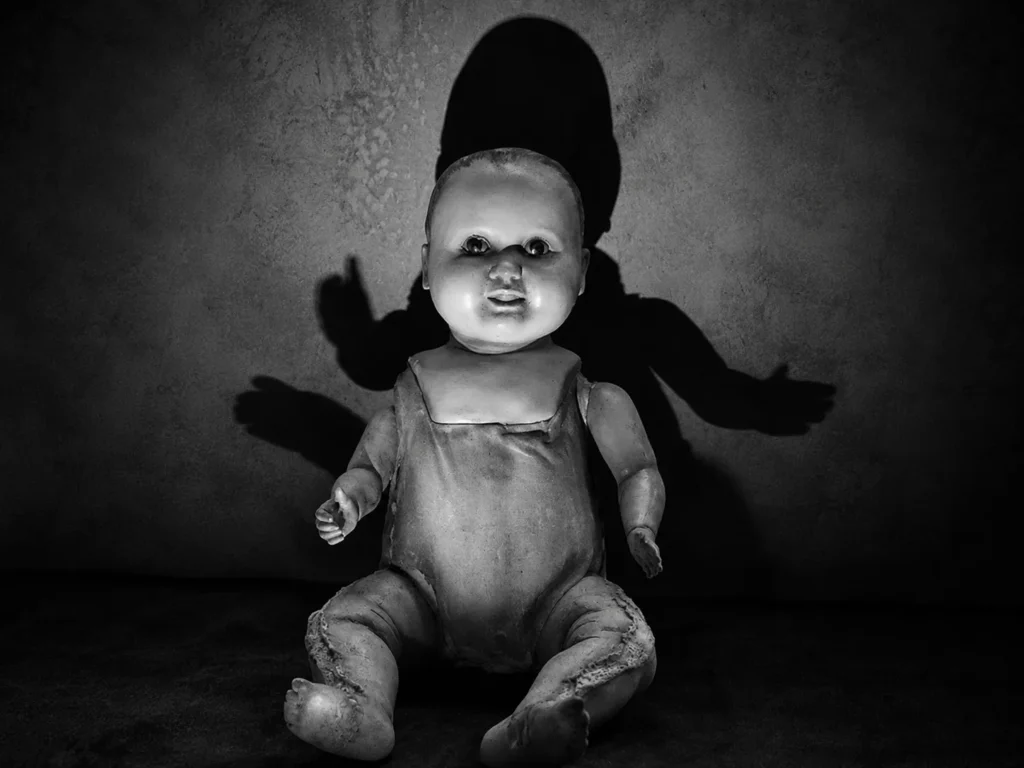
10. Harold the Doll
Harold’s story begins not in a Victorian nursery but on eBay in 2003. A seller using the name Greg posted a listing for a worn, composite-and-plaster doll dating to roughly the turn of the twentieth century, accompanied by a dramatic backstory involving a deceased child and a doll supposedly too cursed to destroy. The listing worked: what Greg originally hoped might fetch $50 instead climbed, fueled by online buzz, to a final winning bid of roughly $700.
The doll passed briefly through the hands of a buyer named Kathy Chruszcz, who herself came to believe the doll was cursed before reselling it in 2004 to paranormal investigator and self-described psychic medium Anthony Quinata, who has owned it ever since. Quinata grew so unsettled by his own experiences that he placed Harold in storage from 2005 until 2013, when renewed public interest convinced him to resume — and make public — his investigation.
He eventually detailed his findings in the 2015 book Harold the Haunted Doll: The Terrifying, True Story of the World’s Most Sinister Doll. The case took an unusual twist when Greg, the original seller, later admitted the entire backstory had been invented purely to drive up the auction price.
Quinata maintains that regardless of its fictional origins, the doll’s effects on the people who have owned it since have been disturbingly real, including reports of headaches, debilitating back pain, and unexplained illness. Harold has since appeared on the Travel Channel’s Ghost Adventures, cementing his reputation as one of the most actively discussed haunted dolls to appear from the early internet era.
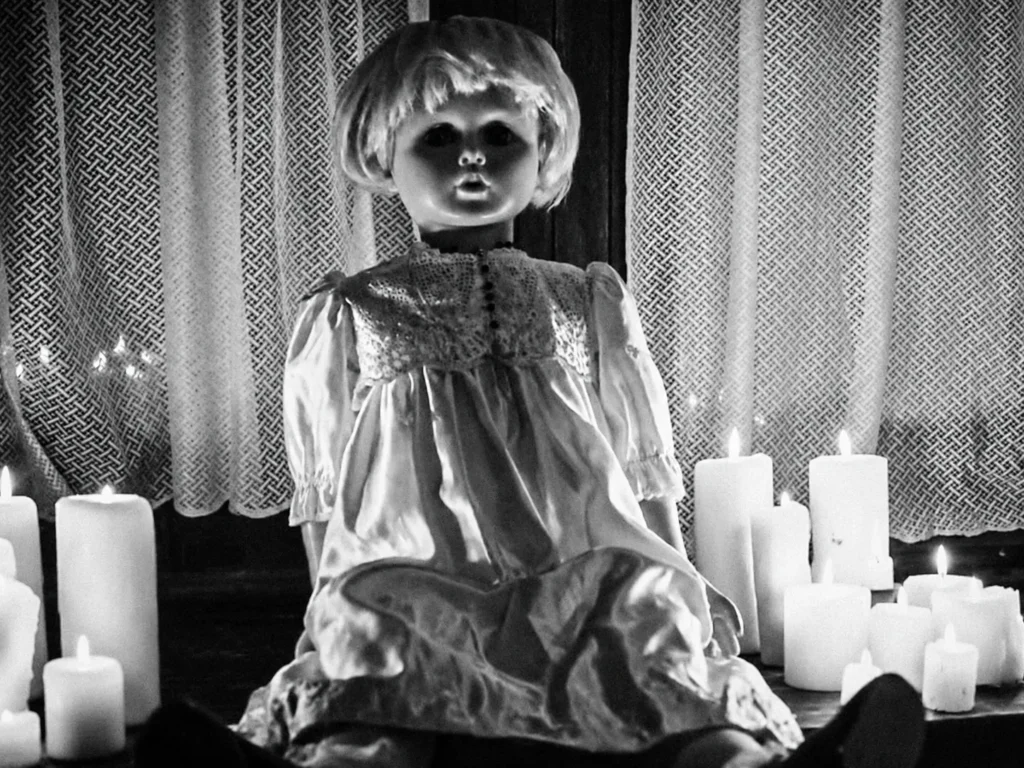
9. Peggy the Doll
Peggy, a roughly three-foot doll with blonde hair and blue eyes dating to the 1940s, was originally purchased at a car boot sale by an owner identified only by the initials “JW.”
According to her account, life fell apart almost immediately afterward — a string of bad luck severe enough that she eventually sought out British paranormal investigator Jayne Harris and asked her to take the doll away entirely.
Harris agreed, and within days of bringing Peggy home, she reportedly became so fatigued she could barely get out of bed, a condition that improved only once a colleague temporarily removed the doll from her house.
When Harris later posted an unlabeled photo of Peggy to social media without explaining who or what it was, she received more than eighty messages within a day from strangers reporting headaches, chest pain, and disturbing dreams after simply viewing the image.
A psychic medium consulted by Harris claimed the doll was inhabited by the spirit of a woman, also named Peggy, born in the mid-1940s, who reportedly died of a respiratory illness and is said to have a particular aversion to clowns.
Harris documented the entire case in her 2017 book, Peggy the Doll: A Very Different Haunting. The doll eventually came into the possession of American paranormal investigator Zak Bagans, who gave her a dedicated room, monitored by cameras around the clock, inside his Haunted Museum in Las Vegas — where she remains one of the museum’s most requested attractions.
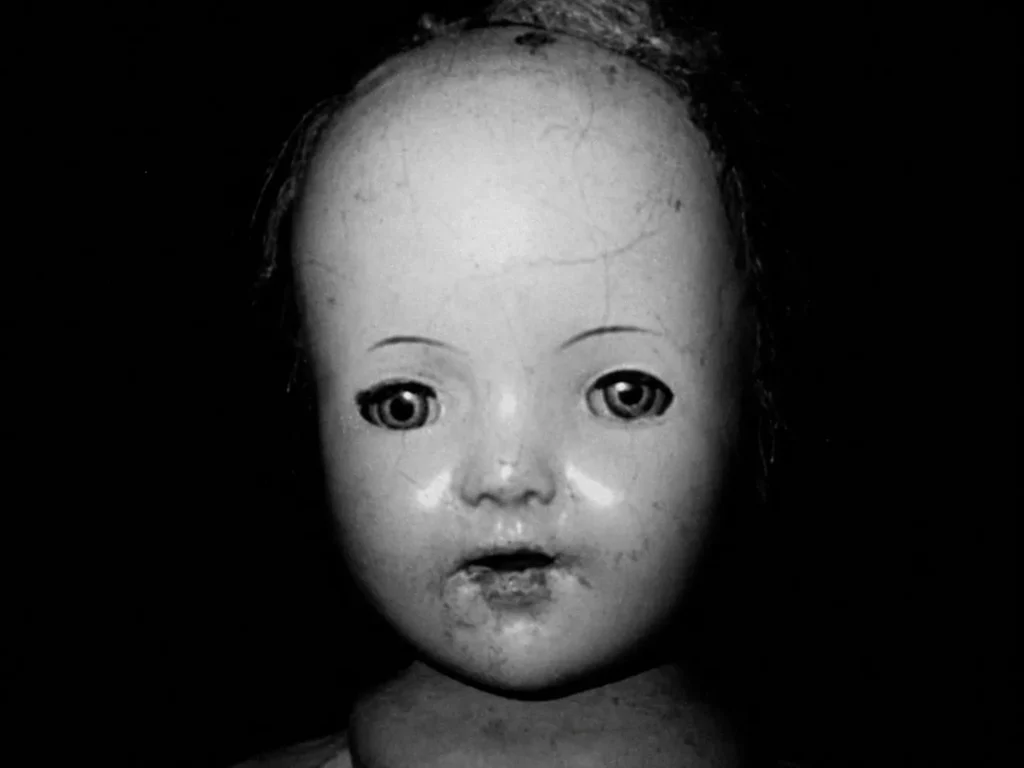
8. Joliet
Joliet’s story has no museum, no eBay listing, and no public address — only a private family and a curse said to have lasted four generations.
According to the doll’s current keeper, who goes by the name Anna, the trouble began when her great-grandmother received Joliet as a pregnancy gift from a friend with whom she had a strained, possibly jealous relationship. Days after the gift was given, the great-grandmother’s newborn son died — exactly three days after birth.
The pattern allegedly repeated itself with uncomfortable consistency across the following generations. Each woman who inherited Joliet gave birth to one boy and one girl, and in every case, the boy reportedly died on his third day of life.
Anna says she can hear the cries of as many as four different infants coming from the doll at once, which she and her family interpret as the trapped souls of every boy lost to the curse — the reason, they say, that no one in the family has ever been willing to destroy or discard it.
No public birth or death records have been produced to verify the pattern across four generations. Some who have examined the story suggest it may function as a kind of “grief myth,” a way of processing a family history that may include cases of sudden infant death, channeled through the more comprehensible narrative of a cursed object rather than tragic coincidence or genetic misfortune.
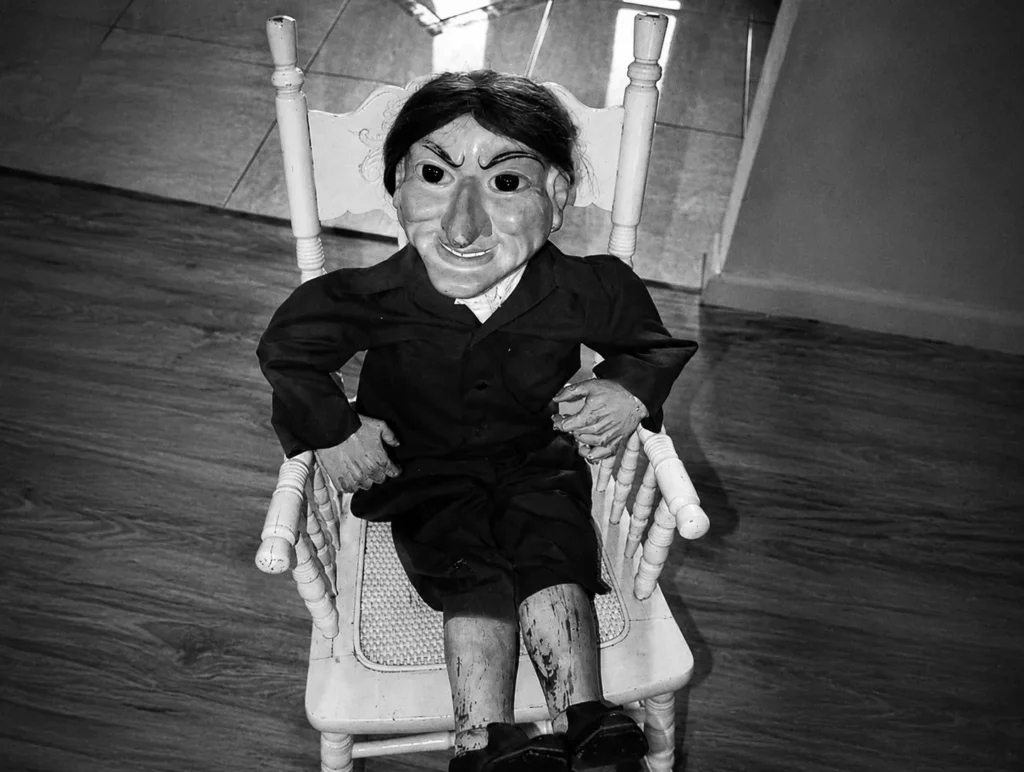
7. Letta Me Out
In 1972, a young man named Kerry Walton returned to Wagga Wagga, New South Wales, for his grandmother’s funeral.
While exploring an abandoned farmhouse with his brother, the pair pried up rotted floorboards and discovered what looked, for one heart-stopping moment, like the body of a child curled beneath the house. It turned out to be a carved wooden marionette with real human hair, later estimated by experts to be around 200 years old based on the nails fixing its joints.
The doll’s now-famous name came from the drive home: as the brothers transported it in a sack in the car, they joked that the bag appeared to be moving on its own, with one of them imitating a muffled voice pleading, “Letta me out!” The name stuck.
Later visits from psychics led Walton to believe the marionette is inhabited by the spirit of a young boy, possibly of Romani or Eastern European origin, who drowned roughly two centuries ago and may have been the inspiration for the doll’s original carving.
In the decades since, Walton — who has kept the doll throughout his life and now lives in Queensland — has reported strange scuff marks appearing on his floors overnight, dogs reacting to the doll with sudden, inexplicable aggression, and a general sense of dread that visitors say settles over them in its presence.
Despite offers to buy Letta over the years, Walton says something always stops him from following through with a sale. He now makes occasional paid public appearances with the doll and maintains active social media accounts written, somewhat unsettlingly, in Letta’s own voice.
You may also enjoy:
Hyakume: The Hundred-Eyed Yokai That Watches from the Shadows
September 10, 2025
What Is a Selkie and Why Is Its Seal Skin So Dangerous?
January 29, 2026
6. Pupa
Made in the port city of Trieste, Italy, in the 1920s, Pupa was crafted to resemble the five- or six-year-old girl who would become her lifelong owner, reportedly even incorporating locks of the girl’s own hair.
Standing roughly 14 inches tall and constructed almost entirely of felt, Pupa traveled an extraordinary amount over the following decades — from Italy to the United States, back to Italy, across a wide stretch of Europe, and finally settling permanently in the United States, all alongside the woman who owned her until her death in July 2005.
Throughout her life, the owner insisted that Pupa was more than an object — she described the doll as her closest confidant, claimed that Pupa had spoken to her over the decades, and even told her grandchildren that the doll had once saved her life, although she never specified how. It was only after her death that Pupa’s behavior reportedly turned unsettling.
The family that inherited her, who have chosen to remain anonymous, describe hearing tapping from inside her display case, only to find the doll’s hand pressed against the glass or her legs crossed in a position no one remembers leaving her in.
In a detail that separates Pupa from almost every other entry on the list of the most haunted dolls in the world, family members have reported that condensation occasionally forms inside the glass case, with words appearing to be traced into it by a small fingertip from the inside.
Pupa’s whereabouts remain unknown to most researchers and paranormal investigators, who have been unable to locate the family that now keeps her.
5. Okiku
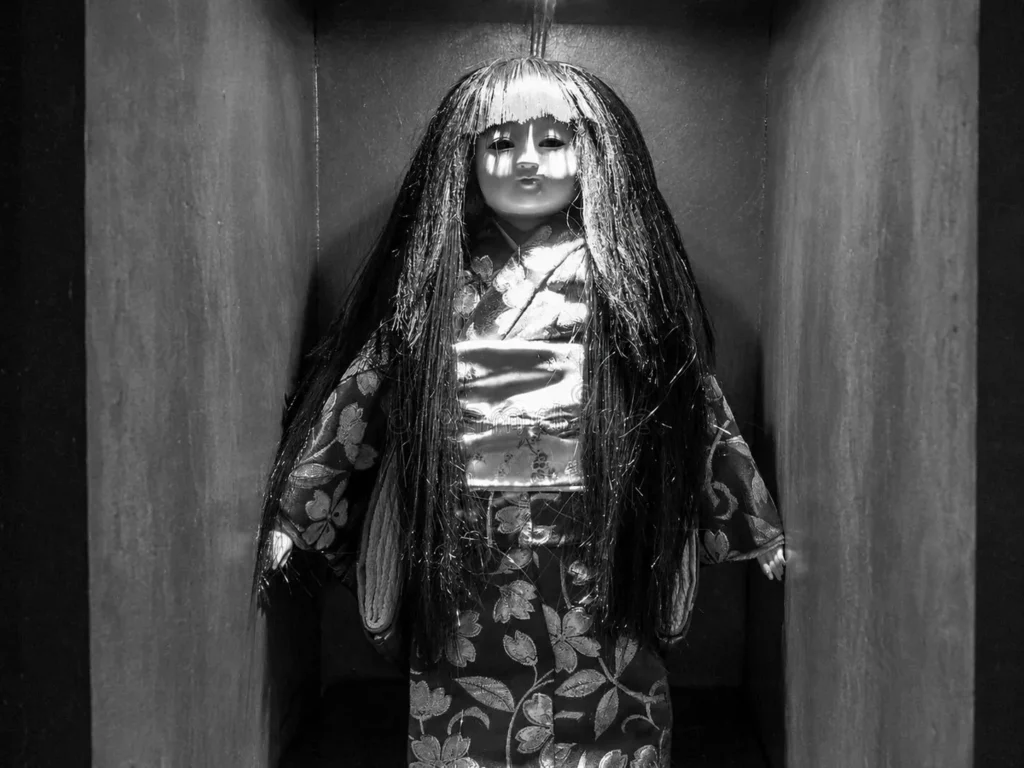
In 1918, a seventeen-year-old named Eikichi Suzuki traveled to an exhibition in Sapporo, Japan, and purchased a traditional doll dressed in a kimono as a gift for his younger sister, who was two or three years old at the time.
The girl, sometimes recorded as Kikuko, adored the doll so much that she renamed it after herself: Okiku. Tragically, she died of a severe fever or influenza the following year, and her grieving family placed the doll on the household’s Buddhist altar in her memory rather than burying it with her as originally intended.
It wasn’t long before the family noticed something profoundly strange: the doll’s hair, originally cut in a short, chin-length bob, appeared to be growing on its own. Convinced the girl’s spirit had taken up residence inside her favorite toy, the family kept the doll until 1938, when they relocated and entrusted it to the care of Mannenji Temple in Iwamizawa, on the northern island of Hokkaido, where it remains to this day.
The hair has reportedly continued growing in the decades since, now reaching down to the knees. It is periodically trimmed by the temple’s monks — one of whom claimed to have dreamed of Okiku herself requesting the haircut before he ever decided to perform one. Laboratory analysis of trimmed samples has reportedly confirmed the hair is genuine human hair, although no scientific explanation has ever been offered for how or why it continues to grow.
Unusually for a list built largely around malevolence, Okiku’s legend contains no record of violence or misfortune; her story is embedded entirely in grief, and she did not become widely known outside Hokkaido until a regional newspaper publicized it in 1970.
4. Mandy the Doll
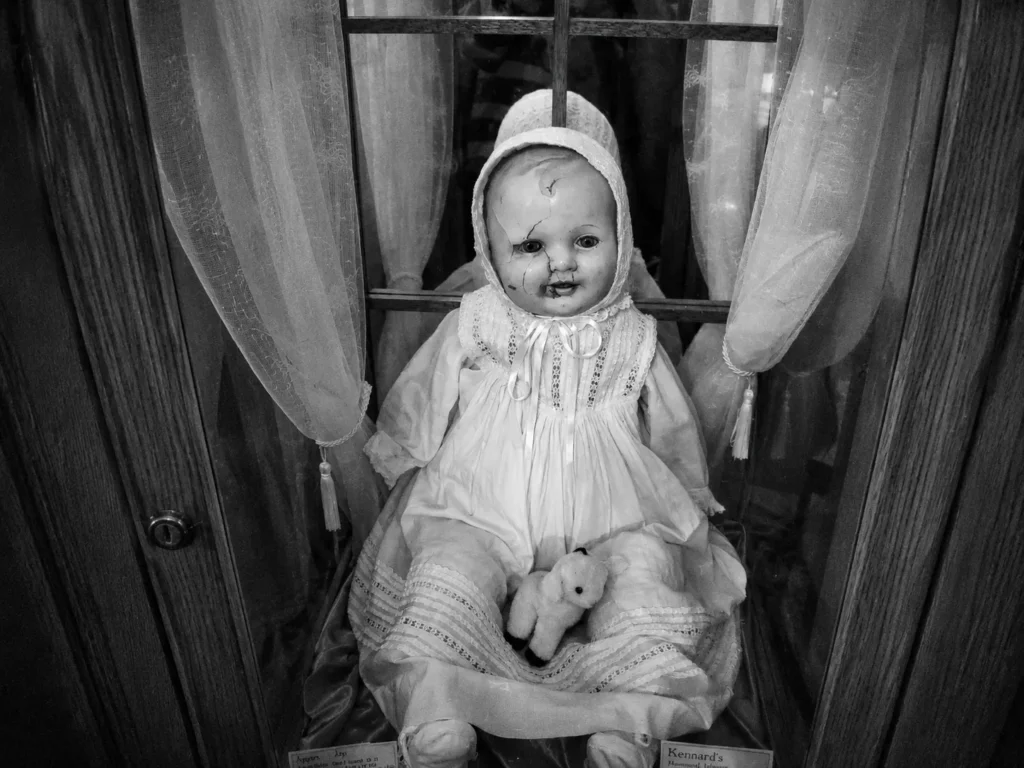
Manufactured somewhere between 1910 and 1920, likely in England or Germany, the porcelain doll now known as Mandy spent decades sealed inside a trunk after her original owners reportedly experienced unspecified “bad things” while a young girl played with her.
In 1991, a woman named Lisa Sorensen, who had inherited the trunk from her grandmother and did not want her own daughter anywhere near its contents, donated the doll to the Quesnel & District Museum and Archives in British Columbia, Canada — but not before describing nights spent listening to what sounded like a baby crying from elsewhere in her house, a sound that stopped entirely the moment Mandy left the property for good.
The museum staff’s first encounter with Mandy set the tone for everything that followed: left alone in a lab overnight to be photographed for the collection, she was found the next morning, the room in total disarray, as though, staff said, a small child had thrown a tantrum.
In the years since, items have gone missing only to reappear in unrelated drawers, a stuffed toy lamb kept in her case for company has repeatedly turned up outside her locked display, and cameras and recording equipment have reportedly malfunctioned in her presence. Staff and visitors alike claim her eyes seem to track them around the room, no matter where they stand.
Mandy’s fame eventually grew well beyond Quesnel: in April 1999, she traveled to New York City to appear on The Montel Williams Show alongside psychic medium Sylvia Browne. Today, museum staff often refer to her affectionately as “Canada’s Annabelle,” and visitors can scan a QR code installed near her case to hear the full story for themselves.
You may also enjoy:
Complete Guide to Iowa Bigfoot Sightings (1965–2025)
July 28, 2025
Succubus: The Demon That Haunts Dreams
August 28, 2025
Who Is Dagon? The Demon That Rose from Ancient Seas
September 29, 2025
Scylla: The Ancient Sea Monster That Haunted the Strait of Messina
November 17, 2025
3. Island of the Dolls (Isla de las Muñecas)
Floating among the canals of Xochimilco, just south of Mexico City, sits a small island unlike anywhere else on this list — not the home of one haunted doll, but of thousands.
The island’s transformation began sometime in the 1950s, when a reclusive man named Don Julián Santana Barrera, who had left his family to live in near-total isolation, reportedly discovered the body of a young girl who had drowned in the canal near his home. The following day, he found a doll floating in the same water and, believing it belonged to the girl, hung it from a nearby tree as both a memorial and a talisman against her restless spirit.
That single doll became an obsession. Over the next fifty years, Santana Barrera scoured trash heaps and canals for more discarded dolls, even trading vegetables from his garden for additional ones brought to him by neighbors, hanging each new acquisition from the island’s trees regardless of how damaged or incomplete it was — some missing limbs, heads, or eyes.
By the time of his death in 2001, the island held what would eventually grow into thousands of dolls. In a detail that has unsettled visitors for decades, Santana Barrera’s nephew found him dead, face down in the canal, in the exact spot where he claimed to have found the drowned girl half a century earlier — though his own family has long disputed whether the girl ever existed at all.
Since opening to tourism, visitors have reported the island’s dolls appearing to move their heads and limbs, open their eyes, and whisper to one another in the wind. In 2022, Guinness World Records officially recognized the island as home to the largest single collection of haunted dolls anywhere in the world.
As of early 2025, however, reports suggest that public access to the original island has become a lot more limited, with some tour operators directing visitors to alternative, similarly themed sites instead.
2. Robert the Doll
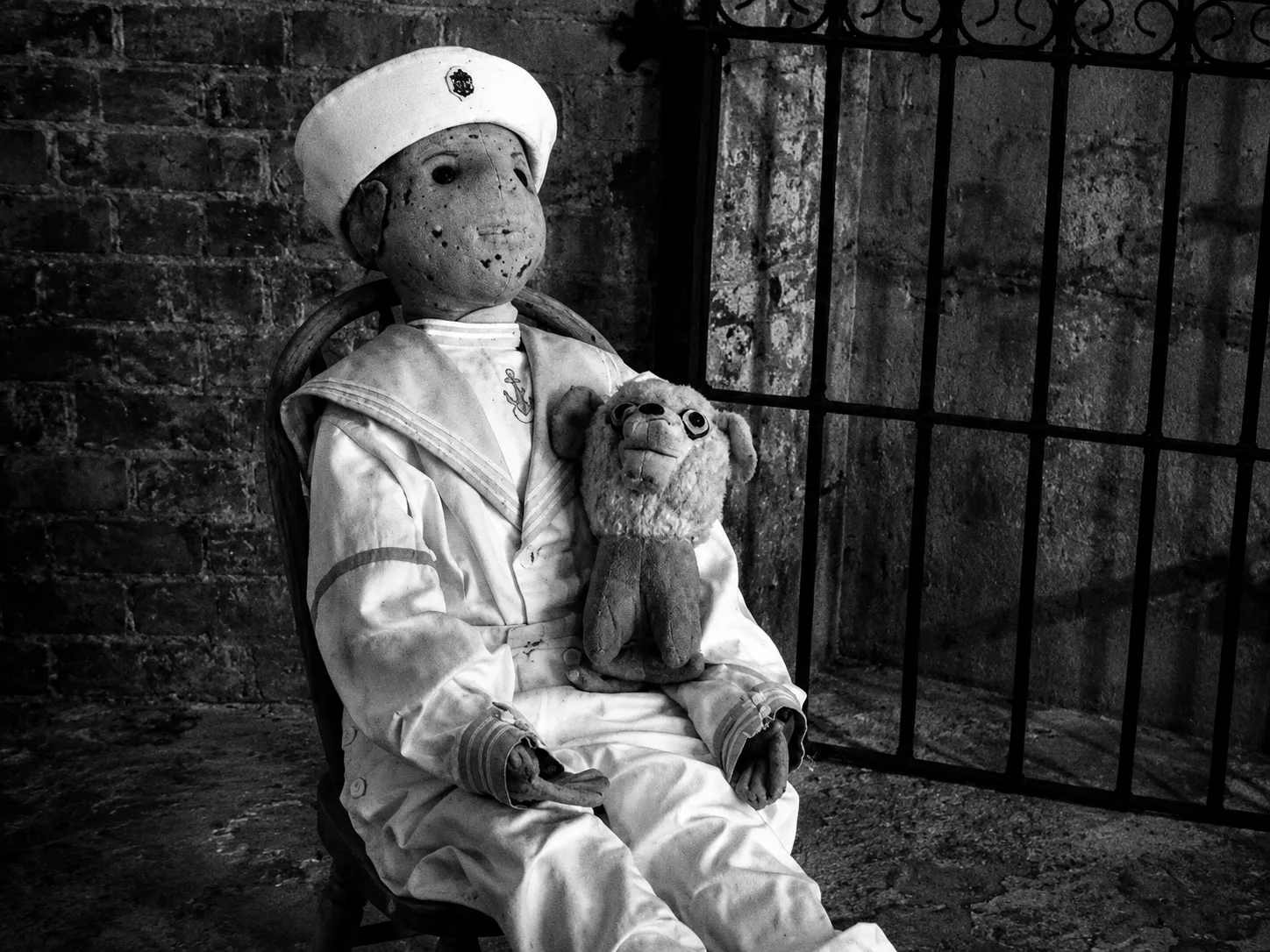
Robert is widely regarded by researchers, museum curators, and paranormal investigators alike as the most haunted doll in the world — a title earned over more than a century of continuous, documented strangeness.
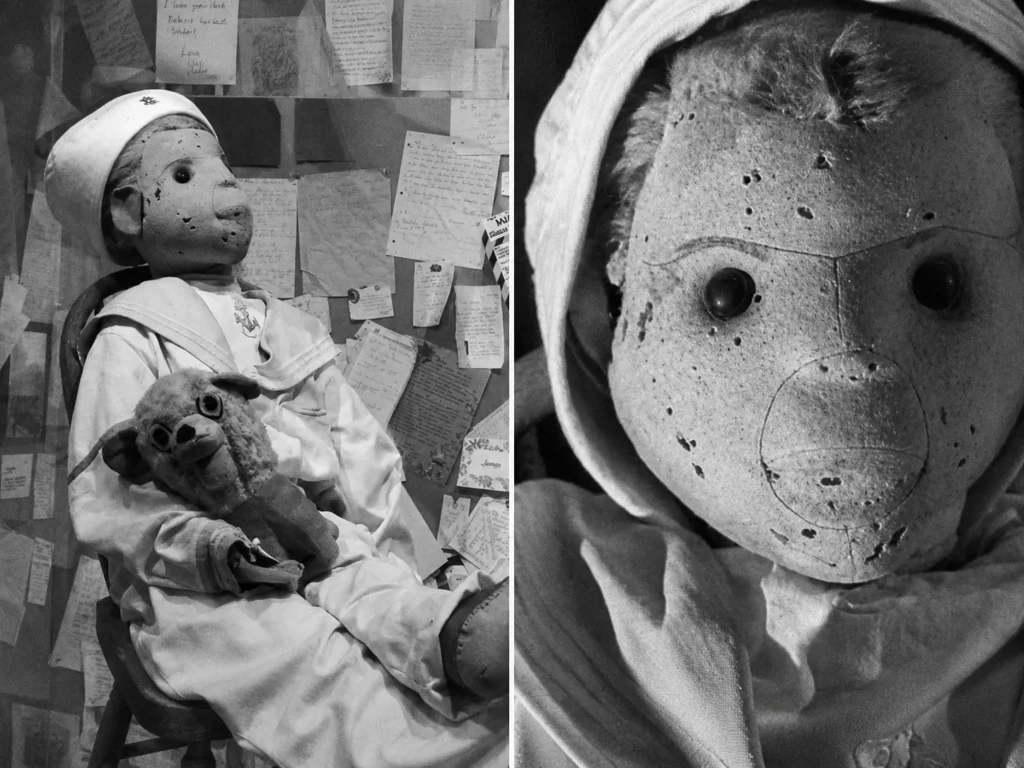
The doll was likely manufactured by Germany’s Steiff company in the early 1900s and purchased by the grandfather of a young boy named Robert Eugene “Gene” Otto during a trip to Germany around 1904. It was afterward dressed in a sailor suit modeled on an outfit Gene himself had worn as a child. Local legend has it that the doll was either given to or cursed by a servant of Bahamian descent who resented the Otto family. However, firsthand accounts of exactly how Robert came into the household vary.
What is consistent across nearly every version of the story is Gene’s lifelong devotion to the doll. As a child, he reportedly blamed Robert for his own misbehavior, famously insisting “Robert did it” whenever something went wrong in the house. Neighbors claimed to see the doll shifting positions in upstairs windows when the family was away, and the household reported strange laughter and voices for decades.
Gene kept Robert as a companion for nearly seventy years, until he died in 1974. The home’s next owner, Myrtle Reuter, lived there for roughly two more decades, reporting footsteps, giggling, and a doll that seemed to move on its own — before finally donating Robert to the Key West Art & Historical Society in 1994, who placed him on permanent display inside the Fort East Martello Museum, a Civil War-era brick fort in Key West, Florida.
Today, visitors are instructed to politely ask Robert’s permission before photographing him, and the museum receives a steady stream of handwritten apology letters from people blaming the doll for car accidents, broken bones, job losses, and divorces after failing to show him proper respect.
Even celebrities have claimed to be influenced by him: musician Ozzy Osbourne purchased a Robert the Doll souvenir from the museum and later attributed a string of health problems to the toy.
Robert remains on permanent display at Fort East Martello to this day, drawing visitors from around the world specifically to see — and, in many cases, formally greet — the doll many call the single most haunted doll on Earth.
1. Annabelle
If Robert is the doll most often called the world’s most haunted, Annabelle is, without question, the most famous — and the one most consistently described as outright dangerous.
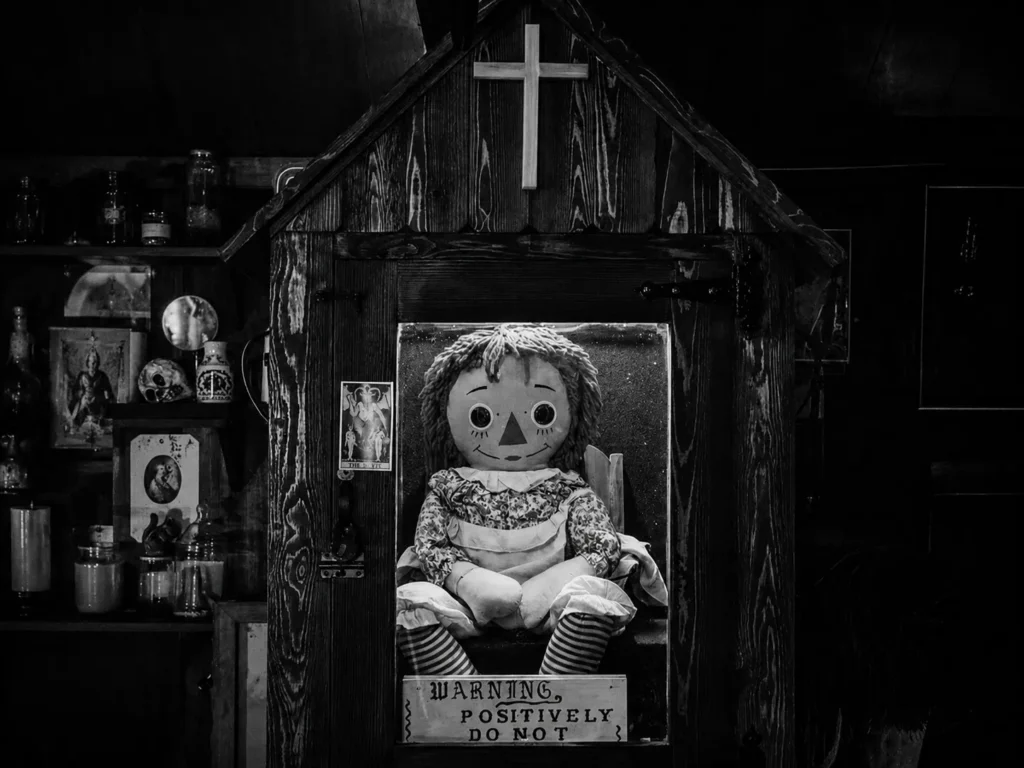
The real Annabelle bears little resemblance to her menacing porcelain counterpart from The Conjuring films; she is, in fact, a soft, ordinary Raggedy Ann cloth doll, given in 1970 to a Hartford, Connecticut, nursing student named Donna as a birthday gift from her mother.
According to the Warrens’ account, Donna and her roommate, Angie, soon noticed the doll repositioning itself around their apartment when no one was home. The disturbances escalated quickly: handwritten notes began appearing on parchment paper, scrawled in a childlike hand with messages such as “Help us,” and the doll was eventually found marked with what looked like blood.
A medium consulted by the women claimed the doll was inhabited by the spirit of a deceased seven-year-old girl named Annabelle Higgins, and out of sympathy, Donna and Angie gave the spirit verbal permission to remain.
Paranormal investigators Ed and Lorraine Warren, brought in through a referral from an Episcopal priest, concluded the women had been deceived: in their assessment, no child’s spirit was involved at all, but rather a demonic entity using an innocent disguise to gain trust, with the eventual goal of fully possessing a human host — a theory the Warrens connected to a violent, unexplained clawing attack suffered by the women’s friend, Lou.
After performing an exorcism on the apartment, the Warrens took the doll into their own custody. They sealed it inside a specially built glass case at their Occult Museum in Monroe, Connecticut, with strict instructions that it never be opened or removed. That museum closed to the public in 2019 following zoning violations, leaving Annabelle’s case effectively in private hands for several years.
In a significant and very recent development, comedian Matt Rife purchased the Warrens’ former home and its entire collection in August 2025, becoming the legal guardian of Annabelle and the rest of the artifacts for at least the next five years — a turn of events that has reignited public fascination with the doll well beyond what The Conjuring franchise originally generated.
Later that same year, Annabelle was even taken on the road for the first time as part of a traveling exhibit, drawing crowds across multiple U.S. cities and, predictably, a fresh wave of unverified rumors and superstitions wherever she stopped.
Whether one credits the legend to genuine demonic activity or to seventy years of skillful storytelling, Annabelle remains the name most universally associated with the most haunted dolls in the world — and the doll most people picture first when the subject comes up at all.
You may also enjoy:
The Japanese Kappa Monster: A Dark Obsession With Humans
September 9, 2025
The Demon Div: The Terrifying Horned Demon of Chaos
October 3, 2025
Mormo: The Terrifying Child-Snatching Monster of Ancient Greece
November 14, 2025
Sources
- Brittle, Gerald. The Demonologist: The Extraordinary Career of Ed and Lorraine Warren. Graymalkin Media, 2013.
- Tony Cornell. (2002). Investigating the Paranormal. New York: Helix Press.
- Pirvulescu, Sergiu. (2021). The existence of paranormal phenomena. ResearchGate.
- Dodwell, Fiona. A Cursed Collection of Haunted Dolls: From Real Life to Literature and Movies. Foreword by Fred Batt, Llewellyn Publications, 2025.
- Harris, Jayne. Peggy the Doll: A Very Different Haunting. CreateSpace Independent Publishing Platform, 2017.
- Negri, Patti. Dollcraft: A Witch’s Guide to Poppet Magick & Haunted Dolls. Foreword by Heather Greene, Llewellyn Publications, 2025.
- Quinata, Anthony. Harold the Haunted Doll: The Terrifying, True Story of the World’s Most Sinister Doll. CreateSpace Independent Publishing Platform, 2015.
- Sloan, David L. Robert the Doll. Phantom Press, 2014.