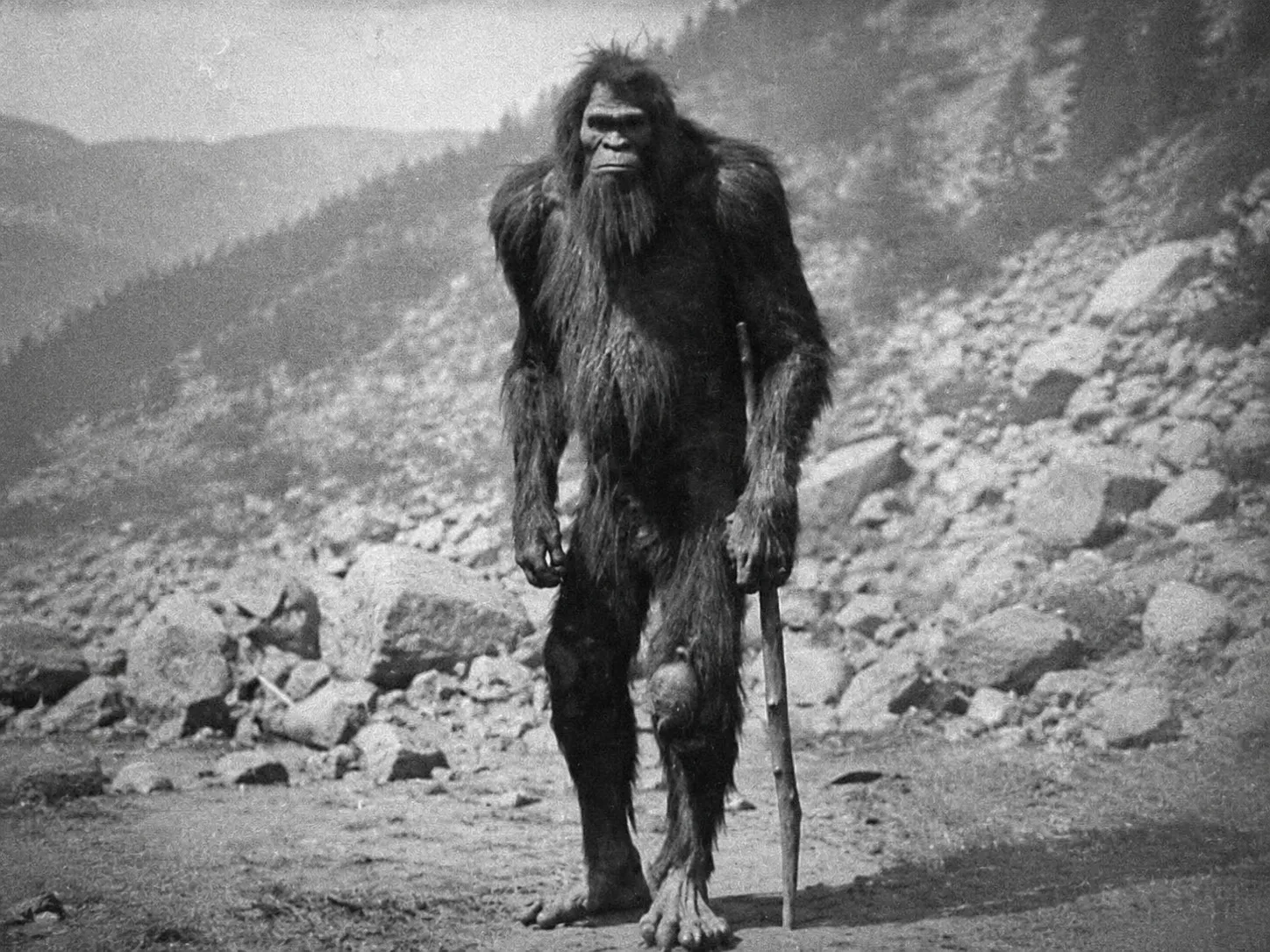
Barmanou is the name given by mountain communities in northern Pakistan and eastern Afghanistan to a hairy, upright-walking wild man said to roam the high forests and ravines of the Hindu Kush — a legend so persistent that it once drew a professional zoologist to spend fifteen years of his life chasing it, and, in the end, cost him that life.
Long before “cryptozoology” became such a worldwide phenomenon, the Barmanou was already the subject of interviews, sketches, plaster footprint casts, and a serious (if controversial) scientific hypothesis.
Summary
Barmanou Infobox
| Attribute | Details |
|---|---|
| Name | Barmanou |
| Aliases | Barmanu, Baddmanus, Banmanus, “Big Hairy One” (translation) |
| Ancestry | Chitrali/Khowar oral folklore tradition of the Hindu Kush, later adopted into Western cryptozoology through Jordi Magraner’s Homo pongoides framework (1987–2002) |
| Species | Speculative hominid (proposed by cryptozoologists as a relict Neanderthal-type population; unconfirmed by mainstream science) |
| CCI Score | 3/10 (Highly doubtful) [See the Cryptid Credibility Index] |
| Threat Level | 🟡 Unpredictable (Keep your distance; wild animal behavior) |
| Height / Weight | 6–8 ft / 183–244 cm tall; weight not documented in any verified witness account or field record |
| Physical Traits | Bipedal, hair-covered body except for face, palms, and soles; human-like face with heavy brow ridge and flat nose; strong unpleasant odor; sometimes described wearing animal skins |
| Habitat | Coniferous forest and alpine pasture above roughly 6,500 ft in the Hindu Kush and Karakoram ranges |
| Core Sighting Corridor | Chitral district (Shishi Kuh valley, Bumburate), Alai valley in Kohistan, Gilgit-Baltistan, extending into Nuristan province, Afghanistan |
| Time Active | Primarily nocturnal and dusk hours; generally avoids daytime human contact |
| Movement | Bipedal walker; reported as agile and capable of climbing steep, rugged terrain |
| First Sighting | 1883–84 (earliest documented written reference, Hazara Gazetteer); oral tradition believed to predate this by generations |
| Last Notable Sighting | Local reports described as ongoing but undocumented in any systematic record since Magraner’s fieldwork ended in 2002 |
| Sighting Frequency | Occasional (based on the 50+ firsthand accounts formally collected by Jordi Magraner between 1987 and the 1990s; likely undercounts generations of undocumented oral tradition) |
| Evidence | Eyewitness accounts, plaster footprint casts (chain of custody unverified after 2002), one disputed and unrecorded audio encounter (1992) |
| Rational Explanations | Misidentified Himalayan brown bear (Ursus arctos isabellinus); cultural transmission of a shared regional folklore archetype; natural rockfall noise mistaken for vocalization |
| Status | Actively part of regional folklore; formal scientific field investigation discontinued since the unsolved 2002 murder of its lead researcher; unconfirmed by mainstream zoology |
Who or What Is a Barmanou?
The Barmanou (also spelled Barmanu, Barmanou, or Baddmanus) is a cryptid — an animal or humanoid whose existence is claimed but not scientifically confirmed — reported from the mountainous districts of northern Pakistan, particularly Chitral, Kohistan, and Gilgit-Baltistan, as well as neighboring parts of Afghanistan. It is described in local oral tradition as a large, bipedal, ape-like being covered in hair over its entire body except for its face, palms, and the soles of its feet.
The name is most often translated as “man of the forest,” “forest man,” or “the big hairy one.” It is considered the regional counterpart to Bigfoot in North America and is geographically positioned between two other famous “wild man” legends: the Yeti of the Himalayas to the east and the Almas of Central Asia to the north and west, placing it squarely within a broader belt of Central and South Asian wild-man folklore that stretches from the Caucasus to Mongolia.
Unlike many cryptids that exist mainly as a single famous sighting or a blurry photograph, the Barmanou is unusual in that it has local names in multiple distinct languages, a body of oral testimony collected systematically over several years, and a documented, named researcher who died while investigating it — facts that set it apart from more purely internet-driven cryptid legends.
Etymology and Regional Names
The most widely cited origin for the name traces it to the Sanskrit compound ban-manus, meaning “man of the forest.” From this root, the term has been absorbed into several regional languages spoken across northern Pakistan, including Khowar (the language of Chitral, where the legend is most concentrated), Shina, Hindko, Pashto, Urdu, and Kashmiri, with local variants including barmanu, baddmanus, and banmanus.
Khowar-language folklore research has grouped the Barmanou alongside a wider cast of feared or revered supernatural and semi-natural beings native to Chitrali oral tradition — figures tied to high pastures, water sources, and the night.
The context matters: it suggests that, before any foreign researcher arrived to treat it as a strict zoological question, the Barmanou was understood locally less as an isolated rogue animal sighting and more as one recognized creature within an established regional cosmology of mountain-dwelling beings.
An interesting linguistic side note: the word “Banmanus” also survives today as the name of an actual forest-dwelling community in the Awadh region of Uttar Pradesh, India—descendants of hunter-gatherers traditionally associated with deep forest life before colonial-era deforestation pushed them into agricultural labor. This is a separate, real ethnic group rather than the cryptid.
Still, the shared etymology illustrates how profoundly the “forest man” concept is embedded across the wider Indo-Aryan linguistic world, well beyond the cryptozoological legend itself.
Physical Description and Alleged Behavior
Descriptions of the Barmanou are fairly consistent across witness accounts collected in Chitral and Kohistan. It is typically described as:
- A large, bipedal, muscular creature, generally estimated at roughly 6 to 8 feet tall
- Covered in dark brown or black hair over the entire body, except for the face, palms, and soles
- Possessing a human-like face with a heavy brow ridge and a flatter nose than a typical ape
- Associated with a powerful, unpleasant odor, often compared to that of a skunk or rotten eggs
- Generally shy, nocturnal, and avoidant of direct human contact, but capable of great strength and agility on steep terrain
Local reports describe the creature inhabiting forested slopes at altitudes of roughly 6,500 feet and above — a zone in Chitral that transitions from cultivated valley floor into coniferous forest and, higher still, into the alpine pasture used seasonally by shepherds.
It is also said, in some regional tellings, to wear animal skins across its back and head — a detail that pushes the legend closer to a “wild man” archetype than to a purely animalistic ape. The same elevation band is also the summer range of the Himalayan brown bear. This fact becomes directly relevant when evaluating possible natural explanations for the legend.
A frequent and distinctive motif in the folklore — one that separates the Barmanou from most other wild-man cryptids — is its alleged attraction to human women, with stories describing it attempting to abduct or mate with them. This “beauty and the beast” theme appears repeatedly in Chitrali oral tradition and gives the legend a narrative flavor closer to folklore about forest spirits than to a simple animal-sighting cryptid like Bigfoot.
Discover More Cryptids:
Complete Guide to Virginia Bigfoot Sightings (1879–2025)
August 8, 2025
Is Batsquatch Real? The Mount St. Helens Mystery
May 20, 2025
What Is Igopogo, the Monster of Lake Simcoe?
May 20, 2025
Jordi Magraner and the Scientific Investigation
The modern, documented history of Barmanou research is inseparable from one man: Jordi Frederico Magraner, a Spanish-born (Casablanca, 1958) zoologist and ethnologist raised in France.
Magraner first traveled to Chitral district between 1987 and 1990, accompanied on part of that early expedition by fellow Frenchmen Yannick and Erik L’Homme, to systematically interview shepherds, woodcutters, and local families about sightings of the wild man they called barmanou. His early findings were compiled into a paper titled Les Hominidés reliques d’Asie Centrale (“The Relict Hominids of Central Asia”).
Encouraged by Bernard Heuvelmans, the Belgian-French zoologist often regarded as the founder of cryptozoology, Magraner continued his fieldwork through the 1990s. According to cryptozoology writer Loren Coleman, Magraner eventually collected more than fifty firsthand sighting accounts.
To standardize witness testimony, he used an identification kit consisting of drawings depicting apes, fossil hominids, aboriginal peoples, monkeys, and the so-called “Minnesota Iceman” — a famous carnival exhibit from the late 1960s that Heuvelmans had argued was the frozen body of a genuine unknown hominid. According to Coleman, witnesses repeatedly and independently selected the Minnesota Iceman image as the best match for what they had seen.
In May 1992 (some sources cite 1994), during fieldwork in the Shishi Kuh valley, Magraner and an associate, Dr. Anne Mallasseand, reported hearing unusual guttural sounds late one evening — vocalizations they believed could only have been produced by “a primitive voice-box.” No recording of the sound was successfully made, and no further physical evidence appeared from that encounter.
In 1998, Magraner founded an organization called GESCH (Groupe d’Études et de Sauvegarde des Civilisations de l’Hindou Kouch — the “Group for the Study and Safeguarding of the Civilizations of the Hindu Kush”), which was dedicated not only to his hominid research but to documenting and supporting the Kalash people, a small polytheistic ethnic and religious minority native to three valleys in Chitral (Bumburate among them), whose population today is estimated at only two to three thousand people and who face ongoing pressure from religious fundamentalism entrenched in the surrounding mountainous terrain.
Part of GESCH’s stated mission was training a new generation of “Conteurs de la tradition” (tradition-bearers or storytellers) to help the Kalash preserve and transmit their oral religious heritage — work that continued alongside, and was arguably as significant as, his cryptozoological fieldwork.
Magraner lived among the Kalash for years, reportedly adopted elements of their religion, and by some accounts lost an earlier teaching position at the Alliance Française in Peshawar amid unproven allegations that were never substantiated in court.
He was also reported, in various unconfirmed accounts, to have had contact with Ahmad Shah Massoud, the Afghan resistance commander, and to have been briefly held by an armed group in Afghanistan’s Nuristan province after crossing the border illegally in pursuit of further leads — an episode he reportedly survived by growing a beard and posing as a convert to Islam.
The Homo Pongoides Theory
The scientific framework Magraner applied to the Barmanou did not originate with him. It came from Bernard Heuvelmans, working in parallel with the Soviet historian Boris Porchnev, and it is worth laying out exactly how that theory was built, since the details matter for judging it fairly.
In late 1968, an aspiring naturalist named Terry Cullen paid to see a touring carnival exhibit at Chicago’s International Livestock Exposition called the “Siberskoye Creature”: a large, hairy, human-like body frozen inside a three-thousand-pound block of ice, owned and shown by an ex-Air Force pilot named Frank D. Hansen.
Cullen alerted two established zoologists, the American Ivan T. Sanderson and the Belgian Bernard Heuvelmans, who traveled to Hansen’s home in Rollingstone, Minnesota, and examined the specimen on-site for three days in mid-December 1968, working through a glass lid and melting ice. Both men came away convinced the body was genuine.
They documented a solid, barrel-chested male roughly six feet tall, with a thick neck, unusually large hands, a flattened face, a short upturned nose, and heavy brow ridges; they also noted an eyeball dislodged from its socket, which Hansen attributed to a gunshot wound to the back of the head, and what appeared to be a fractured forearm.
In February 1969, Heuvelmans published a formal scientific description in the Bulletin de l’Institut Royal des Sciences Naturelles de Belgique, naming the specimen a new, living hominid species: Homo pongoides (“ape-like man”), which he interpreted as a modern-day Neanderthal.
Sanderson did not go as far as Heuvelmans. His own published conclusion described the specimen more cautiously as “some form of primate… an anthropoid,” explicitly declining to endorse the Neanderthal identification or the Homo pongoides name. Within weeks of the scientific announcement, Hansen withdrew the original exhibit, later touring a version he described as a manufactured replica of the “real” specimen, which he claimed had been returned to an anonymous millionaire owner.
No further independent scientific examination of the original body was ever conducted. The Smithsonian Institution’s later inquiries, along with primatologist John Napier’s investigation, concluded that Hansen had commissioned a latex model from a special-effects company in 1967 — meaning the entire specimen on which Homo pongoides was based was very likely an elaborate carnival hoax rather than an actual carcass.
Separately, Boris Porchnev, a Soviet historian rather than a biologist by training, had for years argued that isolated Neanderthal remnant populations survived into the modern era across a broad Central Asian belt — the Caucasus, the Pamirs, Mongolia, and Vietnam — and pointed to regional wild-man legends, most notably the Almas, as living folk memory of these survivors.
Heuvelmans and Porchnev’s theories reinforced one another. They together formed what is sometimes called, in cryptozoological writing, the “de-hominization hypothesis”: the idea that relict Neanderthal groups persisted by becoming increasingly nocturnal, secretive, and confined to remote, forested, or high-altitude terrain specifically to avoid contact with expanding populations of Homo sapiens.
It was this specific, pre-built framework that Magraner imported into his Chitral fieldwork. It is why his witness identification kit deliberately included an image of the Minnesota Iceman alongside drawings of genuine fossil hominids, apes, and aboriginal peoples — he was testing whether Chitrali witnesses would independently select the same visual reference that Heuvelmans had already proposed as a living Neanderthal.
Judged on the science alone, the theory has serious problems that are worth stating plainly. The physical evidence it rests on — the Minnesota Iceman — was never independently authenticated by mainstream scientific institutions and is regarded by the great majority of researchers who have examined the historical record as a manufactured hoax rather than a genuine specimen.
Heuvelmans’s own anatomical reconstruction of the “Neanderthal” nose has also been assessed by later paleoanthropologists as inconsistent with the actual Neanderthal fossil record. And mainstream genetic and archaeological research now dates Neanderthal extinction to roughly 40,000 years ago, following a well-documented period of interbreeding with modern humans that most researchers place between about 50,500 and 43,500 years ago — a chronology built from actual ancient DNA and dated fossil sites, and one that leaves no scientific room for surviving relict populations in the twentieth century.
On strictly evidentiary grounds, the Homo pongoides hypothesis has essentially no support outside cryptozoology.
At the same time, a fair account of this episode should note what cryptozoologists themselves would point out: Heuvelmans was not a fringe amateur but a trained, published zoologist whose broader body of work on unrecognized species was taken seriously enough within zoology to earn him a reputation, in some circles, as the “father of cryptozoology,” and his willingness to formally describe and name a species based on direct physical examination — rather than secondhand testimony alone — was, by his own reasoning, exactly the kind of rigorous approach the field needed to be credible.
Cryptozoology proponents also argue that the failure of one specific piece of evidence, even a central one like the Minnesota Iceman, does not by itself disprove the broader idea that undocumented relict hominid populations could exist in some of the most remote, least-surveyed mountain terrain on Earth; the history of zoology does include real, delayed discoveries of large animals in remote regions.
Where the two sides genuinely part ways is on burden of proof: mainstream science treats an extraordinary claim like a surviving Neanderthal population as requiring extraordinary physical or genetic evidence before serious consideration, while cryptozoological researchers like Magraner treated consistent, cross-referenced eyewitness testimony as sufficient grounds to justify years of continued field investigation. Both positions are internally coherent; they simply apply a different evidentiary standard to the same lack of a body.
Discover More Cryptids:
Pope Lick Monster: Louisville’s Most Haunted Cryptid
September 26, 2025
The Nandi Bear: Africa’s Terrifying “Brain-Eating” Cryptid
November 11, 2025
Alabama White Thang: Every Confirmed Hotspot, Mapped
April 15, 2025
The Unsolved Murder of Jordi Magraner
On Friday, August 2, 2002, Magraner, then 44 years old (some contemporary reports gave his age as 35), was found dead in a rented house in the village of Krakal near Bumburate, in Chitral’s Kalash valley, after having lived in the region for roughly fifteen years.
His throat had been cut with a sharp weapon. His 12-year-old servant, named in press reports as Wazir Ali Shah, was found murdered alongside him in the same manner. A second domestic employee, a 20-year-old Afghan refugee named Asif Ali, had vanished and was never located. Police reported that a computer and a satellite phone were missing from the house, and that Magraner’s guard dogs — animals he was known to keep as a form of night security — appeared to have been drugged before the attack.
He had been due to return to France the following month. No one has ever been convicted of the killings, and the case remains formally unsolved to this day. At the time, Pakistani newspapers ran the story under headlines such as “Yeti hunter found murdered.”
Theories about the motive varied widely: some speculated he had been mistaken for a foreign intelligence operative amid post-9/11 tensions in the region; others pointed to rumors of a personal or “crime of passion” motive; others suspected fundamentalist hostility toward his advocacy for the pagan Kalash minority. A three-day funeral was held, and Magraner — who had by then been informally absorbed into Kalash community life — was buried in the community’s own cemetery, an honor rarely extended to outsiders.
The case later became the subject of a full nonfiction book by Spanish writer Gabi Martínez, published in Spanish as Sólo para gigantes and in English as In the Land of Giants: Hunting Monsters in the Hindu Kush (2011, translated by Daniel Hahn).
Martínez spent months interviewing Magraner’s family in France and traveled to Chitral himself in 2009 to retrace his subject’s final years. The book treats Magraner’s story as much as a portrait of obsession, exile, and life among the Kalash as a cryptozoological investigation. It remains the most in-depth independent account of both the man and the unresolved circumstances of his death.
Barmanou Compared to Other Wild Man Cryptids
| Cryptid | Danger Level | Details |
|---|---|---|
| Yeti | ⚠️ MEDIUM. Folklore describes it as territorial and capable of killing yaks or attacking isolated travelers in high-altitude terrain, though no confirmed human deaths are attributed to it. | Sherpa tradition actually distinguishes between several types of Yeti, including a smaller, more aggressive variant called the “Chuti” and a larger, more docile mountain-dwelling type. |
| Almas | 🕊️ LOW. Described in Central Asian folklore as shy and avoidant, with most accounts describing distant sightings rather than any direct confrontation. | Soviet-era researcher Boris Porchnev organized formal government-linked expeditions into the Pamirs and Caucasus during the 1950s–60s specifically to search for the Almas, treating it as serious state-funded scientific inquiry rather than folklore. |
| Bigfoot (Sasquatch) | ⚠️ MEDIUM. The overwhelming majority of reports describe brief, non-violent sightings, though a minority of accounts describe aggressive vocalizations, thrown rocks, or property destruction near campsites. | The Pacific Northwest’s indigenous oral traditions describe dozens of regionally distinct wild-man figures long before the term “Bigfoot” was coined by a California newspaper in 1958. |
| Yeren | ⚠️ MEDIUM. Chinese folklore from the Hubei region describes occasional aggressive encounters, though most documented reports involve the creature fleeing from human contact. | China’s Hubei province funded a large-scale, multi-week scientific expedition into the Shennongjia forest region in 1977 specifically to investigate Yeren reports, one of the most serious government-backed cryptid investigations in modern history. |
| Orang Pendek | 🕊️ LOW. Described in Sumatran folklore as a small, shy, forest-dwelling primate that actively avoids humans rather than confronting them. | Unlike most wild-man cryptids, the Orang Pendek is consistently described as only about 3 feet tall, making it closer in scale to a large primate than a human-sized hominid. |
| Skunk Ape | 🕊️ LOW. Florida folklore describes it as reclusive and non-confrontational, best known for its overpowering smell rather than any aggression. | Its name comes directly from witness reports of an intense, sulfurous odor, which some researchers have proposed links the legend to swamp gas or decomposing vegetation in the Everglades rather than an animal at all. |
| Yowie | ⚠️ MEDIUM. Australian Aboriginal and settler-era accounts describe occasional threatening behavior, including thrown objects and loud vocalizations directed at intruders near its territory. | Yowie folklore predates European settlement of Australia, appearing in Aboriginal oral tradition under regional names long before the modern portmanteau term entered popular use. |
| Mande Barung | ⚠️ MEDIUM. Reports from India’s Garo Hills describe a large, powerful animal capable of damaging crops and property, though direct attacks on humans are rarely claimed. | The name translates literally to “forest man” in the Garo language, making it a direct linguistic parallel to the Barmanou despite the two legends originating over a thousand miles apart. |
| Hibagon | 🕊️ LOW. Japanese witness reports from Hiroshima Prefecture consistently describe a shy creature that fled from every recorded encounter rather than confronting witnesses. | Nearly all documented Hibagon sightings cluster within a single five-year window (1970–1974) around Mount Hiba, making it one of the most tightly time-bound cryptid flaps ever recorded, complete with contemporary local police reports. |
| Nguoi Rung | ⚠️ MEDIUM. Vietnamese accounts from the Central Highlands describe an elusive, human-like forest dweller occasionally blamed for livestock disturbances, though not for direct human harm. | Reports of the Nguoi Rung (“forest person”) notably increased among American and Vietnamese soldiers during the Vietnam War, who described encounters with a hairy, upright figure while operating in dense jungle terrain. |
| Ebu Gogo | 💥 HIGH. Flores Island oral tradition explicitly describes the Ebu Gogo as a threat to children, with legends culminating in villagers deliberately driving the creatures to extinction out of fear. | Some paleoanthropologists have speculated that Ebu Gogo folklore may represent a genuine cultural memory of Homo floresiensis, the diminutive extinct human species whose fossils were discovered on the same island in 2003. |
Geographically, the Barmanou occupies an important middle position in the broader map of Eurasian wild-man legends. Its reported range — the Hindu Kush and Karakoram ranges, between the Pamirs and the western Himalaya — sits directly between the territory associated with the Almas of Central Asia (reported across Mongolia, the Caucasus, and the Pamirs) and the Yeti of the Himalayas further east.
Cryptozoologists sympathetic to the relict-hominid hypothesis have long pointed to this geographic continuity as circumstantial support for the idea that these are regional names for a single, continuous phenomenon rather than unconnected local legends — though this remains an unproven and largely fringe interpretation.
Compared to Bigfoot, the North American cryptid it is most often likened to in casual description, the Barmanou legend is distinguished by its much stronger folkloric emphasis on human-like intelligence and behavior, including the regular theme of pursuing human women, rather than being portrayed as a purely animalistic, ape-like beast.
Is the Barmanou a Real, Undiscovered Hominid?
The honest answer requires holding two things at once: the case for the Barmanou is more substantial, in terms of documented fieldwork, than most cryptids ever receive — and it still falls well short of anything mainstream science would treat as evidence of an undiscovered hominid.
What actually exists in the record. Unlike a cryptid sustained mainly by a single photo or one viral story, the Barmanou case includes more than fifty firsthand witness interviews collected by a trained zoologist using a standardized identification method, plaster casts of alleged footprints, one disputed and unrecorded audio encounter reported by two investigators together, and a consistent physical description frequent across geographically separated, culturally distinct valleys that historically had limited contact with one another.
From a cryptozoological standpoint, that last point is treated as meaningful: independent, cross-valley consistency in witness description is exactly the kind of pattern the field considers suggestive, since it is harder to explain as simple copying from a shared media source in a region with low literacy and limited outside media penetration during the decades most of this testimony was gathered.
What is missing, and why mainstream science treats that as decisive. No bone, tooth, hair sample subjected to conclusive DNA analysis, scat, or verified photograph has ever been produced or independently authenticated.
The footprint casts were never subjected to peer-reviewed forensic analysis before Magraner’s death, and no chain of custody for them has been verified since.
The one audio encounter was never recorded. This matters because the standard mainstream primatology and paleoanthropology apply here is not unique to the Barmanou — it is the same standard applied to any claimed large-bodied mammal: for a population of large, warm-blooded animals to exist undetected across generations, it would need to leave a fossil, skeletal, or genetic trace somewhere in the record, and over a century of regional archaeological and biological survey work across South and Central Asia has produced no such trace.
Geneticists have also now dated the actual extinction of Neanderthals to roughly 40,000 years ago based on direct ancient-DNA analysis, closing the specific “surviving Neanderthal” version of the Barmanou hypothesis on genetic, rather than merely circumstantial, grounds.
The middle-ground, most probable explanation. Several skeptical but non-dismissive explanations have been proposed over the decades, and they don’t require assuming Chitrali and Kohistani witnesses were lying.
The Himalayan brown bear (Ursus arctos isabellinus) inhabits the same elevation band described in Barmanou sightings, is capable of standing and moving bipedally for short stretches, and can appear strikingly human-like in silhouette and gait at dusk or from a distance — a known source of “wild man” misidentification in bear-range folklore worldwide, not just in Pakistan.
Cultural transmission of a shared regional folklore archetype, reinforced generation to generation independent of any single real animal, is also a well-established process in oral-tradition societies. And in at least one case investigated directly by Magraner’s own team, an anomalous sound was later reconsidered as possibly originating from natural rockfall rather than a vocalization — a useful reminder that even trained investigators in the field sometimes revise their own interpretation of ambiguous evidence.
Where that leaves the question. None of this proves the Barmanou does not exist, and it would be inaccurate to claim otherwise — cryptozoology as a discipline is explicitly concerned with unconfirmed rather than disproven animals, and lack of evidence in famously difficult, low-access terrain is not, strictly speaking, evidence of absence. But it is equally inaccurate to treat witness testimony and a discontinued, unfinished investigation as equivalent to scientific confirmation.
The case currently rests entirely on testimony, and the only researcher who might have eventually converted that testimony into something more rigorous was murdered before he could complete the work. What remains is a genuinely well-documented folklore and field-investigation case — unusually strong by cryptid standards — that has simply never crossed the evidentiary threshold that would move it out of cryptozoology and into recognized zoology.
Frequently Asked Questions
Does the word “Barmanou” have any documented use outside of the cryptid legend?
Yes. The related term “Banmanus” is also the name of a real, officially recognized forest-dwelling community in the Awadh region of Uttar Pradesh, India, with a documented population in the tens of thousands. This group has no connection to the cryptid beyond sharing the same Sanskrit-derived root meaning “forest people.” Still, it shows how profoundly embedded the underlying language concept is across the region.
Was Jordi Magraner’s killing ever officially solved?
No. As of the most recent published investigations into the case, including a book-length inquiry by journalist Gabi Martínez published nearly a decade after the murder, no suspect has ever been formally convicted. Pakistani police were never able to conclusively establish a motive, despite competing theories involving espionage suspicion, personal conflict, and hostility linked to Magraner’s advocacy for the Kalash minority.
What was the “Minnesota Iceman” that keeps coming up in Barmanou research?
It was a hairy, human-like frozen body displayed as a sideshow carnival attraction across the United States in the late 1960s. Zoologist Bernard Heuvelmans examined it in 1968 and proposed it represented an unknown living hominid species he formally named Homo pongoides. The specimen was never independently authenticated by mainstream scientists. It later disappeared from public exhibition, but it became a reference image that Magraner used specifically because Chitrali witnesses reportedly recognized it as resembling what they had seen.
Did Magraner work alone, or was his research affiliated with any organization?
He worked largely independently but was encouraged early on by Bernard Heuvelmans, and in 1998 he founded his own organization, GESCH, to formalize both his hominid fieldwork and his separate, extensive documentation of Kalash culture and religion — work considered valuable in its own right by ethnographers regardless of the cryptid question.
Is the Barmanou legend connected to any real, documented animal in the Hindu Kush region?
The Himalayan brown bear is native to the same mountain ranges associated with Barmanou sightings and is frequently cited by skeptics as a likely source of at least some encounters, since it can stand and move bipedally for short distances and inhabits the same high-elevation forest and pasture zones described in witness testimony.
What actually happened to the “Minnesota Iceman” specimen that influenced Magraner’s methodology?
After being examined by Sanderson and Heuvelmans in December 1968, the original touring exhibit was withdrawn by its owner, Frank Hansen, who then displayed what he described as a manufactured replica, claiming the “real” specimen had been returned to an anonymous private owner. A later investigation involving primatologist John Napier and the Smithsonian Institution concluded that Hansen had commissioned a latex model from a special-effects company in 1967, meaning no verified original body was ever available for independent scientific study.
How large is the geographic area historically associated with Barmanou sightings?
Reports cover a wide corridor of the Hindu Kush and Karakoram ranges, including Chitral district (especially the Shishi Kuh valley and Bumburate), the Alai valley in Kohistan district, and parts of Gilgit-Baltistan. This mountainous zone also extends into Afghanistan’s Nuristan province, one of the least accessible and least surveyed regions in South Asia.
Discover More Cryptids:
The Lake Tanganyika Monster: A Living Prehistoric Beast?
November 10, 2025
Sources
- Heuvelmans, Bernard. Note préliminaire sur un spécimen conservé dans la glace, d’une forme encore inconnue d’hominidé vivant: Homo pongoides (sp. seu subsp. nov.). Bulletin de l’Institut Royal des Sciences Naturelles de Belgique, vol. 45, 1969, pp. 1–24.
- Heuvelmans, Bernard, and Boris F. Porchnev. L’Homme de Néanderthal est toujours vivant. Bibliothèque Heuvelmansienne, vol. 3.
- Magraner, Jordi. Notes sur les hominidés reliques d’Asie centrale: district de Chitral, NWFP, Pakistan. 1992.
- Martínez, Gabi. In the Land of Giants: Hunting Monsters in the Hindu Kush. Translated by Daniel Hahn, 2017.
- Newton, Michael. Encyclopedia of Cryptozoology: A Global Guide to Hidden Animals and Their Pursuers. McFarland & Company, 2009.
- Hazara Gazetteer, 1883–84. Lahore, 1884.
- Ludovic Slimak, Tharsika Vimala, Andaine Seguin-Orlando, Laure Metz, Clément Zanolli, Renaud Joannes-Boyau, Marine Frouin, Lee J. Arnold, Martina Demuro, Thibaut Devièse, Daniel Comeskey, Michael Buckley, Hubert Camus, Xavier Muth, Jason E. Lewis, Hervé Bocherens, Pascale Yvorra, Christophe Tenailleau, Benjamin Duployer, Hélène Coqueugniot, Olivier Dutour, Thomas Higham, Martin Sikora. Long genetic and social isolation in Neanderthals before their extinction. Cell Genomics, Volume 4, Issue 9, 2024, 100593, ISSN 2666-979X.
- Schembri, Elise. Cryptozoology as a pseudoscience: beasts in transition. Studies by Undergraduate Researchers at Guelph Vol. 5, No. 1, Fall 2011, 5-10.
- Rossi, Lorenzo. (2015). A Review of Cryptozoology: Towards a Scientific Approach to the Study of “Hidden Animals”. 10.1007/978-3-319-22246-2_26.