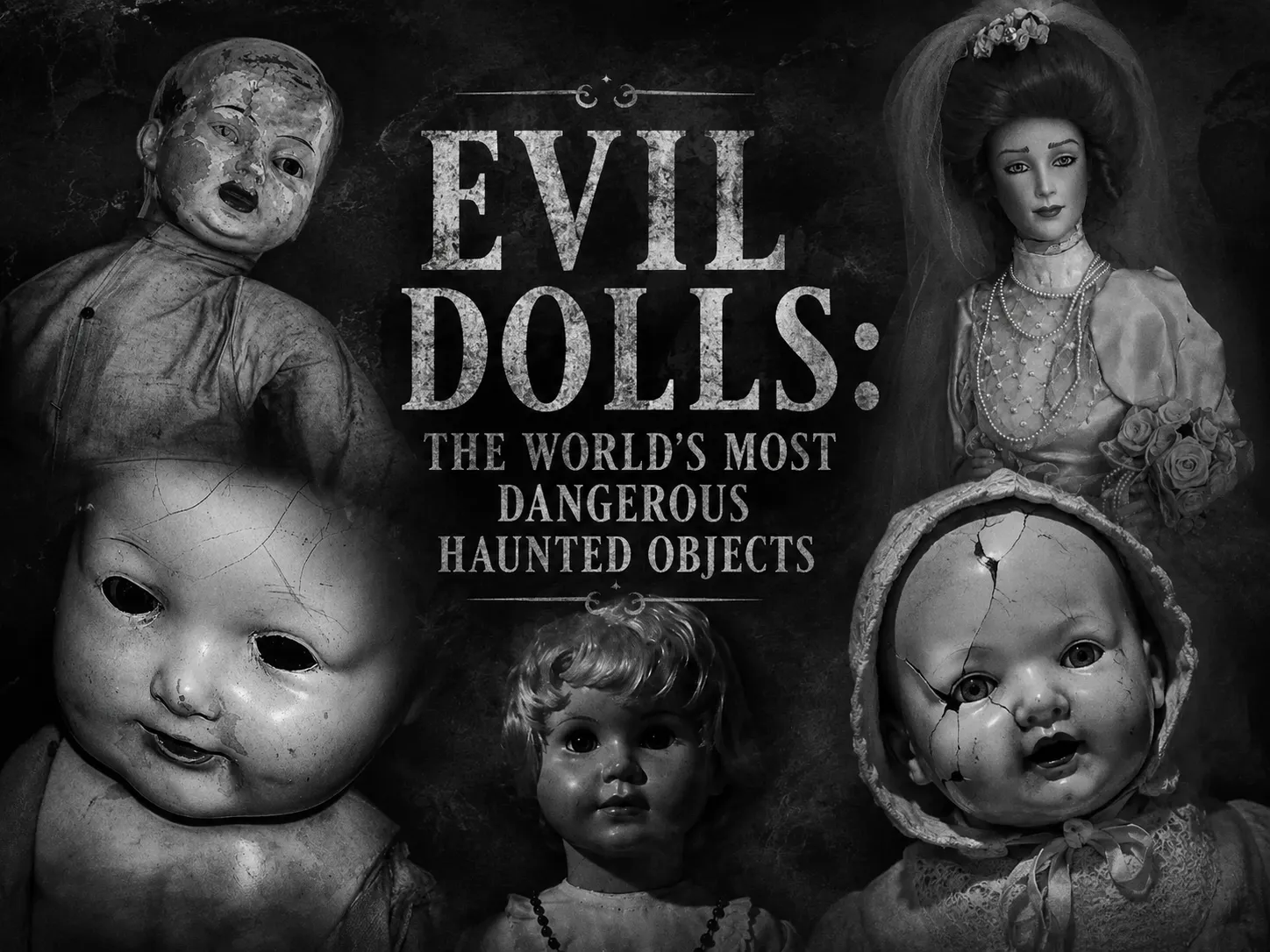
Evil dolls have terrified collectors, museum visitors, and paranormal investigators for over a century. Unlike most spooky legends, several of these cases come with a documented trail of scratches, breakdowns, accidents, and even deaths attached to them.
Some evil dolls are famous mostly because of a movie franchise, while others built their sinister reputation the hard way, incident by incident, decade after decade.
Each of these evil dolls has built its reputation the same way: through years of eyewitness testimony, unexplained physical harm, and a body of “evidence” that ranges from apology letters and hospital-adjacent claims to genuine, documented deaths connected to the people around them.
Whether any single account can be independently verified or not, the sheer accumulation of incidents is what separates a doll that’s merely creepy-looking from one that has earned a lasting reputation for being evil.
Summary
What Is the Most Evil Doll in the World?
Based on the sheer number of alleged incidents linked to it over more than fifty years, Annabelle is widely considered the most evil doll in the world. Annabelle is not the porcelain doll seen in The Conjuring movies. The real doll is a Raggedy Ann cloth toy that paranormal investigators Ed and Lorraine Warren took into custody in the early 1970s after two Hartford, Connecticut, roommates said it moved on its own, left disturbing handwritten notes, and scratched one of their boyfriends.
What separates Annabelle from every other doll on this list of the most evil dolls in the world is the volume and severity of claims made about her over the decades that followed.
For instance, the Warrens claimed the doll caused a priest to crash his car after he mocked it, “psychically slashed” a visitor’s chest, and was blamed for the death of a young motorcyclist who taunted her from behind glass at the Warrens’ Occult Museum in Monroe, Connecticut — he was killed in a crash shortly after leaving. A homicide detective was also said to have been attacked badly enough that he took early retirement.
However, none of these claims have ever been independently verified, and skeptics have pointed out there is no police record, medical report, or contemporaneous news account that confirms the motorcyclist story or the priest’s crash.
Still, in terms of sheer volume of alleged harm — physical attacks, a claimed death, career-ending injuries, and decades of “do not open” warnings on her display case — no other doll on the list has as many serious incidents attached to its name. That combination of longevity, media reach, and the severity of what she’s been blamed for is why Annabelle tops the ranking rather than simply being the most famous.
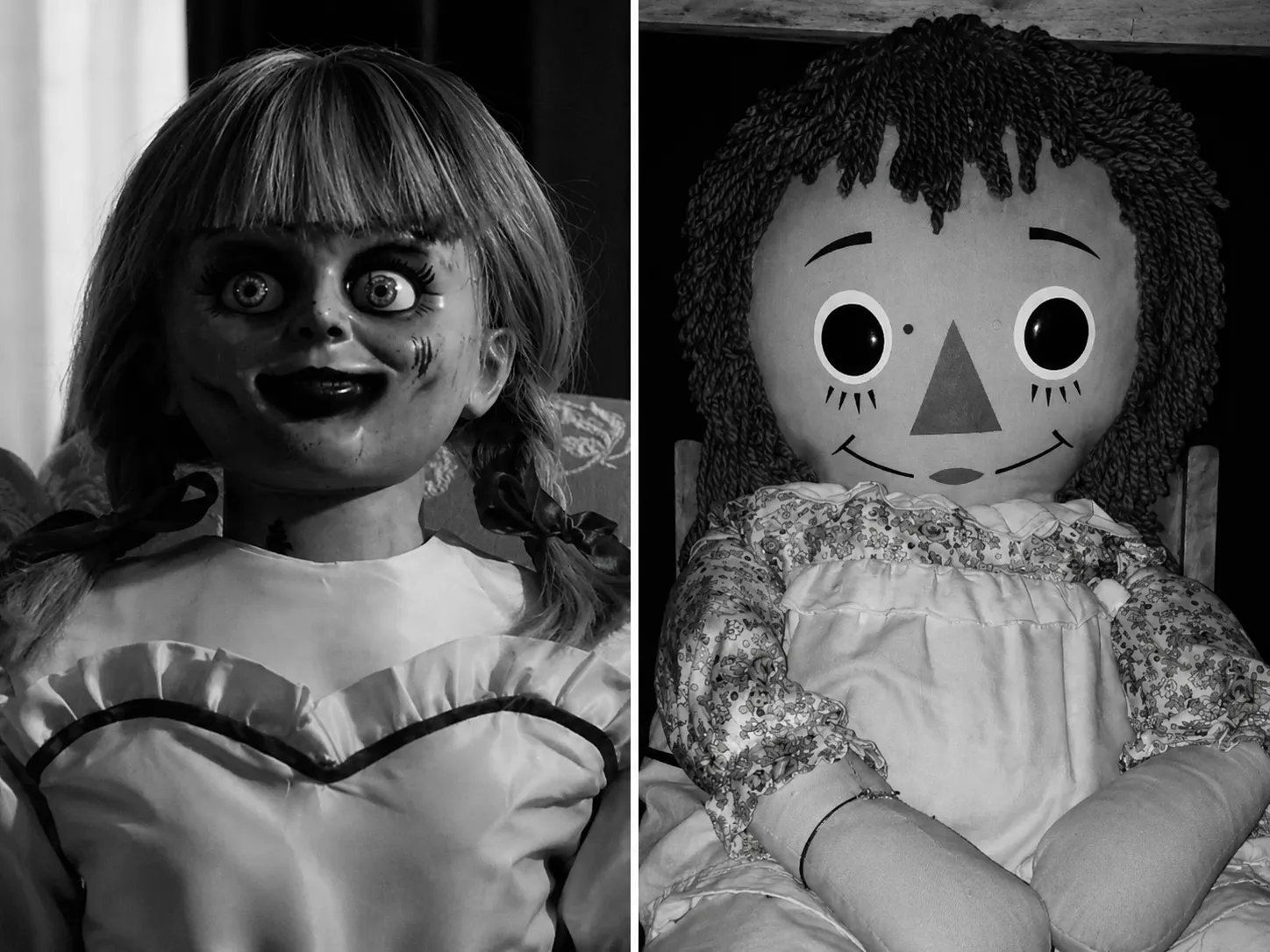
1. Annabelle — The Doll With the Longest List of Alleged Victims
Annabelle’s story begins in 1970, when a mother bought the Raggedy Ann doll from a hobby shop for her nursing-student daughter, Donna. Donna and her roommate Angie noticed the doll changing position and rooms on its own, and eventually found notes written in a child’s handwriting on parchment paper neither of them owned.
A medium told the women the doll was inhabited by the spirit of a seven-year-old girl. Still, Ed and Lorraine Warren, once brought in, concluded the entity was never human — it was something using the doll as a way to get closer to a human host.
Since then, Annabelle has been blamed for a chain of incidents that reads less like a doll story and more like a decades-long police blotter: the motorcyclist’s fatal crash, the priest’s collision with a tree, a detective’s career-ending scratches, and reports of visitors falling ill after mocking her glass case at the Warrens’ museum.
Today the doll is kept behind a sign reading “POSITIVELY DO NOT OPEN,” regularly blessed by a priest, and was recently the centerpiece of a 2025 national tour during which the tour’s lead promoter, Dan Rivera, died unexpectedly in a Gettysburg hotel room — a death officials described as not suspicious, but one that instantly reignited public fascination with the doll’s reputation.
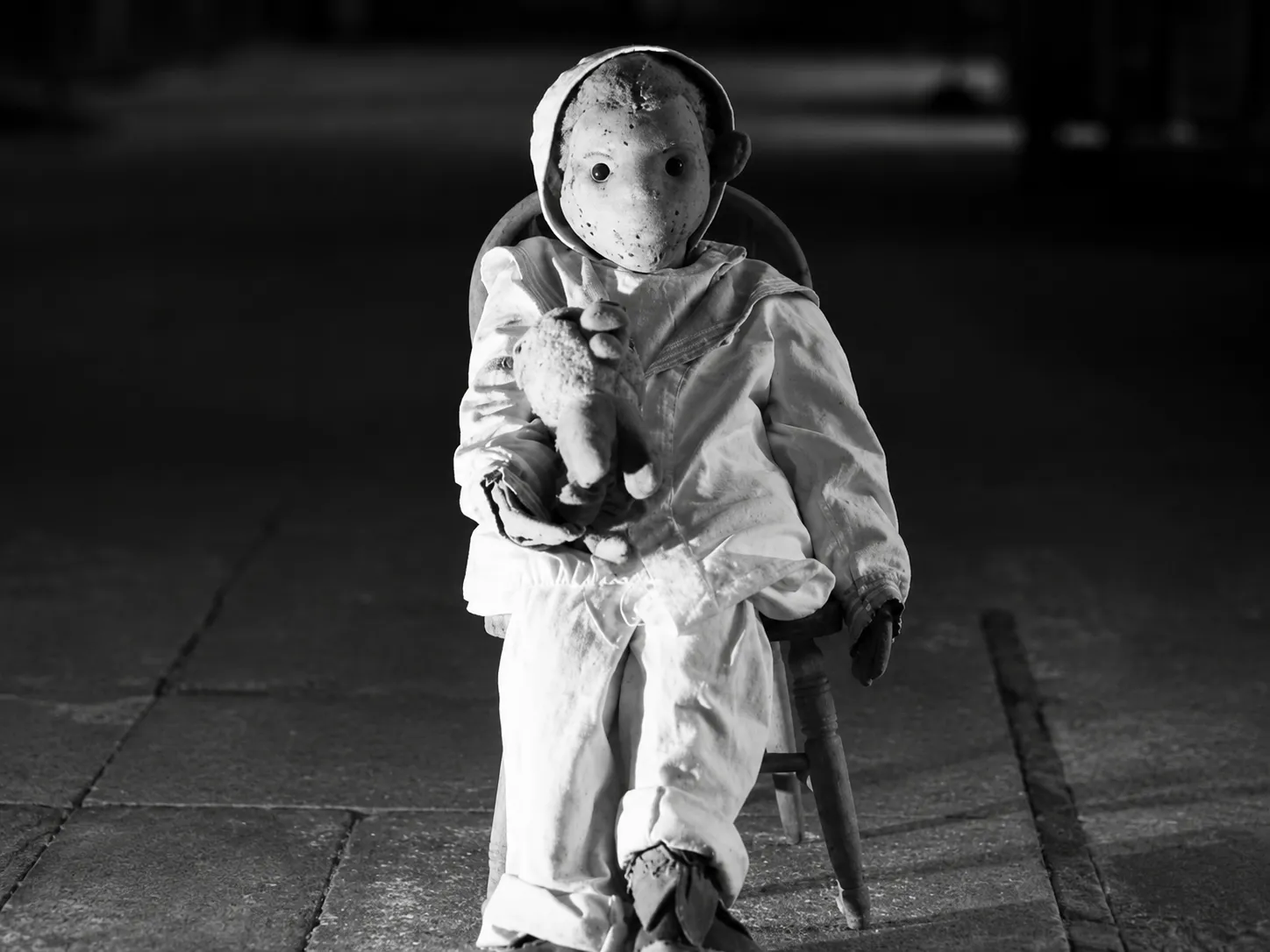
2. Robert the Doll — Key West’s Century-Old Curse
Robert is a three-foot-tall, straw-stuffed Steiff doll given to young Robert Eugene “Gene” Otto around 1904. According to the most widely repeated version of his origin story, the doll was crafted or given by a Bahamian servant who had been mistreated by the Otto family and cursed the toy with folk magic before handing it over.
Neighbors in Key West reported seeing the doll move from window to window in the Otto house when the family was away. Gene would blame Robert whenever furniture was found overturned, or toys turned up mutilated, insisting, “Robert did it.”
After Gene died in 1974, a new family moved into the house, and their ten-year-old daughter reportedly became terrified of the doll, insisting it wanted to hurt her and that it moved around her room at night.
Robert now lives behind reinforced glass at the Fort East Martello Museum, where he is surrounded by hundreds of handwritten apology letters from visitors who blame the doll for canceled flights, lost jewelry, torn tendons, job losses, and broken marriages after they failed to ask his permission before photographing him.
You may also enjoy:
July 1, 2026
USS Alabama Haunting: Eerie Ghost Sightings You Won’t Believe
September 23, 2025
What Are the 14 Types of Hauntings? Everything You Need to Know
September 4, 2025
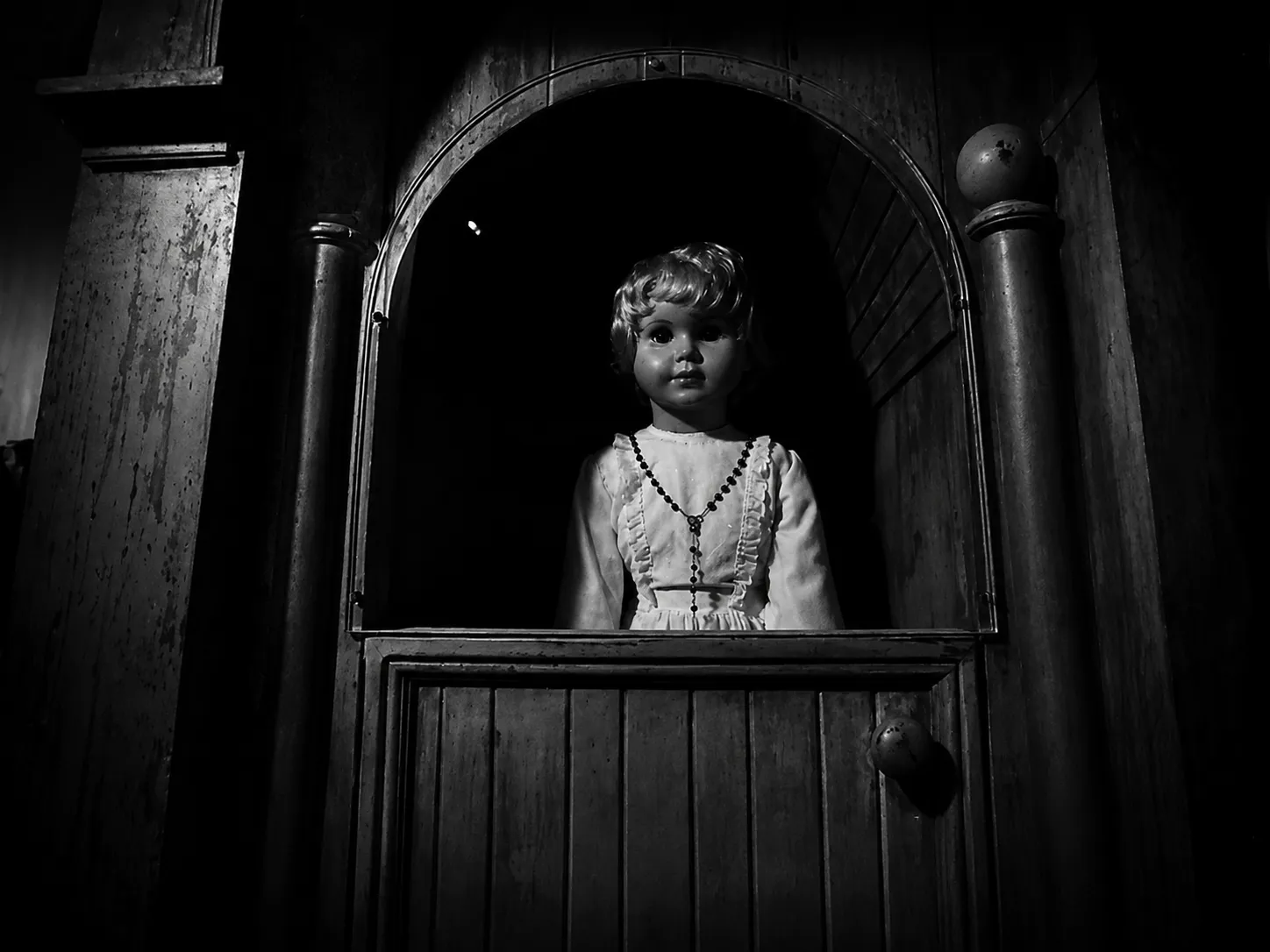
3. Peggy the Doll — The Doll That Allegedly Attacks Through a Screen
Unlike other evil dolls, Peggy’s reputation for causing harm doesn’t require anyone to touch her — simply looking at her photograph is believed to be enough.
First discovered at a UK car-boot sale and eventually handed over to paranormal investigator Jayne Harris in 2014, Peggy’s first owner reported nightmares, fevers, and hallucinations so severe that two visits from a priest failed to help, and she eventually begged Harris to take the doll away entirely.
When Harris posted a single photo of Peggy online in 2015, she received more than 80 messages within a day from strangers reporting headaches, chest pain, shattered light bulbs, and animals behaving erratically after simply viewing the image. One woman, Katreen Reedick, claimed she suffered a heart attack shortly after seeing Peggy’s photo despite having no prior cardiac history.
Peggy is believed by several mediums to be possessed by the spirit of a woman who died of a respiratory illness in London in the mid-1940s and who is said to have a lingering hatred of clowns. She is now locked in Zak Bagans’ Haunted Museum in Las Vegas, where visitors are required to sign a liability waiver before viewing her.
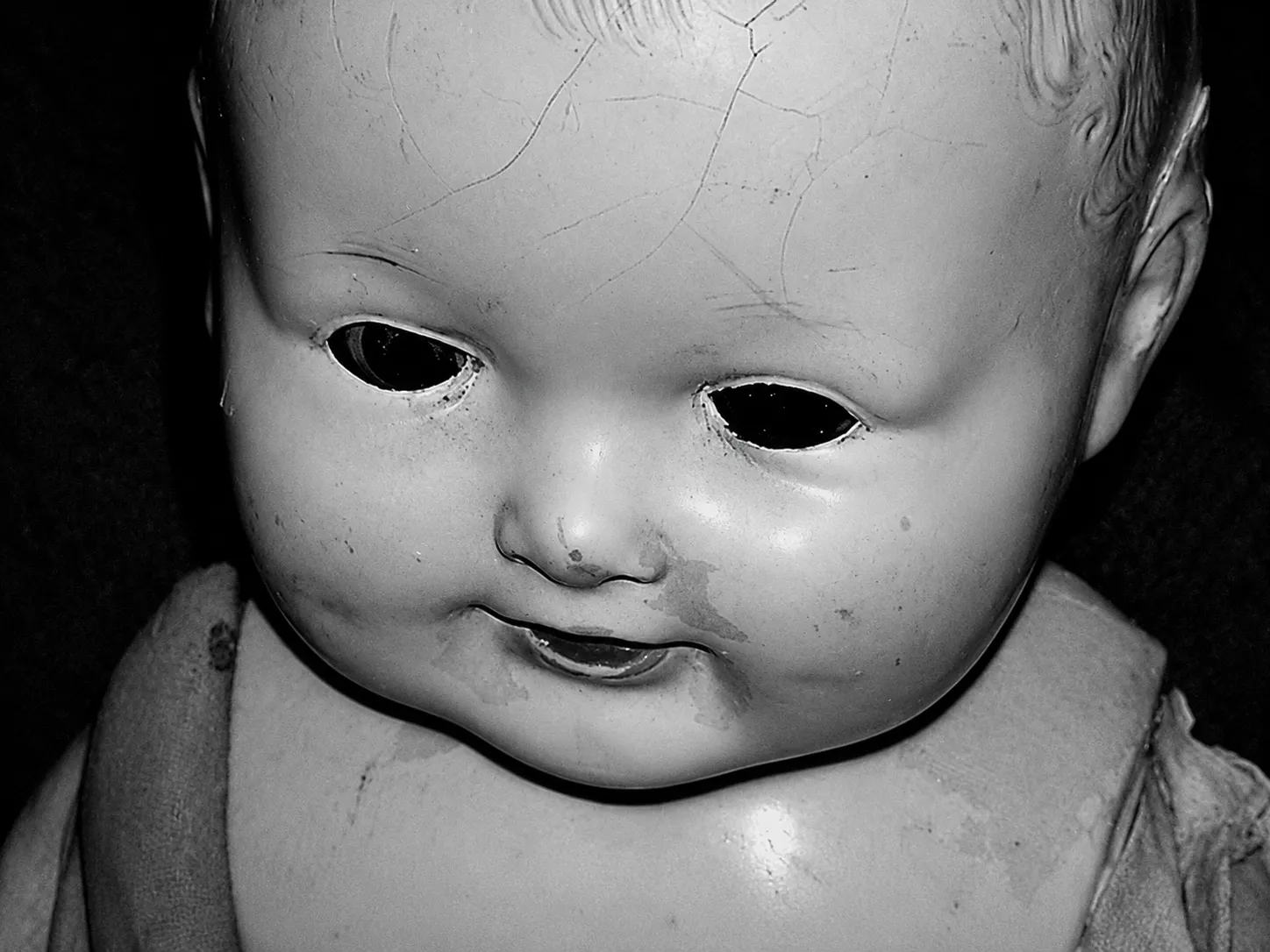
4. Harold the Doll — eBay’s Original Cursed Toy
Harold has the reputation of being one of the first dolls to become infamous through an online auction. In 2003, a film student named Greg listed the worn, discolored baby doll on eBay after claiming its arm and mouth moved in response to being called “Harold.”
Greg later admitted to a friend that the listing was a hoax meant to drive up the price. When the winning bidder never paid, the doll ended up with Greg’s neighbor Kathy, who intended to run the same hoax herself — only to become convinced that Harold’s effects were genuine after living with him for a year.
Later owners have reported Harold causing severe headaches, migraines, and back pain. One owner told Ghost Adventures that a friend developed a brain tumor shortly after visiting the doll, while another blamed Harold for the death of a pet and the end of a relationship within days of acquiring him.
Harold has since appeared on the Travel Channel, where investigators reported physical attacks and equipment failures in his presence.
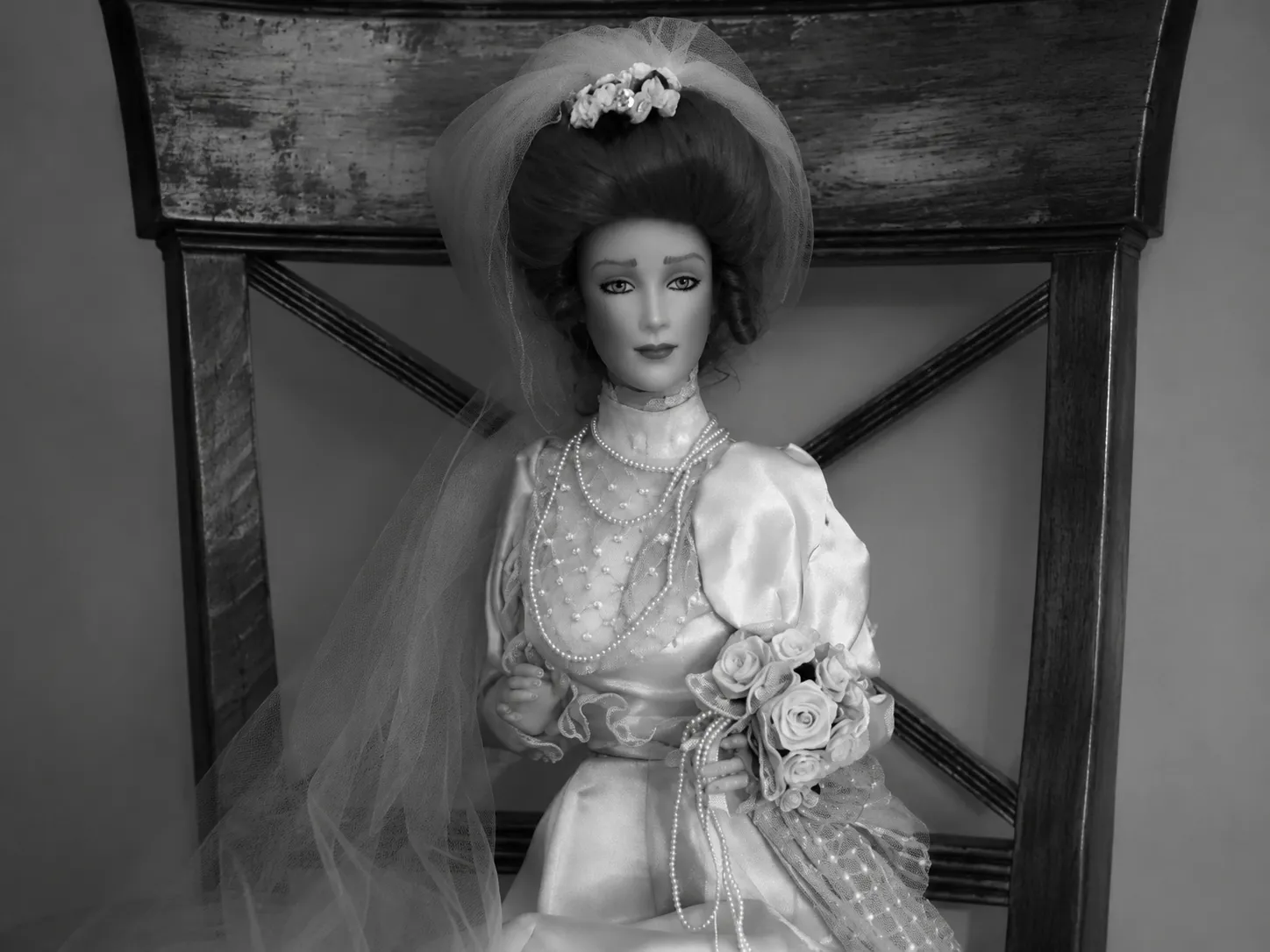
5. Elizabeth the Doll — The Bride Who Only Attacks Men
Elizabeth is a Victorian-style bridal doll now kept at the Haunted Objects Museum in Rotherham, England, run by paranormal investigator Lee Steer.
Before Steer acquired her in a 2017 eBay bidding war that reached roughly $1,100, the doll — then known by her previous owner, Debbie Merrick, simply as a family heirloom — had already developed a frightening reputation: Merrick said the doll repeatedly set off her home’s fire alarms, removed her own necklace overnight, and left her husband covered in scratches while he slept.
Within days of the doll’s arrival at Steer’s home, his father reported waking up with six identical scratches on his arm. A picture on the wall reportedly began swinging on its own before the doll even entered the house. Since being renamed Elizabeth and put on public display, the doll’s reported pattern of aggression has become more specific: staff says she exclusively targets men, having allegedly scratched at least fifteen male visitors, while women in the museum, including Steer’s own partner, have never reported an attack.
The going theory among staff is that Elizabeth was mistreated by a man in life, or that her wedding day ended in tragedy, and that the resentment carried into the doll.
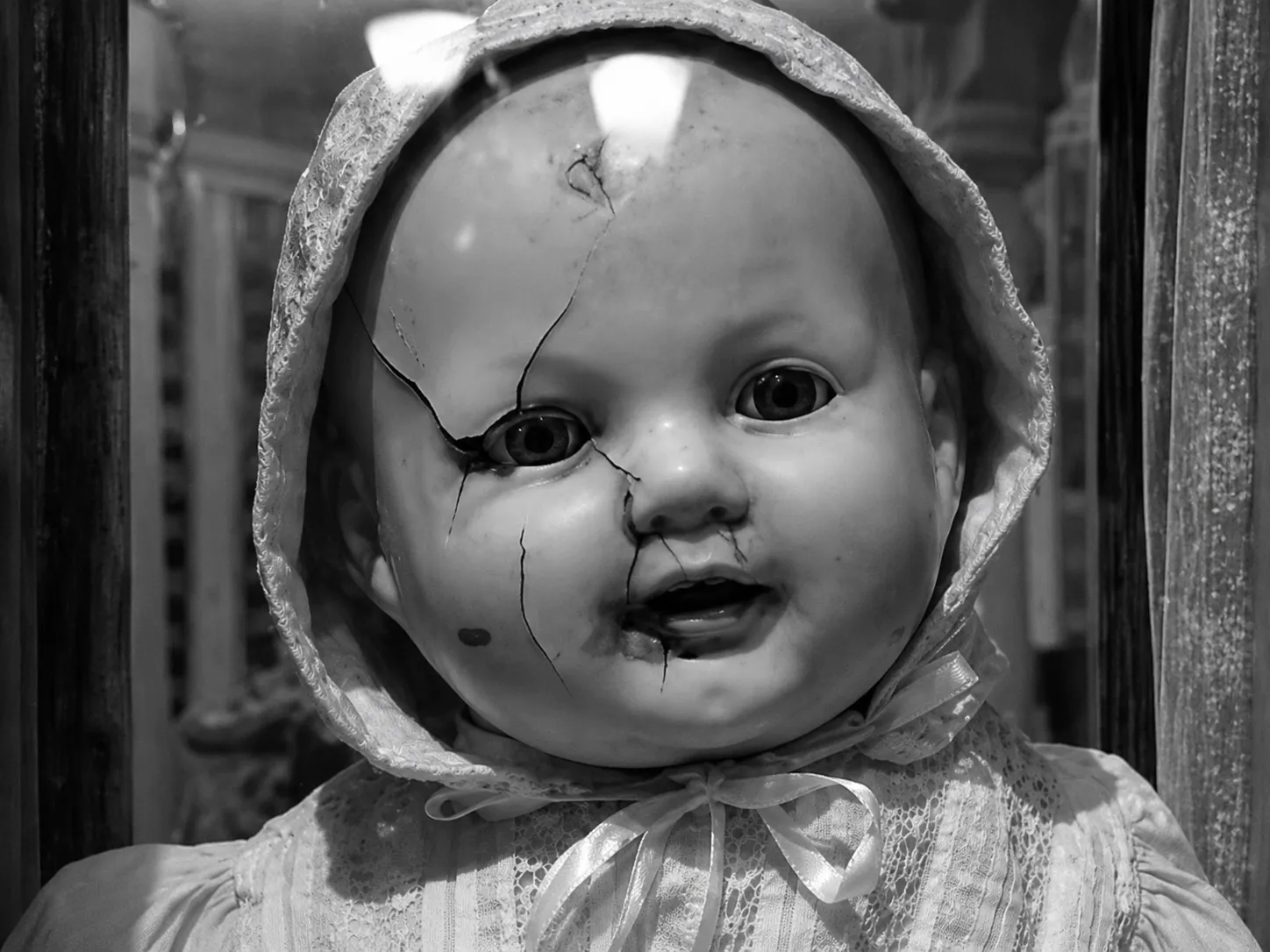
6. Mandy the Doll — Canada’s Mischievous Museum Resident
Mandy is a composition doll believed to date to the late 1920s or early 1930s, donated to the Quesnel & District Museum in British Columbia in 1991 after the previous owner’s granddaughter said she could hear a baby crying in the house whenever the doll was nearby, a sound that stopped the moment Mandy left.
On her first night in the museum’s lab, staff arrived to find the room in disarray, as though a child had thrown a tantrum, and a stuffed lamb that had been kept at Mandy’s side was later found on the floor outside her locked display case.
Museum staff says cameras and video equipment malfunction specifically around her; one visitor claimed her home was broken into, with only a porcelain doll stolen from it after a trip to see Mandy, and on at least one occasion a young visitor became so overwhelmed in front of Mandy’s case that she fainted and had to be taken to the hospital for observation due to dangerously low blood pressure.
Mandy is kept apart from the museum’s other dolls because staff says she does not tolerate being displayed alongside them.
You may also enjoy:
Who Is Astaroth, the Great Duke of Decay?
May 8, 2025
Complete Guide to Montana Bigfoot Sightings (1971–2025)
August 4, 2025
Who Is Cimejes, the Twentieth Demon in the Ars Goetia?
November 13, 2025
What Is the Agogwe? The Mysterious Hairy Dwarf of East Africa
November 10, 2025
Viné: King of Demonic Forces. Facts & Myths
May 28, 2025
Domovoi: The Creepy Household Spirit
September 11, 2025
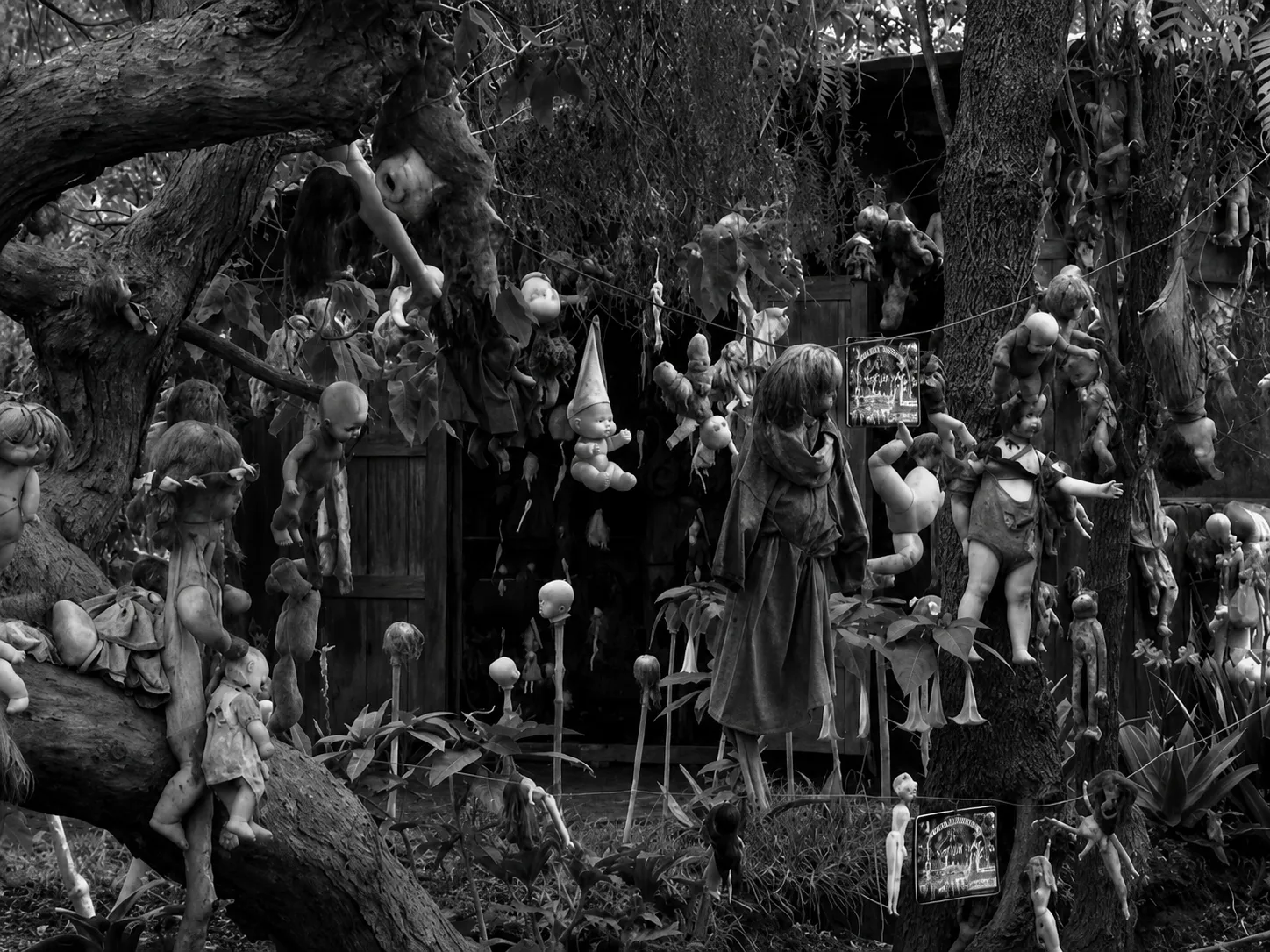
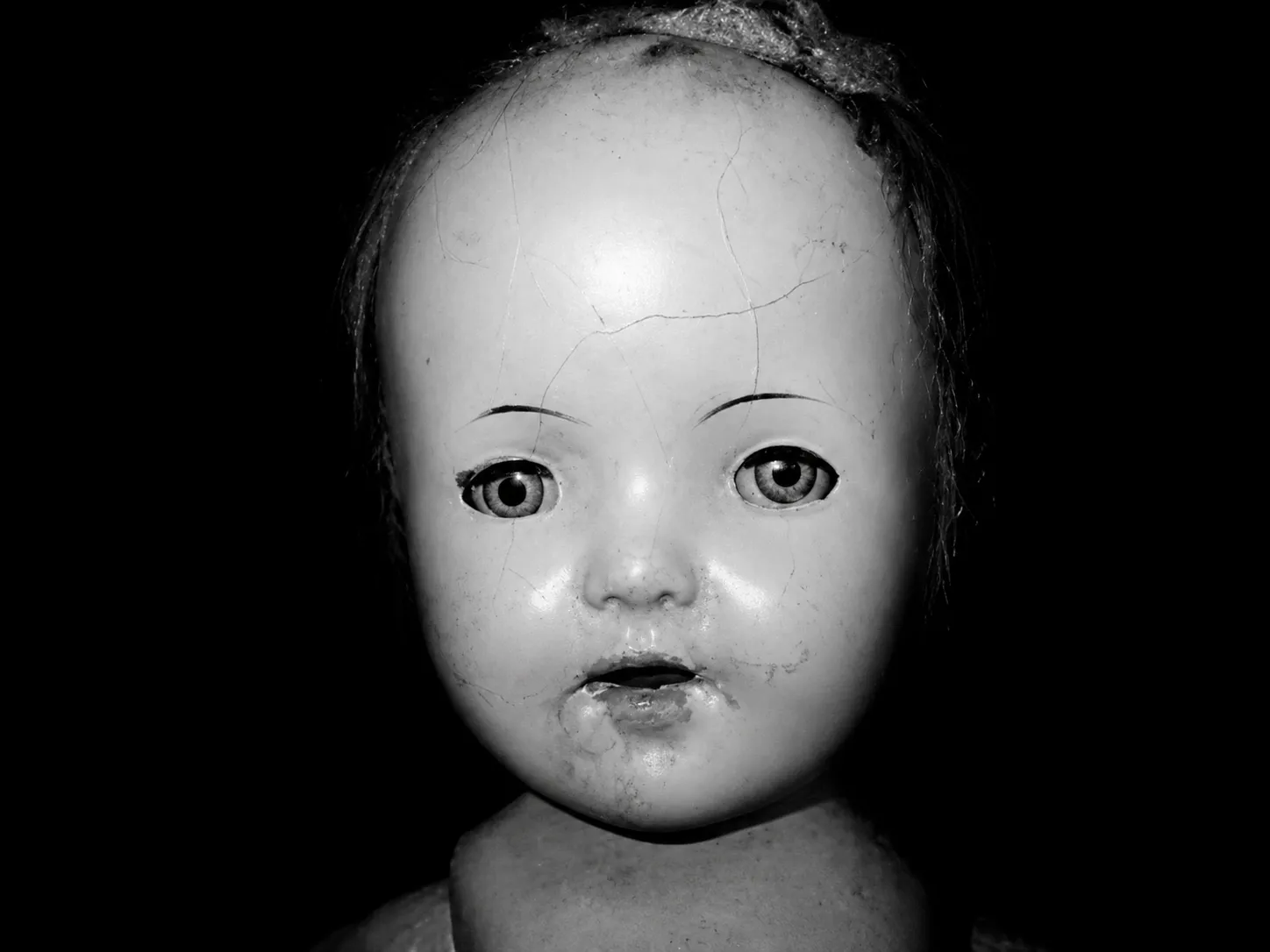
7. The Island of the Dolls — A Shrine Built From Real Tragedy
Unlike the other entries on this list of the most evil dolls in the world, the Island of the Dolls in Mexico isn’t a single doll but thousands of them, hung from trees across a small chinampa in the canals of Xochimilco, and its dark history is tied to two real deaths rather than folklore alone.
According to the account passed down by his family, caretaker Don Julián Santana Barrera discovered the body of a young girl who had drowned in the canal near his home sometime in the mid-20th century, and shortly afterward found a doll floating in the water that he believed had belonged to her.
Believing her spirit was haunting the island, Santana Barrera spent the next fifty years collecting discarded and broken dolls from the trash and the canals, trading garden produce for more, and hanging them from every available branch as a form of protection.
In 2001, his nephew found him drowned in the exact spot where he always claimed to have found the girl’s body decades earlier. Visitors since then have reported the dolls’ heads and eyes moving and have described hearing them whisper to one another after dark; in 2022, Guinness World Records recognized the island as home to the largest collection of haunted dolls anywhere in the world.
8. Joliet the Doll — The Curse That Allegedly Claims Newborns
Joliet is a porcelain doll believed to have been passed down through the same family for more than four generations. Its legend is the most severe on this list in terms of alleged loss of life. However, the list of alleged victims remains entirely unverified, which is why Joliet is only No. 8 on the list.
According to the current keeper, known only as Anna, the doll was given to her great-grandmother as a pregnancy gift by a friend harboring a hidden grudge. Nine months later, Anna’s great-grandmother gave birth to a son who died of an unexplained illness exactly three days later.
That same pattern — a daughter who lives and a son who dies on his third day of life — has allegedly repeated in every generation since, with the doll said to cry at night in a voice matching each lost infant, audible only to the mother who bore that child.
Paranormal investigators who have looked into the story note there is no documentation connecting a specific family or set of infant deaths to the doll. Some suggest the legend may function as a way of processing generations of infant loss, such as SIDS, rather than describing genuine supernatural harm.
Even so, the family has refused every opportunity to destroy or sell Joliet, believing that doing so would trap or endanger the souls they believe the doll contains.
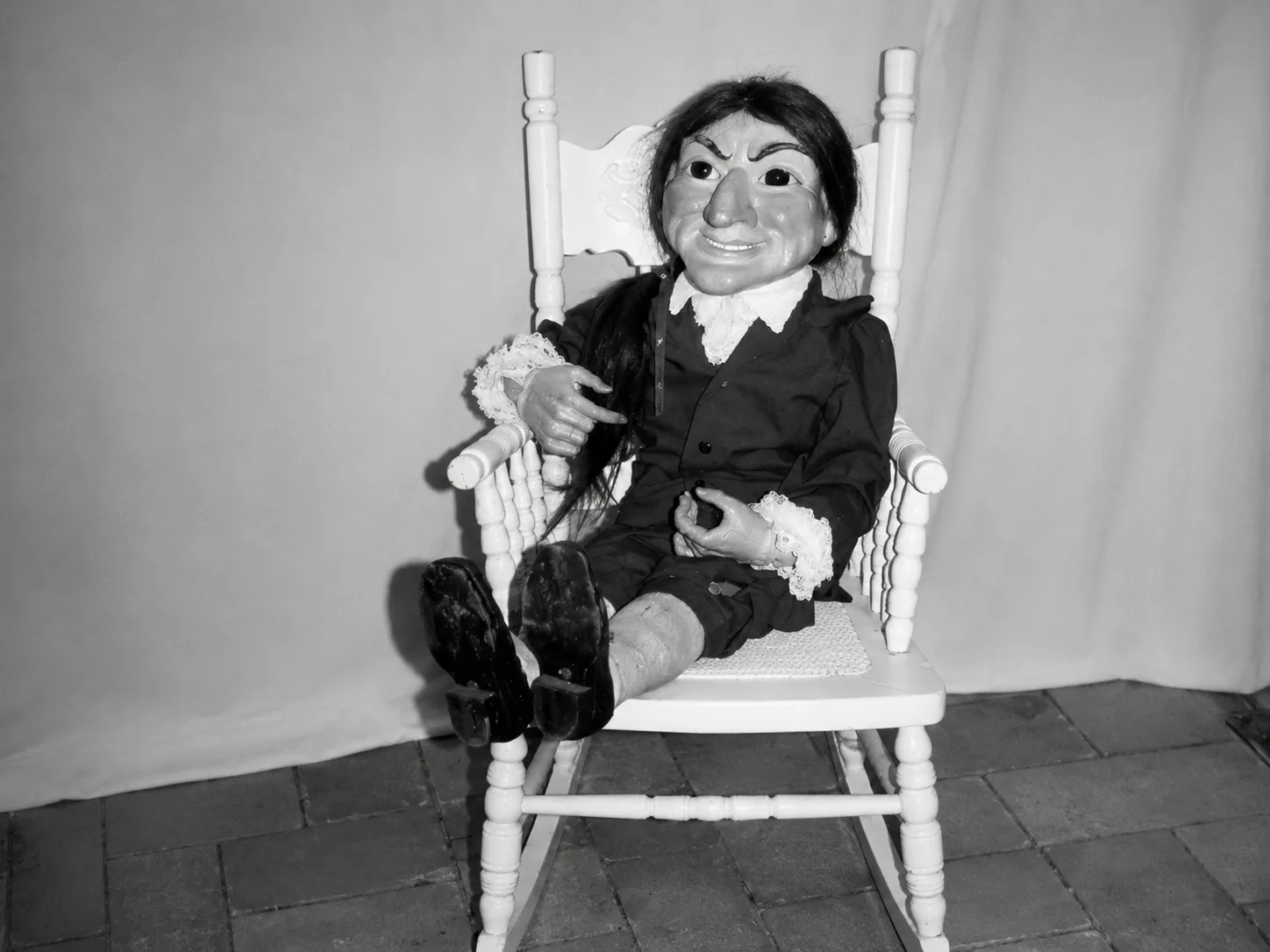
9. Letta Me Out — The Doll That Makes Dogs Attack
Letta was uncovered in the 1970s by Kerry Walton, who found the roughly 200-year-old wooden doll hidden beneath the floorboards of an abandoned house in Wagga Wagga, Australia. Walton says that on the drive home, the sack containing the doll appeared to move, and his brother swore he heard it scream “letta me out,” giving the doll its name.
Experts who later examined Letta determined it was likely handcrafted in Eastern Europe and fitted with real human hair, and a psychic told Walton the doll was inhabited by the spirit of a young boy who had drowned around the time it was made.
While Letta has developed a reputation as one of the more good-natured entries in the haunted-doll world — Walton describes the doll as a bringer of good luck rather than a malevolent force — witnesses have reported vivid nightmares, nausea, and unexplained scuff marks appearing around the house whenever the doll is present.
Dogs are believed to react to Letta with aggressive barking and attempted attacks whenever they encounter it, a pattern that has been consistent across the doll’s many television appearances since the 1990s.
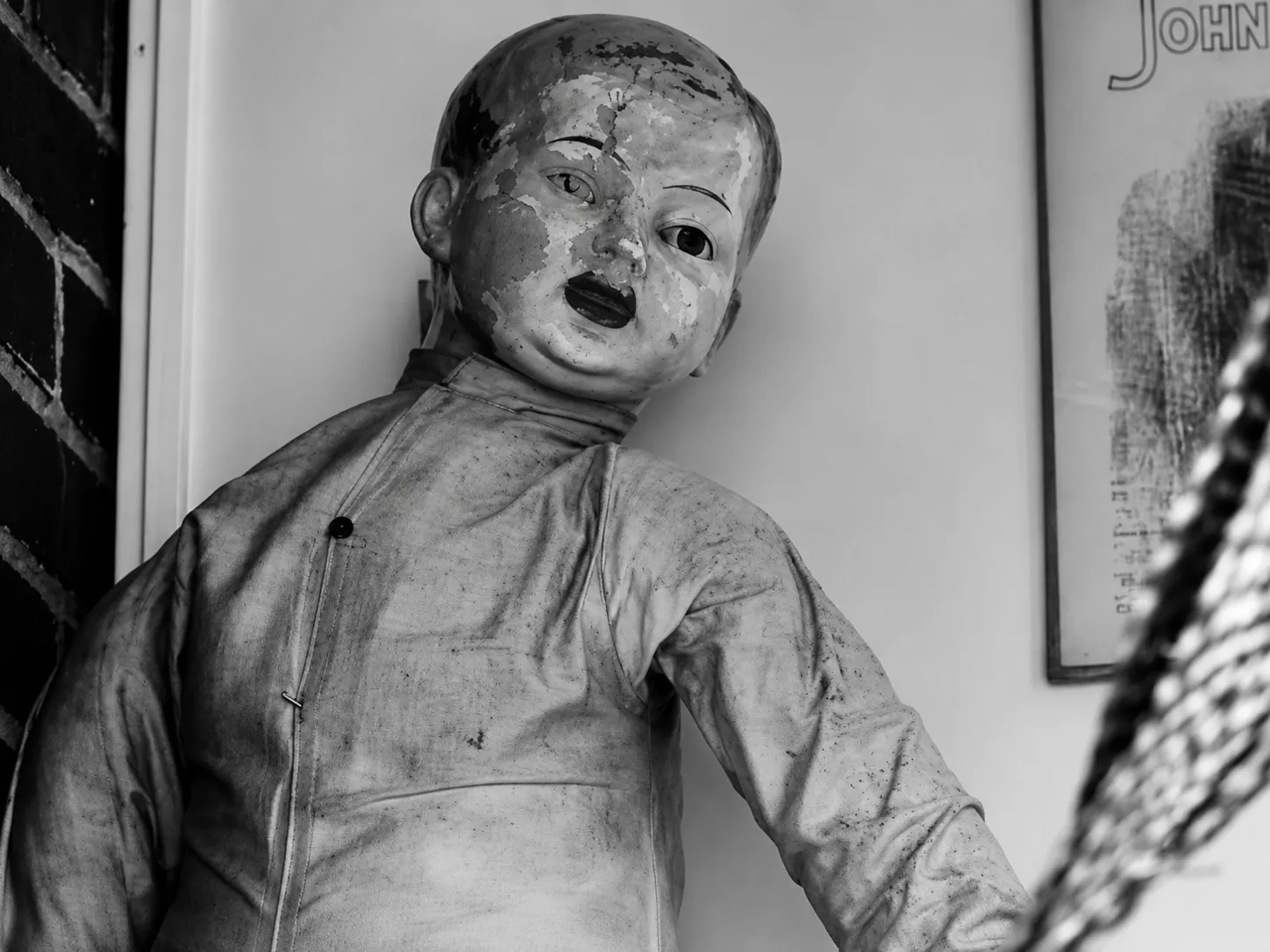
10. Charley the Doll — The Attic Discovery That Turned on a Child
Charley was found in 1968 inside a trunk in the attic of a Victorian home in upstate New York, wrapped in newspaper dating back to the 1930s alongside a single yellowed page bearing the Lord’s Prayer. This detail has fueled speculation that the doll was deliberately sealed away rather than simply forgotten.
The family who found him added Charley to an existing collection of antique dolls and at first noticed nothing unusual, except that the doll seemed to shift position on its own along a display bench.
That changed when the family’s youngest daughter, then four years old, told her parents Charley had spoken to her during a nighttime trip to the bathroom; her parents dismissed the claim until mysterious scratches began appearing on the girl’s body, at which point Charley was locked back inside his attic trunk.
The evil doll resurfaced decades later at an antiques sale and eventually found a home at an oddities shop in Beverly, Massachusetts, near Salem, where he remained on display until the shop’s closure.
You may also enjoy:
Huldra: The Beautiful Forest Demon of Scandinavia
October 27, 2025
Glasya-Labolas: The Griffin-Winged Demon of Blood and Wisdom
August 21, 2025
Belle Mont Mansion Haunting: Ghosts of Slavery and Tragedy
September 23, 2025
Ronové in Demonology: Appearance, Powers, and Lore
August 27, 2025
Sources
- Brittle, Gerald. The Demonologist: The Extraordinary Career of Ed and Lorraine Warren. Prentice-Hall, 1980.
- Hill, Sharon A. Scientifical Americans: The Culture of Amateur Paranormal Researchers. McFarland, 2017.
- Pulliam, June, and Anthony Fonseca. Ghosts in Popular Culture and Legend. ABC-CLIO, 2016.
- Yusof, Ahmad Muhyiddin B Yusof & Hashim, Ruzy & Md Yusof, Noraini & Harris Satkunananthan, Anita. (2017). Unravelling the Family-based Haunted House Film Patterns in Malaysian and American Haunted House Films. 3L The Southeast Asian Journal of English Language Studies. 23. 170-183. 10.17576/3L-2017-2304-13.
- Foer, Joshua, Dylan Thuras, and Ella Morton. Atlas Obscura: An Explorer’s Guide to the World’s Hidden Wonders. Workman Publishing, 2016.
- Elborough, Travis, and Alan Horsfield. Atlas of Improbable Places: A Journey to the World’s Most Unusual Corners. Aurum Press, 2016.
- Carlson, Katherine. On eBay, a Fantastical, Earnest World of Haunted Dolls. The New Yorker, 31 Oct. 2017.