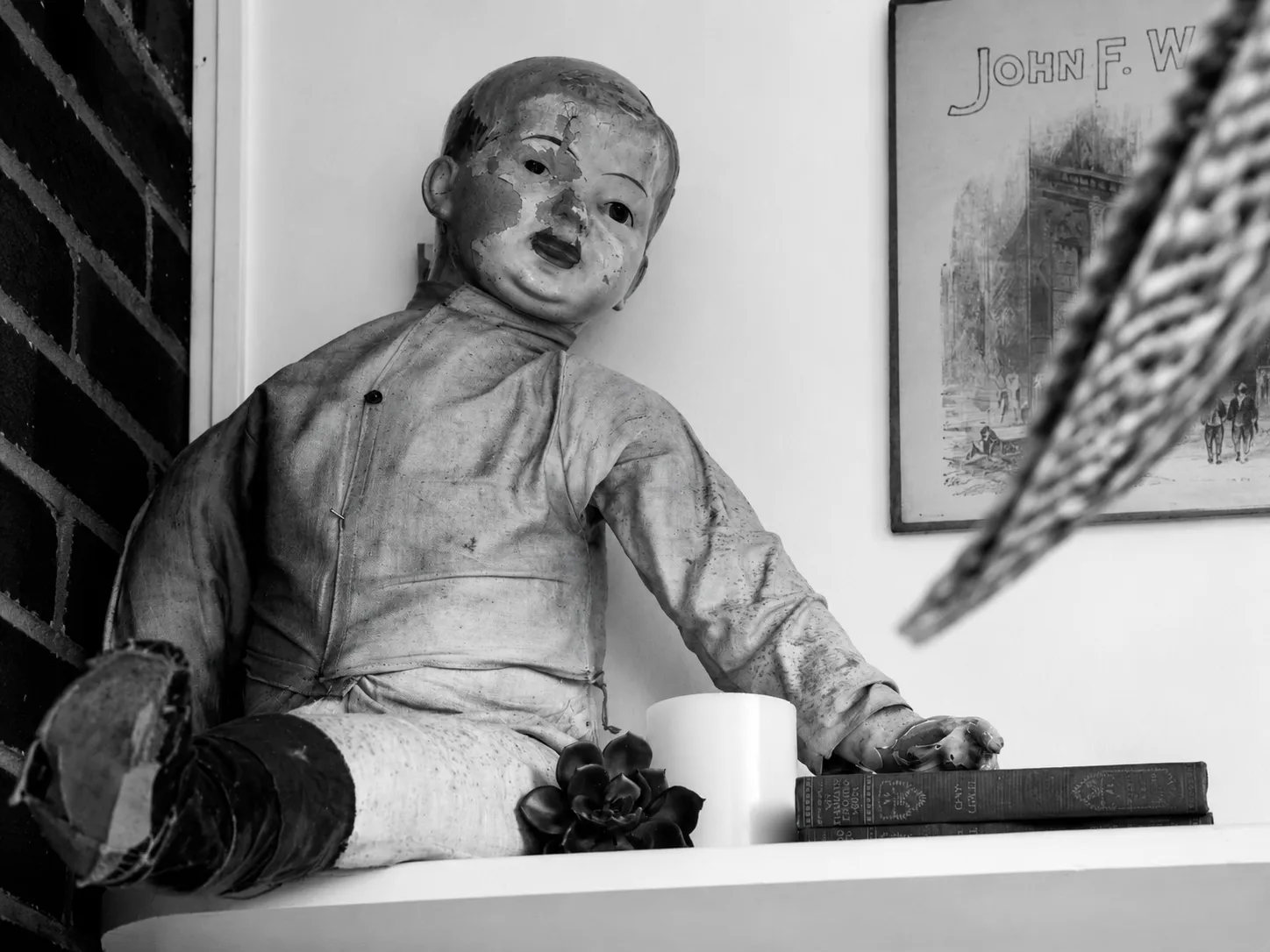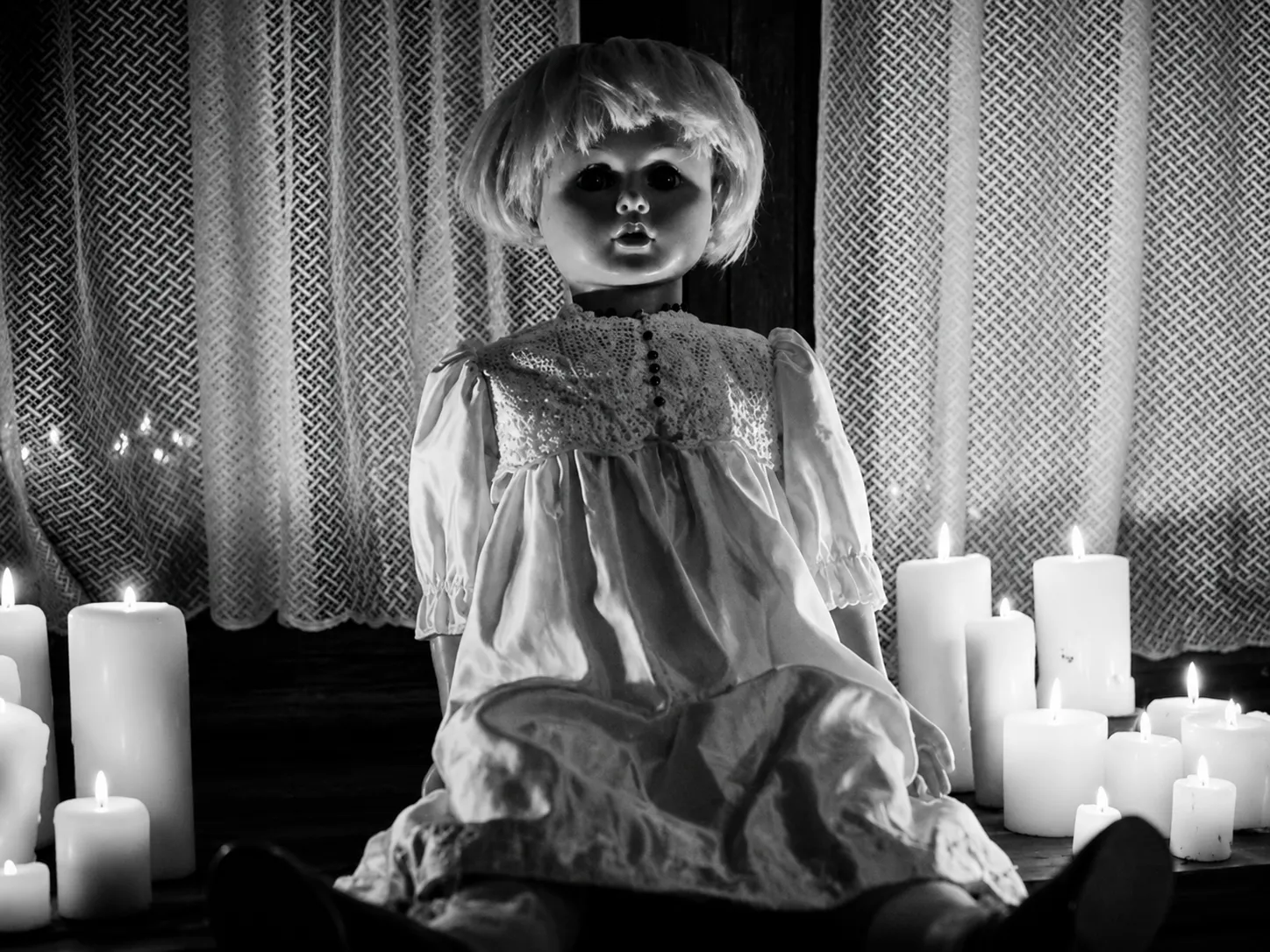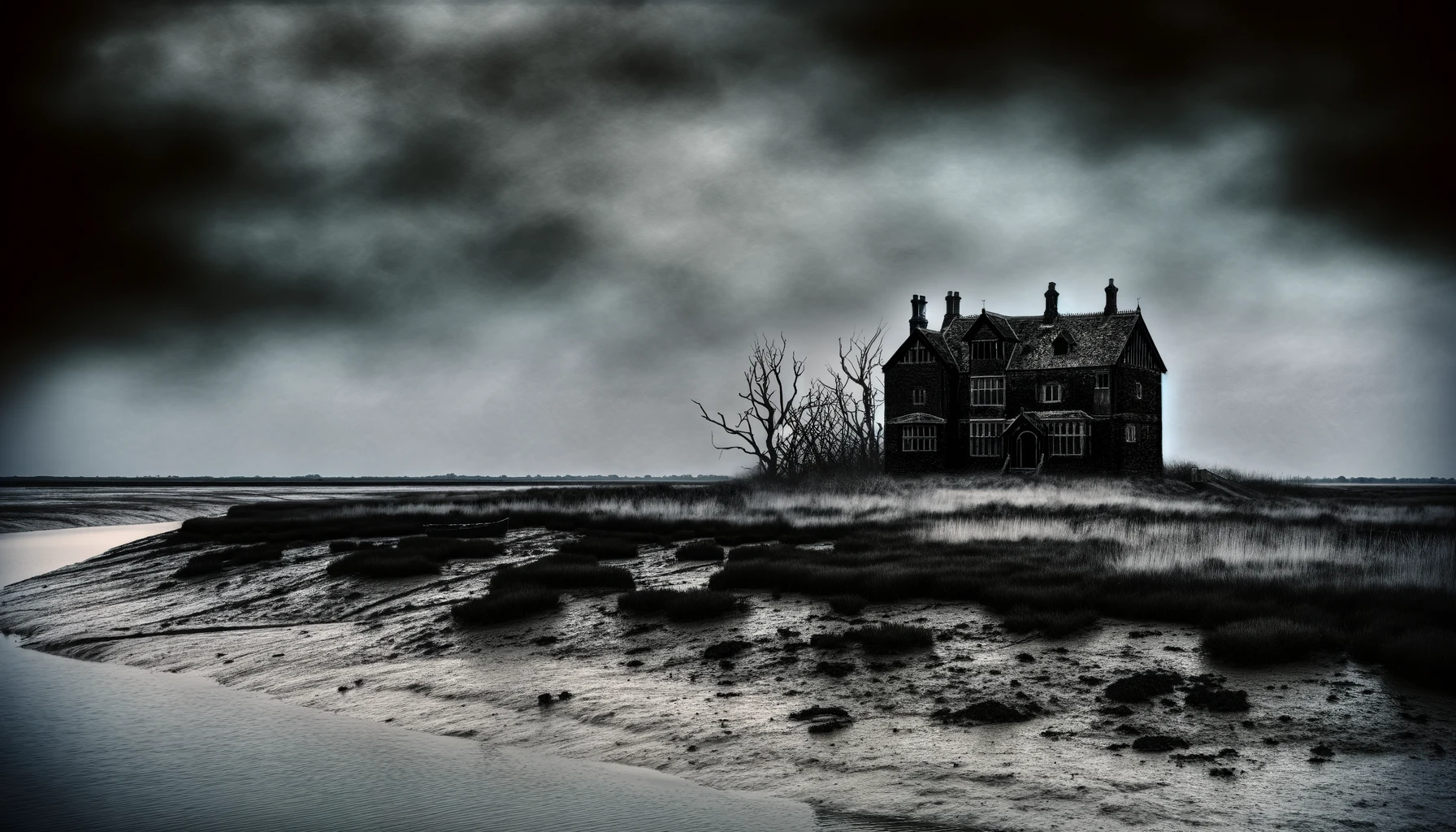
Between 1765 and 1772, the Hinton Ampner mansion was disturbed by loud, unexplained footsteps and the sound of crashing furniture. These events became so overwhelming that an aristocratic family eventually abandoned their ancestral home in fear.
A particularly disturbing and well-documented part of the story is the demolition of the manor in 1793. The Hinton Ampner haunting had made the property impossible to sell, so it was torn down. When workers destroyed the Yellow Room, which was the center of the activity, they found a hidden space under the floorboards containing a skull and the bones of a child.
Summary
Key Takeaways
| Attribute | Details |
| Name | Hinton Ampner Haunting; The Ricketts Case; The Hampshire Ghost Story |
| THC Scale | L-5 [See the THC Scale Explanation] |
| Location / Origin | Hinton Ampner, Alresford, Hampshire, UK (51.0436° N, 1.1508° W) |
| Classification | Poltergeist / Intelligent |
| History | Tragedy involves the death of Lord Stawell (1755) and rumors of illicit familial secrets. |
| Casualties & Deaths | 1 primary historical death (Lord Stawell) + 0 direct attributed to the entity. |
| Associated Entities | The Man in the Drab Coat; The Woman in Silk; The Dark Figure. |
| Manifestations | Auditory (slamming, footsteps), Visual (apparitions), Olfactory (stench). |
| First reported sighting | 1765 |
| Recent reported sighting | 1772 (Site demolished 1793) |
| Threat Level | 6/10 (potentially aggressive) [See the Threat Level Explanation] |
| HCR | 2/10 (extremely likely authentic) [See the Hoax Confidence Rating Explanation] |
| Access Status | Private / Limited (The original house is demolished; the current National Trust site is open to the public). |
What Is the Hinton Ampner Haunting?
I believe that the Hinton Ampner haunting was a mix of intelligent haunting and poltergeist activity. Instead of simply repeating the same actions, as in a typical residual haunting, the disturbances from 1765 to 1772 seemed to interact directly and sometimes aggressively with the people living there. The main entity, usually seen as a man in a drab-colored coat, seemed to control the master suite and service corridors.
On top of that, the original Tudor house’s design included many empty spaces and sealed rooms. These unusual features probably made the strange sounds and disturbances even louder and more intense.
The haunting often followed a pattern of heavy footsteps and doors slamming violently, a sequence that defied logical explanation even after military officers investigated. In the end, the Hinton Ampner haunting became so intense that the house was considered impossible to live in and was eventually torn down.
Hinton Ampner Haunted History
The roots of the Hinton Ampner haunting go back decades before the Ricketts family arrived. To understand what happened, it’s important to look at the period when Lord Stawell owned the estate, up to his death in 1755.
Stawell was known for his dark reputation, and people at the time often spoke of illegal activities and cruelty in his household. Local stories and family records suggest he may have had a scandalous and possibly violent relationship with his sister-in-law, Honoria Mary Bosville.
The main reason the site became known as haunted is often linked to the sudden and suspicious death of a young woman, thought to be either a mistress or a relative, while Stawell lived there. This, along with a missing child from the servant records, created a lasting sense of tragedy.
When Mary Ricketts moved in during 1765, she did not know that the house’s design might have trapped the echoes of past crimes. The Tudor manor had thick, hollow walls and empty spaces, which likely helped carry and boost strange sounds from earlier times.
During the late 1760s, when the haunting was at its worst, most of the activity happened near the Yellow Room and the master dressing area. People living there often heard the sound of a woman’s silk dress moving through the halls, along with heavy, uneven footsteps from a man.
Reports from the staff at the time show that many servants became profoundly distressed. Some were found in shock or panic, saying unseen forces had pushed them in the same places where Lord Stawell was said to have trapped his victims.
The Hinton Ampner haunting reached its peak when the house seemed to force out anyone who tried to live there. By 1771, the disturbances were not just sounds but also included doors being torn off their hinges and the crash of heavy objects onto the floor above where children slept, even though nothing was actually there.
When the house was demolished in 1793, workers found a human skull and bones hidden in the Yellow Room’s walls. This discovery linked the haunting to real tragedies from Lord Stawell’s time.
You may also enjoy:
Forneus: The Terrifying Sea Demon of the Ars Goetia
August 21, 2025
Is the Downey Booger Real? Latest Sightings & Theories
April 17, 2025
Demon Naberius Explained: Origins, Powers, and Myths
August 26, 2025
Hinton Ampner Haunting Timeline
This Hinton Ampner haunting is especially well-documented because Mary Ricketts kept detailed journals and letters. Over seven years, there were almost nightly reports of disturbances, with a big increase in the autumn of 1771.
This rise coincided with the time when Mary’s brother, Captain John Jervis, was investigating the house, suggesting that their investigations may have worsened the activity.
| Date | Witness | Description of the event |
| Summer 1765 | Mary Ricketts | Auditory onset: Loud, violent slamming of the hall door at midnight. |
| Winter 1767 | Domestic Staff | Visual sighting of a tall man in a drab-colored coat in the lobby. |
| 1768 (General) | Nursery Maid | Frequent auditory reports of a “Silk Rustle” moving through the children’s wing. |
| May 1769 | Housekeeper | The “Silk Rustle”: Sounds of a phantom dress moving through the nursery. |
| June 1770 | Elizabeth Camis | A local woman reported seeing a woman in silk through a window in an empty room. |
| July 1771 | Mary Ricketts | The “Hollow Groans”: Human-like vocalizations emanating from the walls of the Yellow Room. |
| August 1771 | Captain John Jervis | Tactile and Auditory: Heavy footsteps circling the bed; no visual source found. |
| August 1771 | Captain Luttrell | Auditory: The sound of a violent struggle and “pistol-shot” cracks in the floor above. |
| September 1771 | The Ricketts Children | Multiple reports of “The Tall Man” standing at the foot of their beds. |
| December 1771 | Multiple Witnesses | The “Great Crash”: Sound of a ceiling collapsing in a room that remained intact. |
| January 1772 | Household Staff | The “Dismissed Maid” incident: A reported prank involving chains, later suspected as a cover story. |
| 1793 (Demolition) | Construction Crew | The discovery of a skull and skeletal remains in a lead box within the wall. |
The Jervis Investigation (1771)
A key moment in the Hinton Ampner haunting’s case happened in the summer of 1771, when Captain John Jervis, who would later become Earl of St. Vincent, came to investigate his sister Mary Ricketts’s reports.
Jervis, known for his strict military discipline and skepticism about the supernatural, brought another officer, Captain Luttrell, with him. Both men were trained observers and wanted to prove that the haunting was just a trick by smugglers or servants.
Looking at Jervis’s letters, it’s clear that what happened next did not fit his logical expectations. On their first night, Jervis and Luttrell carefully checked the manor, sealing windows and locking doors to make sure nothing could get in or out.
Even with all these precautions, the officers heard heavy, rhythmic footsteps in the hallway outside their room. When they opened the door with their pistols ready, they found no one there, but the sound of footsteps continued down the stairs.
However, records from the next year tell a different story that is often left out. In 1772, a report claimed that Jervis had caught a female servant making the noises with chains. Yet, later research into the household records shows there was no maid with that name, and no one was dismissed at that time.
This inconsistency may suggest that Jervis himself may have made up the story about the dismissed maid. As someone moving up in the Royal Navy, he risked his reputation if people thought he had failed to solve a haunting.
By spreading the story of a prankster, Jervis could give his colleagues a logical explanation while privately knowing that he and Luttrell had seen things they could not explain.
The Apparition of the Drab Coat
Although strange sounds were most common, people also saw the ‘Man in the Drab Coat’ many times. He did not look like a ghostly mist, but like a real person, so much so that people often thought he was an intruder. Witnesses, including the Ricketts’ nursemaid and kitchen staff, described him as a sturdy, middle-aged man in an old-fashioned, drab coat and a low-crowned hat.
One well-recorded sighting happened when a housemaid saw the man at the end of a dark hallway near the Yellow Room. Thinking he was a trespasser, she followed him into a small lobby with only one exit. To her shock, he did not turn around but instead disappeared into a door that had been nailed shut for years.
This sighting suggests the ghost was moving through the house as it was originally built in the 1500s, not as it was changed later. The ‘Drab Coat’ entity was often seen with another ghost, a woman in a rustling silk dress. Some believe these were the spirits of Lord Stawell and his sister-in-law.
Many people saw these ghosts without knowing the house’s history, which supports the idea that the ‘Man in Drab’ was a real and intelligent presence connected to the site’s past tragedies.
You may also enjoy:
Demon Valac Explained: Origins, Powers, and Lore
August 28, 2025
Complete Guide to New York Bigfoot Sightings (1840–2025)
August 5, 2025
Who Is the Red Lady of Huntingdon College?
May 14, 2025
Who Is Kimaris, the 66th Demon in Ars Goetia?
August 29, 2025
Beast of Bray Road: Wisconsin Creepiest Cryptid?
September 24, 2025
Theories
The Seismic/Hydrological Interference Model (2002)
In 2002, a technical analysis in the Journal of the Society for Psychical Research offered a scientific alternative to supernatural explanations. Researchers Trevor H. Hall and Peter A. McCue used geological maps and hydrological data to suggest that the Hinton Ampner haunting was caused by geo-acoustic resonance.
The estate sits on a chalk aquifer system in the Hampshire Basin, with underground water channels that change on size with rainfall. This model links the “Great Crash” and the thumping sounds reported by the Ricketts family to water rushing through underground cracks, which can create loud noises that travel through the building’s foundation.
From my investigation, a key detail is remarkable: the original manor was built with a timber frame. Timber frames naturally conduct and amplify vibrations from the ground, making them act like resonators.
The researchers believed that the “footsteps” Captain Jervis heard were probably caused by microseisms, a local seismic event where geological pressure is released as quick “pops” or “cracks” in the wood. For someone tired and anxious, these sounds could easily be mistaken for footsteps.
The 2002 study also found a seismic fault line near Alresford that was active between 1765 and 1772. This finding may provide a natural explanation for the Hinton Ampner haunting, without the need to invoke ghosts.
However, while this theory explains the loud crashes, it does not fully explain the sightings of the “Man in Drab.” The model suggests that low-frequency vibrations from moving water could also create infrasound, which might cause people to see shadowy figures by vibrating the fluid in their eyes.
The Infrasound and Acoustic Resonance Hypothesis
According to this theory, the Hinton Ampner haunting was actually a physical reaction to low-frequency sound waves below 20 Hz. Infrasound can make people feel a “presence,” get chills, or have blurred vision by vibrating the eyes. The Tudor house stood on a high ridge, exposed to strong winds, and had many hollow walls and a big central chimney.
Under certain wind conditions, these features could act like a giant pipe organ, producing infrasound, which could explain why Mary Ricketts felt dread and why Jervis noticed a “vortex” of cold air. Still, I think this theory does not explain the more violent events.
Infrasound might also explain why people felt watched, but it cannot explain the loud “great crash” or the rhythmic footsteps heard by several people at once in different rooms. To sound like a smashing sideboard, the noise would have to be loud enough for people to hear, not just below the range of hearing.
The Stone Tape (Residual Energy) Theory
The Stone Tape Theory, a fundamental concept in modern parapsychology, suggests that minerals like quartz and limestone, which are common in Hampshire’s soil, can record strong emotional events and “replay” them when conditions are right. This theory matches the repeated “Silk Rustle” and “Step-and-Slam” sounds, which happened even when no one was watching.
In my view, the theory explains why the entities often ignored people—they were just repeating scenes from the past. Lord Stawell’s troubled home life could have provided the emotional energy needed to leave these imprints in the building. But the theory falls short when it comes to the reported intelligent reactions.
When Captain Jervis and his companion tried to catch the “Man in Drab,” the entity seemed to respond by leading them into a dead-end lobby. Since residual energy is not sentient, the theory explains only part of what happened, suggesting that the haunting was more complex.
The Smuggler’s Subterfuge Theory
Because smuggling was common in the Georgian era, some propose the idea that the Hinton Ampner haunting was a hoax by local smugglers who wanted to keep the Ricketts family away from hidden cellars and tunnels. Smugglers sometimes used “thumpers,” mechanical devices that made rhythmic noises, and spread ghost stories to scare people away from certain estates at night.
From my investigation, this theory sounds logical, but the facts from the 1771 Jervis investigation make it unlikely. Jervis was an experienced military strategist who put guards at every exit and checked the inside himself.
No intruder could have gotten past his security without being caught, and no one could have disappeared into the “sealed” lobby where the ghost was seen. Plus, when the house was torn down in 1793, no hidden devices or secret tunnels were found that could have enabled such a long-lasting hoax.
The Psychokinetic Stress (RSPK) Theory
According to the RSPK theory, the disturbances were caused by living people, not ghosts. Recurrent Spontaneous Psychokinesis (RSPK) is often linked to someone under a lot of emotional or hormonal stress. Mary Ricketts was basically a single mother in a huge, old house while her husband was away in the West Indies. The hypothesis suggests her stress and anxiety showed up as poltergeist activity.
From what I’ve seen, the activity peaked when Mary was most stressed and then stopped soon after she moved her children out. But RSPK usually focuses on one person, often a child or teenager. Here, many people saw the disturbances, including officers and servants, sometimes when Mary was not even nearby, which suggests that the energy came from the place itself, not just one person.
The Geological and Piezoelectric Theory
The Geological and Piezoelectric theory examines tectonic stress in the Hampshire Basin. It proposes that when the earth presses against chalk and flint layers, it creates piezoelectricity, which can produce local electromagnetic fields (EMF). High EMF levels are known to cause “hallucinations” in the brain, making people see shadows or hear voices.
I find this idea interesting because it explains why the haunting got stronger and then faded away. Geological pressures change over time, building up and then releasing over decades, which could explain why the site was quiet for years, became “active” when the Ricketts lived there, and stayed quiet after the house was rebuilt.
But EMF cannot move a heavy door or make the sound of a sideboard breaking that people heard outside the house. While geology might have made people more sensitive, it does not explain the physical events described in the main records.
The “Hidden Atrocity” (Intelligent Guardian) Theory
According to this idea, an Intelligent Entity stayed in the house to draw attention to a crime—the murder of the child whose skull was found under the floorboards. In parapsychology, this is called a “Grievance Haunting,” in which a spirit remains active until its remains are found or buried.
In my opinion, this is the best explanation of the case’s intelligent parts. The entity did not just appear; it led people to certain rooms. The “Great Crash” often happened near the Yellow Room, where the remains were later found, suggesting that the entity used sounds to draw people’s attention to the hidden burial site.
The haunting stopped when the room was destroyed, and the bones were found, which matches stories and records of “restless” spirits seeking closure.
Hinton Ampner vs Other Haunted Mansions
The Hinton Ampner haunting, noted for its strong connection between alleged spectral activity and the discovery of physical remains, can be compared to other significant British paranormal cases.
| Name | Location | Type of Haunting | Activity Level |
| Borley Rectory | Essex, UK | Poltergeist | 10 (extremely active and dangerous) |
| Ballechin House | Perthshire, Scotland | Intelligent | 8 (very active) |
| Ancient Ram Inn | Gloucestershire, UK | Elemental / Demonic | 9 (very active) |
| Berry Pomeroy | Devon, UK | Residual | 7 (very active) |
| Ham House | Surrey, UK | Intelligent | 6 (occasional) |
| Raynham Hall | Norfolk, UK | Residual | 5 (occasional) |
| Woodchester Mansion | Gloucestershire, UK | Intelligent | 7 (very active) |
| 50 Berkeley Square | London, UK | Anomalous | 4 (occasional) |
| Chillingham Castle | Northumberland, UK | Physical | 8 (very active) |
| Skirrid Inn | Monmouthshire, Wales | Poltergeist | 8 (very active) |
| Pluckley Village | Kent, UK | Multiple Residual | 7 (very active) |
| Tower of London | London, UK | Multiple / Layered | 9 (very active) |
| Aston Hall | Birmingham, UK | Residual | 6 (occasional) |
My Conclusion
After reading Mary Ricketts’s letters and Captain Jervis’s notes, I think the “Smuggler” and “Hallucination” theories do not fully explain what happened. The amount of force needed for the “Great Crash” and the way sounds were heard in different rooms at the same time point to a powerful energy event.
So, I suggest the “Architectural Anchor” theory: the old Tudor manor acted like a battery, holding years of secrets and trauma in its wood and stone. The haunting ended exactly when the house was torn down in 1793, which is our strongest evidence. The entity was attached to the building itself, not the land.
My verdict is that the Hinton Ampner haunting was a Grade-A localized haunting fueled by the psychokinetic energy of the Ricketts family, which “awakened” a deep-seated residual imprint left by the Stawell era. It remains one of the most authentic cases in history because the witnesses had everything to lose—reputation and social standing—by reporting it, yet they fled their home nonetheless.
You may also enjoy:
What Is a Selkie and Why Is Its Seal Skin So Dangerous?
January 29, 2026
Dullahan: The Irish Death Rider That Cannot Be Escaped
February 2, 2026
Bigfoot: What Are We Still Missing?
July 8, 2025
What Is a Poltergeist? Definition, Manifestations, and History
January 20, 2026
Botis in Demonology: From Serpent to Hell’s Noble
August 20, 2025
Sources
- Pirvulescu, Sergiu. (2021). The existence of paranormal phenomena. ResearchGate.
- Marryat, Florence. There Is No Death. Griffith Farran Okeden & Welsh, 1891. Internet Archive.
- The National Archives. Admiralty: Office of the Commissioners of Sick and Wounded Seamen and others: Miscellanea (Subseries: Jervis Family Papers). Kew, Richmond, UK.
- Ingram, John H. The Haunted Homes and Family Traditions of Great Britain. W.H. Allen & Co., 1897. Internet Archive.
- Hampshire Record Office. Estate Records of the Stawell Family and Hinton Ampner Manor, 1650–1800. Winchester, UK.
- National Trust Collections. Hinton Ampner House: Archaeological and Structural Surveys of the Former Tudor Site. Swindon, UK.
- Haunted Frequency. The Higgs Center for Theoretical Physics, University of Edinburgh, 31 Oct. 2021.
- Mühlhans, Jörg H. Low Frequency and Infrasound: A Critical Review of the Myths, Misbeliefs and Their Relevance to Music Perception Research. Musicae Scientiae, vol. 21, no. 3, 2017, pp. 267-286. Sage Journals.
- Lamont, Peter. Extraordinary Beliefs: A Historical Approach to a Psychological Problem. Cambridge University Press, 2013.
- Waskul, Dennis, and Michele Waskul. Ghostly Encounters: The Hauntings of Everyday Life. Temple University Press, 2016. JSTOR, https://doi.org/10.2307/j.ctvrdf2jc. Accessed 14 May 2026.
- Tucker, Jedediah Stephens. Memoirs of Admiral the Right Hon. the Earl of St. Vincent. Vol. 2, R. Bentley, 1844. Internet Archive.