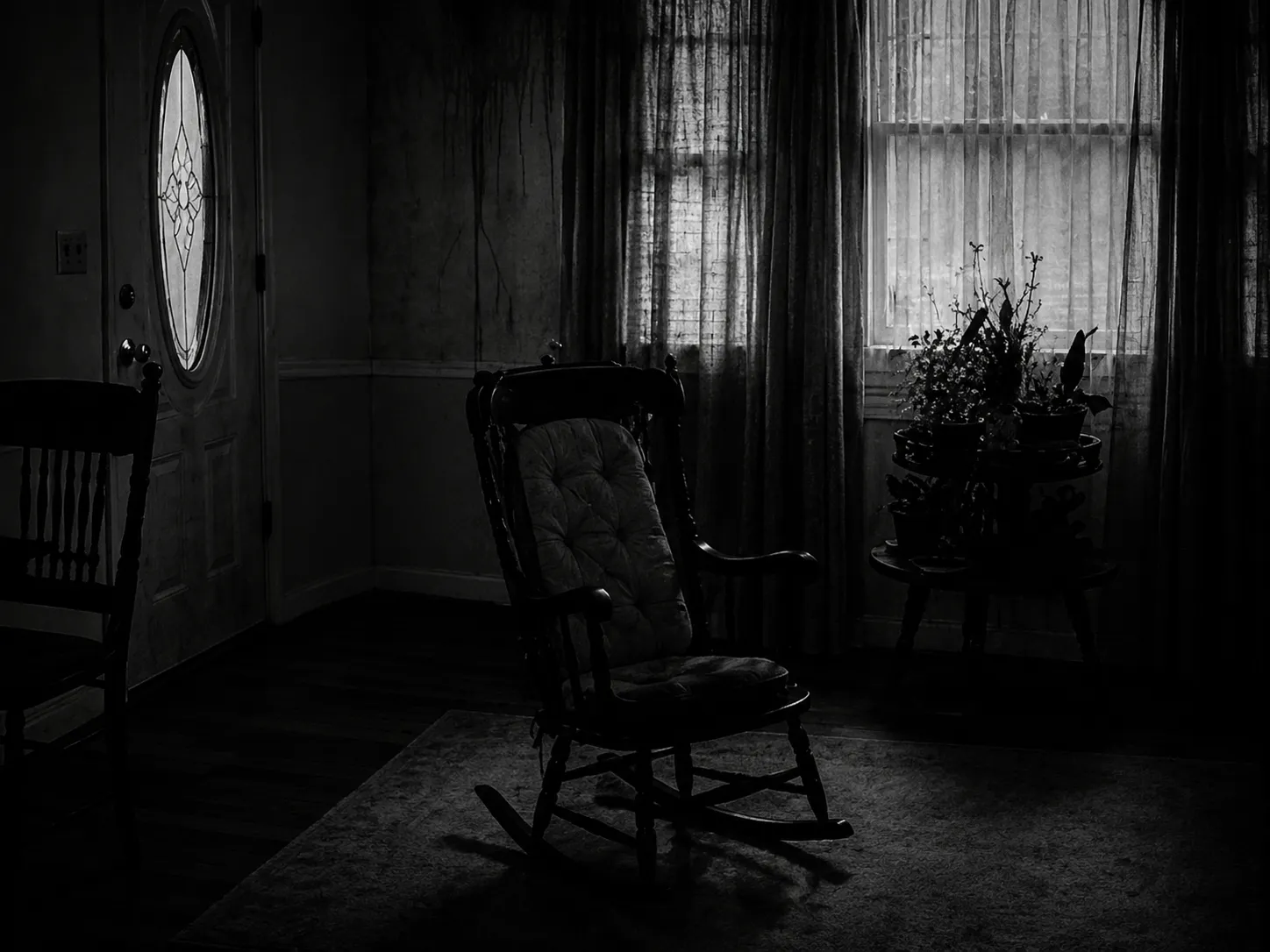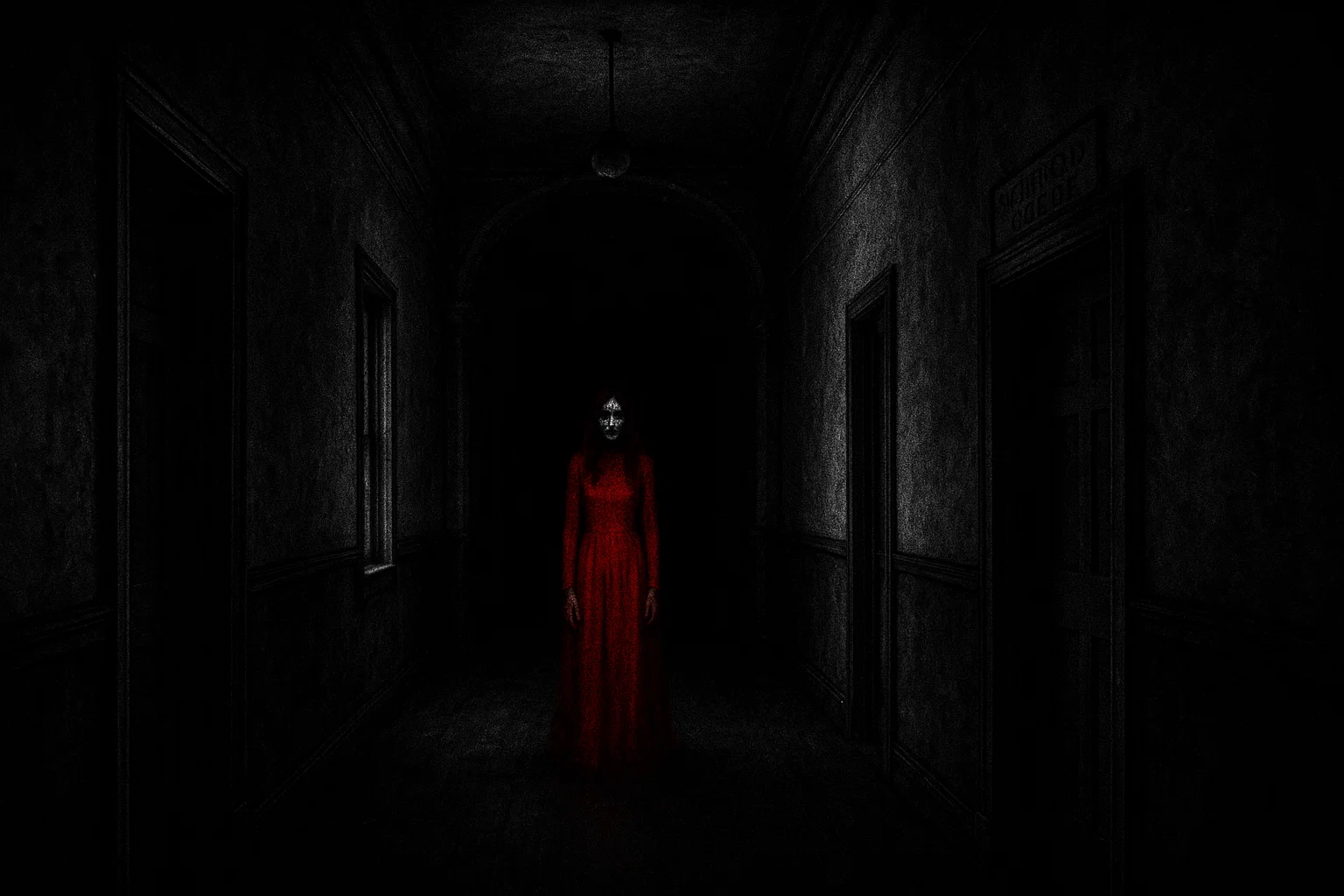
The Red Lady of Huntingdon College is one of Alabama’s most long-lasting campus ghost stories, a spectre said to haunt the halls of a century-old dormitory in Montgomery in a swirl of scarlet cloth and crimson light. For more than a hundred years, students, staff, and visitors have passed down her story in dorm rooms and orientation sessions, turning her into a fixture of Southern collegiate folklore.
But who is she supposed to be, where did the legend come from, and why does it keep resurfacing every autumn? Here is everything verifiable about her origins, her story, and her place in campus tradition.
Summary
Key Takeaways
| Attribute | Details |
|---|---|
| Name | Red Lady of Huntingdon College; also known as “Martha” (or, in some retellings, “Margaret”); sometimes conflated online with the unofficial “Phantom Flapper” variant |
| THC Scale | L-4 [See the THC Scale Explanation] |
| Location / Origin | Former Pratt Hall dormitory, Huntingdon College, 1500 East Fairview Avenue, Montgomery, Alabama 36106 (secondary origin point: the original Tuskegee, Alabama campus, for the earlier 19th-century apparition) |
| Classification | Crisis Apparition, Intelligent |
| History | Unconfirmed campus legend of a homesick, red-obsessed student’s suicide in Pratt Hall, placed in the early 20th century (school was then the Woman’s College of Alabama, 1910–1935); a separate, unrelated apparition was reported in the late 19th century at the college’s original Tuskegee campus |
| Casualties & Deaths | Martha is described as the alleged victim, not a cause of harm |
| Associated Entities | The “jilted student” ghost of the college green (alleged 1970s); a murdered co-ed; a boy said to have drowned in the campus pond; a towel-clad student apparition; “Frank the Library Ghost” |
| Manifestations | Visual (full-figure apparition in red, red glow beneath a door), Auditory (footsteps, unexplained movement), Environmental (reported crimson light flashes) |
| First reported sighting | Late 19th century (unnamed apparition, Tuskegee campus); “Martha” narrative dated to the early 20th century, first published in 1969 |
| Recent reported sighting | Undocumented officially; anecdotal student and visitor accounts have continued to circulate online as recently as the 2020s |
| Threat Level | 2/10 (harmless) [See the Threat Level Explanation] |
| HCR | 6/10 (Leans fabricated) [See the Hoax Confidence Rating Explanation] |
Who Is the Red Lady of Huntingdon College
The Red Lady of Huntingdon College is a ghost said to haunt the former Pratt Hall dormitory at Huntingdon College, a private Methodist liberal arts school in Montgomery, Alabama.
According to folklorist Kathryn Tucker Windham, who first published the tale in her 1969 book 13 Alabama Ghosts and Jeffrey, and later corroborated by historian Daniel W. Barefoot, the legend is actually made up of two separate apparitions, both associated with the color red.
The first ghost appeared in the late 19th century, when the school was still located in Tuskegee, Alabama, and known as Tuskegee Female College.
The early apparition was described as a young woman in a scarlet dress who carried a scarlet parasol. She was seen walking silently up and down the halls of a women’s dormitory late at night, bathed in a red glow, before eventually passing through a gateway outside campus and vanishing for good. Her identity was never established.
The second and far better-known ghost is tied to the campus’s later location in Montgomery, after the school moved there in 1909 and was renamed the Woman’s College of Alabama. This version of the legend centers on a student, remembered in most retellings as “Martha” (though some sources give her name as “Margaret,” and no last name has ever been documented), who is said to have died by suicide in her room on the fourth floor of Pratt Hall in the early 20th century.
Ever since, students have reported seeing her ghost — dressed in red — moving through the halls of Pratt Hall, passing through closed doors and walls, and appearing as a red glow from beneath her old dorm room door on the anniversary of her death.
The Legend of Martha and Her Room Full of Red
The most detailed version of the story, as recorded by Windham, describes a young woman who reluctantly came to Huntingdon. She had grown up in New York, and family circumstance — her father’s mother had attended the college in its earlier days in Tuskegee, and her father’s will specified that she attend his mother’s alma mater — brought her to Alabama against her wishes.
Her father’s fortune was said to be considerable. Though Martha had little desire to leave New York, she reportedly went along with the arrangement out of respect for how profoundly her father loved his home state.
From the moment she arrived, the student was fixated on the color red. She wore red almost exclusively and decorated her dorm room with red draperies, a red bedspread, and a red rug.
Windham’s version adds a specific detail: among her red belongings was a prayer rug purchased in Turkey, along with a collection of small red figurines displayed on her bookshelves. When classmates asked why she surrounded herself so completely with a single color, she reportedly never gave a clear answer, only deepening the curiosity — and eventually the unease — of the other girls on her floor.
She struggled to make friends and was described in most tellings as shy, withdrawn, and homesick, further isolated by classmates who assumed her reticence was a form of snobbery tied to her family’s wealth. According to Windham’s account, many of the girls who did visit her room were less interested in Martha herself than in getting a look at her unusual red belongings. Once their curiosity was satisfied, the visits stopped.
Her one real connection on campus was her roommate. Windham’s version states that the roommate ultimately found living with Martha unbearable and asked the dormitory’s housemother for a transfer. The request was granted, and a new student was placed in the room in her place, leaving Martha — according to the legend — even more isolated and irritable than before.
Soon afterward, Martha stopped appearing at meals and classes altogether. Concerned classmates eventually went to check on her. According to the fullest version of the story, whoever opened the door to Martha’s room found her lying on the floor in her red robe, draped in her red bedspread, having taken her own life by cutting her wrists.
The witness reportedly screamed and fainted on the spot, drawing other students on the fourth floor out of their rooms to see what had happened. No precise date for this event has ever been documented in any independent source, and the exact circumstances — along with Martha’s full name — remain unconfirmed outside the oral tradition itself.
You may also enjoy:
Is the Richards DAR House Haunting Evidence of Intelligent Spirits?
September 22, 2025
Pruflas: Prince of Chaos in Hell’s Hierarchy
August 26, 2025
Dajjal, the One-Eyed Antichrist Who Deceives the World
October 3, 2025
What Is a Selkie and Why Is Its Seal Skin So Dangerous?
January 29, 2026
Who Is Hanbi? The Formless Demon of Ancient Mesopotamia
October 1, 2025
Scylla: The Ancient Sea Monster That Haunted the Strait of Messina
November 17, 2025
Why Are There Two “Red Ladies”?
Understanding the “Red Lady legends” requires some context about the institution itself. Huntingdon College was chartered on February 2, 1854, as Tuskegee Female College in Tuskegee, Alabama, under its first president, Andrew Adgate Lipscomb. In 1872, the Methodist Episcopal Church, South, took over management of the school, renaming it Alabama Conference Female College.
Facing the need for a larger, more urban base of support after the Civil War, college leaders relocated the institution to Montgomery, purchasing a 58-acre parcel of land in 1908 in what is now the city’s Old Cloverdale neighborhood.
The campus landscape was designed by Frederick Law Olmsted Jr., son of the designer of New York’s Central Park, and the school was renamed the Woman’s College of Alabama after its move. Julia Pratt Hall — the dormitory at the center of the Red Lady legend — was completed in 1912, three years after the move to Montgomery.
The college admitted its first male students after World War I, graduated its first male student in 1934, and was renamed Huntingdon College in 1935 in honor of Selina, Countess of Huntingdon, a prominent supporter of the Methodist movement in England. The campus, known for its Collegiate Gothic architecture modeled on Oxford and Cambridge, is today listed on the National Register of Historic Places as the Huntingdon College Campus Historic District.
One detail that often confuses newcomers to the legend is that Huntingdon College is said to have not one, but two distinct “Red Lady” ghosts, separated by decades and by two different campuses. According to both Windham and historian Daniel Barefoot, these are treated as separate hauntings that later merged into a single popular legend:
- The first Red Lady (late 1800s, Tuskegee campus). This is the older and far less developed of the two stories. It involves an unnamed woman in a scarlet dress carrying a scarlet parasol, seen walking the halls of a women’s dormitory bathed in red light before disappearing through an outdoor gateway, never to return. No backstory, motive, or identity was ever attached to the entity. She is essentially a single reported sighting that predates the “Martha” narrative by decades and belongs to the campus’s original location in Tuskegee, not Montgomery.
- The second Red Lady (early 1900s, Montgomery campus). This is the fully developed “Martha” story most people mean today when they refer to the Red Lady — the tale of the homesick, red-obsessed student who died in Pratt Hall.
Because both figures share the same defining trait — an association with the color red and a haunting tied to a women’s dormitory — storytellers, including Windham herself, have long folded them into a single continuous legend, even though they involve different women, different decades, and, in particular, different campuses.
Adding to the confusion, some campus retellings place Martha’s actual death not in Montgomery’s Pratt Hall (built in 1912) but earlier, during the college’s time in Tuskegee, which would predate Pratt Hall’s construction entirely and cannot be reconciled with the version most commonly told.
A separate, less official strand of campus lore — sometimes referred to informally online as the “Phantom Flapper” — ties a red-clad apparition in Pratt Hall to the 1920s specifically, a variant that does not appear in Windham’s original 1969 account and should be treated as a later elaboration on the core legend rather than an established part of it.
In short, the “two Red Ladies” framing exists because the legend appears to be a fusion of at least one genuinely older, thinly documented sighting from the 19th century and a much richer, more narratively complete story that took shape after the college’s 1909 move to Montgomery. Over a century of retelling, the two have become functionally inseparable in popular memory.
The Haunting of Pratt Hall
Following her death, students began reporting a range of paranormal experiences tied specifically to Pratt Hall, the dormitory built on the Montgomery campus in 1912 that housed the young woman’s room. The most commonly repeated details of the haunting include:
- Flashes of red or crimson light said to come from the transom of her old fourth-floor room, particularly on the anniversary of her death.
- Reports of a red-robed or red-dressed entity walking the corridors of Pratt Hall late at night.
- Claims that the apparition has been seen passing directly through closed doors and solid walls.
- General accounts of an eerie, unexplained presence concentrated on the building’s upper floor.
Because no exact date for the young woman’s death has ever been documented, the “anniversary” tied to these sightings is not fixed to a single confirmed calendar date in the historical record — it exists only within the oral tradition of the legend itself.
Pratt Hall no longer functions as a dormitory. It has since been converted into academic space and now houses Huntingdon College’s Department of Education and Psychology. However, the building’s reputation as the epicenter of the haunting has persisted regardless of its current use.
Some alumni accounts describe the fourth floor being closed off and used as storage space for a period, with students in the dormitory below reportedly hearing furniture being moved overhead at night — though, like most details of the legend, these accounts exist only as secondhand recollection rather than documented record.
A Campus With Several Ghost Stories, Not Just One
The Red Lady is by far the most famous of Huntingdon’s ghosts. Still, the same body of campus folklore that produced her story also includes several other alleged hauntings, suggesting that Huntingdon’s reputation as one of the most “haunted” colleges in the American South rests on more than a single legend:
- The jilted student on the green. According to campus lore, Huntingdon is also haunted by the spirit of a young male student who reportedly died by suicide, by gunshot, on the college green sometime during the 1970s after being left by a girlfriend. Students have described feeling unseen hands tugging at their clothes, mussing their hair, or blowing in their ears while crossing the green at night.
- A murdered co-ed. Campus ghost lore also references the spirit of a female student said to have been murdered on campus, though, as with the Red Lady, no independently documented case has been tied to this account.
- A drowned boy. Another frequent entity in Huntingdon’s ghost lore is a young boy said to have drowned in the campus pond.
- A towel-clad apparition. Some retellings describe a female student ghost seen wrapped only in a towel, generally associated with one of the dormitories.
- “Frank the Library Ghost.” A poltergeist nicknamed Frank is said to haunt the college library, representing one of the few named, though similarly undocumented, spirits on campus.
None of these secondary legends carry the same weight of documentation, narrative detail, or institutional recognition as the Red Lady — most exist only as brief mentions in folklore compilations and campus oral tradition — but together they illustrate that Huntingdon’s paranormal reputation was built cumulatively, over generations, rather than around one single tragic event.
The Dark History Behind the Legend
Separating documented Huntingdon College history from ghost-story embellishment is difficult because so much of the college’s early institutional memory was destroyed by a well-documented disaster. When the school relocated from Tuskegee to Montgomery in 1909, staff moved the college’s furniture, laboratory chemicals, and administrative records into a building called Hamner Hall on August 24 of that year.
Hamner Hall burned to the ground that same night, destroying the written records of the college’s first fifty years, along with essentially all of its furnishings. Students and the college’s president relocated to Sullins College in Virginia for a full school year while Montgomery’s first permanent building, Flowers Memorial Hall, was under construction.
The fire is significant to the Red Lady legend for two reasons. First, it means that any student records, correspondence, or local newspaper coverage that might have confirmed or disproven a death matching Martha’s story from the college’s earliest Montgomery years would have been especially vulnerable to loss, either in the fire itself or in the disruption of the following year.
Second, it proves that Huntingdon’s early Montgomery-era history genuinely included institutional trauma and loss — just not, as far as any surviving documentation shows, in the specific form the Red Lady legend describes.
Beyond the fire, the broader environment the legend describes was real: in the early 20th century, Huntingdon operated as the Woman’s College of Alabama, a small, socially conservative, all-female institution where students lived under close supervision by housemothers, dined communally, and had limited privacy or ability to leave campus.
Historians who have studied the Red Lady story have noted that this kind of setting — isolating for any student who didn’t fit in, and offering few outlets for a homesick or grieving young woman far from family — plausibly explains why a story about isolation, rejection, and tragedy would take root and resonate at a school like Huntingdon, whether or not the specific events described ever happened to a real “Martha.”
You may also enjoy:
Who Is Oriens? The Forgotten Infernal King
August 26, 2025
Satanachia: Demon General of Hell’s Legions
August 28, 2025
The Complete List of All Haunted Places in Colorado
November 19, 2025
Abalam: Demon of Sorrow and Knowledge
August 13, 2025
Where the Story Comes From: Kathryn Tucker Windham
The Red Lady’s modern fame owes a great deal to one specific source: Kathryn Tucker Windham (1918–2011), a journalist, photographer, and folklorist who graduated from Huntingdon College in 1939. Windham became one of the American South’s best-known collectors of ghost stories after she began attributing unexplained household disturbances in her own Selma home to a spirit she called “Jeffrey.
That personal experience led Windham to team up with folklorist Margaret Gillis Figh to write 13 Alabama Ghosts and Jeffrey, published in 1969. The book compiled thirteen ghost legends from across Alabama, chosen specifically because they had “entertained many generations” and represented a “treasured part of Southern folklore.”
The Red Lady of Huntingdon College was included among these thirteen stories. It was this book — later reprinted by the University of Alabama Press and still widely read in Alabama schools — that cemented the legend in its now-familiar form and introduced it to readers well beyond the Huntingdon campus.
Windham went on to write six more regional ghost story collections covering Georgia, Mississippi, and Tennessee, and became a nationally recognized storyteller through repeated appearances on NPR’s All Things Considered.
Her ghost stories, including the Red Lady, are generally framed as folklore and community history rather than claims of documented supernatural fact — a distinction Windham herself often made, noting that her stories did not require belief in ghosts to be enjoyed.
What the Historical Record Actually Shows
Despite the legend’s popularity, no independent documentation — such as college records, newspaper archives, or death certificates — has ever surfaced to confirm that a student named Martha or Margaret died by suicide in Pratt Hall in the way the story describes. Huntingdon’s own institutional archives do not contain a confirmed record of the event.
This gap is not unusual for campus ghost legends of this era and type. As discussed above, the loss of the college’s early records in the 1909 Hamner Hall fire makes it especially difficult to confirm or rule out specific claims from this period of Huntingdon’s history.
Historians who have examined the tale generally treat it as folklore that reflects the era’s real social conditions — including the isolating, tightly regulated environment of an early-20th-century women’s college — rather than as a documented historical event. Several competing explanations for who Martha “really” was, or whether she existed at all, circulate among people who have studied the legend:
- A hybrid creature. One theory has that Martha is not based on a single real person but on a blend of several real students’ hardships, hometown loneliness, family pressure, social isolation, or personal tragedy, later consolidated into one dramatic narrative for the purposes of storytelling.
- A moral or warning story. Another interpretation treats the story less as biography and more as a parable, warning students against snobbery, gossip, and excluding those who seem different — with Martha’s isolation by her peers serving as the story’s central lesson.
- An entirely invented legend. A third possibility, favored by skeptics, is that the story was constructed wholesale as campus folklore, in the same tradition as countless other “haunted dormitory” legends that appear at colleges across the United States, and was never tied to any real death at all.
- A garbled memory of a real but different event. Because the college’s own early Montgomery-era records were damaged by fire and the Tuskegee-era records were lost outright, some researchers allow for the possibility that the story reflects a real tragedy — just one whose specific details (the name, the exact building, the year) were altered or conflated over decades of oral retelling.
No single theory has been confirmed, and given the loss of early institutional records, it is unlikely any will be definitively proven or disproven using documentary evidence alone.
Red Lady of Huntingdon College vs Other Similar Entities
The Red Lady belongs to two overlapping ghost-story traditions: the “haunted women’s dormitory” legend common to American colleges, and the broader “Lady in Red” archetype found in folklore worldwide.
| Name | Location | Type of Haunting | Activity Level |
|---|---|---|---|
| Edith | Wiebking Hall, University of Northern Colorado, Greeley, Colorado | Intelligent | 5/10 (occasional) |
| Sarah | Phillips Hall, West Virginia Wesleyan College, Buckhannon, West Virginia | Intelligent | 4/10 (occasional) |
| Henry | Converse Hall, University of Vermont, Burlington, Vermont | Poltergeist, Intelligent | 4/10 (occasional) |
| Winship Hall Ghost | Agnes Scott College, Decatur, Georgia | Intelligent, Poltergeist | 5/10 (occasional) |
| Currier Hall Ghosts | University of Iowa, Iowa City, Iowa | Crisis Apparition, Intelligent | 4/10 (occasional) |
| Daisy Williams | Sweet Briar College, Amherst, Virginia | Intelligent, Poltergeist | 6/10 (occasional) |
| Riggleman Hall Spirit | University of Charleston, Charleston, West Virginia | Residual, Intelligent | 3/10 (dormant) |
| Woodburn Hall Clock Tower Ghost | West Virginia University, Morgantown, West Virginia | Residual | 2/10 (dormant) |
| Nettie Dickerson | Dock Street Theatre area, Charleston, South Carolina | Lady in Red, Intelligent | 5/10 (occasional) |
| Rawls Hotel Lady in Red | Enterprise, Alabama | Lady in Red, Intelligent | 4/10 (occasional) |
| Drake Hotel Lady in Red | Chicago, Illinois | Lady in Red, Crisis Apparition | 4/10 (occasional) |
| Weckesser Building Lady in Red | Wilkes University, Wilkes-Barre, Pennsylvania | Lady in Red, Intelligent | 4/10 (occasional) |
| Wrexham Hall Lady in Red (Susannah Walthall) | Chesterfield, Virginia | Lady in Red, Residual | 3/10 (dormant) |
| Moran Mansion Lady in Red (Alice Goodfellow Rheem) | Orcas Island, Washington | Lady in Red, Intelligent | 4/10 (occasional) |
| Leap Castle Red Lady | County Offaly, Ireland | Lady in Red, Residual | 3/10 (dormant) |
| Pluckley Red Lady | Church of St Nicholas, Pluckley, Kent, England | Lady in Red, Residual | 3/10 (dormant) |
The Red Lady Run and Campus Tradition
The Red Lady has become more than a ghost story at Huntingdon — she is part of the college’s living campus culture. Each October, members of the Chi Omega, Phi Mu, and Alpha Omicron Pi sororities take part in an annual event known as “The Red Lady Run,” in which participants paint their faces, dress in black, and run together around campus in a tradition tied directly to the legend.
The story is also commonly shared with incoming students, often during orientation or in late-night dormitory conversations, functioning as a rite of passage that connects new students to the college’s long institutional history.
Beyond campus, the Red Lady is regularly featured in books and media covering Alabama’s paranormal folklore, including Faith Serafin’s Haunted Montgomery, Alabama and Daniel Barefoot’s Haunted Halls of Ivy: Ghosts of Southern Colleges and Universities, and she is frequently cited on lists of the most haunted college campuses in the United States.
A Legend Rooted in Real Places
What distinguishes the Red Lady of Huntingdon College from many campus ghost stories is that its setting is entirely real and still standing. Pratt Hall exists today as an active academic building, the campus’s Gothic Revival architecture dates directly to the era the legend describes, and the college itself has a documented, continuous history stretching back to 1854.
Whether or not a student named Martha ever actually died within its walls, the Red Lady legend has become permanently woven into how generations of Huntingdon students understand and pass down the identity of their campus.
You may also enjoy:
Belphegor: From Moabite God to Seductive Maiden of Hell
August 29, 2025
Why the Jemison-Van de Graaff Mansion Haunting Terrifies Visitors
September 23, 2025
The Enfield Poltergeist Case: Fact, Hoax, or Something More?
October 21, 2025
Sources
- Windham, Kathryn Tucker, and Margaret Gillis Figh. 13 Alabama Ghosts and Jeffrey. University of Alabama Press, 2016.
- Barefoot, Daniel W. Haunted Halls of Ivy: Ghosts of Southern Colleges and Universities. John F. Blair, 2004.
- Serafin, Faith. Haunted Montgomery, Alabama. The History Press, 2013.
- Brown, Alan. The Haunting of Alabama. Pelican Publishing, 2017.
- Hauck, Dennis William. Haunted Places: The National Directory. Athanor Press, 1994.
- Ellison, Rhoda Coleman. History of Huntingdon College, 1854–1954. University of Alabama Press, 1954.