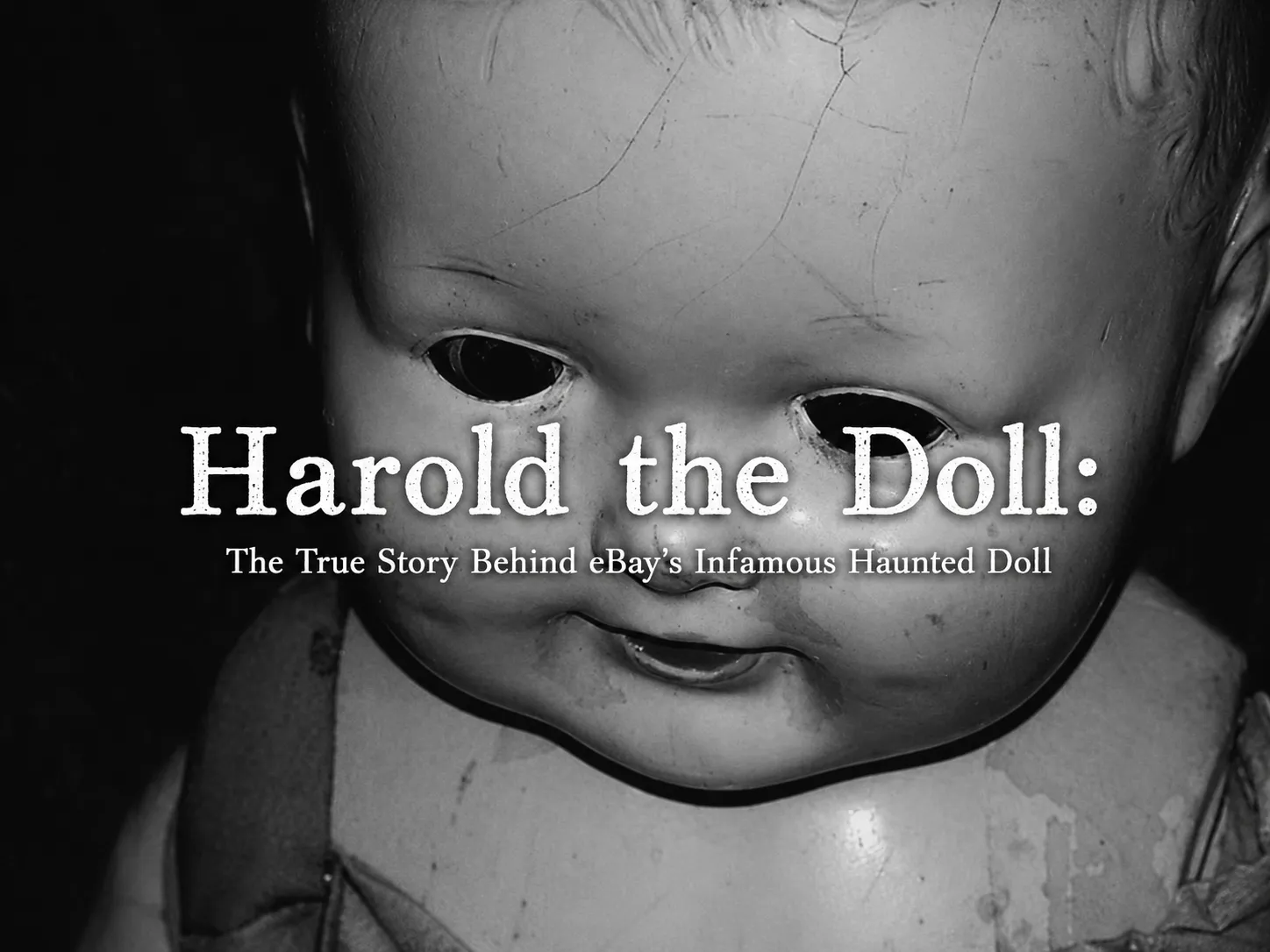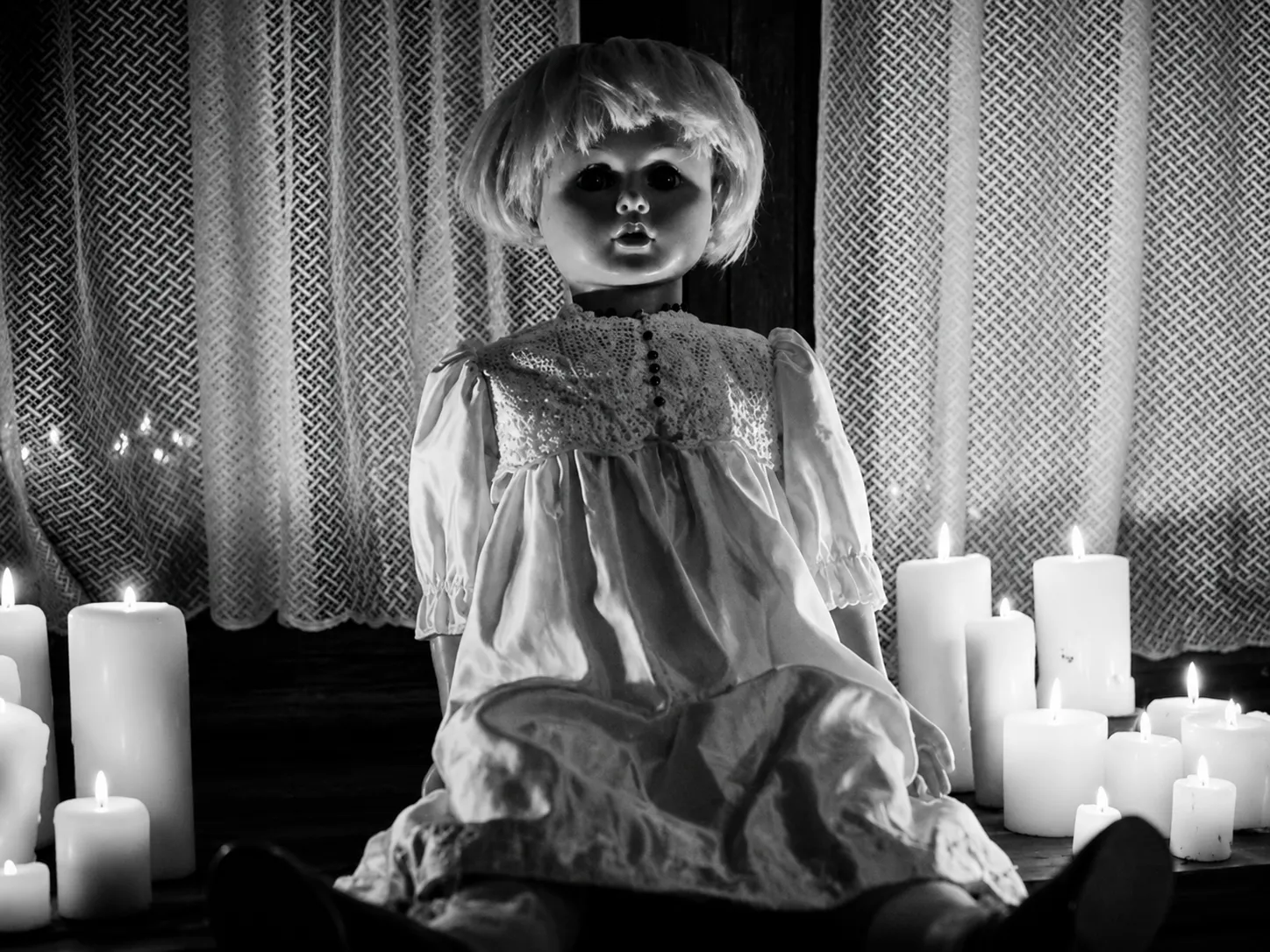
Charley the Doll is one of New England’s lesser-known but genuinely unsettling haunted-object legends, a Victorian-era boy doll pulled from a locked trunk in 1968 whose story has quietly followed him through five decades, several owners, and one very unusual retail shop near Salem, Massachusetts.
Unlike mass-marketed horror icons manufactured for movie franchises, Charley’s story began in an attic, not a script — and that origin is part of why his tale has persisted among paranormal researchers and oddity collectors for so long.
Summary
Key Takeaways
| Attribute | Details |
|---|---|
| Name | Charley the Doll (also spelled “Charlie the Doll”) |
| Object Type | Antique boy doll, hard head and feet with a soft, stuffed body |
| Origin / Creation | Unknown. Discovered in 1968; the newspaper packed around him dates to the early 1930s, but his actual manufacture date and maker have never been confirmed |
| Current Location | Last publicly documented at Local Artisan, a taxidermy and oddities shop in Beverly, Massachusetts, USA. Current whereabouts uncertain following the attraction’s closure |
| Current Owner | Last publicly associated with Cassandra Carr of Local Artisan; not confirmed whether she remains his current custodian |
| Death Toll | None confirmed, and none attributed |
| Type of Curse / Haunting | Poltergeist Activity Linked to Object, Intelligent Haunting, Inhabited Object, Spirit Attachment |
| Manifestations | Unexplained movement between positions on a shelf, a child’s account of the doll speaking to her, unexplained scratches on that same child, and a general sense of fear and fixation reported among the children in the household |
| Most Recent Incident | No newly reported incidents since being placed on display at Local Artisan; as of the most recent published account (2019), the doll was reported to have not moved since being placed on a top shelf |
| Threat Level | 3/10 (mildly threatening) [See the Threat Level Explanation] |
| Can the Public View It? | No — the public attraction listing for Charley has been marked permanently closed; last known location was Local Artisan in Beverly, Massachusetts |
| Hoax Confidence Rating | 5/10 (Neutral) [See the Hoax Confidence Rating Explanation] |
What Is Charley the Doll?
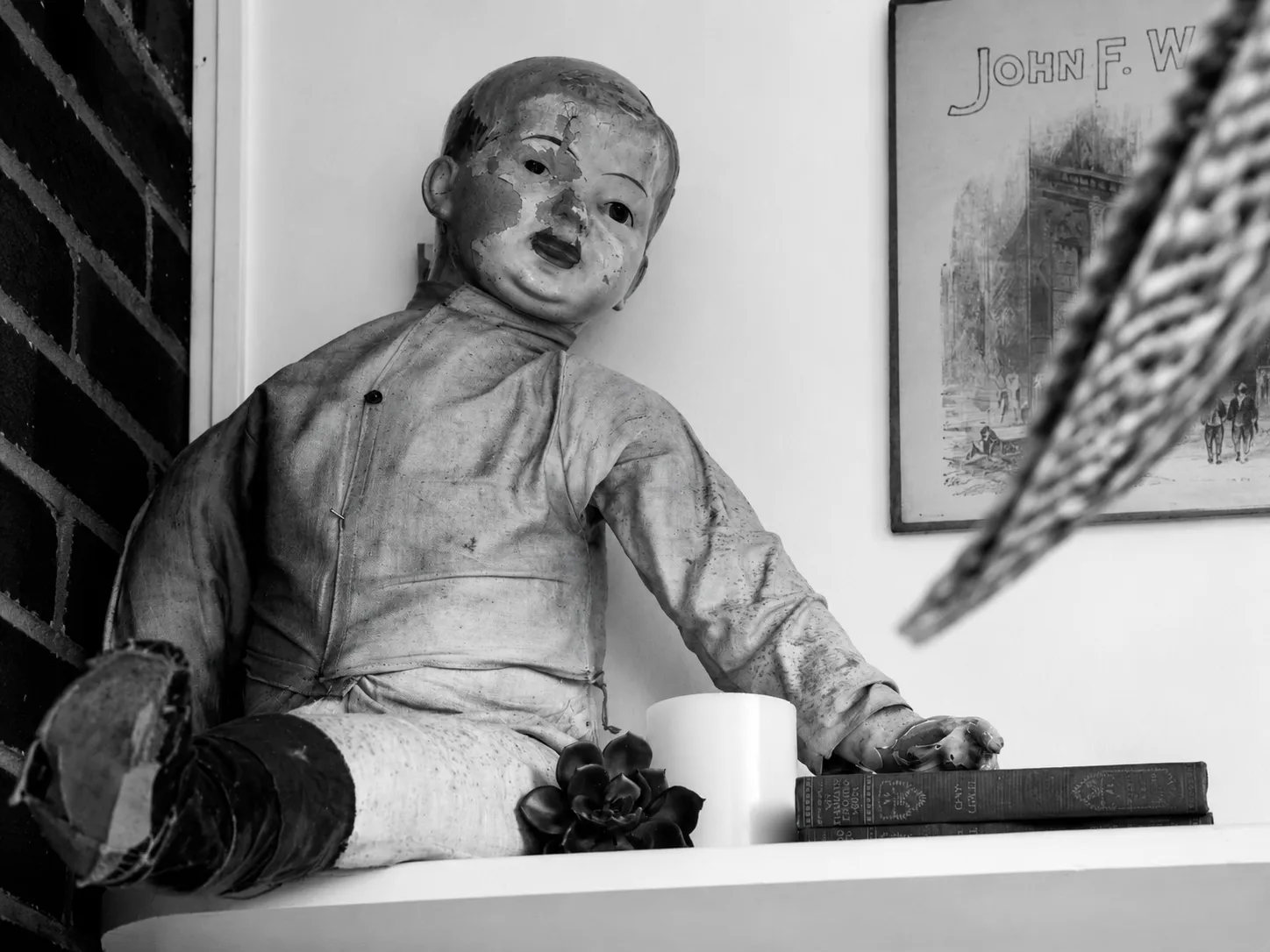
Charley the Doll is an antique doll, fashioned in the likeness of a young boy, that was discovered in 1968 inside a locked trunk in the attic of a Victorian-era home in upstate New York.
He is dressed in a yellowing, high-collared coat, cream-colored trousers, and tall black boots trimmed with reddish-brown bands. His head and feet are made of a hard material, typical of antique doll construction, while his body is soft and stuffed. He has blond hair, blue eyes, a red mouth, and rosy cheeks.
This allegedly evil doll gets his “haunted” reputation from a string of incidents reported by the family who found him: unexplained movement between the shelves of a shared doll collection, a young child who claimed the doll spoke to her, and scratches that appeared on that same child’s body that the family could not attribute to their household cat.
Because the doll’s actual age has never been determined, and because his origins before 1968 are unknown, Charley occupies an unusual space in American ghost-doll lore — he is not tied to a single famous case file the way Robert the Doll or Annabelle are, but his story has nonetheless been passed along largely by word of mouth and firsthand retellings from the people who have owned him.
Today, Charley’s documented history places him in the collection of Local Artisan, a small taxidermy and oddities shop that operated on Cabot Street in Beverly, Massachusetts, just across the Beverly–Salem Bridge from Salem’s more famous witch-trial history.
The 1968 Discovery: A Trunk, a Prayer, and Old Newspaper
According to the account most consistently repeated by those who have owned him, Charley was found in 1968 at the bottom of a tattered trunk stored in the attic of a Victorian home in upstate New York. The only other item in the trunk with the doll was a yellowed sheet of paper bearing the Lord’s Prayer.
The trunk had been packed using old newspaper, and the dates printed on that newspaper went back to the early 1930s — but that detail only tells researchers when the trunk was packed, not when the doll himself was made. His true age and place of origin remain undetermined to this day, and no maker’s mark, manufacturer stamp, or documented provenance has ever surfaced to date him more precisely.
This detail is one of the more genuinely interesting aspects of Charley’s case: most “haunted doll” legends attach themselves to a specific, well-documented manufacturer or decade (composition dolls from the 1920s, bisque dolls from Victorian Germany, and so on).
Charley’s manufacture predates the paper trail that would normally allow collectors to pin down a decade, which is part of why antique doll collectors who have handled him describe his exact age as a genuine open question rather than a marketing embellishment.
You may also enjoy:
Is the Lukwata Real or Just an African Legend?
November 11, 2025
Top 13 Most Haunted Houses in Connecticut
December 2, 2025
Who Is Lucifuge Rofocale in Demonology?
August 25, 2025
Andras in the Ars Goetia: The Great Marquis of Discord
April 28, 2025
The Family, the Bench of Dolls, and the First Signs of Trouble
The family that discovered the trunk consisted of a husband, wife, and their five daughters. When they found the doll, they added him to an existing collection of antique dolls already displayed in the home and gave him the name Charley. At first, none of the five girls showed much interest in playing with him — he simply blended in with the family’s other dolls on a shared bench.
That changed when the parents noticed Charley had, on more than one occasion, moved position on the bench. Their first instinct was to blame their children for rearranging the dolls, but all five girls maintained they had not touched him.
The situation escalated when the youngest daughter, then four years old, told her parents that Charley had spoken to her one night when she got up to use the bathroom. Her parents dismissed the claim as a young child’s imagination — a reasonable assumption at the time, since neither parent had personally witnessed the doll moving or speaking.
What followed made the family take the situation more seriously. The children became increasingly fixated on and frightened of the doll, and several of them stopped using the bathroom at night altogether out of fear of encountering him. The turning point came when the youngest daughter was found with unexplained scratches on her body.
The family owned a cat, but the marks did not match the pattern of a cat’s claws. With no clear explanation for the injury, and no adult ever having caught the doll in the act of moving, the parents made the decision to remove Charley from the bench, return him to the attic, and lock him back inside the same trunk he had originally been found in.
How Charley Changed Hands
The doll stayed locked away for years while the family’s five daughters grew up. Eventually, once the children were grown, the family sold the house. The contents of the attic — including the trunk and the doll still locked inside it — were sold off, with Charley reportedly being one of the last items to sell at what was ultimately a garage or estate sale.
A woman with an antique doll collection purchased Charley at that sale. According to the accounts passed down with him, the original homeowner told her the doll’s full history before the sale was finalized — she bought him with full knowledge of what the family had experienced. She did not keep him for especially long, however, and the doll changed hands several more times over the following years, with his backstory following him at each transaction.
This detail matters for anyone researching haunted-object folklore broadly: unlike urban legends that grow more elaborate with each retelling, the core details of Charley’s story — the trunk, the Lord’s Prayer, the scratches, the five daughters — have remained largely consistent across the retellings by each following owner, which is part of what has made the case durable enough to be documented by paranormal researchers and travel writers alike.
Charley’s Home at Local Artisan in Beverly, Massachusetts
Charley’s most recent and most publicly documented home was Local Artisan, a small taxidermy, art, and oddities shop located at 34 Cabot Street in Beverly, Massachusetts — a compact retail space of well under 200 square feet situated near the foot of the Beverly–Salem Bridge. The shop was owned and operated by Cassandra Carr, a self-taught taxidermist and artist who opened the business in Beverly in 2018 or 2019.
Local Artisan was known for far more than Charley. Carr’s own handcrafted taxidermy pieces shared shelf space with pinned insect displays, a taxidermied coyote, and Mice Manor — a dollhouse-style habitat Carr built and populated with taxidermied mice dressed and posed as famous fictional and historical figures, including Buffalo Bill from Silence of the Lambs, Norman Bates, and Lizzie Borden.
Charley sat among these oddities on a shelf where visitors could view him, and Carr was known for sharing his history in detail with anyone who asked.
As of the most recent records, the Charley the Doll listing has been marked as permanently closed to visitors, meaning the attraction is no longer accessible in the way it once was, even though the record of Charley’s history remains documented online.
Anyone hoping to view him in person should verify current status and location before planning a visit, since the doll’s custodianship — much like his history before 1968 — has a track record of changing.
You may also enjoy:
Is My Home Haunted or Just Old? How to Tell the Difference
September 5, 2025
6 Real Haunted Houses in Arkansas with Chilling True Stories
October 8, 2025
How Charley Compares to Other Famous Haunted Items
Charley is frequently mentioned alongside better-known haunted dolls, but his case has some meaningful differences worth understanding.
Robert the Doll, housed at the Fort East Martello Museum in Key West, Florida, belonged to artist Robert Eugene Otto in the early 20th century and was reportedly given to him by a servant. Robert’s legend is tied to a single documented family and a specific historical figure, and the doll has a fixed public home with an established museum record going back decades.
Annabelle, the doll linked with two of the most famous paranormal investigators of all time: Ed and Lorraine Warren. The doll is a Raggedy Ann-style cloth doll rather than an antique bisque or composition doll. Her case is recorded primarily through the Warrens’ own investigative reports. It is now housed at the Warrens’ Occult Museum in Connecticut.
Charley the Doll is different from both Annabelle and Robert in that his earliest known history is largely undocumented. There is no named original owner, no confirmed date of the doll’s creation, and no record establishing his backstory. His story instead survives through narratives passed from one private owner to the next, beginning with the family who found him in the attic trunk in 1968.
| Name | Type | Death Toll (Attributed) | Activity Level |
|---|---|---|---|
| Annabelle | Raggedy Ann-style cloth doll | At least 1 attributed | 4/10 (occasional) |
| Robert the Doll | Straw-stuffed doll, museum-housed | None confirmed; anecdotal bad luck reports from visitors | 5/10 (occasional) |
| Peggy the Doll | Porcelain-style doll (viral online case) | None confirmed; multiple reported illnesses among owners | 4/10 (occasional) |
| The Dybbuk Box | Wine cabinet | None confirmed; several illnesses attributed by successive owners | 3/10 (dormant) |
| The Crying Boy Painting | Mass-produced painting | None confirmed; linked in 1980s British tabloid reports to house fires | 2/10 (dormant) |
| Busby’s Stoop Chair | Wooden chair | At least 4 attributed (popular pub-lore accounts, dates vary) | 2/10 (dormant, chair now suspended out of reach) |
| The Hope Diamond | Blue gemstone | Several deaths and misfortunes attributed across a chain of owners (folklore) | 1/10 (dormant) |
| James Dean’s “Little Bastard” Porsche | Automobile (wreckage) | A small number of additional deaths/injuries attributed to those who later handled the wreckage and parts (widely reported, unverified) | 1/10 (dormant; wreckage has been missing since 1960) |
| Curse of Tutankhamun’s Tomb | Excavated royal tomb | Commonly cited between 20 and 30 deaths attributed among expedition-linked individuals; causal link disputed by historians | 1/10 (dormant) |
| The Basano Vase | Bronze/silver vase | Several deaths attributed across centuries (folklore; provenance largely unverified) | 2/10 (dormant) |
| The “Unlucky Mummy” (British Museum) | Ancient Egyptian mummy board | None confirmed; popularly but inaccurately linked to the sinking of the Titanic | 1/10 (dormant) |
| The Anguished Man Painting | Oil painting | None confirmed; anecdotal nightmares and disturbances reported by viewers | 3/10 (dormant to occasional) |
The Psychology Behind Haunted Doll Legends
Separate from whether any individual doll is genuinely haunted, there is a well-established body of research explaining why dolls in general — and antique dolls in particular — tend to unsettle people so consistently.
In 1970, Japanese roboticist Masahiro Mori published his concept of the “uncanny valley,” describing the sharp drop in comfort people feel when looking at a figure that is almost, but not quite, convincingly human.
Antique dolls like Charley are a near-perfect trigger for this response: hard bisque, porcelain, or composition heads with glass or painted eyes replicate human facial proportions closely enough to read as a face, but the fixed, unmoving expression and the material’s coldness break the illusion in a way that many people find viscerally disturbing rather than simply strange.
Victorian and early 20th-century doll manufacturing also plays a role. Dolls of the era Charley likely originates from were commonly produced with hard bisque or composition heads and hands attached to a soft, cloth-stuffed body — the exact construction described in Charley’s own documented appearance.
This combination of a rigid “dead” face on a soft, human-shaped body was standard manufacturing practice at the time, not a deliberate design choice meant to unsettle, but it has the side effect of making these dolls appear more corpse-like to modern eyes than the softer, more stylized dolls and action figures produced later in the 20th century.
Pareidolia — the tendency of the human brain to detect faces and patterns in random or fixed visual information — compounds this effect. A doll’s glass eyes and painted mouth do not change expression, so in dim or shifting light, small changes in shadow across a fixed face can appear to viewers as a change in expression, contributing to reports that a doll’s face “looked different” or that its eyes “seemed to follow” someone.
Frequently Asked Questions
When was Charley the Doll discovered?
Charley was discovered in 1968 in the attic of a Victorian home in upstate New York, inside a locked trunk packed with newspaper dated to the early 1930s.
How old is Charley the Doll?
His exact age is unknown. The newspaper used to pack his trunk dates to the 1930s, but that only establishes when the trunk was packed, not when the doll himself was made. No manufacturer’s mark has been documented.
Where is Charley the Doll now?
His most recently documented home was Local Artisan, a taxidermy and oddities shop in Beverly, Massachusetts, owned by Cassandra Carr. The public listing for viewing him has since been marked as permanently closed.
What is Charley the Doll rumored to do?
Reported activity includes the doll shifting position on a shelf without explanation, one witness’s account of the doll speaking to her as a child, and unexplained scratches that appeared on that same child. His activity is rumored to be connected specifically to children rather than adults.
Is Charley the Doll related to Annabelle or Robert the Doll?
No. Charley is an independent case with no documented connection to either doll. He differs from both in that his origin before 1968 is entirely unknown. In contrast, Robert the Doll and Annabelle both have documented original owners and more institutionally recorded histories.
You may also enjoy:
Who Is the Noppera-bō? The Eerie Legend of Japan’s Faceless Ghost
September 10, 2025
The Enfield Poltergeist Case: Fact, Hoax, or Something More?
October 21, 2025
What Is a Basilisk? Origins, Mythology, and Powers
January 28, 2026
Sources
- Mori, Masahiro. The Uncanny Valley. Translated by Karl F. MacDorman and Norri Kageki, IEEE Robotics & Automation Magazine, vol. 19, no. 2, 2012, pp. 98–100. Originally published in Energy, vol. 7, no. 4, 1970, pp. 33–35.
- Brittle, Gerald. The Demonologist: The Extraordinary Career of Ed and Lorraine Warren. Graymalkin Media, 2013.
- Pirvulescu, Sergiu. (2021). The existence of paranormal phenomena. ResearchGate.
- Ingram, John H. The Haunted Homes and Family Traditions of Great Britain. W.H. Allen & Co., 1897. Internet Archive.
- Lipp, Ottmar V, and Jessica Taubert. The face pareidolia illusion drives a happy face advantage that is dependent on perceived gender. Emotion (Washington, D.C.) vol. 24,7 (2024): 1781-1787. doi:10.1037/emo0001346