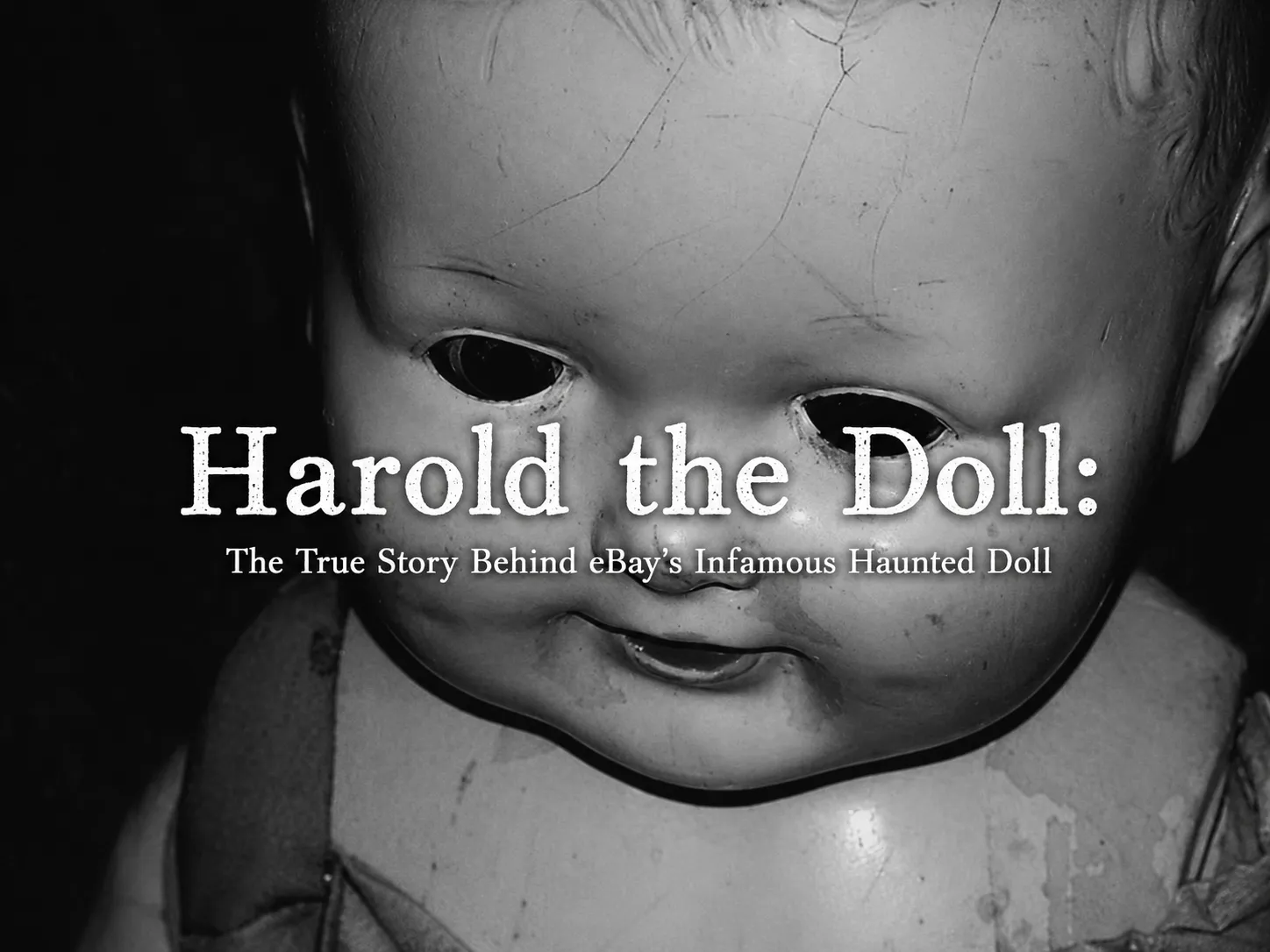
Harold the Doll is a battered, composition-style antique doll whose eBay listing in the early 2000s helped kick off the modern “haunted doll” craze that later gave the world stars like Robert the Doll and Annabelle.
Unlike many haunted-object legends that fade into folklore, Harold’s story is unusually well documented: it has a named current owner, a published book, a network of hand-drawn “evidence” sketches, EVP recordings, an alleged demon with a name pulled from the Book of Revelation, and a nationally broadcast television appearance.
That paper trail is exactly what makes Harold such a compelling case study — there’s a real, traceable chain of custody behind the ghost story, and behind it sits one of the darker and more elaborate mythologies attached to any haunted object on the internet.
Summary
Key Takeaways
| Attribute | Details |
|---|---|
| Name | Harold the Doll, also known as “Haunted Harold,” “The Devil’s Doll,” and “eBay’s Most Infamous Haunted Doll |
| Object Type | Doll (unmarked composition “mama” doll) |
| Origin / Creation | Manufacturer unknown; construction is consistent with composition dolls made roughly between the early 1900s and the 1950s |
| Current Location | Private residence in South Australia |
| Current Owner | Anthony Quinata |
| Death Toll | 0 confirmed + 2 attributed (anecdotal claims from a single prior owner, unverified) |
| Type of Curse / Haunting | Cursed Object, Demonic Attachment, Soul-Trapping Object, Intelligent Haunting |
| Manifestations | Disembodied voices and EVPs, crying and screaming, slight doll movement and facial-expression changes, headaches and chronic back pain, unexplained bruising and pinch-like marks, a reported thermal anomaly, visitor illness, and the death of a pet dog attributed to the entity |
| Most Recent Incident | 2017 — Quinata reported the “release” of three trapped souls during a trip to Australia; no new incidents have been publicly documented since, though the case has resurfaced in paranormal podcasts and retrospectives through 2025–2026 |
| Threat Level | 4/10 (mildly threatening) [See the Threat Level Explanation] |
| Can the Public View It? | No — held in a private collection; occasionally brought out for investigations or media appearances, but not on permanent public display |
| Hoax Confidence Rating | 7/10 (Probably a hoax) [See the Hoax Confidence Rating Explanation] |
What Is Harold the Doll?
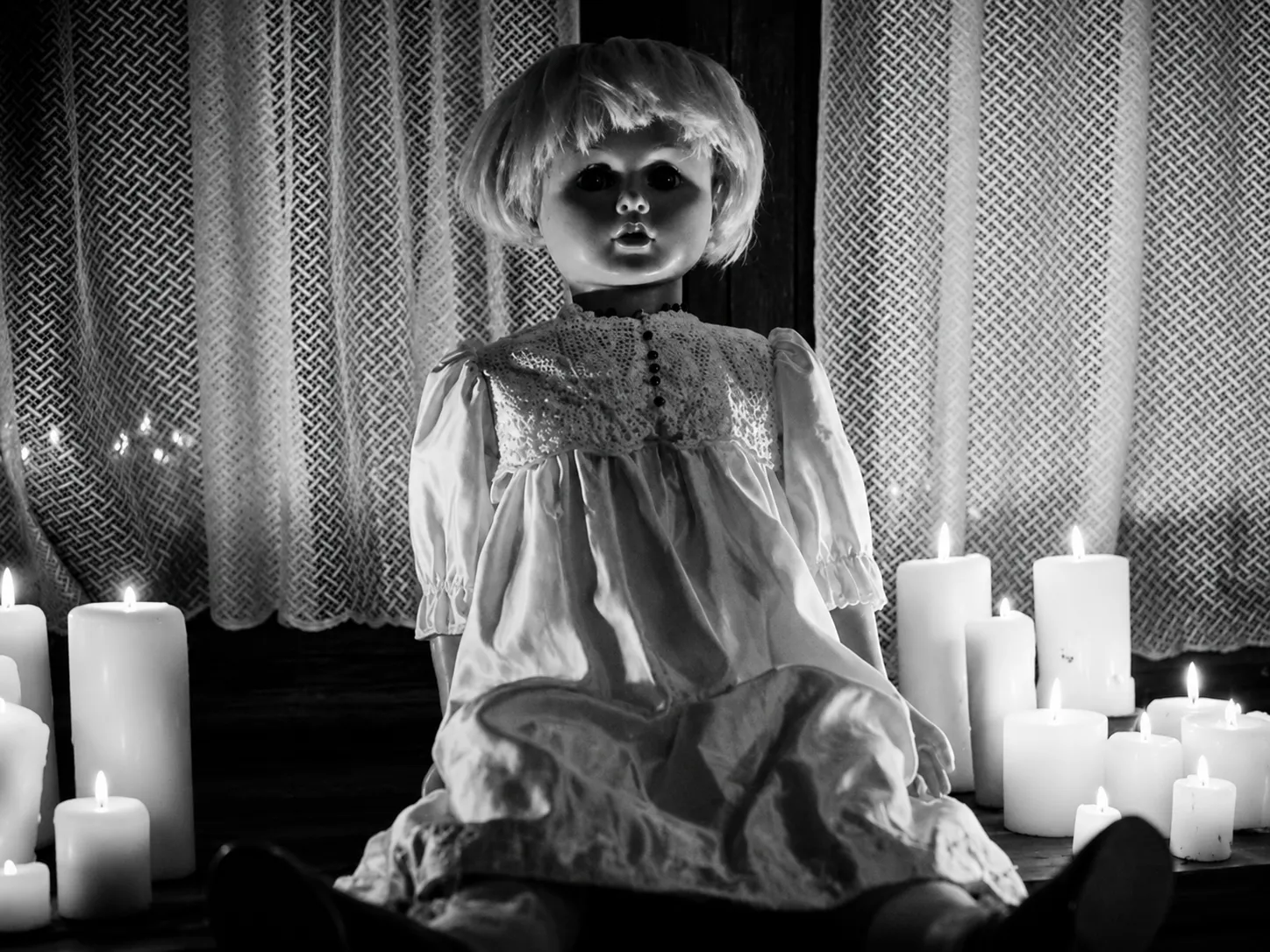
Harold the Doll — sometimes called “Haunted Harold” — is a composition doll, a type of doll manufactured largely between the early 1900s and the 1950s using a mixture of glue, sawdust, and other pulped materials pressed into molds, then coated in a gesso-like paint finish.
Only dolls with heads made from this composition material are technically classified as composition dolls. Harold is unmarked, meaning there is no manufacturer’s stamp on his body, which has made it difficult to pin down exactly which doll company produced him.
Based on his construction, Harold appears to be what collectors call a “mama doll” — a common type of composition doll built with a composition head and lower limbs attached to a soft, cloth-stuffed body, which made the dolls light enough for a child to carry.
Mama dolls of this era were also frequently fitted with internal voice mechanisms that produced a “mama”-like sound when the doll was tilted or rocked. Manufacturers marketed them at the time as “unbreakable” and “lifelike.” After consulting a doll expert, researcher Anthony Quinata concluded that Harold was likely produced by a smaller, more affordable knockoff manufacturer rather than one of the major doll houses of the period, which would explain the lack of any maker’s mark.
Harold rose to internet notoriety after being listed for sale on eBay in 2003, accompanied by an elaborate backstory written by the seller. That original listing is now widely acknowledged — including by the doll’s own current owner — to have been a fabricated sales pitch designed to drive up bidding.
What is not disputed is that the allegedly evil doll itself is real, physically exists, has changed hands multiple times since that auction, and has been the subject of ongoing paranormal claims, a self-published book, and a feature segment on a nationally aired ghost-hunting television show.
How Harold Got His Name and His First Auction
The doll’s story begins with a man named Greg, who listed the doll for sale online in 2003. According to accounts later confirmed by Anthony Quinata’s own research, Greg named the doll “Harold” after filming a video in which the doll’s arm and mouth appeared to move whenever someone said the word “here” or “Harold” — footage he then used to help sell the listing.
Greg originally priced the doll modestly, reportedly intending to ask somewhere around $9 to $50 for it, but as the listing’s spooky backstory spread and view counts climbed into the hundreds of thousands, bidding escalated dramatically, with the auction eventually closing at roughly $700.
Greg’s listing described a doll responsible for illness, migraines, a breakup, the disappearance of his cat, and crying and laughter heard coming from the basement where he stored it.
Anthony Quinata has since stated plainly that Greg later admitted, privately, that the entire backstory was invented to increase the sale price — a well-known tactic among online sellers of “cursed,” “evil,” or “haunted” collectibles, where a dramatic narrative can turn an ordinary secondhand item into a bidding war.
This makes Harold one of the few viral “evil dolls” cases in which the hoax origin has been openly acknowledged by the people closest to it, rather than simply repeated as an unquestioned fact.
Owners, Injuries, and Deaths
After Greg failed to find a long-term buyer willing to keep the doll, it passed to his neighbor and friend Kathy Chruszcz, who lived in Dublin, Ireland. Kathy reportedly intended to use the doll for her own hoax listing. Still, she later claimed that what happened to her while she owned it was genuinely disturbing rather than staged.
She has said that “crazy stuff” began happening in her Dublin home almost immediately, and — most seriously — that two of her friends died under mysterious circumstances within six months of each other while the doll was in her possession.
A roommate named Ronnie reportedly asked to see the doll shortly before leaving on a trip to Amsterdam; what specifically happened to him afterward has never been fully detailed publicly, but he is named among those Kathy associated with the doll’s bad luck.
Kathy eventually traveled to New York for a relative’s wedding and cruise, at which point she picked the doll up from a prior handler and kept it in the trunk of her car. When she finally showed it to her aunt, the aunt laughed off the idea that it was haunted — and, according to Quinata’s account, was on bed rest with a herniated disc by the next day.
The aunt’s wedding day was reportedly plagued by disasters: the hairdresser never arrived, the cake fell apart, and the groom ended up saying his vows from a wheelchair. Days before the post-wedding cruise was set to depart, the aunt and her new husband both fell ill with bronchitis, strep throat, and shingles and had to cancel. Kathy grew increasingly convinced the doll was the common thread, and rather than risk flying home with it, she shipped it back to Ireland and put it up for auction roughly a year later.
That is the auction Anthony Quinata won in June 2004. Kathy warned him directly through eBay messages before the sale closed, telling him she believed the doll was genuinely cursed and asking if he was sure he wanted it. Quinata — who had already collected reportedly haunted objects, including a pendant linked to an unexplained entity who appeared in a hospital’s Halloween photograph — took the doll anyway, skeptical at first.
Within about a year, he says, he had changed his mind. In 2005, convinced something was seriously wrong, he removed Harold from public view entirely. He placed him in storage, where the doll would remain, largely forgotten by the public, for eight years.
You may also enjoy:
What Is a Harpy, The Winged Horror That Tormented Kings?
October 31, 2025
Complete Guide to Montana Bigfoot Sightings (1971–2025)
August 4, 2025
15 True Ghost Stories You Shouldn’t Read Alone After Midnight
October 20, 2025
The Terrifying Troll: Scandinavian Monster of Stone and Shadow
September 12, 2025
The Psychic Reading, the Holy Water, and the Threats
One of the most frequently cited incidents in Harold’s dark history involves a psychic named April, whom Quinata brought in for a reading not long after acquiring the doll.
According to Quinata’s own account, he sprinkled the doll with holy water before April took it in her hands. She reportedly stopped almost immediately, telling Quinata she could not continue because she felt as though “the spirit in the doll” was squeezing her heart — she disclosed that she had a pre-existing heart murmur and was frightened by the sensation.
When Quinata later reviewed the audio recording of the session, he claims to have heard agonized screaming, followed by a male voice reacting to the holy water with a crude, threatening remark, and then explicitly threatening to kill April.
This session is frequently pointed to by those who follow the case as the moment Quinata’s skepticism began to break down, roughly a year after he had won the doll.
The Exorcist, the Priests, and “Abaddon”
Years later, while living in Gardner, Massachusetts, Quinata says he was approached by a self-described exorcist who offered to help deal with what he called “the demon” attached to Harold. This person, along with an associate, reportedly made contact with an entity but concluded it was a “low-level demon” rather than the more powerful being Quinata believed he was dealing with.
Quinata claims that around this time he began hearing internal messages suggesting the entity had deliberately misled the exorcist — including a line he attributes to the entity itself: “I sent Harold to him. It was Harold that he saw, not me.” He also says he received an internal warning that the exorcist would be killed if he attempted anything further.
The mythology surrounding Harold deepened substantially through Quinata’s contact with a family in Australia, whose son — referred to by the pseudonym “Vincent” and described as moderately to severely autistic — allegedly began experiencing frightening encounters connected to the doll, despite living on the opposite side of the world from where Harold was physically kept.
Quinata says that with the help of two Catholic priests in Australia, the attacks on Vincent and his family stopped — but that the assault then turned toward Quinata himself and anyone helping him. Through this process, Quinata says he came to believe that Harold was not a single entity but a name adopted by one of at least four (and by some accounts five) separate souls he believes are trapped, rather than permanently attached, inside the doll.
He further claims these souls are being held captive by a demon he identifies as Abaddon — an entity named in the Book of Revelation and referred to in occult research as a “soul collector.”
In early 2017, Quinata traveled to Australia in what he described as an attempt to facilitate the release of three of the trapped souls with the help of the same two priests. He later reported on his blog that the trip was successful, describing a period of “joy and peace” afterward.
However, he noted that the soul identifying itself as “Harold” remained bound to the doll. He has said that if circumstances allowed, his preference would be to eventually hand the doll over to the Vatican rather than sell it.
Chance the Dog, the “Hell Hound,” and Physical Marks
Not all of the dark incidents attributed to Harold are frightening in a purely negative sense — some involve loss. Quinata has written that his puppy, Chance, was killed by the entity connected to the doll.
Following Chance’s death, Quinata and others connected to the case began reporting sightings of a “doggy in a bright light,” including a child in another country who described playing with a dog matching Chance’s description and said the animal was “protecting” him.
Around the same period, Quinata says he began receiving warnings to “beware of the black dog that hides in the shadows” — a creature sometimes referred to in folklore as a “hell hound” — which he came to associate with the same entity.
Physical marks have also been reported by people connected to the case. One woman following Quinata’s investigation reported waking up to find an unexplained mark on her upper thigh that she and Quinata interpreted as a pinch, allegedly delivered as a warning after she became involved in the research.
Reports of headaches, migraines, chronic back pain, and other unexplained injuries recur throughout nearly every account connected to the doll, from Kathy’s original ownership through Quinata’s own investigation and the independent paranormal team that later examined it.
Independent Investigation
Harold’s case is somewhat unusual among haunted-doll legends in that a named, outside paranormal team — Lockdown Paranormal — was invited to conduct its own independent evaluation rather than relying solely on the owner’s testimony.
During an EVP and Ovilus session at an undisclosed location, the team reported that their Ovilus device registered repeated hits on the words “worry” and “guilt,” and that their audio recordings captured multiple distinct voices along with screaming and laughter.
During a follow-up session, the team’s lead investigator reportedly became seriously ill afterward, suffering a migraine headache, severe lower back pain, and disorientation, which the team attributed to an “attack” tied to the doll.
Based on their findings, Lockdown Paranormal concluded they believed the doll was inhabited by multiple spirits, with one dominant, malevolent entity potentially disguising itself as several. The team eventually decided not to pursue further investigations with Harold, citing the physical toll on their investigator.
Harold on Ghost Adventures and the Injuries That Followed
Harold’s biggest mainstream media exposure came on October 25, 2014, when he appeared in “Island of the Dolls,” the fourth episode of Season 10 of the Travel Channel series Ghost Adventures.
The episode centers on Xochimilco, Mexico’s Isla de las Munecas — the “Island of the Dolls” — a real tourist site in the canals south of Mexico City where thousands of decaying dolls hang from trees, tied there by the site’s former caretaker, Don Julian, who reportedly believed the dolls appeased the spirit of a drowned girl. Host Zak Bagans and his crew brought Harold along as part of their investigation of the island.
During filming, a thermal imaging camera pointed at Harold reportedly registered a warmer temperature reading beneath the doll, as though it were generating body heat like a living being. Zak Bagans also reported developing three bruises on his arm after handling the doll, whose left arm was loose and nearly detached at the time.
In the years following the broadcast, two specific claims spread widely online that Quinata has since directly and publicly disputed: a rumor that “FBI X-rays” proved there was a deceased infant sealed inside the doll’s body, and a separate claim that a person developed a brain tumor after looking into Harold’s eyes.
Quinata has stated he has no idea where the brain tumor rumor originated and believes it appeared only after the Ghost Adventures broadcast, unconnected to anything in the doll’s documented history. He has also revealed that Zak Bagans personally asked to purchase Harold on three separate occasions for his own Haunted Museum collection in Las Vegas — offers Quinata turned down each time.
You may also enjoy:
What Is a Marid? The Demon That Defies Heaven
October 3, 2025
Who Is Vual in Demonology? Powers, Lore, and Origins
August 12, 2025
Who Is Aim in Demonology? The Demon Prince of Fire and Ruin
August 12, 2025
The Book and the “Two Deaths”
In September 2015, Quinata published “Harold the Haunted Doll: The Terrifying, True Story of the World’s Most Sinister Doll” through CreateSpace, a nearly 300-page account of his investigation that includes more than 20 photographs he says had rarely, if ever, been shown publicly before its release.
Several summaries of the doll’s history describe Harold as having been “blamed for the death of two people,” though — notably, and unlike many haunted-object legends — the claim is consistently qualified as speculative even by sources sympathetic to the haunting, with the true cause of those deaths described as something that “may never be known.” This kind of built-in uncertainty is unusual; most viral cursed-object stories present deaths as settled fact rather than acknowledging the limits of what can actually be verified.
Why Harold Feels So Disturbing
One angle largely absent from most retellings of Harold’s story is the psychological research into why worn, antique dolls provoke such a strong fear response in the first place, independent of any supernatural claim.
A 2013 study by psychologist Frank McAndrew identified doll collecting as one of the “creepiest” hobbies a person could have, and his broader research into creepiness found that the sensation is closely tied to ambiguity — a sense that something “might be dangerous, but you’re not sure it is.”
Composition dolls like Harold boost this effect physically: decades of paint loss, cracking, and repairs leave the face asymmetrical, the eyes slightly misaligned, and the expression subtly “off” in a way that mimics the uncanny valley effect long documented in reactions to lifelike but imperfect human representations.
That combination of a human-like face with visible decay and unpredictable asymmetry is itself enough to trigger genuine physiological unease in viewers, entirely separate from any belief in ghosts or curses — a factor that likely amplifies how any strange coincidence experienced near the doll gets interpreted.
Fact vs. Fiction
Unlike most competing accounts, it’s worth being direct about the parts of Harold’s story that even its central figures have acknowledged are unverifiable or outright invented.
The original 2003 eBay backstory — the version most widely repeated across the internet, involving a specific flea market, a failed attempt at burning the doll, and precise details about prior owners — has been confirmed as fabricated marketing copy, admitted by the seller himself and repeatedly disavowed by Quinata.
Reviewers of Quinata’s own book have noted that its narrative shifts roughly halfway through from an investigative structure into what reads more like an ongoing, unresolved chat-log saga involving “Vincent” and his mother, with earlier claims about events at Quinata’s own home left largely unexplained.
Because Vincent’s identity, his family’s location beyond “Australia,” and the two priests involved have never been publicly disclosed or independently confirmed, key elements of the story’s most dramatic later chapters — the demon Abaddon, the four or five trapped souls, and the 2017 “release” — rest entirely on Quinata’s own reporting, with no independent, named third party able to corroborate them.
The one genuinely independent evaluation on record, from Lockdown Paranormal, stopped short of endorsing any specific demonic or multi-soul narrative and instead described only a general belief in “multiple spirits” and one possible malevolent presence.
None of this proves the case is a hoax — Quinata himself has always maintained skepticism is healthy — but it does mean the most sensational claims about Harold rest on a single source, a detail many shorter recaps of the story leave out entirely.
Harold vs. Other Famous Haunted Dolls
Harold is frequently mentioned in the same breath as two other well-known haunted dolls: Robert the Doll, housed at the Fort East Martello Museum in Key West, Florida, and Annabelle, the Raggedy Ann-style doll associated with paranormal investigators Ed and Lorraine Warren and now kept at the Warrens’ Occult Museum in Connecticut.
Both of those dolls have decades-old, institutional homes and origin stories tied to specific documented families.
Harold’s history is different in kind, and arguably darker in scope: rather than a single continuous custodial record from childhood ownership onward, Harold’s fame began with an admitted hoax auction, and his mythology later grew to include a named demon, multiple trapped human souls, an attempted exorcism, and a cross-continental spiritual intervention involving Catholic clergy — a level of theological complexity that goes well beyond the more contained, single-entity narratives typically associated with Robert or Annabelle.
| Name | Type | Death Toll (Attributed) | Activity Level |
|---|---|---|---|
| Robert the Doll | Doll | at least 3 | 7/10 (very active) |
| Annabelle | Doll | at least 1 (disputed) | 4/10 (occasional) |
| The Dybbuk Box | Wine cabinet | at least 2 (disputed; hoax origin admitted by creator) | 3/10 (dormant) |
| Busby’s Stoop Chair | Chair | around 60 | 2/10 (dormant) |
| The Hope Diamond | Gemstone | at least 10 | 2/10 (dormant) |
| Peggy the Doll | Doll | 0 confirmed (illness only) | 5/10 (occasional) |
| The Crying Boy Painting | Painting | 0 (property/fire damage only) | 2/10 (dormant) |
| The Myrtles Plantation Mirror | Mirror | at least 3 | 6/10 (occasional) |
| The Anguished Man | Painting | 0 confirmed (illness/disturbance reports) | 4/10 (occasional) |
| James Dean’s “Little Bastard” Porsche | Car (wreckage/parts) | at least 2 | 1/10 (dormant) |
| The Basano Vase | Vase | at least 5 | 1/10 (dormant; whereabouts unknown) |
| “The Hands Resist Him” Painting | Painting | 0 confirmed | 3/10 (dormant) |
Where Is Harold the Doll Now?
In recent years, Harold the Doll has remained in the possession of Anthony Quinata, who has continued to keep and investigate the doll for two decades since winning it on eBay in 2004. Quinata has been based in South Australia, where he has hosted visitors and fellow investigators for direct encounters with the doll, including overnight investigations at reportedly haunted locations such as a former gaol (jail).
His public blog and vlog activity slowed a lot after 2017, following the reported release of the trapped souls. However, the doll’s story has continued to attract fresh attention through paranormal podcasts and YouTube retrospectives in the years since.
He continues to document Harold’s activity through his YouTube channel. He has stated on multiple occasions that he has no intention of selling the doll, including after being approached with purchase offers from television personalities.
Frequently Asked Questions
Who owns Harold the doll?
Harold the Doll is owned by Anthony Quinata, a paranormal investigator and author originally from Guam. He won the doll in an eBay auction in June 2004 and has kept it in his possession ever since, using it as the basis for an ongoing personal investigation, a published book, and numerous video and podcast interviews.
Where is Harold the doll now?
Harold remains with Anthony Quinata, who has been based in South Australia in recent years. The doll is not on permanent public display in a museum; Quinata has occasionally brought it to specific locations for investigations or media appearances, most notably its 2014 appearance on the Ghost Adventures episode “Island of the Dolls.”
Is the original Harold the Doll story true?
No. The widely circulated origin story — involving a Florida flea market, a failed attempt to burn the doll, and specific deaths — has been described by both the original seller and the doll’s current owner as a fabricated backstory written to attract bidders. Quinata maintains that while the specific narrative was invented, he believes his own firsthand experiences with the doll since 2004 and the experiences reported by the prior owner, Kathy Chruszcz, are genuine.
Has anyone actually died because of Harold the doll?
The doll has been anecdotally linked to the deaths of at least two people, based on claims from a prior owner, Kathy Chruszcz, who said two friends died under mysterious circumstances within six months of each other while she owned the doll in Dublin. No public record or independent investigation has confirmed a causal link between the doll and these deaths, and even sources sympathetic to the haunting describe the connection as speculative.
What is Abaddon, and what does it have to do with Harold?
Abaddon is an entity named in the Book of Revelation, sometimes referred to in religious and occult texts as a “soul collector” or angel of the abyss. Anthony Quinata claims that through his investigation he came to believe Abaddon is the demonic entity controlling the doll and holding multiple human souls captive within it, one of which allegedly identifies itself as “Harold.” This claim originates solely from Quinata’s own research and has not been independently corroborated.
What type of doll is Harold?
Harold is a composition doll, built with a head and lower limbs made from a composition material (typically a glue-and-sawdust mixture) and a soft cloth body, a construction style common in dolls manufactured from the early 1900s through the 1950s. He appears to be an unmarked example, likely made by a smaller manufacturer rather than a major, well-documented doll company.
Was Harold the Doll really on Ghost Adventures?
Yes. Harold appeared in the Ghost Adventures episode “Island of the Dolls,” which aired on the Travel Channel on October 25, 2014, as part of Season 10. During filming, a thermal camera reportedly detected unusual warmth beneath the doll, and host Zak Bagans developed bruises on his arm after handling it.
Why do people find Harold the doll so unsettling to look at?
Beyond the paranormal claims, psychological research offers a separate explanation: a 2013 study by psychologist Frank McAndrew identified antique doll collecting as one of the objectively “creepiest” hobbies, tying the reaction to ambiguity and uncertain intent. Decades of paint loss and wear have also left Harold’s face asymmetrical in a way that echoes the well-documented “uncanny valley” effect, which can trigger unease independent of any belief in curses or hauntings.
Can you buy Harold the Doll?
Not currently. Anthony Quinata has publicly stated that he has turned down multiple purchase offers for the doll, including a reported offer from Ghost Adventures host Zak Bagans. He has said he intends to keep the doll as he continues his personal investigation into its history.
You may also enjoy:
What Is the Black Shuck? History, Legends, and Belief
February 9, 2026
The Sphinx: The Greek Monster That Devoured Thebes
October 30, 2025
Why the Kitsune Is the Most Dangerous Yokai in Japanese Folklore
September 10, 2025
Sources
- Quinata, Anthony. Harold the Haunted Doll: The Terrifying, True Story of the World’s Most Sinister Doll. CreateSpace Independent Publishing Platform, 2015.
- Island of the Dolls. Ghost Adventures, season 10, episode 4, Travel Channel, 25 Oct. 2014.
- The Bible. New Revised Standard Version, Oxford UP, 1989. Revelation 9:11.
- Mori, Masahiro. The Uncanny Valley. Translated by Karl F. MacDorman and Norri Kageki, IEEE Robotics & Automation Magazine, vol. 19, no. 2, 2012, pp. 98–100.
- McAndrew, Francis T., and Sara S. Koehnke. On the Nature of Creepiness. New Ideas in Psychology, vol. 43, 2016, pp. 10–15.
- Foulke, Jan. Blue Book of Dolls & Values. 14th ed., Hobby House Press, 1999.
- Henson, Mitch, and Jeff Wellman, editors. Lemegeton: The Complete Lesser Key of Solomon. Metatron Books, 1999. Internet Archive.
- Tony Cornell. (2002). Investigating the Paranormal. New York: Helix Press.
- Cardeña, Etzel. (2018). The Experimental Evidence for Parapsychological Phenomena: A Review. American Psychologist. 73. 663-677. 10.1037/amp0000236. ResearchGate.