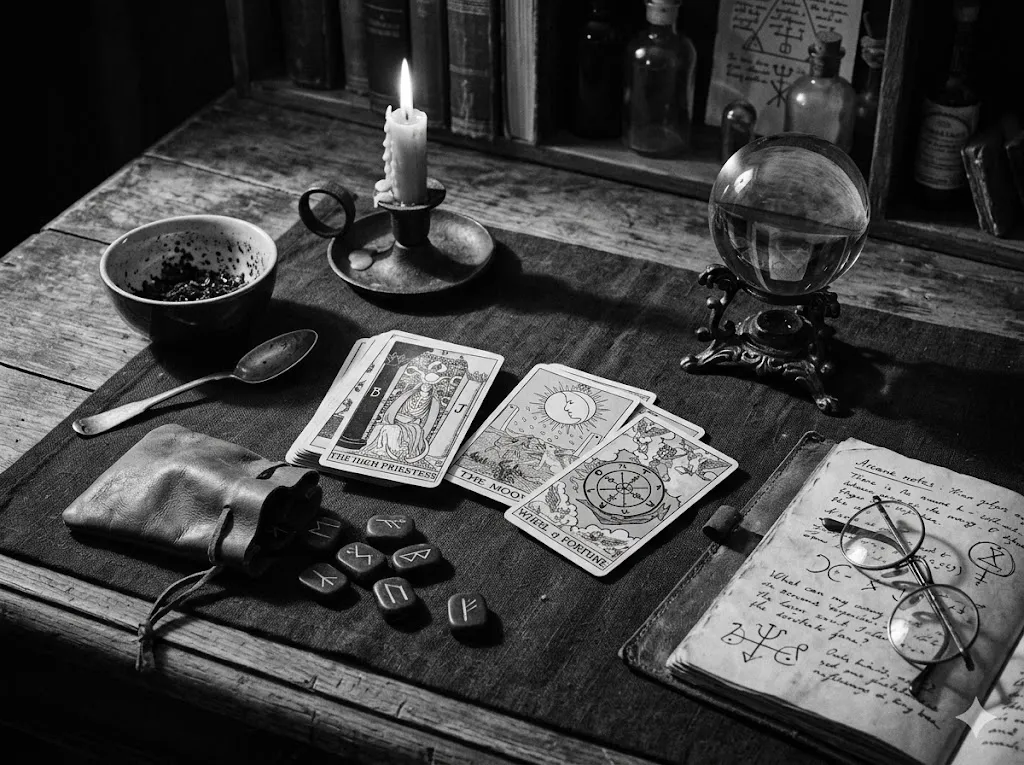
For thousands of years, people have struggled with uncertainty. From ancient Greece to today’s smartphone apps, humans have always looked for ways to find patterns and meaning in the world around them.
These organized ways of exploring the unknown, called the mantic arts (types of divination), are not meant to magically alter reality. Instead, they are thoughtful systems from many cultures that help people understand their lives in a bigger context.
By turning random events or results into stories, these practices help people make sense of confusion, weigh difficult choices, and find answers when logic alone is not enough.
Summary
The Most Common Types of Divination
| System Class | Primary Medium / Tool | Cultural Ecosystem | Historical Legal or Religious Status |
| Cartomancy | Symbolic decks of cards | 14th-century Europe to modern day | Generally permitted; transiently restricted by early modern gaming laws |
| Astrology | Celestial coordinates and geometric angles | Ancient Babylon, Hellenistic Greece, Vedic India | Conditionally Prohibited: Frequently banned by Roman Imperial decree (crimen maiestatis) |
| Lithomancy & Runes | Inscribed wooden tablets or stones | Germanic, Norse, and early European tribes | Tolerated in antiquity; aggressively suppressed during Christianization |
| The I Ching | Sorting 50 yarrow stalks or 3 coins | Bronze Age China (Zhou Dynasty) | Sanctioned: Revered as a foundational philosophical and imperial text |
| Ifá Corpus | 16 sacred palm nuts or an Opele chain | West African Yoruba civilization | Sanctioned: Central to community governance; suppressed during colonial rule |
| Osteomancy | Animal bones, sea shells, or claws | Global indigenous communities | Variable; frequently condemned as witchcraft under colonial statutes |
| Augury & Haruspicy | Bird flight tracks and sacrificed animal livers | Etruscan and Roman state structures | Sanctioned: Legally mandated for public policy under the Roman Republic |
| Tasseography | Residual tea leaves or coffee grounds | Imperial China to Victorian Europe | Permitted; viewed historically as a domestic parlor art |
| Scrying | Reflective black obsidian, water, or crystal | Mesoamerican, Egyptian, and medieval European | Highly contested; strictly monitored or condemned by medieval ecclesiastic courts |
| Necromancy | Animated physical corpses or spirits of the deceased | Classical Greece, medieval Europe, ancient Near East | Strictly Forbidden: Universally outlawed by biblical law and secular capital statutes |
| Goetia / Demonomancy | Ritual seals and invocations of demonic entities | Late medieval and Renaissance Europe | Strictly Forbidden: Punishable by death under early modern Witchcraft Acts |
| Belomancy | Marked arrows drawn blindly from a quiver | Ancient Babylonia, Scythia, and early Arabia | Forbidden: Explicitly banned in early Islamic and Judean law codes |
Forbidden Types of Divination
Whether a prophetic practice was accepted or banned usually did not depend on the tool used. Instead, a practice became illegal if it challenged the power of the state, broke important religious rules, or tried to use hidden forces to harm others. Throughout history, authorities often used strict laws and harsh punishments to control these practices.
In the ancient Mediterranean, political astrology was the most legally sensitive practice. Roman emperors like Augustus and Tiberius privately hired court astrologers, such as the well-known Thrasyllus, to support their rule. However, they also issued thirteen separate decrees between 44 BCE and 180 CE that banned independent astrologers from Rome.
Roman law allowed people to cast horoscopes for private citizens, but trying to predict the Emperor’s death using astrology was considered high treason (crimen maiestatis). Emperor Domitian even checked the birth charts of important senators to find and remove possible rivals before any plots could form. If someone tried to predict a transition in leadership without permission, they could be executed or sent into exile.
One of the most common spiritual restrictions across cultures is the strict ban on communicating with the dead, known as necromancy or nigromancy. In the ancient Near East, the rule was written into early religious texts, like the clear bans in Deuteronomy chapter 18, which condemned mediums, spiritists, and anyone who tried to contact the dead.
These old laws saw such actions as serious violations of divine order. They argued that trying to obtain secret information from the dead or spirits circumvented the approved ways of prophecy in the community. Still, stories like the biblical tale of the Witch of Endor show that even rulers sometimes broke their own rules in times of crisis, secretly turning to banned mediums when they were desperate for answers.
In late medieval and early modern Europe, the crackdown on these types of divination shifted from church courts to regular criminal law. In 1326, Pope John XXII issued a papal bull called Super illius specula, which officially labeled calling on spirits and using magical images as forms of heresy.
This change in church policy set the stage for new laws, such as King Henry VIII’s Witchcraft Act of 1541 and King James I’s Witchcraft Act of 1604. These laws made calling on spirits or casting harmful spells serious crimes, punishable by death and loss of all property.
The drive to control these practices reached a peak with the publication of manuals such as the Malleus Maleficarum in 1486. These guides aimed to identify and eliminate folk traditions, from casting animal bones to reading crop cycles, that were not part of official church rituals. Through strict legal and religious campaigns, authorities made sure that only approved leaders could interpret the unknown.
What Is the Oldest Form of Divination?
To find out when people first tried to understand the universe systematically, we need to look beyond stories and focus on what archaeology tells us.
People have probably been interpreting dreams and unusual weather since prehistoric times. Still, the oldest proven, organized systems of ritual prediction appeared around the same time in ancient East Asia and Mesopotamia. These two types of divination—heating animal bones and mapping the organs of sacrificed animals—are the first known examples of societies establishing official, recurring methods to communicate with the divine.
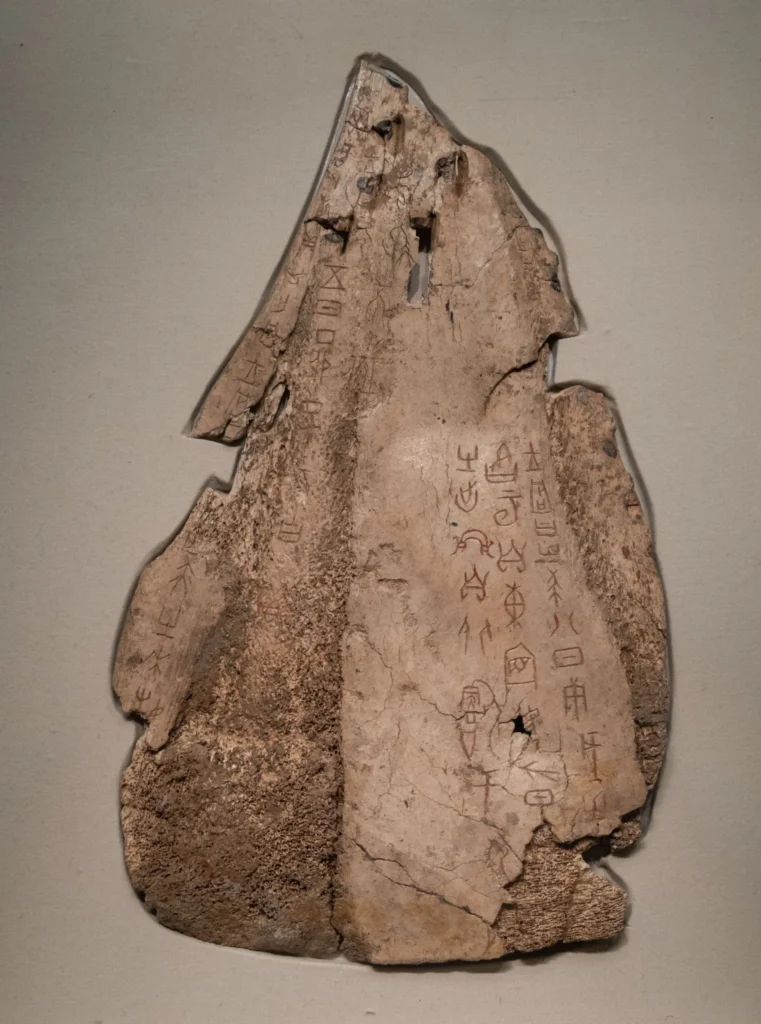
The oldest physical evidence of a formal type of divination is called pyro-osteomancy. This method uses intense heat on animal bones. Archaeologists have found heat-cracked shoulder blades from deer, sheep, and pigs at several Chinese Neolithic sites, especially those linked to the Longshan culture from about 3500 to 3000 BCE.
By the time of the Shang Dynasty, around 1600 BCE, the method had become a key part of government. The process grew more advanced, with experts carefully polishing animal bones or turtle shells.
Next, they made small holes in the back to thin the material. A royal official would press a hot metal rod into these spots, causing the surface to crack and make sharp sounds. The ruler would study the shapes and directions of these cracks to predict outcomes such as military success, health, and harvests.
Parallel to this East Asian development, the ancient civilizations of the Near East were codifying their own highly administrative oracular discipline.
In Sumerian and Akkadian cultures, the oldest recorded practices center on extispicy, the anatomical inspection of animal entrails, with a particular focus on the liver. Written cuneiform tablets from the Early Dynastic period, dating to the early third millennium BCE (circa 2800 BCE to 2500 BCE), explicitly list professional titles for state diviners who operated directly under royal command.
Mesopotamians saw the inside of a sacrificed animal as a message from the gods. The clay artifact shown above was used by officials as a guide, dividing the liver into different sections for interpretation.
During rituals, every crease, color change, or unusual feature on the organ was carefully compared to these clay guides. A long groove on the left side of the liver, called “the presence,” showed if a protective god was present or if the kingdom was at risk.
Whether following cracks in bones in China or studying blood vessels in Mesopotamia, these early forms of divination were serious and technical. They were important tools for managing risks, guiding state decisions, and bringing order to uncertain times.
Divination vs. Fortune-Telling: What’s the Real Difference?
Today, people often mix up two very different ways of looking at the future: casual fortune-telling and traditional divination. Knowing the difference is important for understanding why these systems have lasted through so many changes in science and society.
Fortune-telling is based on the idea that the future is set and just waiting to be revealed. It treats the client as someone who can only accept what is coming. Usually, fortune-telling offers clear, unchangeable predictions, such as that someone will inherit money, a relationship will end on a certain date, or a trip will go badly. This method takes away the person’s sense of control and turns the session into a simple exchange about what will happen.
Real divinatory systems are based on the opposite idea. They see the future as flexible and evolving, shaped by current actions, hidden motives, and shifting surroundings. Instead of giving a fixed plan, these practices offer a current picture of the unseen forces at work in a situation.
Cicero argued in De Divinatione that true mantic work relies on either deep technical analysis or an inspired state of mind. Still, its ultimate purpose is always to provide counsel, not inescapable sentences.
When an expert uses an oracular system, they are not saying what will definitely happen. Instead, they show what is likely to occur if the person’s actions, feelings, and situation stay the same. This approach helps people reflect on themselves and make changes if they want a different result.
The Three Core Categories of Divinatory Practices
Experts usually sort the many types of divination into three main groups, based on how the information is gathered. The system makes it easier to understand how each ritual works.
Omens and Natural Signs (Auspicia)
This group is based on watching natural events as they happen. The practitioner does not cause these events but pays close attention to the environment to notice anything unusual, which can include reading the weather, noticing unexpected eclipses, watching strange animal behavior, or tracking birds in the sky.
The main idea is that major natural events reflect what is happening in smaller ways, sending warnings through these changes.
Inductive Methods (Technical and Sortilege)
Inductive methods involve the practitioner using tools or randomizers on purpose. This is the most common type of modern mystical reading. The person might shuffle cards, throw marked stones on a cloth, or count plant stems. The way these items land is then read using a set of established rules and symbols. Mastering these systems takes a lot of study and practice.
Intuitive and Mediumistic Signs (Inspirational)
This group focuses on the mind rather than on external tools. The practitioner enters a different state of awareness, like a light trance or deep relaxation, to quiet their usual thoughts.
This can involve looking into dark mirrors to spark visions, interpreting dreams, or channeling messages. Instead of following a set of rules, the person uses their own impressions, images, and feelings to find meaning.
Tool-Based and Inductive Methods
To see how mechanical randomizers act as psychological mirrors, we need to look at how these tools work, their history, and the math behind the most popular traditions that use them.
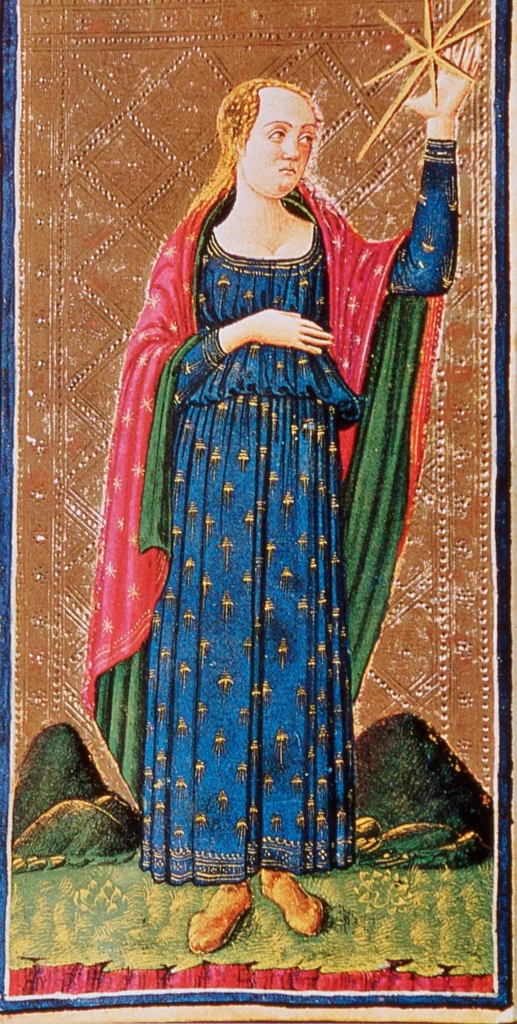
Cartomancy
The use of illustrated cards for insight dates back to the late 1300s, when card games from Mamluk Egypt arrived in European cities such as Venice and Barcelona. At first, these decks were only used for fancy parlor games.
One important milestone is the Visconti-Sforza deck, made around 1450 for Milan’s ruling family. These hand-painted cards featured gold leaf and depicted figures that symbolized power, the cosmos, and moral values.
If you look at cards from the mid-1400s, you’ll see they have no titles, numbers, or labels. Early users had to remember the complex meanings, court values, and stories of the time to understand the cards’ layouts.
The shift from a simple game to a tool for interpretation happened in late 1700s Paris. In 1781, French scholar Antoine Court de Gébelin wrote a large book that wrongly connected the cards’ images to ancient Egyptian temples, sparking a big interest in the mystical side of the cards.
A couple of years later, in 1783, French printmaker Jean-Baptiste Alliette, known as Etteilla, published the first manual explaining how to lay out cards for guidance. He also created the first deck designed for spiritual advice rather than just playing games.
The modern deck most people use today was created in 1909 by Arthur Edward Waite and artist Pamela Colman Smith. Their deck, published by William Rider and Son, changed the tradition by turning the number cards into scenes with people and stories, making it easier for users to connect with the images on a personal level.
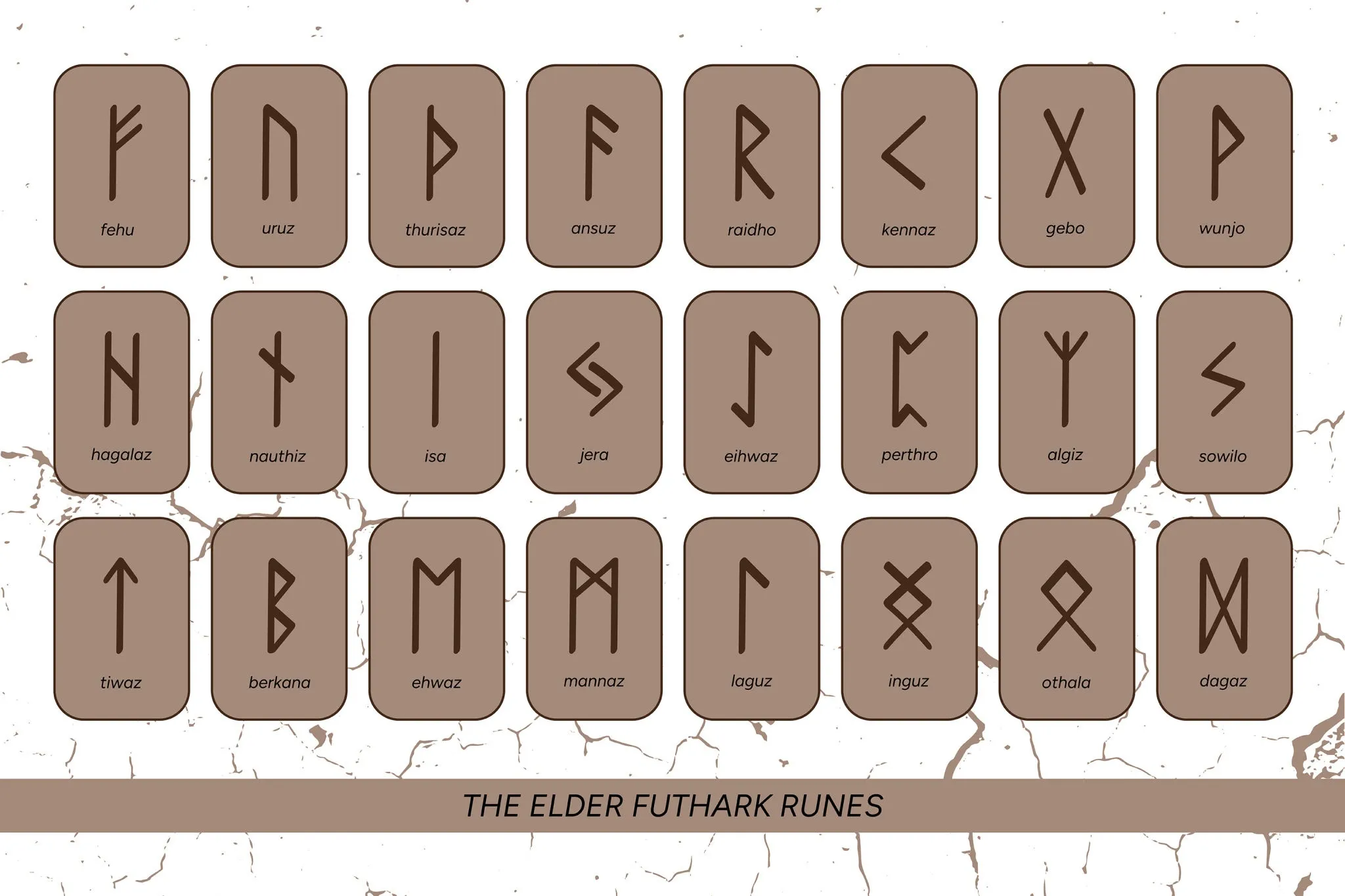
Runes and Lithomancy
Casting runes moves away from detailed pictures and instead uses simple, geometric letters. The main system is the Elder Futhark, an alphabet with 24 characters used in Germanic and Scandinavian areas from the 2nd to the 8th centuries.
The first written record of casting rituals in northern Europe comes from Roman historian Tacitus in 98 CE. He described how tribal leaders would cut branches into strips, carve marks on them, and toss them onto a white cloth during public meetings.
The script’s straight lines and angles made it easy to carve into wood, bone, or stone. Each symbol represents a real element of the environment and reflects a social concern. For example, the first rune denotes livestock, a form of wealth and currency in farming societies. The rune for ice represents freezing and delays, while the one for hail means sudden disasters.
Today, people often throw these runes onto a cloth marked with rings for the self, family, and the outside world. The meaning depends on where the runes land, which ones are upside down, and which ones cross paths, showing hidden motives or upcoming conflicts.
Astrology and Numerology
Astrology and numerology do not use random casting. Instead, they depend on fixed positions of stars and numbers. The basics of horoscope calculation were established by Babylonian scribes in the 2nd millennium BCE, who kept detailed records of celestial omens, including the Enuma Anu Enlil.
After Alexander the Great’s conquests, these records were combined with Egyptian mathematics and Greek ideas in Alexandria, forming the horoscope system we know today. In the 2nd century CE, Claudius Ptolemy wrote the Tetrabiblos, which set out the rules governing the interactions among planets, zodiac signs, and horoscopes.
This system treats the sky like a giant clock. The astrologer lines up the local horizon with a 360-degree circle, divided into 12 equal parts of 30 degrees each.
Astrologers calculate the angles between planets as seen from Earth. Some angles, like trines at 120 degrees, are seen as positive, while squares at 90 degrees or oppositions at 180 degrees show tension. These patterns help reveal trends and personal changes.
Numerology works alongside astrology by breaking down words and dates into basic numbers. The idea goes back to Pythagoras in the 6th century BCE, who believed numbers are the building blocks of everything.
Later, this number-based mysticism merged with Gematria, a Hebrew system assigning numerical values to letters to uncover hidden meanings in texts. In the early 1900s, L. Dow Balliett updated numerology by showing how to turn birth dates and names into single numbers from 1 to 9, each linked to certain personality types and life cycles.
Ancient, Nature-Based, and Interpretive
While some systems use man-made tools, many ancient traditions find meaning in natural patterns, living things, and unusual events in the environment. These methods need skill and treat the world as if it’s full of hidden messages.

Scrying
This type of divination uses focused attention to quiet the thinking mind. People in many places have used polished stones or glass to help them see images in their minds. In ancient Mesoamerica, especially among the Aztecs, shiny black volcanic glass was seen as a sacred tool.
These mirrors were linked to the god Tezcatlipoca, whose name means “Smoking Mirror” in Nahuatl. People believed he watched over the world through a magical reflective stone.
After the Spanish conquered the Americas in the early 1500s, some of these sacred obsidian mirrors were taken to European royal courts. One famous example was owned by Dr. John Dee, a mathematician, navigator, and astrologer to Queen Elizabeth I.
Dee used the Aztec mirror while trying to understand politics and cosmic events, entering a focused state as he looked into the dark glass. The mirror still exists today and is kept in the British Museum.
The practice works by causing the brain to see images when it gets little visual input. When someone stares at a dark, blank surface in dim light, their mind starts to fill in the gaps with memories and images from within.
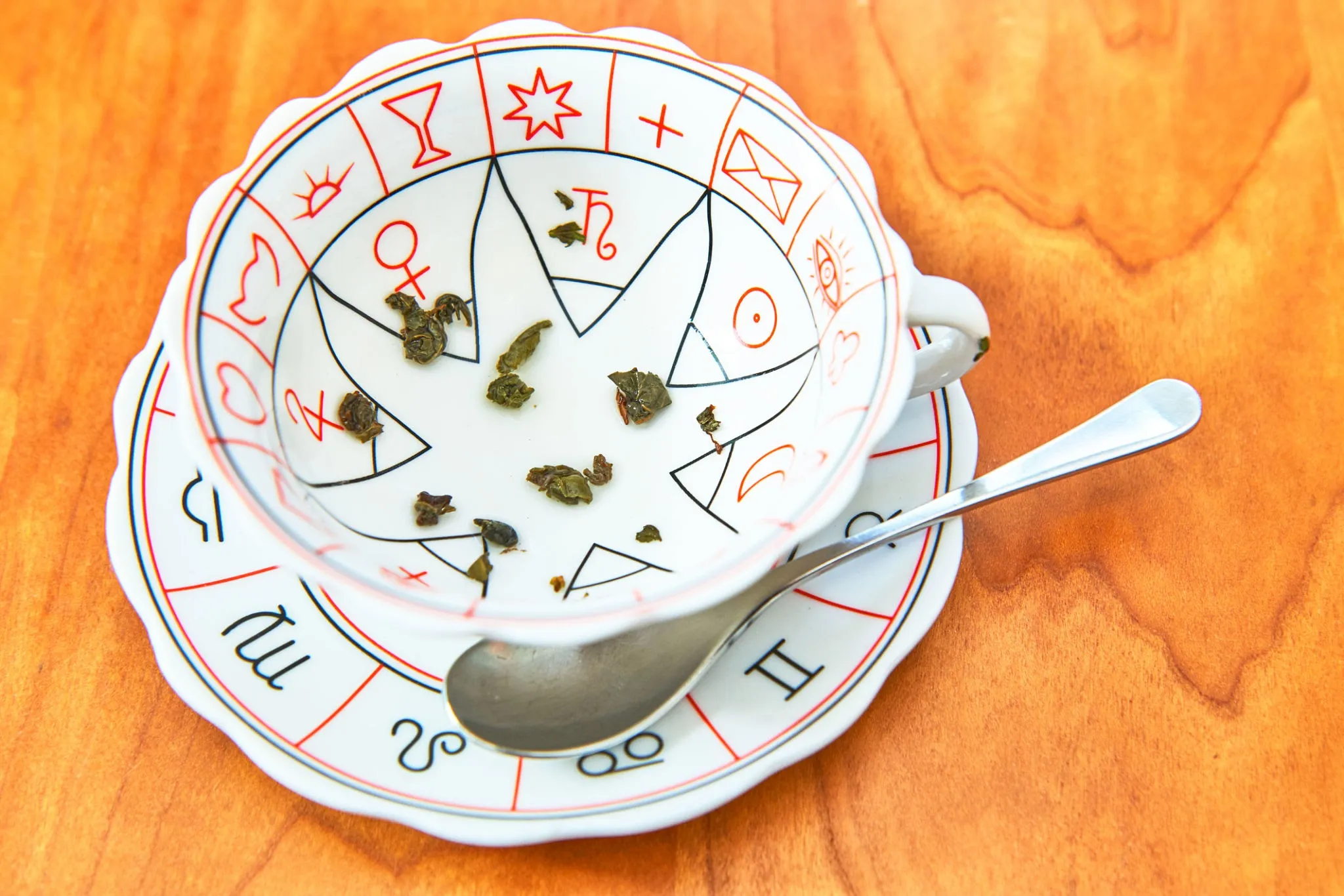
Tasseography
This method turns leftover household items into symbols. Reading tea leaves became popular in the 1600s, after Europeans began trading more tea. Earlier, people read shapes in melted wax or lead dropped into water.
The process follows a set pattern. After drinking the tea, the leaves left behind form shapes inside the cup. The reader examines where these shapes appear to tell a story about time and themes in the person’s life.
In this type of divination, the inside of the cup is divided by how close the leaves are to the handle. The handle represents the person’s home and personal life. Leaves near the top edge show things that will happen soon, often within a month. The middle shows ongoing events, and the bottom points to long-term issues or worries.
The reader looks at the shapes the leaves make—like an anchor for stability or a path for a big decision—and uses both tradition and intuition to create a personal story for the seeker.
The Anatomy of Omen
In ancient Mediterranean societies, especially in Rome and Etruria, reading signs from nature was an official part of government and the military. Special officials called augurs watched the sky and interpreted what they saw.
Before major events such as meetings, building projects, or military actions, an augur would mark off a section of the sky with a staff. They watched how birds flew, gathered, and called to decide if the plans had cosmic approval.
Another practice involved examining the organs of sacrificed animals, a task performed by experts called haruspices. They believed the animal’s organs at the moment of sacrifice showed a map of the universe.
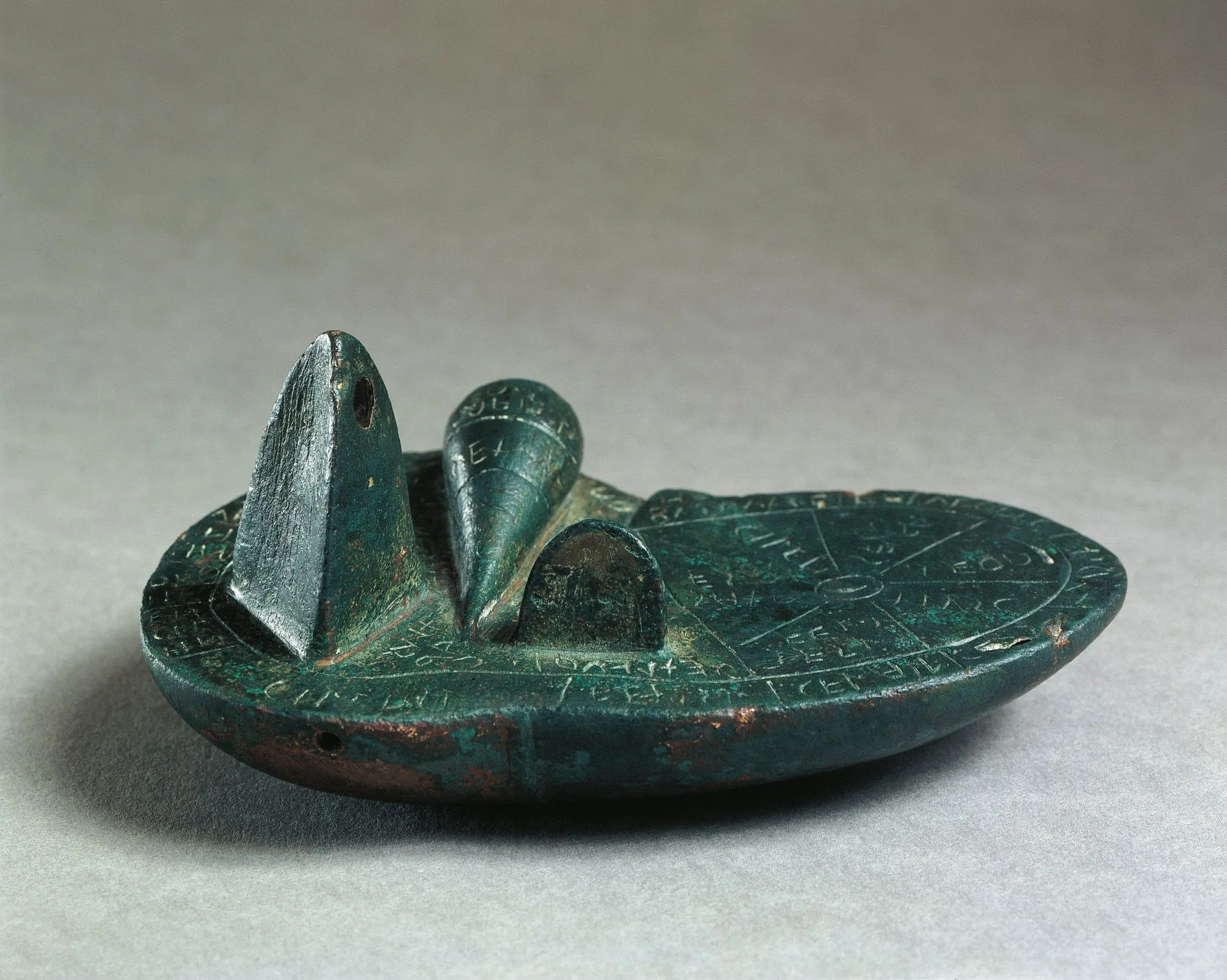
The best-known example of this type of divination is the Piacenza Liver, a bronze model of a sheep’s liver found in Italy in 1877. It dates to the late 2nd century BCE and was used as a reference tool.
The model’s surface is split into 40 sections, each labeled with the name of a god. When examining real organs, practitioners compared any unusual features to this bronze guide.
If a dark spot appeared in a section linked to a storm or war god, it was seen as a warning to halt the planned action. The system shows how ancient people used careful observation to guide important decisions.
Sacred Cultural Masterpieces
Some traditions are so deep and important that they go beyond being just tools. They are key texts in world literature and help preserve culture.
The I Ching: The Binary Cosmos
The I Ching, or Book of Changes, is a key work of Chinese philosophy from over 3,000 years ago. Unlike systems that predict quick results, it offers ethical and philosophical advice to help people act in harmony with the Dao, or natural order.
The I Ching uses 64 hexagrams, each made of six lines that are either broken (Yin, passive) or solid (Yang, active). Traditionally, people created these hexagrams by sorting and counting 50 yarrow stalks. Still, many now use three coins for a simpler method.
Yin Line (Receptive): — —
Yang Line (Creative): ——
The process gives a hexagram and sometimes ‘changing lines’ that show what is shifting in the situation. The person then reads the related text for advice. The I Ching doesn’t give simple yes or no answers, but instead offers deep thoughts on how to act wisely.
Ifá Divination: The Odù Corpus
Ifá is a complex ritual system kept alive by the Yoruba people of West Africa and their descendants. It is one of the richest oral traditions in the world, and UNESCO has recognized it as a cultural treasure. The practice is led by priests called Babalawo or priestesses called Iyanifa.
This type of divination involves asking Ọrunmila, the Yoruba god of wisdom and destiny, for guidance. The priest uses sixteen sacred palm nuts, counting how many are left after each toss, or sometimes uses a chain called an Opele with eight seed pods. The way the nuts or pods land creates a unique pattern for interpretation.
There are 16 main patterns, called Oju Odù. By combining them, priests obtain 256 distinct chapters that make up the Odù Ifá collection. Each Odù has a large amount of sacred knowledge, including many poems, stories, healing recipes, and rituals.
After finding the right pattern, the priest recites verses from memory and adapts the stories to fit the person’s situation. This gives advice on health, relationships, and community, and may suggest actions to help restore balance in the person’s life.
You may also enjoy:
Samigina: The Demon Who Speaks With the Dead
August 27, 2025
Jinmenken: Japan’s Terrifying Human-Faced Dog
June 6, 2025
Who Were the Werewolves of Greifswald?
June 19, 2025
Sources
- The I Ching or Book of Changes. Translated by Richard Wilhelm and Cary F. Baynes, Princeton University Press, 1967.
- Barber, Karin. Ifà: An Exposition of Ifá Literary Corpus. By ’Wande Abimbola. Ibadan: Oxford University Press, 1976. Pp. Ix, 256, Ill., Bibl. Africa 50.1 (1980): 105–105. Web.
- Cicero, Marcus Tullius. De Divinatione. Translated by William Armistead Falconer, Harvard University Press, 1923.
- Ptolemy, Claudius. Tetrabiblos. Translated by F. E. Robbins, Harvard University Press, 1940.
- Tacitus, Publius Cornelius. Agricola and Germania. Translated by Harold Mattingly, revised by J. B. Rives, Penguin Books, 2009.
- Flad, Rowan K. Divination and Power: A Multiregional View of the Development of Oracle Bone Divination in Early China. Current Anthropology, vol. 49, no. 3, June 2008, pp. 403–37. The University of Chicago Press Journals.
- Márványos, Krisztián. Astrologia Et Crimen: Four Cases with Astrological Relevance during Tiberius’ Rule. Academia.edu.
- Rohmann, Dirk. BOOK BURNING AS CONFLICT MANAGEMENT IN THE ROMAN EMPIRE (213 BCE – 200 CE). Ancient Society, vol. 43, 2013, pp. 115–49. JSTOR, http://www.jstor.org/stable/44079972. Accessed 1 June 2026.
- “Ifa Divination System.” UNESCO Intangible Cultural Heritage, 2008, https://ich.unesco.org/en/RL/ifa-divination-system-00146. Accessed 1 June 2026.