Crystallomancy is one of the oldest forms of divination in recorded history. Yet, most people have only ever encountered its most famous prop — the crystal ball — without knowing the practice actually has a name, a documented history stretching back thousands of years, and its own body of scientific study.
What really happens when someone “sees” something in a crystal? Is it superstition, psychology, or something else entirely? The answer turns out to be more interesting than the fortune-teller stereotype suggests.
Summary
What Is Crystallomancy?
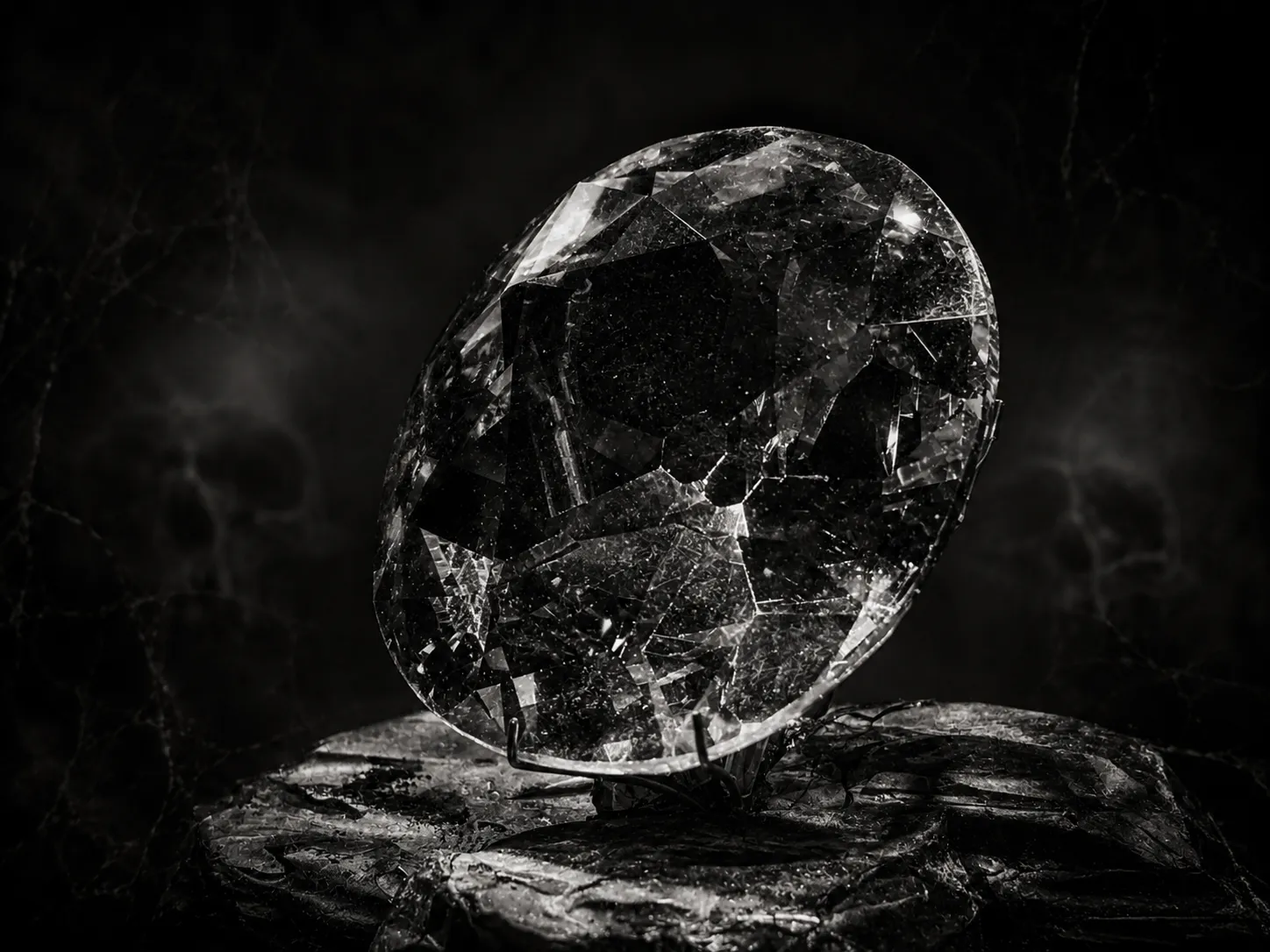
Crystallomancy is a form of divination that involves gazing fixedly into a crystal, gemstone, or other transparent or reflective object to induce a trance-like state and perceive visions relating to the past, present, or future.
The word is a compound of the Greek krystallos (“ice” or “clear ice/crystal”) and manteia (“divination”), and in English it is documented from as early as the 1610s. Both the Oxford English Dictionary and Merriam-Webster trace the term’s first recorded use to 1613, in the writing of the English geographer and clergyman Samuel Purchas. However, the underlying practice is far older than the word itself.
The Roman naturalist Pliny the Elder, writing in the 1st century CE, described soothsayers of his own era using crystal spheres, which he referred to in Latin as “crystallum orbis” — a term later Latinized further by medieval scribes into “orbuculum.”
In everyday use, crystallomancy is most commonly known by two more familiar names: crystal gazing and scrying. The practitioner — traditionally called a scryer, crystal-gazer, or seer — stares into a polished sphere or stone, usually in dim lighting and against a dark background, until a meditative or trance-like state develops.
Within this state, practitioners report seeing images, symbols, mist, or scenes that they interpret as meaningful: messages from spirits, glimpses of hidden knowledge, or omens of coming events.
It is worth distinguishing crystallomancy from the broader modern practice sometimes called “crystal healing.” Crystallomancy is specifically a divinatory act, using a crystal as a lens for gazing and receiving visions.
Crystal healing, by contrast, is a wellness practice built on the belief that different stones emit energies that influence physical or emotional wellbeing, and it involves no gazing or trance induction at all. The two are frequently confused because they share the same raw materials — quartz, beryl, amethyst, and other translucent stones — but they are functionally unrelated practices with different goals and different histories.
Crystallomancy also belongs to a much larger family of divination methods that rely on staring into a reflective or translucent medium to trigger a vision; this broader category is called scrying, and crystallomancy is simply its best-documented branch.
You may also enjoy:
What Is a Selkie and Why Is Its Seal Skin So Dangerous?
January 29, 2026
Jinmenken: Japan’s Terrifying Human-Faced Dog
June 6, 2025
Complete Guide to Utah Bigfoot Sightings (1970–2025)
August 8, 2025
The Ancient Origins of Crystal Gazing
The impulse to seek visions in transparent or reflective surfaces appears to be genuinely ancient and cross-cultural, rather than a single invention that spread from a single source.
According to the 4th-century theologian St. Augustine, the ancient Persians practiced a form of crystal gazing in pursuit of divine wisdom, and some historians of the occult place the origins of the wider practice at more than 3,000 years old.
Egyptian and Babylonian diviners are separately recorded as gazing into low, open stone dishes filled with palm oil or ink to induce visions — a liquid-based cousin of crystal gazing known as lecanomancy — while further west, the Celtic Druids of Iron Age Gaul, Britain, and Ireland are frequently cited by historians as early practitioners of crystal-based divination before the practice declined with the spread of Christianity across the region by around 600 CE. Archaeological evidence places crystal-gazing tools in early medieval Britain as far back as the 7th century CE.
The practice was never confined to Europe or the Near East. The Aztecs used polished obsidian mirrors rather than crystal for scrying, a method the 16th-century Spanish chronicler Bernardino de Sahagún documented in The Florentine Codex.
The 1905 study Crystal Gazing: Its History and Practice, by the anthropologist Northcote W. Thomas, records the practice among peoples as geographically diverse as the Pawnee, the Iroquois, the Inca, the Egyptians, the Persians, the Chinese, and the Maya of the Yucatán Peninsula.
Across every one of these traditions, the underlying logic remained consistent: a still, clear, or reflective surface was treated as a threshold between ordinary sight and hidden knowledge, whether that knowledge was believed to come from gods, spirits, ancestors, or the diviner’s own inner faculties.
John Dee, Edward Kelley, and the Elizabethan Revival
Crystallomancy’s most famous chapter in Western history belongs to the Elizabethan mathematician and astrologer John Dee (1527–1608). Dee served as an advisor to Queen Elizabeth I and was a serious scholar of mathematics, astronomy, and navigation — he built one of the largest scientific libraries in England — but by the early 1580s he had become increasingly consumed by a desire to communicate directly with angels.
Dee was not himself a skilled scryer, so from December 1581 onward he used a series of mediums to look into a crystal on his behalf while he recorded what they claimed to see and hear. His first assistant, Barnabas Saul, was later arrested and dismissed; his most significant and controversial scryer was Edward Kelley (1555–1597), a self-declared spirit medium who approached Dee in 1582 and quickly impressed him.
Over the following seven years, Dee and Kelley conducted an extensive series of “spiritual conferences” using a crystal “shew-stone,” during which Kelley reported visions of angels who allegedly dictated an entire language, later called Enochian, said to be the tongue used by Adam before the Fall and later by the angels themselves.
Their sessions were meticulously documented in Dee’s journals, portions of which survive in manuscript collections such as the British Library’s Cotton Appendix XLVI, spanning 104 folios largely in Dee’s own hand.
One of the crystal stones used in these sessions, along with the accompanying wax seal known as the Sigillum Dei Aemeth and an obsidian mirror of Mexican origin associated with Dee, are preserved and displayed at the British Museum in London today.
Dee and Kelley’s partnership eventually collapsed in 1589 after Kelley reported that the spirits had instructed the two men to share their wives, an episode recorded in Dee’s own diary and confirmed, at least in part, by later documentary evidence.
Despite the falling-out and the long-standing historical debate over whether Kelley was a genuine visionary or an elaborate fraud, the Dee-Kelley sessions remain the best-documented case study of Renaissance-era crystallomancy, and they did more than any other single episode to cement the crystal ball’s association with prophecy and the occult in the Western popular imagination.
You may also enjoy:
Complete Guide to Nebraska Bigfoot Sightings (1957–2025)
August 4, 2025
What Is the Nurikabe Yokai? The Haunted Barrier That Traps Travelers
September 9, 2025
The Winchester Mystery House Haunting: The Real Story
October 23, 2025
Futakuchi-onna: The Terrifying Two-Mouthed Woman of Japanese Folklore
September 10, 2025
Tools and Materials Used in Crystallomancy
While the crystal ball is the object most associated with the practice today, historical accounts describe a somewhat wider range of materials in use.
The classic tool was a rock-crystal (quartz) sphere, typically around four inches in diameter, valued for its genuine transparency and freedom from visible flaws; because a flawless crystal globe of that size was historically expensive, polished glass spheres were frequently substituted and were considered by practitioners to work just as well.
Beryl was also singled out by historical sources as a favored stone, particularly in pale sea-green or reddish tints — common enough that an older term for a crystal-gazer was “beryllist.”
Some practitioners preferred blue- or amethyst-tinted crystal, which was traditionally believed to be less tiring on the eyes than clear or white crystal during long gazing sessions, and finished spheres were customarily mounted on stands of polished ebony, ivory, or boxwood.
Beyond stones and glass, the wider scrying tradition of which crystallomancy is one branch has historically extended to other reflective or translucent media, including still water, ink, polished metal, and obsidian mirrors — though each of these falls under a related but technically distinct divinatory name, discussed further below.
How Crystallomancy Is Traditionally Practiced
Historical and occult accounts describe crystallomancy as a deliberate, ritualized process rather than a casual glance into a stone. A session typically unfolded in a fairly consistent sequence:
- Preparing the environment. Sessions were conducted in low or dim light, with the crystal placed against a dark background, such as black cloth, to eliminate glare and external distractions.
- Sustained, relaxed gazing. The scryer fixed their eyes on the crystal for an extended period without actively searching for images, allowing a trance or meditative state to develop on its own.
- Ritual preparation. In more ceremonial traditions, incense, prayers, or invocations were used beforehand, and the practitioner sometimes faced a specific direction, such as east, as part of the ritual framework — a pattern described in detail in Dee’s own journals.
- Interpretation. Once imagery appeared — described variously as mist resolving into scenes, symbols, or figures — the scryer, or a separate interpreter working alongside them, attempted to read meaning into what was seen.
- Working through a medium. If the person seeking the divination could not see visions themselves, they engaged a dedicated scryer to gaze on their behalf, exactly as Dee did with Kelley for seven years.
Not everyone who attempts crystallomancy reports success, and the ability appears to be unevenly distributed.
The 19th-century folklorist Andrew Lang, who studied the practice among “normal British subjects” previously unfamiliar with it, noted that the ability to see visions in a crystal did not reliably correlate with a person’s general capacity for mental imagery.
Some people who could vividly visualize scenes with their eyes closed saw nothing at all in a crystal, while some who reported little visualizing ability otherwise could scry successfully.
Crystallomancy and Related Forms of Scrying
Crystallomancy belongs to a wider family of divination methods that rely on the same core mechanism — fixed, trance-inducing gazing into a medium — but differ in the object used. Hydromancy relies on water rather than crystal as the gazing surface, while catoptromancy, sometimes called enoptromancy, uses a mirror or other reflective surface instead of a transparent stone.
Lecanomancy, as practiced by Egyptian and Babylonian priests, uses oil floating on water in a shallow basin. An older and now largely obsolete term, gastromancy, was sometimes used as a rough synonym for crystallomancy in historical taxonomies of divination. However, the same word was also applied historically to a completely different practice: divination by ventriloquism.
All of these methods are sometimes grouped under the general term “specularia” or “speculum divination,” since the surface gazed into — whether solid, liquid, or metallic — functions as a speculum, Latin for mirror. Crystallomancy is distinguished within this family specifically by its reliance on a solid, transparent object: crystal, glass, or a precious stone, rather than a liquid or a purely reflective surface.
You may also enjoy:
The Nain Rouge: Detroit’s Dwarf Cryptid and Omen of Disaster
September 25, 2025
Is the George Wythe House Haunted by Multiple Spirits?
January 8, 2026
Likho: The One-Eyed Crone Who Brings Death and Bad Luck
September 11, 2025
Stocksbridge Bypass: Britain’s Most Terrifying Haunted Road
January 22, 2026
Crystallomancy Compared to Other Divination Practices
Crystallomancy is only one of dozens of divination systems developed across human history, but it sits alongside a shorter list of methods that remain the most widely recognized today.
| Practice | Medium or Method | Notable Fact |
|---|---|---|
| Crystallomancy (Scrying) | Gazing into a crystal ball or reflective surface | Pliny the Elder documented Roman soothsayers using crystal spheres as far back as the 1st century CE, calling them “crystallum orbis.” |
| Astrology | Positions and movements of celestial bodies | The 12 zodiac signs used in Western astrology trace back to Babylonian astronomers of the 1st millennium BCE, later systematized by the ancient Greeks. |
| Tarot (Cartomancy) | 78-card deck divided into Major and Minor Arcana | Tarot cards began in 15th-century Italy purely as a trick-taking card game and were not used for divination until French occultists repurposed them in the 1780s. |
| Palmistry (Chiromancy) | Lines, shape, and mounts of the hand | Palmistry’s oldest surviving texts originate in ancient India, where it developed as part of Hindu astrology before spreading through China, Persia, and Greece. |
| I Ching | 64 hexagrams generated by casting coins or yarrow stalks | The I Ching’s hexagrams have been used continuously for well over two thousand years, making it one of the longest-running divination systems still practiced today. |
| Rune Casting | Inscribed stones or wooden staves bearing the Elder Futhark alphabet | The Elder Futhark, the 24-symbol alphabet used in rune divination, dates to roughly the 2nd century CE, but was so thoroughly forgotten that scholars didn’t decipher it until 1865. |
| Tasseography | Patterns left by tea leaves or coffee grounds in a cup | The practice spread through Europe in the 1600s and 1700s alongside the rising popularity of tea drinking, eventually becoming a fashionable parlor activity in Victorian England. |
| Numerology | Numeric values assigned to names, dates, or words | Western numerology is commonly traced to the Greek mathematician Pythagoras, who taught that numbers held a mystical significance underlying the structure of the universe. |
| Pendulum Dowsing | Movement of a weight suspended from a string or chain | The use of divining rods to locate underground water and metal ore was documented in Georgius Agricola’s 1556 mining treatise De Re Metallica, long before pendulums were adapted for personal divination. |
| Geomancy | Patterns of dots or marks, traditionally made in sand or earth | The word “geomancy” is a direct translation of the Arabic khatt al-raml, or “sand writing,” and the practice reached medieval Europe through Arabic texts translated in 12th-century Spain. |
The Scientific Perspective on Crystal Gazing
Crystallomancy has attracted more serious scientific attention than most divination practices, largely because 19th- and early 20th-century psychical researchers treated it as a testable psychological phenomenon rather than dismissing it outright.
The Society for Psychical Research, founded in 1882, published studies on crystal gazing and related hallucinatory experiences, including a large-scale “Census of Hallucinations” in 1884 that documented numerous spontaneous visions reported in mirrors and other reflective surfaces.
The psychologist Morton Prince conducted some of the earliest formal investigations of crystal gazing around the turn of the 20th century, in studies published in 1898 and 1922.
His research suggested that the images scryers reported were often forgotten memory images resurfacing from the subconscious, that experienced subjects could sometimes reproduce the effect without a crystal at all once trained, and that the practice appeared to occur more readily against a backdrop of existing psychological suggestibility.
Later researchers built on this foundation with complementary explanations. The psychologist Millais Culpin proposed that crystal gazing functions as a form of self-hypnosis, allowing unconscious fantasies and memories to surface as visual imagery, while the psychologist Leonard Zusne, writing on anomalistic psychology, argued that crystal visions are most plausibly explained as hypnagogic hallucinations — the same vivid, spontaneous imagery many people experience while drifting between wakefulness and sleep — rather than as evidence of supernatural insight.
Some researchers have also pointed to the Carpenter effect, first described by the physiologist William B. Carpenter in 1852, in which unconscious expectation can produce tiny involuntary eye movements against a static surface, potentially creating the illusion of movement or shifting patterns within the crystal itself.
The consensus reflected in the scientific literature on crystal gazing is that while many people genuinely do perceive vivid images when staring into a crystal, there is no scientific evidence that the content of those visions carries any clairvoyant or predictive accuracy.
What the research does support is that crystal gazing reliably induces a trance-like altered state in susceptible individuals, and that the imagery produced tends to reflect the gazer’s own memories, expectations, and subconscious associations rather than any external source of information.
Crystallomancy Today
Although it never became a mainstream scientific practice, crystallomancy has not fully disappeared and persists today across several overlapping contexts.
It survives most visibly in popular fortune-telling and psychic practice, where the crystal ball remains a widely recognized, if often theatrical, symbol of divination. It continues within contemporary occult and esoteric communities, where scrying with crystals is practiced much as it was historically — as a meditative technique for accessing intuition or the subconscious, frequently without any claim of literal supernatural contact.
The underlying gazing technique has also been adapted for therapeutic use: the “psychomanteum,” a mirror-gazing chamber developed by the researcher Raymond Moody in the early 1990s and inspired by ancient Greek mirror-gazing traditions, has been explored specifically when it comes to bereavement therapy rather than fortune-telling.
Beyond formal practice, the crystal ball remains a durable piece of visual shorthand for prophecy and mysticism throughout film, literature, and popular media, keeping the imagery — if not the specific term “crystallomancy” — in wide public circulation more than four centuries after the word first entered the English language.
Whether approached as a genuine spiritual practice, a psychological curiosity, or simply a piece of cultural history, crystallomancy occupies a distinctive place at the intersection of ancient ritual and the modern study of the human mind — a reminder that some of humanity’s oldest questions about the future have always been asked while staring into something clear.
You may also enjoy:
Complete Guide to Utah Bigfoot Sightings (1970–2025)
August 8, 2025
Pan: From Forest God to Christian Demon
August 26, 2025
Demon Bifrons – The Two-Faced Necromancer of Hell
August 11, 2025
Is the LaLaurie Mansion Haunting Real?
October 24, 2025
Sources
- Casaubon, Meric, editor. A True and Faithful Relation of What Passed for Many Years Between Dr. John Dee … and Some Spirits. London: Printed by D. Maxwell for T. Garthwait, 1659
- Lang, Andrew. Scrying, or Crystal Gazing. Cock Lane and Common-Sense, Longmans, Green, and Co., 2004.
- Pliny the Elder. Natural History in ten volumes. Vol.10: Libri XXXVI-XXXVII [Loeb 419]. 1962.
- Thomas, Northcote W. Crystal Gazing: Its History and Practice, with a Discussion of the Evidence for Telepathic Scrying. A. Moring, 1905.
- Zusne, Leonard, and Warren H. Jones. Anomalistic Psychology: A Study of Magical Thinking. 2nd ed., Lawrence Erlbaum Associates, 1989.