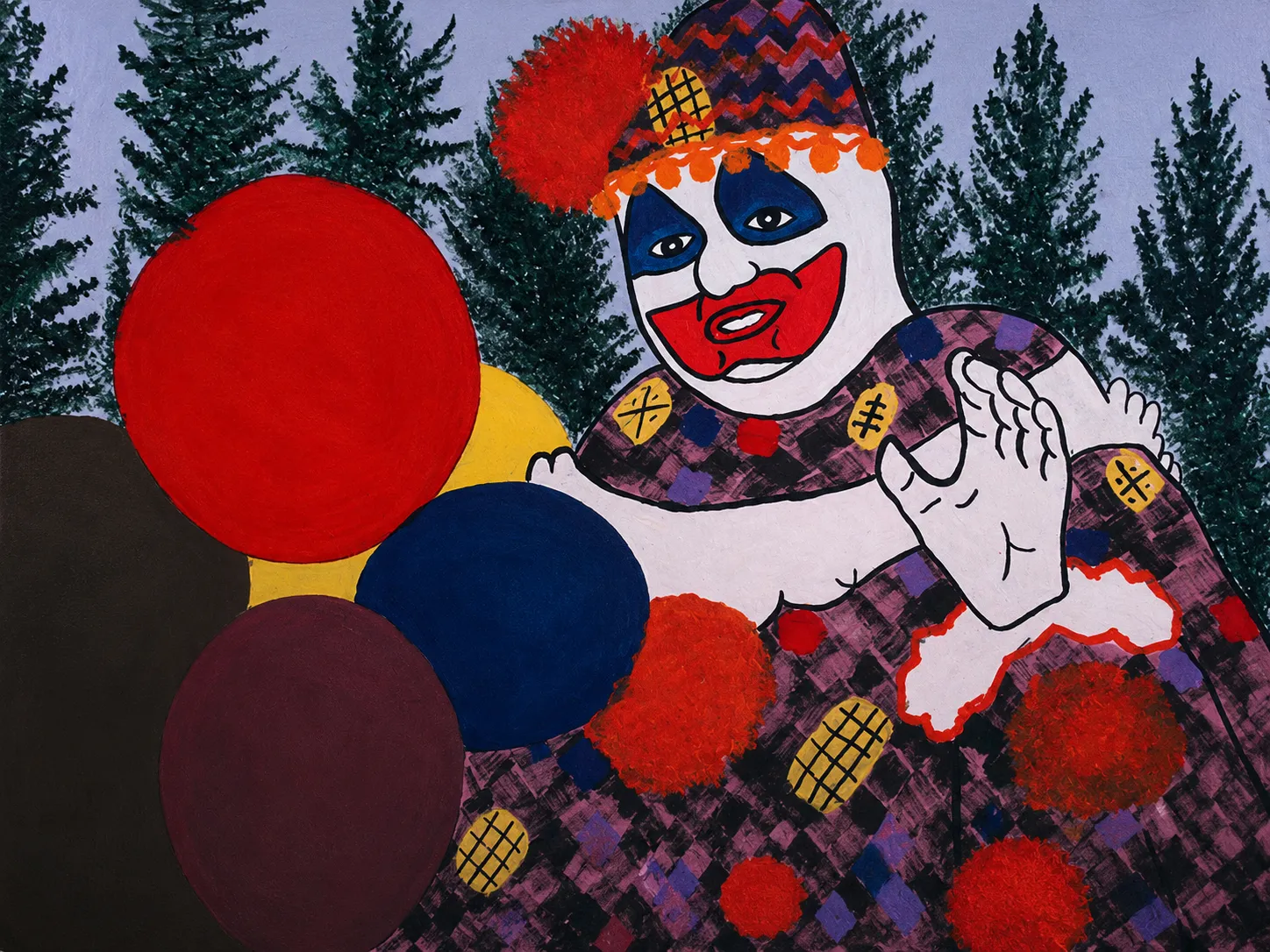
The Pogo the Clown cursed painting is a self-portrait by serial killer John Wayne Gacy. However, several former owners claim that there is something much darker than just oil paint and canvas. Stories of sudden misfortune following the painting from one owner to the next have made this small, amateurish artwork one of the most talked-about “haunted” pieces of art in the United States.
Behind the ghost stories, there is a real and well-documented criminal case, along with personal misfortunes reported by specific people, and a long-running industry that sells killers’ belongings.
Summary
Key Takeaways
| Attribute | Details |
|---|---|
| Name | “Pogo the Clown” — the title Gacy gave this self-portrait of his own clown persona. Gacy himself was publicly known as “Pogo the Clown” and, after his arrest, the “Killer Clown.” The painting has no separate nickname beyond “the cursed Gacy painting,” a label applied by media coverage rather than by Gacy. |
| Object Type | Painting (oil-on-canvas or canvas-board self-portrait) |
| Origin / Creation | Painted by John Wayne Gacy during his 14 years on death row at Menard Correctional Center, Illinois (c. 1982–1994). Gacy signed and dated multiple versions of this same self-portrait over the years; the exact creation year of the specific copy tied to the curse legend has not been independently confirmed. |
| Current Location | Reportedly part of Zak Bagans’ Haunted Museum collection in Las Vegas, Nevada, USA, per a 2020 report — though it is unconfirmed whether this is the exact copy described in the 2001–2005 curse account, since Gacy painted this same subject many times. |
| Current Owner | Reportedly Zak Bagans (television personality and museum operator), per a 2020 report; not independently confirmed as the same specific copy tied to the original curse account. |
| Death Toll | 0 confirmed deaths caused by the painting. 1 death loosely attributed to its “curse” in popular retellings (a neighbor of a friend who briefly stored the painting died in a car accident, per a 2005 account). Note: this is separate from artist John Wayne Gacy’s own 33 real-world murder convictions, which are documented criminal history and not part of any paranormal claim about the object itself. |
| Type of Curse / Haunting | Cursed Object, Bad-Luck Curse, Portrait-Bound Entity, Spirit Attachment |
| Manifestations | Sudden death of an owner’s pet dog; an owner’s mother diagnosed with cancer; a fatal car accident involving a storage-friend’s neighbor; a second storage-friend’s reported suicide attempt; visitors describing chills and unease when viewing the painting. No reports of moving objects, voices, apparitions, or physical damage. |
| Most Recent Incident | No new paranormal incidents have been publicly reported since the original owner’s 2005 statements. The most recent documented development is the painting’s reported entry into a private collection, per a 2020 report. |
| Threat Level | 2/10 (harmless) [See the Threat Level Explanation] |
| Can the Public View It? | Possibly — if it is part of Zak Bagans’ Haunted Museum collection, a ticketed public attraction in Las Vegas, Nevada, as reported in 2020. Museum displays rotate, so its exhibit status at any given time cannot be confirmed. |
| Hoax Confidence Rating | 7/10 (Probably a hoax) [See the Hoax Confidence Rating Explanation] |
What Is the Pogo the Clown Cursed Painting?
The Pogo the Clown painting is an oil-on-canvas self-portrait by John Wayne Gacy, a serial killer from the Chicago area who murdered at least 33 young men and boys between 1972 and 1978.
While waiting for execution at Menard Correctional Center in Illinois, Gacy began painting and created about 2,000 pieces of art over 14 years on death row. He often painted himself as “Pogo,” the clown character he used to entertain at children’s parties, charity events, and hospitals before his crimes were uncovered.
It’s important to understand that there is no single, one-of-a-kind “Pogo the Clown” canvas. Gacy painted versions of this self-portrait many times over the years, signing and dating each one, and several different originals are known to have circulated through private collectors, auction houses, and “murderabilia” dealers since his 1994 execution.
The “cursed painting” reputation is tied specifically to one version of this self-portrait, whose ownership history was publicly described by a Boston-area musician named Nikki Stone in interviews given around 2005.
After Stone reported a series of misfortunes following the purchase, the story spread, and the label “cursed” attached itself to the painting in true-crime and paranormal media. Other separate copies of the same self-portrait have changed hands at auction for thousands of dollars without any associated claims of a curse, which is a detail most retellings of the story leave out.
In short, the “curse” is not tied to a single unique object that can be tracked or tested. It is a reputation based on one owner’s story, attached after the fact to a self-portrait that Gacy admitted he painted many times.
Who Was Pogo the Clown? The Real Story of John Wayne Gacy
Before his name became linked to a haunted painting, John Wayne Gacy was a real person with a documented criminal history. He was born on March 17, 1942, in Chicago, the only son of John Stanley Gacy and Marion Elaine Gacy.
He married twice, first to Marlynn Myers in 1964 and then to Carole Hoff in 1972, and had two children. In 1968, while living in Waterloo, Iowa, and managing a Kentucky Fried Chicken for his father-in-law, Gacy was convicted of sodomizing a teenage boy. He was sentenced to ten years in prison but was paroled after about 18 months.
After his release, Gacy moved to Norwood Park Township, a suburb of Chicago, and rebuilt his image as a respected local businessman. He started a construction company, got involved in local Democratic politics, and was even photographed in 1978 with First Lady Rosalynn Carter at a community event. As part of his public persona, Gacy created two clown characters, “Pogo” and “Patches,” and performed in costume at children’s hospitals, charity events, and neighborhood parades.
Behind this façade, Gacy began murdering young men and teenage boys in 1972. He typically lured victims to his home with promises of construction work or under other pretenses, tricked them into being handcuffed, and then raped, tortured, and killed them, usually by strangulation. Most of his victims were buried in the crawl space beneath his house; others were buried elsewhere on his property, and four bodies, including that of his final victim, were dumped in the Des Plaines River.
Gacy’s crimes were discovered after the disappearance of 15-year-old Robert Piest in December 1978. Piest had gone to Gacy’s home to discuss a job, and police investigating his disappearance learned of Gacy’s prior sex-offense conviction in Iowa.
A search of Gacy’s house uncovered human remains in the crawl space. He confessed to police on December 22, 1978, and was later convicted of 33 murders on March 13, 1980.
At the time, this was the largest number of homicide convictions for one person in U.S. legal history. He was sentenced to death and executed by lethal injection at Stateville Correctional Center on May 10, 1994, at age 52.
You may also enjoy:
Is the Lukwata Real or Just an African Legend?
November 11, 2025
Complete Guide to Ohio Bigfoot Sightings (1860–2025)
August 5, 2025
Lamia: The Child-Devouring Demon of Greek Mythology
November 13, 2025
How Gacy Became a Painter
Gacy started painting around 1982 after getting an art set while in Menard Correctional Center. Over the next twelve years, he created about 2,000 works. These included clown self-portraits, landscapes, religious images of Jesus Christ, Disney’s Seven Dwarfs, Elvis Presley, skulls, and even portraits of other notorious criminals like Charles Manson and Ed Gein.
He sold much of his artwork directly from prison, often using intermediaries and collectors who wrote to him. Reports at the time of his death estimated that he earned about $30,000 from art sales while on death row, with individual pieces selling for anywhere from $200 to $20,000.
He reportedly required buyers to write to him personally before buying a piece. Some have speculated that he used this correspondence to feel a sense of control and connection from inside his cell, though this cannot be independently confirmed.
After his execution, demand for Gacy’s art did not go away; it actually increased. By 2018, individual paintings were reportedly selling for between $6,000 and $175,000. His Pogo the Clown self-portraits and a painting of his own house, which showed the crawl space where he hid victims’ bodies, were among his most valuable and sought-after works.
The Curse Begins
The most common version of the story online comes from musician Nikki Stone, who bought a Pogo the Clown self-portrait in 2001 for $3,000.
In interviews, including one with the Boston Herald in 2005, Stone said his dog died, and his mother was diagnosed with cancer soon after he got the painting. Worried about its effect, Stone asked a friend to store the painting; that friend’s neighbor was later killed in a car accident. Another friend who kept the painting reportedly attempted suicide soon after.
By 2005, Stone told reporters he just wanted to get rid of the painting, admitting he had never even hung it on a wall while he owned it. A friend who stored the artwork for a short time said visitors would get a chill and ask for it to be put away.
These are real statements from named individuals, and the events described—a death, an illness diagnosis, a car accident, a suicide attempt—are the kinds of misfortunes that, statistically, happen in many people’s lives over several years, no matter what objects they own.
No independent investigation has linked the painting itself to any of these events beyond Stone’s timeline. The “curse” is a personal story and a pattern of events, not a proven or measurable phenomenon.
Johnny Depp and the Painting He Gave Away
Actor Johnny Depp is often linked to the Pogo the Clown story, and he indeed bought a Gacy “Pogo the Clown” self-portrait in the 1990s. He got rid of it after learning that the money from the sale did not go to charity or to victims’ families as he had been told.
In an interview given around the time he was promoting the 1999 film “Sleepy Hollow,” Depp described the painting as psychologically fascinating but “too dark,” and explained that he parted with it for that reason.
Some retellings wrongly claim that owning the painting caused Depp’s well-known fear of clowns. Depp’s own comments from that time describe a general unease with clowns based on “the painted face, the fake smile,” and a sense of “darkness lurking just under the surface.” This describes a pre-existing phobia, known as coulrophobia, not something caused by the painting. The painting and the phobia are two separate facts about Depp that have been combined into a single supernatural story without evidence.
You may also enjoy:
Minos: The Tyrant King of Crete and His Dark Mythological Legacy
September 9, 2025
What Is a Pukwudgie? Spirit, Cryptid, or Something Worse?
November 5, 2025
Pruflas: Prince of Chaos in Hell’s Hierarchy
August 26, 2025
Is the Alabama Sasquatch Real? Latest Sightings & Proof
April 18, 2025
Did Gacy Inspire Stephen King’s Pennywise?
Another claim that circulates alongside the cursed-painting story is that Gacy was the direct inspiration for Pennywise, the murderous clown in Stephen King’s 1986 novel “It.” King himself has never confirmed the connection.
When talking about his creative process, King said he wanted to create the most universally frightening monster possible for a children’s story and decided that clowns fit that role. He based Pennywise’s appearance on Ronald McDonald and TV clown characters like Bozo the Clown and Clarabell from “Howdy Doody,” not on any real person.
There are some surface-level similarities worth noting. Gacy was arrested in 1978, eight years before “It” was published, and his case contributed to a broader cultural fear of clowns and “stranger danger” at the time. However, a similarity in timing is not the same as a confirmed creative source. The Gacy-Pennywise link should be seen as an unproven theory, not a confirmed fact.
The Naperville Bonfire
One of the most remarkable and well-documented events in this story has nothing to do with curses at all. In May 1994, just days after Gacy’s execution, an auction of his remaining artwork was held in the Chicago area.
A local businessman, Joseph Roth, along with Walter Knoebel, spent about $20,000 to buy more than two dozen of the 40 pieces for sale, with the clear goal of destroying them. Roth told reporters he wanted to “wipe them off the map” and was frustrated that media coverage of Gacy’s execution had not sent a strong enough message about the consequences of his crimes.
On June 18, 1994, about five weeks after Gacy’s execution, the men held a public bonfire outside an auction house in Naperville, Illinois. Newspaper reports from the time say that paintings with titles like “Skull Clown” and “Death Wish” were thrown into the fire around 6 p.m. in front of about 100 people, including relatives of seven of Gacy’s victims. Witnesses described the event as both macabre and cathartic, with many in the crowd cheering as the fire started.
This bonfire destroyed about 25 of Gacy’s paintings, but it did not remove his artwork from circulation. Many pieces, including more Pogo the Clown self-portraits painted in different years, had already been sold to private collectors before the auction and burning. That is why versions of the painting still appear at auctions today.
Where Is the Painting Now?
Tracking who owns the Pogo the Clown painting now is difficult because there are several originals. According to a 2020 report, the self-portrait linked to Nikki Stone’s story eventually became part of Zak Bagans’s collection. Bagans is a TV personality known for paranormal investigation shows and for running a museum of unusual and dark historical artifacts in Las Vegas.
Separately, and around the same time, Bagans acquired a different batch of Gacy paintings and personal items — including a landscape painting, a depiction of the Seven Dwarfs, Polaroid photographs, letters, and Gacy’s last pack of cigarettes — directly from Gacy’s stepdaughter, Tammy Hoff, who had received items from her stepfather while he was on death row without knowing about his crimes until his arrest.
It is not clear from public reports whether these are the same painting or two different self-portraits that ended up in the same collection through different owners. Since Gacy painted this subject many times, either scenario is possible.
What is certain is that at least one Pogo the Clown self-portrait, along with other Gacy artwork and personal items, is now part of a private collection of criminal and paranormal memorabilia, rather than being kept in a private home as it was during Stone’s and Depp’s ownership.
You may also enjoy:
Is the Drish House the Most Haunted Mansion in Alabama?
September 3, 2025
Piasa Bird: The Terrifying Cryptid That Devoured Men
November 6, 2025
The Loveland Frog Mystery: Real Cryptid or Local Hoax?
September 25, 2025
Amdusias: The Duke of Discord and Musician of Hell
April 24, 2025
The Murderabilia Market and the Law
The wider trade in items linked to killers, known as “murderabilia,” is the commercial background that makes stories like this possible. Gacy’s paintings are still among the most sought-after items in this market, along with artwork and personal items from killers like Charles Manson and Ted Bundy.
Laws addressing this trade exist but are narrow and inconsistently enforced. So-called “Son of Sam” laws, named after serial killer David Berkowitz, were originally designed to prevent convicted criminals from profiting directly from selling their life stories to publishers or filmmakers.
New York’s original 1977 version of the law was struck down by the U.S. Supreme Court in 1991 for violating First Amendment free-speech protections. While roughly 40 states have since enacted narrower versions of similar laws, they generally apply to book and film deals rather than physical objects like paintings.
This legal gap is one reason third-party dealers, rather than the killers themselves, usually profit from selling artwork like Gacy’s paintings today. It also explains why repeated efforts to pass a federal law targeting the murderabilia trade have not succeeded in Congress.
Pogo the Clown Painting vs. Other Famous Cursed Objects
| Name | Type | Death Toll (Attributed) | Activity Level |
|---|---|---|---|
| Annabelle the Doll | Doll | 1 attributed (a motorcyclist’s fatal crash after reportedly mocking the doll, per Warren-family lore) | 2/10 (dormant) |
| Dybbuk Box | Wine cabinet | 2 attributed (per the box’s original eBay listing and the seller’s told backstory) | 4/10 (occasional) |
| Crying Boy | Painting | Several attributed (linked to UK house fires in which copies of the painting reportedly survived undamaged) | 2/10 (dormant) |
| The Hands Resist Him | Painting | 0 confirmed (reports limited to claimed illness and unease among viewers) | 2/10 (dormant) |
| The Anguished Man | Painting | 0 confirmed (reports limited to claimed scratching sounds and shadow figures) | 3/10 (dormant) |
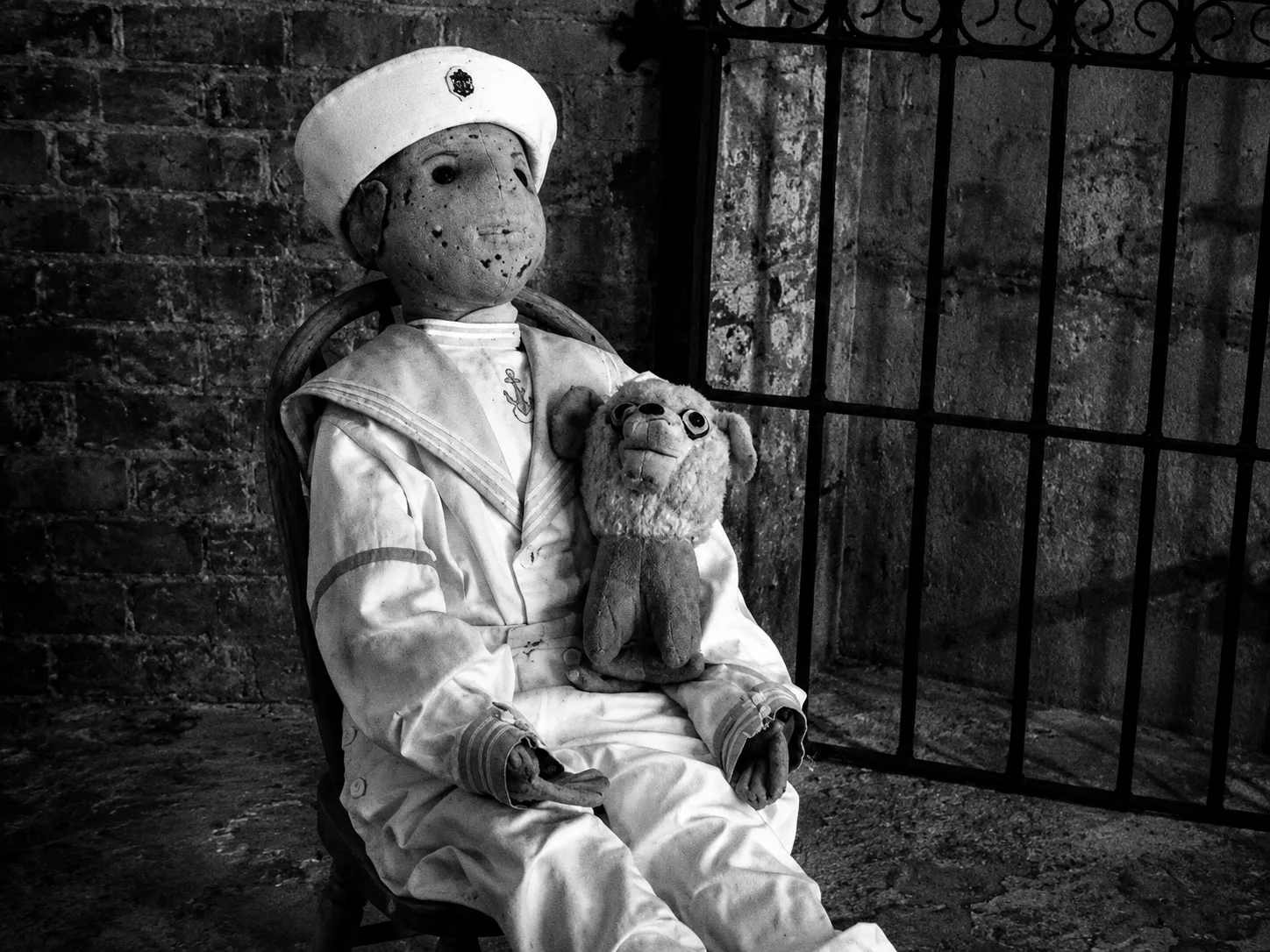
| Robert the Doll | Doll | 0 confirmed (misfortune and accidents attributed to those who mock or photograph it without asking permission) | 5/10 (occasional) |
| Myrtles Plantation Mirror | Mirror | Several attributed (tied to 19th-century plantation deaths, per local legend) | 4/10 (occasional) |
| Hope Diamond | Gemstone / jewelry | Numerous attributed (a long-running 19th–20th-century “curse” legend tied to multiple former owners) | 1/10 (dormant) |
| The Black Orlov Diamond | Gemstone / jewelry | 2–3 attributed (per a 20th-century “curse” legend involving former owners) | 1/10 (dormant) |
| The Basano Vase | Vase | About 6 attributed (per a widely circulated, largely unverified internet legend) | 1/10 (dormant) |
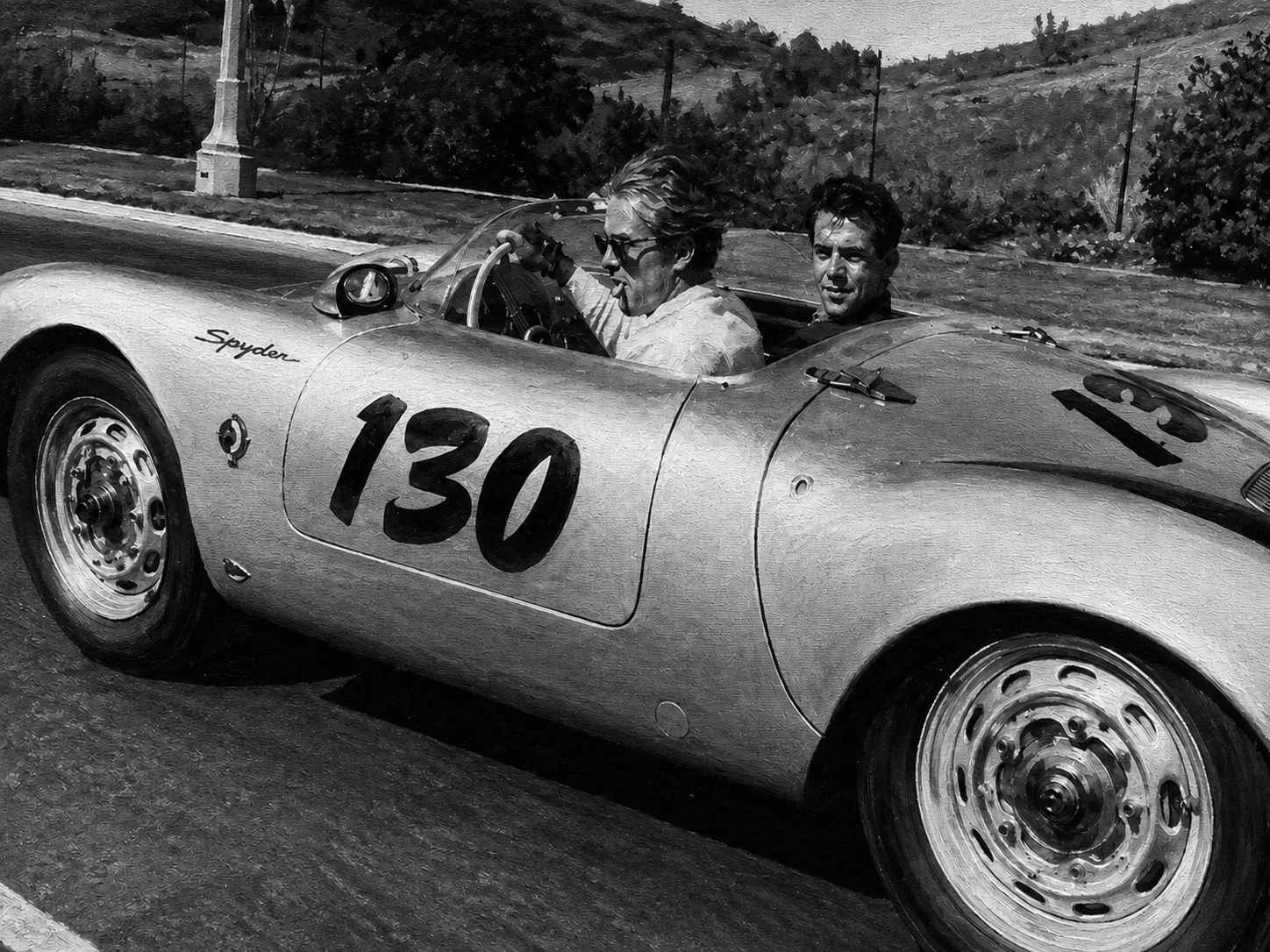
| James Dean’s “Little Bastard” Porsche | Automobile (wreck) | Several attributed (including a mechanic reportedly injured by salvaged wreck parts) | 1/10 (dormant; whereabouts unknown since 1960) |
Separating the Legend From the Record
The Pogo the Clown cursed painting stands at a unique crossroads between documented criminal history and unproven superstition. The man behind the clown, his crimes, his conviction, and his death sentence are all public record. The paintings he made, their sale prices, and the 1994 bonfire are supported by news reports from the time.
There is no evidence that any specific painting has a force that causes illness, death, or bad luck for its owners. The stories from Stone and others describe real personal hardships, but the connection between those hardships and the painting is a matter of belief, not proof. This may be why the story has lasted for two decades.
You may also enjoy:
Decarabia: Pentagram Spirit of the Ars Goetia
August 20, 2025
Pan: From Forest God to Christian Demon
August 26, 2025
Who Is Malphas? The Great President of Hell
August 25, 2025
Who Is Kimaris, the 66th Demon in Ars Goetia?
August 29, 2025
Fomorian: The One-Eyed Giants of Doom
February 12, 2026
Sources
- Cahill, Tim. Buried Dreams: Inside the Mind of a Serial Killer. Bantam Books, 1986.
- Sullivan, Terry, and Peter T. Maiken. Killer Clown: The John Wayne Gacy Murders. Grosset & Dunlap, 1983.
- Amirante, Sam L., and Danny Broderick. John Wayne Gacy: Defending a Monster. Skyhorse Publishing, 2011.
- John Wayne Gacy. Britannica, Encyclopædia Britannica. Accessed 25 June 2026.
- John Wayne Gacy’s Artwork. Britannica, Encyclopædia Britannica. Accessed 25 June 2026.
- John Wayne Gacy. FBI Records: The Vault, Federal Bureau of Investigation. Accessed 25 June 2026.
- John Wayne GACY. ArtPrice. Accessed 25 June 2026.