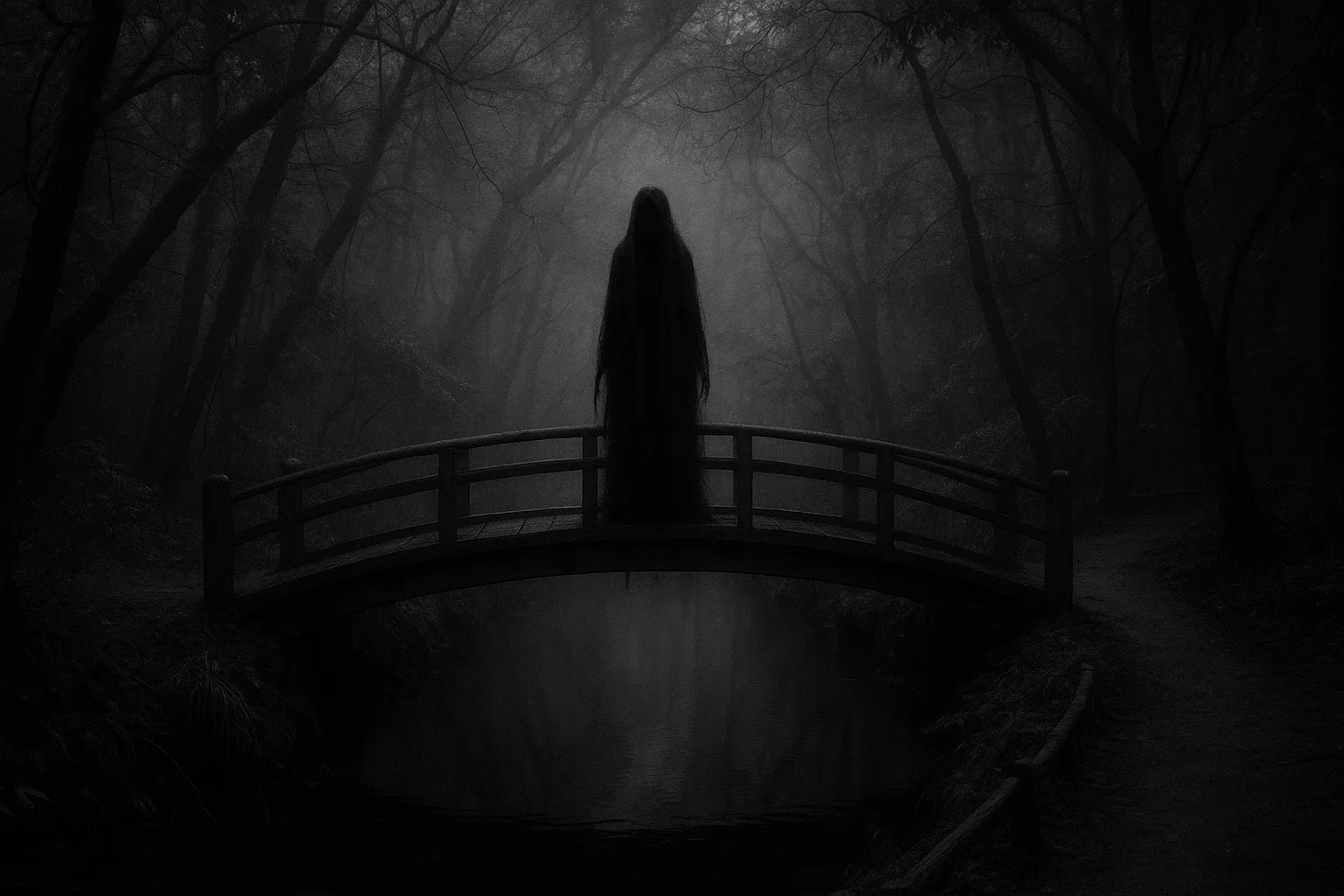
The Inokashira Park curse is one of Tokyo’s longer-lasting urban legends, a piece of folklore that claims any couple who rides a boat together across Inokashira Pond is destined to break up soon afterward.
Tucked in the leafy Kichijoji district of western Tokyo, Inokashira Park is one of the city’s most romantic settings, with cherry blossoms lining the water and swan-shaped paddle boats gliding past a small shrine on an island in the middle of the pond. Yet this same postcard-perfect view has a reputation that makes couples think twice before getting into a boat.
For decades, the story has circulated among Tokyo residents, tourists, and Japanese media outlets, blending real history, religious belief, and superstition into a legend that refuses to fade.
Summary
What Is the Inokashira Park Curse?
The Inokashira Park curse is a Japanese urban legend stating that any romantic couple who ride a boat, particularly the park’s swan-shaped pedal boats, across Inokashira Pond will separate shortly after the outing.
The legend is tied to Benzaiten, a deity enshrined on a small island in the middle of the pond, who is said to become jealous when she witnesses displays of romantic affection on the water she watches over. According to the story, her jealousy takes the form of a curse that sabotages the relationship of any couple who dares to boat across her domain.
The legend applies broadly to all three boat types available at the park’s boathouse: swan-shaped pedal boats, standard pedal boats, and rowboats. A widely repeated detail has that the curse specifically targets couples, and that riding alone, with friends, or with family does not trigger it. Some retellings add that a single male-only swan boat in the fleet is considered exempt from the curse, since it is not associated with couples at all.
Unlike many ghost stories, the Inokashira Park curse is not about a supernatural event or a vengeful spirit tied to a specific death. It is framed instead as an act of divine jealousy connected to an existing, actively worshipped deity, which is part of why the legend has remained so persistent and so widely known both in Japan and internationally.
The legend has become well known enough to be documented in Japanese travel guides, referenced in the Japan Times, and repeated across Japanese and English-language pop culture as one of the country’s signature “breakup spots.”
Benzaiten: The Goddess Blamed for the Curse
The deity at the center of the legend is Benzaiten, a sacred entity worshipped at Inokashira Benzaiten, a small temple on an island connected to the shore of the pond by a red bridge. Benzaiten originates from Sarasvati, a Hindu goddess of water, music, wisdom, and the arts, who was absorbed into Japanese Buddhism and became one of the Seven Lucky Gods.
Because Inokashira Benzaiten is a Buddhist site rather than a Shinto shrine, Benzaiten here is more precisely classified as a Buddhist deity of the Tenbu class, a category that includes other “-ten” figures such as Bishamonten and Daikokuten.
The image enshrined at Inokashira Benzaiten is a seated, eight-armed statue, each arm holding a different weapon such as a sword, a bow, or a spear, symbolizing her power. This statue is a hibutsu, meaning it is a “hidden” object normally kept out of public view and displayed only on rare occasions tied to the Year of the Snake in the Japanese zodiac calendar.
Traditionally, Benzaiten is associated with prosperity in the arts, eloquence, and financial fortune. She is generally regarded as a kind deity rather than a malevolent one, which is part of what makes the curse legend such an unusual departure from her typical religious role.
The most common explanation for the curse is that Benzaiten, watching over the pond from her island shrine, becomes envious of couples who express affection for each other on the water she presides over, and punishes that happiness by making sure the relationship does not last.
A related detail found at the shrine grounds is a statue of Ugajin, a deity with a human head and a snake’s body, linked to a local story about a young woman who, after being born through prayers to Benzaiten, later transformed into a white snake and entered the pond; the Ugajin statue is said to have been built to honor her being.
The Origins of Inokashira Park and Its Shrine
Inokashira Park’s history stretches back centuries before it became a public park. Historical accounts trace the founding of the Benzaiten shrine to the Tengyo era, between 938 and 946, when the statue is said to have been installed by order of Minamoto no Tsunemoto.
Later, in 1197, Minamoto no Yoritomo reportedly built a shrine hall there in gratitude after his prayers for victory over the rival Taira clan were fulfilled. Historical accounts also connect the site to Nitta Yoshisada’s prayers during his campaign against the Kamakura shogunate in the 14th century.
During the Edo period, Inokashira Pond took on a new and far more practical role: it became one of the primary water sources supplying the city of Edo, now Tokyo, through the Kanda Josui aqueduct system. The third Tokugawa shogun, Tokugawa Iemitsu, is credited with naming the pond “Inokashira,” meaning “wellhead” or “head of the well,” during a visit in the 17th century, and with restoring the Benzaiten shrine after it had fallen into disrepair. Shogun Tokugawa Ieyasu is also said to have used water drawn from the pond to prepare tea in the early 1600s.
The land later passed into the hands of the Imperial Household during the Meiji era before being granted to the city of Tokyo, and it opened to the public on May 1, 1917, under the name Inokashira Onshi Koen, or “Inokashira Imperial Grant Park.”
The pond itself became a recognizable feature of Edo-period art, appearing in Utagawa Hiroshige’s ukiyo-e print series, One Hundred Famous Views of Edo, published in the mid-19th century. Today the park spans roughly 40 hectares across the cities of Musashino and Mitaka, and the pond remains the source of the Kanda River.
You may also enjoy:
Sabnock in Demonology: Powers, Legends, and Rituals
August 27, 2025
Is the Bragg-Mitchell Mansion in Alabama Really Haunted?
September 3, 2025
The Legend of Umibozu: Japan’s Most Frightening Ocean Yokai
September 10, 2025
Is the Jersey Devil Real? Eyewitness Accounts and Chilling Encounters
September 24, 2025
Complete Guide to Missouri Bigfoot Sightings (1960–2025)
August 1, 2025
The Swan Boats and the Legend’s Modern Reputation
The swan-shaped pedal boats are the detail most closely associated with the curse in popular retellings, largely because they are the park’s most visually distinctive and most photographed attraction, especially during cherry blossom season when the pond’s surface fills with pink reflections. Boats can be rented from the park’s boathouse, with rowboats, standard pedal boats, and swan boats available depending on group size.
The legend’s staying power in everyday Tokyo life is well documented. In November 2018, the Japan Times published an overheard exchange recorded at Inokashira Park in its “Overheard” community feature, in which a young man warned his companion that any couple who rides a swan boat together is said to break up soon after, prompting his companion to ask whether the same risk applied to ordinary paddle boats.
The fact that such a conversation was considered newsworthy enough to print illustrates how casually and widely the legend circulates among residents rather than being treated purely as a story for tourists.
The legend is not confined to romantic partners rowing together; it has also become a frequent reference point in Japanese travel writing and lifestyle media, frequently mentioned alongside practical visitor information about the park’s boat rental hours and pricing, which suggests the story functions as much as local color and conversation material as it does a genuine deterrent.
Inokashira Park Curse vs Other Famous Cursed Locations in Japan
| Name | Type | Activity Level |
|---|---|---|
| Shinobazu Pond (Ueno Park, Tokyo) | Pond and shrine | 4/10 (occasional) |
| Enoshima Island (Kanagawa) | Island shrine | 3/10 (dormant) |
| Sengen Shrine (Shizuoka) | Mountain shrine | 3/10 (dormant) |
| Togetsukyo Bridge (Kyoto) | Bridge | 3/10 (dormant) |
| Aokigahara Forest (Yamanashi) | Forest | 8/10 (very active) |
| Okiku’s Well, Himeji Castle (Hyogo) | Well | 6/10 (occasional) |
| Old Inunaki Tunnel and Village (Fukuoka) | Tunnel and legendary village | 9/10 (very active) |
| Osorezan / Mount Osore (Aomori) | Mountain | 7/10 (very active) |
| Oiwa Inari Shrine (Tokyo) | Shrine | 5/10 (occasional) |
| Adachigahara / Kurozuka (Fukushima) | Legendary site | 4/10 (occasional) |
| Nakagusuku Hotel Ruins (Okinawa) | Abandoned building | 6/10 (occasional) |
| Kiyotaki Tunnel (Kyoto) | Tunnel | 5/10 (occasional) |
A clear pattern appears from this comparison: locations tied to a jealous-deity narrative, such as Shinobazu Pond, Enoshima, Sengen Shrine, and Togetsukyo Bridge, share the Inokashira Park curse’s core structure of a relationship-ending curse with no attributed deaths, while sites tied to a documented tragedy, murder, or historically real place of death, such as Aokigahara Forest or the Old Inunaki Tunnel, tend to carry both a higher attributed death toll and a higher paranormal activity reputation.
Inokashira Park itself sits closer to the first category: its curse is exclusively about romantic separation, with no deaths attributed to the legend itself.
The Inokashira Park Dismemberment Incident
Inokashira Park is also connected, in the more general popular imagination, to a genuine and disturbing unsolved crime, one that is entirely separate from the boat curse legend but is sometimes folded into the park’s eerie reputation.
On the morning of April 23, 1994, a park cleaner emptying trash cans discovered dismembered human remains, eventually totaling more than twenty individual pieces, wrapped in plastic bags and distributed across several trash cans in the park. Investigators determined that the remains belonged to a 35-year-old man, publicly referred to in most accounts only by an initial, who had last been seen alive roughly a day and a half before the discovery.
Forensic examiners found no blood at the scene and concluded that dismemberment had been performed elsewhere with considerable precision, likely using an electric saw, and that the pieces had then been thoroughly washed before being disposed of, a detail investigators said pointed to someone with substantial anatomical knowledge and access to a large water supply. The victim’s head, torso, and genitals were never recovered.
Despite an extensive investigation, no suspect was ever identified, and Japan’s statute of limitations on the case expired in 2009, fifteen years after the murder, leaving it permanently unsolved. Investigators were also redirected to the 1995 Tokyo subway sarin gas attacks less than a year into the case, which further limited the resources devoted to it.
The case is factually distinct from the Benzaiten boat curse; it involves no supernatural claim in the earliest police investigation and predates most tellings of the curse legend that reference it.
It is worth noting, however, that the video game Shin Megami Tensei, released in October 1992, includes a plot device in which the game’s protagonist is barred from entering Inokashira Park early in the story because a dismembered body has been found there, a detail that has led to frequent speculation online about a connection between the fictional game and the real 1994 case, even though the game predates the actual murder by roughly two years.
Rational Explanations Behind the Curse
Setting aside the supernatural framing, several realistic factors help explain why Inokashira Park developed this particular reputation and why the legend continues to feel believable to visitors.
Boating requires two people to cooperate in a small, physically confined space for an extended period, often while pedaling in unfamiliar, mildly awkward conditions. This kind of close-quarters cooperation can expose friction points in a relationship that could otherwise go unnoticed, particularly for newer couples who have not yet handled a stressful shared task.
Inokashira Park is also simply one of Tokyo’s most popular dating destinations, drawing enormous numbers of couples every year, especially during cherry blossom season. A location that hosts a very high volume of couples will, purely by statistical chance, also see a high volume of eventual breakups among the people who visited it, regardless of any curse.
The same statistical pattern has been used to explain why other extremely popular date destinations in Japan, unconnected to Benzaiten or any goddess, have separately picked up reputations as places where relationships tend to end.
Visiting Inokashira Park Today
Inokashira Park remains one of Tokyo’s most visited green spaces, located a short walk from Kichijoji Station on the JR Chuo Line and from Inokashira-Koen Station on the Keio Inokashira Line.
The park is open to the public free of charge. It includes a small zoo, an aquarium, the Benzaiten temple, and extensive walking paths shaded by thousands of trees. It sits adjacent to the Ghibli Museum, which draws its own significant visitor traffic and requires advance ticket reservations.
Boat rentals operate seasonally, generally from around 10:00 a.m. to 4:30 p.m., with swan boats, standard pedal boats, and rowboats available in different capacities and at varying rental rates. Spring, during cherry blossom season, and autumn, when the park’s varied trees change color, are considered the most popular times to visit, with the pond’s cherry blossom reflections in particular drawing large crowds and correspondingly long lines at the boathouse.
Whether or not visitors take the curse seriously, the legend has become part of the park’s identity, discussed as readily by locals as any of its more conventional attractions.
You may also enjoy:
Why Lumley Castle Is One of England’s Most Disturbing Hauntings
January 12, 2026
Who Is Cimejes, the Twentieth Demon in the Ars Goetia?
November 13, 2025
Complete Guide to Ohio Bigfoot Sightings (1860–2025)
August 5, 2025
Lamashtu: The Demon Goddess Who Preyed on Infants
August 22, 2025
Demon Naberius Explained: Origins, Powers, and Myths
August 26, 2025
Spontaneous Human Combustion: History and Real Cases
June 29, 2026
Sources
- Hiroshige, Utagawa. Meisho Edo Hyakkei [One Hundred Famous Views of Edo]. 1856–1858.
- Takahashi, Y. Aokigahara-jukai: suicide and amnesia in Mt. Fuji’s Black Forest. Suicide & life-threatening behavior vol. 18,2 (1988): 164-75. doi:10.1111/j.1943-278x.1988.tb00150.x
- Addiss, Stephen (2005). Japanese Ghosts and Demons: Art of the Supernatural. George Braziller, 1985.
- Iwasaka, Michiko; Toelken, Barre (1994). Ghosts and the Japanese: Cultural Experience in Japanese Death Legends. Utah State University Press. ISBN 978-0-87421-179-5.