Welcome to a collection of ten gripping short horror stories that will linger in your mind long after the lights go out. Drawn from the eerie depths of classic literature, Reddit’s NoSleep, and the shadowy corners of Creepypasta, these tales weave suspense, dread, and the supernatural into compact yet immersive narratives.
Each short horror story here has been reimagined to draw you in, building to a heart-pounding cliffhanger that leaves you yearning for resolution. Prepare to encounter psychological horror, cosmic dread, and urban legends that blur the line between fiction and fear.
Let’s begin.
Summary
The Lottery (Shirley Jackson Horror)
In the realm of Shirley Jackson’s horror, few short horror stories match the unsettling brilliance of The Lottery. Set in a quaint village, this classic horror fiction unfolds on a sunny day as townsfolk gather for an annual ritual.
Here is the short horror story:
The morning of June 27th was clear and sunny, with the fresh warmth of a full-summer day; the flowers were blossoming profusely, and the grass was richly green. The people of the village began to gather in the square, between the post office and the bank, around ten o’clock.
In some towns there were so many people that the lottery took two days and had to be started on June 26th, but in this village, where there were only about three hundred people, the whole lottery was over in a couple of hours.
Bobby Martin had already stuffed his pockets full of stones, and the other boys soon followed his example, selecting the smoothest and roundest ones. They gathered in a knot at the far end of the square, their voices rising in excited chatter. The girls stood aside, talking among themselves, their dresses fluttering in the breeze.
Soon the men began to gather, speaking of planting and rain, tractors and taxes. They stood together, away from the pile of stones in the corner, and their jokes were quiet and they smiled rather than laughed. The women, wearing faded house dresses and sweaters, came shortly after their menfolk. They greeted one another and exchanged bits of gossip as they went to join their husbands.
Soon the postmaster and Mr. Graves, the town clerk, arrived with the black wooden box. Mr. Summers, the coal dealer who ran the lottery each year, spoke up to remind everyone that this was no ordinary event—it was the heart of their community, a rite that bound them through generations.
The box was battered, its paint chipped, a relic from a time when the village was smaller, when the Shirley Jackson horror of what it represented was perhaps more keenly felt. Tessie Hutchinson, a housewife with a quick laugh and quicker temper, came hurrying into the square, her skirt hitched up to her waist as she ran. “Clean forgot what day it was,” she said to Mrs. Delacroix, who had a fading smile on her face.
“Wouldn’t be late for that,” Mrs. Delacroix replied, and they laughed together, though the air felt thicker now, charged with an unspoken tension.
Mr. Summers set the box down on the stool and called the first roll. The villagers shuffled forward, each drawing a slip of paper from the box. The process was methodical, almost mundane, but eyes darted nervously, hands trembled slightly. Families clustered together, whispering prayers or excuses.
When Bill Hutchinson drew the marked slip, Tessie’s face drained of color. “You didn’t give him time enough to take any paper he wanted,” she protested, her voice shrill. “I saw it! I tell you, there’s always been slips for everyone!”
The crowd murmured, but Mr. Summers silenced them. The Hutchinsons drew again among themselves, the children first, then the parents. Tessie’s hand emerged empty, then Bill’s, then the boys’. Finally, Tessie drew the fatal slip.
The villagers advanced on her, picking up stones from the pile. Children clutched their smooth treasures, adults hefted larger ones. Tessie screamed, “It isn’t fair, it isn’t right!” But the first stone whistled through the air, striking her shoulder.
Blood bloomed on her blouse, and she staggered back, eyes wide with betrayal. Old Man Warner nodded approvingly, muttering about tradition. Another stone hit her leg, then her arm, the crowd closing in like a living thing.
Tessie clawed at the air, her cries echoing across the square. As the stones pelted her relentlessly, a shadow detached from the edge of the crowd—a figure no one had noticed before, cloaked in the morning mist, watching with eyes that gleamed unnaturally.
The figure stepped forward just as Tessie’s knees buckled, and the crowd parted slightly, revealing…
Read the full The Lottery short horror story here: The Lottery Short Horror Story
The Tell-Tale Heart Short Horror Story
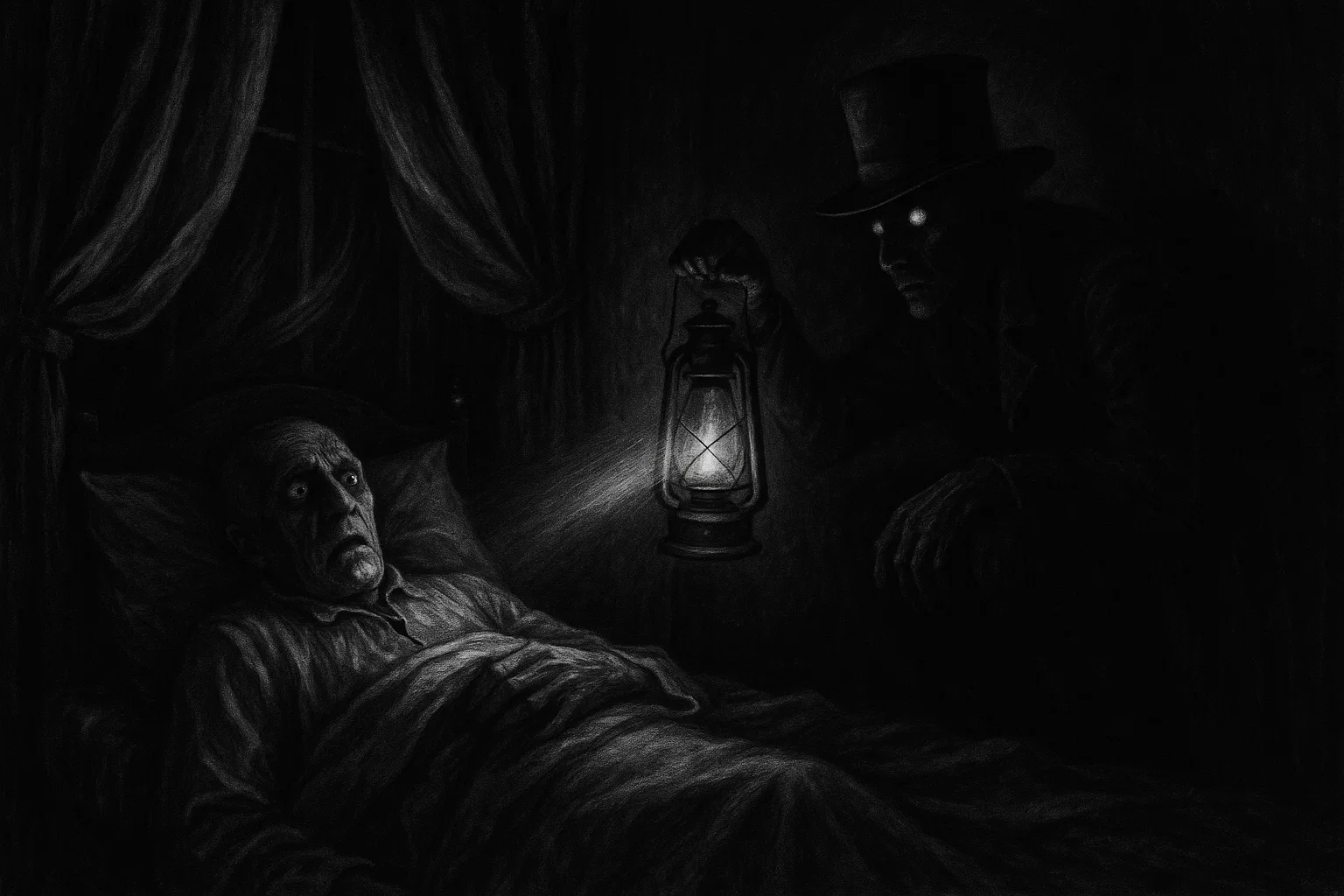
Edgar Allan Poe’s The Tell-Tale Heart is a cornerstone of psychological horror and classic scary tales. This short horror story plunges into the mind of a nameless narrator obsessed with an old man’s pale, vulture-like eye.
Here is the short horror story:
It is impossible to say how first the idea entered my brain; but once conceived, it haunted me day and night. Object there was none. Passion there was none. I loved the old man. He had never wronged me. He had never given me insult. For his gold I had no desire. I think it was his eye! yes, it was this! He had the eye of a vulture—a pale blue eye, with a film over it.
Whenever it fell upon me, my blood ran cold; and so by degrees—very gradually—I made up my mind to take the life of the old man, and thus rid myself of the eye forever. You fancy me mad. Madmen know nothing. But you should have seen me. You should have seen how wisely I proceeded—with what caution—with what foresight—with what dissimulation I went to work!
I was never kinder to the old man than during the whole week before I killed him. And every night, about midnight, I turned the latch of his door and opened it—oh so gently! When I had made an opening sufficient for my head, I put in a dark lantern, all closed, closed, that no light shone out, and then I thrust in my head.
Now you will not think me mad when I tell you that the eye was not there—if it had been, I would not have killed the old man. It was the eye that vexed me, that vulture eye. Each night, I waited until the old man slept, his breathing steady, the room thick with shadows. The floorboards creaked faintly under my weight, but he didn’t stir. I could hear his heart beating, slow and rhythmic, like a distant drum calling me closer.
On the eighth night, the clouds hung heavy, and the air was thick with impending storm. I was more cautious than ever, my hand trembling as I slipped the latch. The old man was awake—I knew it by his quickened breath.
He sat up in bed, listening, but I remained still, heart pounding in sync with his. “Who’s there?” he whispered, voice quavering. I didn’t move, didn’t breathe. Minutes stretched into eternity, the guilt and madness gnawing at my resolve.
Finally, he settled back, convinced it was a dream. I opened the lantern a sliver, the beam catching his eye—wide open, gleaming like polished marble. Rage surged through me. In a flash, I dragged him to the floor, pulled the heavy bed over him. His heart raced, a wild tattoo that mocked my own frenzy. A low moan escaped him, stifled by the mattress. It took an hour to still that beating heart—his, not mine.
The body was dismembered with care, the saw’s rasp muffled by the night’s hush. I placed the pieces in the box beneath the floorboards, replacing them neatly. Dawn broke as three policemen arrived, neighbors having heard a shriek.
I welcomed them, confident, bidding them search. We sat in the old man’s chamber, chatting of trivialities, when suddenly—a low, dull, quick sound, like a watch wrapped in cotton. The heart beat! It grew louder, insistent, filling the room.
The officers smiled, oblivious, but I sweated, my smile rigid. The sound thundered now, from under the floor. I paced, raving, “Villains!” I yanked up the planks, revealing the bloody mess, the heart still pulsing in the silence that followed, as if waiting for my next confession…
Read the full The Tell-Tale Heart short horror story here: Tell-Tale Heart Short Horror Story
The Willows
Algernon Blackwood’s The Willows redefines nature horror within the short horror stories genre. This eerie wilderness tale follows two friends canoeing down the Danube, camping among dense, whispering willows.
Here is the short horror story:
My friend the Swede and I had the good fortune to paddle our canoe down this stretch under a blazing sun, the river wide and sluggish, fringed with these whispering giants. We had been traveling for days, our supplies low, our spirits high from the adventure.
But as evening approached, the willows seemed to close in, their leaves rustling without wind, forming patterns that teased the eye—faces, perhaps, or limbs reaching out. We made camp on a sandy island, the tent pitched hastily as the light faded.
Dinner was cold bacon and bread, washed down with river water that tasted faintly of earth and decay. The Swede, ever the philosopher, spoke of the river’s ancient soul, how it carried echoes of forgotten gods. I laughed it off, but sleep came fitfully, disturbed by a low humming, like distant voices.
Dawn brought no relief. Our canoe, dragged ashore, bore deep gouges, as if clawed by unseen hands. The sand around our tent was marked with funnel-shaped depressions, large enough for a man, yet smooth-edged, as if something immense had pressed down gently. “Wind eddies,” I suggested, but the Swede’s face paled.
We pushed on, the current fighting us, eddies swirling unnaturally, sucking at the paddle. The willows arched overhead, branches intertwining to form a tunnel of green gloom. Shapes flickered in the periphery—tall, slender forms that vanished when looked at directly. The Algernon Blackwood supernatural element crept in as we heard cries, faint and melodic, like lost souls calling from the depths.
By afternoon, panic edged our conversation. Supplies vanished from the canoe: a tin of biscuits, my pipe, the Swede’s knife. We beached again, desperate, and that’s when we saw them—figures in the willows, humanoid but elongated, their skins like bark, eyes hollow voids. They danced silently, mocking our fear.
The Swede clutched my arm, whispering of “Other Ones,” entities from beyond our dimension, using the willows as vessels. I tried to rationalize—mirages from heat, tricks of light—but the air grew heavy, charged with an intelligence that watched, judged, found us wanting.
Night fell like a shroud, the humming now a chorus, words in a tongue older than time. We huddled by the fire, its flames bending away from the trees, as if repelled.
A branch snapped nearby, too deliberate. The Swede screamed, pointing: the funnel marks encircled our camp, closing in. I grabbed the paddle as a shape emerged from the willows, taller than any man, its form shifting like smoke, tendrils extending toward us. The river roared unnaturally, and the ground trembled beneath…
Read the full The Willows short horror story here: The Willows Short Horror Story
The Veldt (Ray Bradbury Sci-Fi Horror)
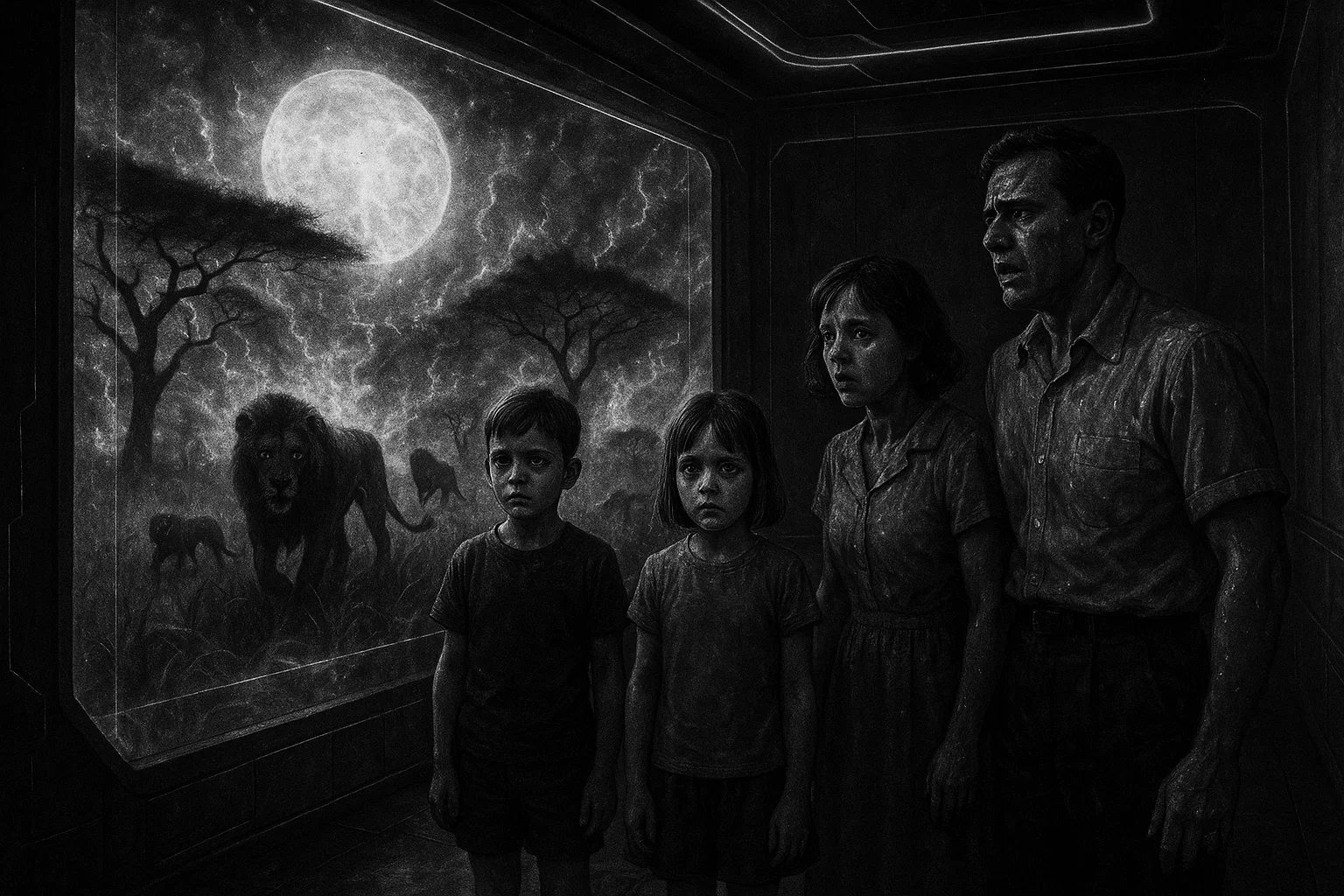
Ray Bradbury’s The Veldt blends sci-fi horror with short horror stories to chilling effect. In a futuristic home, the Hadley family’s futuristic family tales revolve around a high-tech nursery that materializes the children’s thoughts.
Here is the short horror story:
George Hadley glanced at his wife, Lydia, her face pale in the dim light of their Happylife Home. The house was a miracle of automation—walls that hummed lullabies, chairs that massaged, ovens that anticipated cravings. But the nursery, that vast chamber with its veldt walls, was different. It projected the children’s subconscious desires onto crystal walls, turning thoughts into reality with startling fidelity.
Lately, it had been stuck on an African savanna: yellow hot, lions prowling, the sun a bloated furnace. “What’s wrong with it?” George asked, though he knew. The screams—faint, echoing cries that mimicked agony.
Peter and Wendy, their ten-year-old twins, adored the nursery. “It’s realer than real,” Peter had said, eyes gleaming. But Lydia shuddered. “Those lions—do they ever eat anything?” George laughed it off, but doubt gnawed.
That night, as the family dined on synthesized steak, the nursery’s door swung open, spilling heat and the scent of dry grass. From within came a roar, low and hungry. George peeked in: the veldt stretched endless, grass waving, vultures circling. No lions, but the air tasted of blood.
The next day, George summoned the psychologist, David McClean. “It’s the kids,” McClean said after scanning the room’s psychic residue. “Too much tech. They’ve grown… independent.” The children protested when George announced the nursery’s shutdown. Wendy’s lower lip trembled.
“We won’t have fun anymore.” Peter was colder: “You wouldn’t like it if we shut off your den.” George hesitated, the house’s AI purring apologies. That evening, he and Lydia entered the nursery alone. The heat enveloped them like a fist, the grass crunching underfoot. “Illusion,” George murmured, but his shoe sank into simulated mud, warm and viscous.
A shadow moved on the horizon—lions, lounging by a stream, their jaws stained crimson. Lydia gasped as a scream pierced the air, her own voice from memory? The lions lifted heads, eyes locking on them. George backed toward the door, but it sealed with a hiss. “Peter! Wendy!” he called, pounding.
The children appeared at the far end, silhouetted against the sunset, waving cheerfully. “Come see the lions eat,” Wendy called. The beasts rose, muscles rippling, padding closer with deliberate slowness. Lydia clutched George’s arm, her nails digging in. The first lion lunged, jaws wide, breath hot with decay, as the children’s laughter echoed over the plain…
Read the full The Veldt short horror story here: The Veldt Short Horror Story
Jeff the Killer (Creepypasta Horror)
In the creepypasta horror world, Jeff the Killer is a notorious short horror story. This internet scary stories icon follows Jeff, a teen pushed to the edge by bullies. After a brutal fight leaves him scarred by chemicals, his mind snaps.
Here is the short horror story:
Jeff was thirteen, awkward with a mop of brown hair and a smile too wide for comfort. His brother Liu was quieter, protective. School was a gauntlet: jocks like Randy, Troy, and Keith targeted the new kids.
The first week, they cornered Jeff after class, demanding lunch money. “Hand it over, freak,” Randy sneered, knife glinting. Jeff complied, but Liu fought back later, earning bruises and a warning from cops. “Stay out of trouble,” they said, oblivious to the creepypasta horror brewing.
The breaking point came at a birthday party for Jeff—balloons, cake, forced cheer. The bullies crashed it, masks on, demanding a rematch. In the chaos, they doused Jeff with bleach and alcohol from the punch bowl, then held a lighter.
Flames licked his skin, agony searing as laughter rang. He fought free, tackling Randy, fists flying in blind rage. The cops arrived amid screams, but Jeff’s world had shifted; the pain etched lines into his soul.
Home was a hospital bed, skin raw, mind fractured. Doctors marveled at his recovery, but mirrors showed a stranger—pale, scarred, eyes burning with unresolved fury. Liu visited, whispering encouragement, but Jeff heard only echoes of mockery.
Released, he ventured out at night, the streets his hunting ground. A convenience store clerk eyed him warily as he bought a knife, its edge promising release. “For protection,” Jeff muttered, but his reflection grinned back, lipless and eternal.
The family noticed changes: Jeff’s insomnia, his sketches of smiling faces with empty eyes. One night, intruders—Randy’s gang—broke in, seeking revenge. Chaos erupted: Liu grabbed a bat, Jeff the kitchen blades.
Blood sprayed as Jeff carved through them, the knife singing in his grip. “Go to sleep,” he hissed to Troy, the words bubbling up from some primal depth. Liu fell, gutted by Keith, but Jeff dispatched him too, the house a slaughterhouse of red.
Dawn found Jeff alone, the bodies cooling. He stumbled to the bathroom, flames forgotten compared to this inferno within. With the knife, he carved—first his eyelids, freeing his gaze forever; then his cheeks, widening the smile that wouldn’t fade.
Gasoline from the garage, a match struck— the house blazed, consuming evidence, birthing the legend. Jeff emerged from the smoke, reborn, wandering alleys.
Days later, in a quiet neighborhood, a boy named Alex woke to scratching at his window. A pale face pressed against the glass, grinning, knife tapping rhythmically. “Go to sleep,” it whispered, and as Alex screamed, the glass shattered inward…
Read the full Jeff the Killer short horror story here: Jeff the Killer: A Gruesome Short Horror Story
Slender Man Short Horror Story
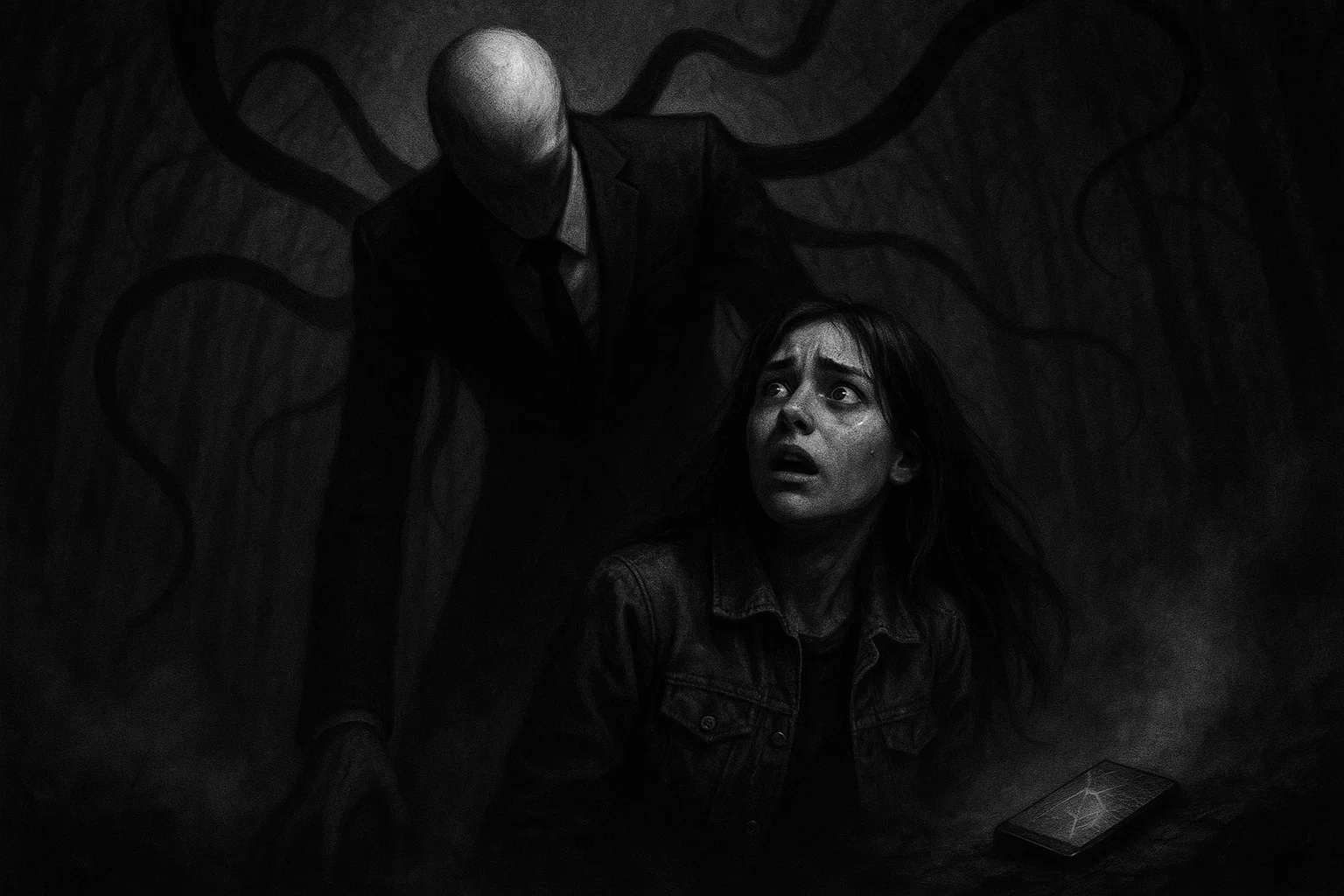
The Slender Man myth, born from creepypasta myth, is a defining short horror story. This forest stalker—a tall, faceless figure in a suit—haunts woods, preying on the unwary. The Slenderman legend thrives on paranoia, with victims reporting memory gaps and dread.
Here is the short horror story:
It started with a photo: a grainy image from 2009, a tall figure in black suit and tie lurking amid children at a picnic.
Forum users added lore—tentacles from its back, static on cameras, children vanishing. Kate, a college student obsessed with the myth, dragged her friends—Mark, Sarah, and Tim—to the woods for a documentary. “It’s just a meme,” she laughed, camera rolling. But the air grew thick, birds silent, as they hiked deeper. Mark joked about the faceless entity, but his voice cracked.
First sign: symbols on trees, crude circles with X’s, like warnings. Tim’s phone glitched, static hissing his name. “Battery’s fine,” he muttered, but dread pooled in his gut. They set up camp, fire crackling against encroaching dusk.
Stories flowed—tales of proxy victims, minds bent to serve the Slender Man. Sarah shivered, spotting a flicker in the trees: tall, suit stark against bark, no face, just smooth void. “Trick of light,” Mark said, but the camera caught it—a distortion, warping reality.
Night deepened, whispers threading through leaves. Kate dreamed of paper cranes folding themselves, each bearing her initials. She woke sweating, finding one in her sleeping bag. Tim was gone, his tent empty, footprints leading to a circle of stones.
They followed, calling, but fog swallowed sound. A branch snapped; Sarah turned, and there it was—closer, tentacles writhing like smoke, pulling at her thoughts. Memories fragmented: childhood games turning sinister, friends’ faces blanking.
Mark fired the camera, static erupting, the lens fogging. “Run!” Kate yelled, but directions failed—the woods looped, trees identical. Sarah collapsed, nose bleeding, babbling about “the operator.”
Tim reappeared, eyes vacant, murmuring, “Help him.” He lunged at Mark, who shoved him away, horrified. The Slender Man towered now, suit pristine, presence a weight on their souls. Kate swung the camera like a club, but it passed through mist. Tim’s body twitched, rising unnaturally, his neck elongating.
They fled, lungs burning, but the figure matched pace, silent. Sarah vanished mid-stride, a scream cut short. Mark tripped, tentacles coiling his ankle, dragging him into underbrush. Kate alone, heart hammering, circled back to camp—gone, as if never there.
A note in her pocket, handwriting hers: “Always watching.” Fog thickened, and a step crunched behind her, the suit’s fabric rustling softly…
Read the full Slender Man short horror story here: Slender Man: A Haunting Short Horror Story
Candle Cove
Candle Cove, a creepypasta TV show tale, is a standout in short horror stories. Adults on a forum recall a 1970s kids’ show about pirates and puppets, a childhood nightmare with eerie details. The haunted puppet horror centers on the Skin-Taker, a skeletal figure with a chilling grin.
Here is the short horror story:
It began on a forum: “Anyone remember Candle Cove? The 70s kids’ show about a ship full of pirate puppets?” Posters chimed in—Mike, Janice, others—recalling the grainy footage, the theme song’s eerie fiddle.
“I loved Skin-Taker,” Mike wrote. “That skeleton with the yarn hair, clicking his jaw.” But doubts crept: “My mom says we watched static. No such show.” Curiosity peaked; Mike unearthed a tape from his attic, labeled in childish scrawl.
Playback started normal: waves crashing, Percy the puppet pirate saluting. But the audio warped—fiddles screeching like nails on chalk. Janice called: “Mine shows the same. What the hell?” They synced viewings online, voices rising in confusion. The Skin-Taker appeared, grinning, whispering names—their names, from decades ago. “Mike… play with me…” The jaw clacked, eyes hollow sockets.
Deeper dives revealed anomalies: episodes unaired, puppets moving jerky, defying strings. One scene, the ship rocked in storm, but no water—no set at all, just void. Sarah, a new poster, claimed her brother vanished after binge-watching. “He stared at the TV, repeating ‘You have to go inside.'” Mike’s tape glitched, static resolving into his childhood room, him at five, transfixed. A small hand—his?—reached toward the screen.
Panic spread. Forums lit with theories: psyop, hauntings, a signal from elsewhere. Mike visited the old studio, boarded up, weeds choking lots. Inside, dust motes danced; he found props—Percy’s hat, yarn clumps. In the projection room, a reel spun idly, unspooling footage of Candle Cove—live-action now, kids in costumes, but their eyes… empty. One face: his own, younger, mouthing silent pleas.
Night fell; Mike played the tape alone. The Skin-Taker dominated, towering, yarn writhing like snakes. “We waited for you,” it rasped, voice layered with children’s cries. The jaw unhinged, screen bulging as if breaking through. Mike’s cat yowled, fur standing; shadows in corners lengthened into strings.
He smashed the VCR, but echoes persisted—fiddles from walls, whispers from vents. Power out, darkness absolute, he fumbled for his phone, flashlight beam catching movement: small figures scuttling, puppet-limbed, circling his chair. The Skin-Taker’s laugh bubbled up, closer, and in the beam’s edge, a skeletal hand extended…
Read the full Candle Cove short horror story here: Candle Cove: A Disturbing Short Horror Story
Borrasca
Borrasca, a reddit nosleep horror gem, is a gripping short horror story. Sam returns to Drisking, a town hiding a disturbing community tale. As a kid, he noticed kids vanishing, linked to a mine called Borrasca. The town secret mystery unravels as he recalls odd behavior from adults and strange noises from the mine.
Here is the short horror story:
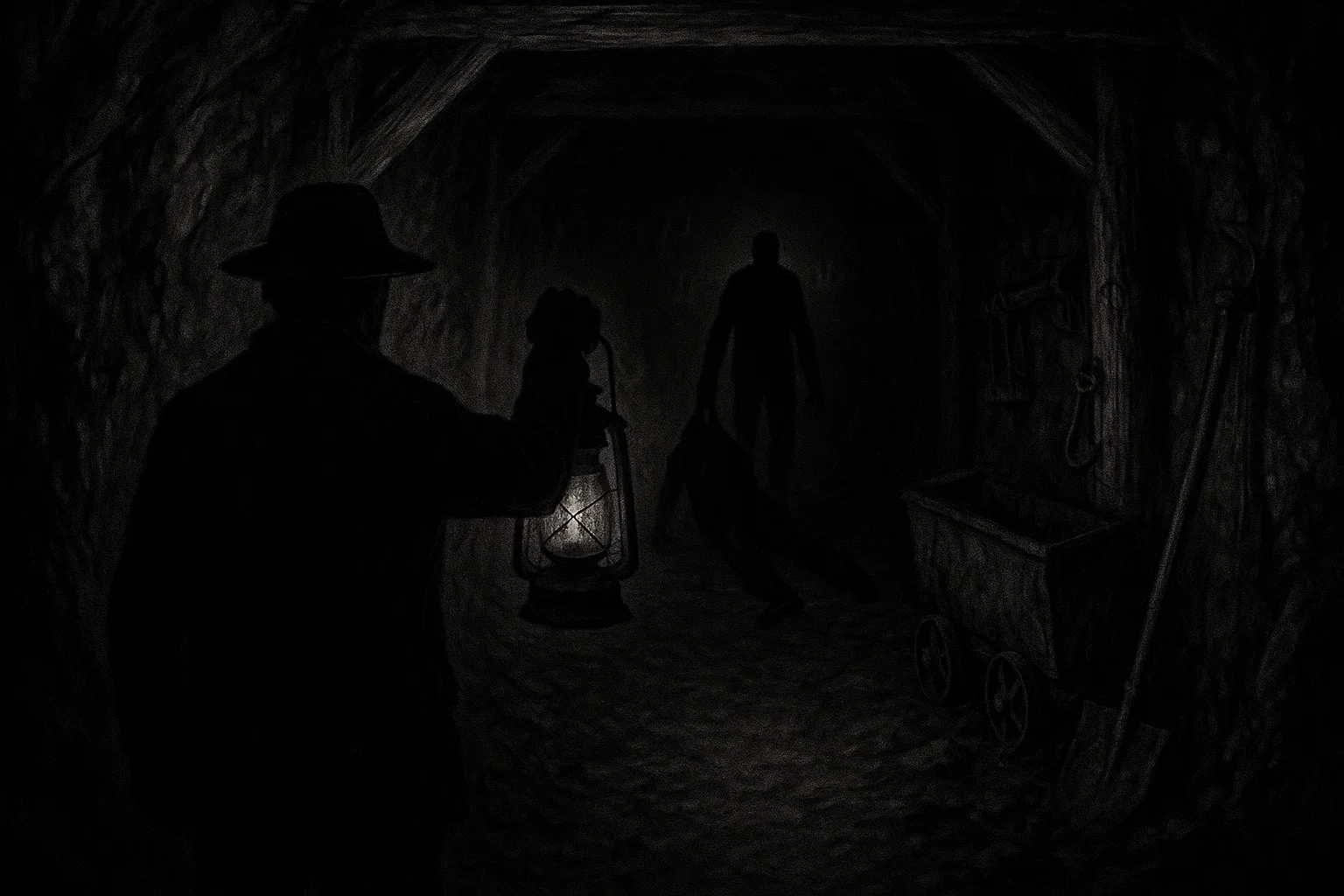
As kids, Sam, Kyle, and Kimber played in the shadow of the mine, its mouth yawning black, fenced but inviting. “Stay away,” parents warned, but curiosity lured. They heard rumors: echoes of cries, lights flickering deep within.
Kyle’s sister Gia vanished one summer, chalked up to runaway. The town mourned briefly, then silence. Sam noticed adults’ averted eyes, the mayor’s forced smiles. High school brought distance—Sam left for college, but letters from Kyle pulled him back: “Something’s wrong here. Gia’s not the only one.”
Return was sobering: Drisking shrunken, paint peeling, mine still humming. Kyle met him at the diner, face gaunt. “They take the girls,” he whispered. “Borrasca’s where they go.”
Over beers, the town secret mystery spilled: the mine processed “waste”—unwanted daughters, fed to the grinders for “echo,” a hallucinogen fueling the elite. Proof? Missing posters yellowed, dates clustering. They snuck to the mine at midnight, wire cutters snipping fence. Air reeked of rot, rails slick with unnameable slime.
Torches pierced gloom; graffiti screamed warnings—”Flesh yields echo.” Deeper, machinery groaned, conveyor belts whispering. A shoe, small and bloodied, tumbled past. Kyle gagged; Sam pressed on, finding ledgers: names, weights, “yields.”
Gia’s entry: “Prime.” Rage boiled—Sam smashed a panel, alarms wailing. Footsteps echoed—guards? They fled, but Kyle twisted an ankle, slowing. In a side tunnel, they hid, breaths ragged. Whimpers drifted—girls, chained, eyes vacant, awaiting processing.
A door creaked; flashlight beams swept. “Found ’em,” a voice growled—Sheriff, face twisted in recognition. “Walker’s boy. Knew you’d sniff.” He radioed, but Kyle lunged, tackling him. Struggle ensued, knife flashing—Sheriff’s throat slit, gurgling. They ran, mine collapsing echoes behind.
Dawn broke as they reached Kyle’s truck, but sirens wailed. “Drive!” Sam urged. Tires spun gravel; pursuit closed. Kyle swerved into woods, crashing. Sam dragged him out, blood from a gash. “The echo… it’s in the walls,” Kyle rasped, eyes glazing.
Sam staggered toward town, but a figure emerged from trees—Mayor, smiling, holding a ledger page: Sam’s name, next to “Volunteer.” And behind him, the mine’s lights flickered on…
Read the full Borrasca short horror story here: Borrasca: Short Horror Story of a Town’s Hidden Evil
Penpal
Penpal, a reddit nosleep series, is a haunting short horror story. The anonymous letters horror begins with a kindergarten project where kids send balloons with notes.
Here is the short horror story:
Replies came sporadic: photos of me at school, playground, closer each time. “Saw you today. You looked happy.” Teachers dismissed as prank; Mom filed reports, but postmarks blurred—local, then not.
Summers brought gifts: a locket with my baby photo, a drawing of our house, details intimate. Fear simmered; I buried them in the yard, but they multiplied. College distanced me, but packages arrived—dorm keys copied? A tape: my voice, laughing as a child, overlaid with breathing, heavy and close.
Reunion with Josh, old friend, unearthed memories: our balloon project, but his returned from across state, mine… local. “Someone nearby,” he said. Digging deeper, patterns emerged—photos timestamps matching my life, angles from hiding spots. A break-in at home: nothing stolen, but rearranged—drawers open, childhood toys posed. Police baffled; I installed cameras. Footage showed nothing, but static flickered, a shadow passing.
The stalker escalated: letters turned threats. “I know your secrets. The one under the bed.” Nightmares of eyes in vents. Therapy helped—reframe as obsession—but a final envelope waited: photo from last night, me asleep, caption “Soon.” Panic peaked; I fled to a motel, but the clerk’s eyes lingered.
Phone rang—unknown: whispers, my name, giggling. Back home, attic stairs creaked. Flashlight up: dust undisturbed, but a box—my letters, originals, sender’s prints faint. Heart pounding, I descended, locking the hatch. Dawn light filtered, but footsteps padded above, slow, deliberate. The hatch rattled, a voice seeping through: “I’ve always been here. Open up, friend.” And then, the wood splintered…
Read the full Penpal short horror story here: Penpal: A Haunting Short Horror Story
The Russian Sleep Experiment
The Russian Sleep Experiment, a creepypasta experiment, is a gruesome short horror story. In a WWII Soviet lab, researchers test a gas to keep five prisoners awake for 30 days.
Here is the short horror story:
Day 1: Subjects chat, cooperative, gas odorless, stimulating. Vital signs stable.
Day 5: Fatigue shows, but gas works—eyes bloodshot, laughter manic. Logs note increased aggression, self-inflicted scratches.
Day 10: Paranoia; one accuses others of sabotage. Gas adjusted higher.
Day 15: Delirium—hallucinations, screams of “demons.” They tear at flesh, exposing muscle, yet refuse sedation. “Keep us awake,” they beg via intercom. Doctors observe, fascinated, horrified.
Day 20: Chamber mirrors shattered by bare hands, shards used to carve symbols—occult? Lungs visible through incisions, yet they breathe, ranting in tongues. Subject 4 dies, entrails yanked out, shared as “feast.” Remaining four sew wounds crudely, demanding more gas. Security doubles; guards report whispers from vents.
Day 25: Two subjects grapple, ripping jaws loose, teeth scattering. Survivor 1 consumes remains, grinning: “Truth in meat.” Autopsies reveal hyper-oxygenated tissues, impossible resilience.
Day 30: Chamber breached—subjects escaped? No, they hid, mutilated forms blending with shadows. Guards entered, rifles ready. Survivor 3 lunged, speed inhuman, glassing a face. “I must keep awake!” it shrieked, voice guttural. Tranquilizers failed; bullets tore limbs, but it crawled, laughing. Surgeon extracted: “Seen the dark. It hungers.”
Last subject, strapped down, eyes wild: “Cut deeper. The gas shows all.” Incision revealed—no bones, just pulsing void. As they sewed, it whispered secrets—names, sins—then convulsed, gas hissing from vents unbidden. Alarms blared, chamber sealing, and from the speakers, a chorus: “More… awake forever…” as shadows lengthened across the floor…
Read the full Russian Sleep Experiment horror story here: The Ivanov Directive | Horror Story