The Dullahan is a malevolent headless creature from Irish folklore known for predicting death. Unlike other spirits that people can keep away, the Dullahan brings a final fate. If it stops during its midnight ride and says someone’s name, that person dies right away.
For centuries, its appearance on Ireland’s dark country roads has reminded people of mortality and the unavoidable journey from life to death.
Summary
Key Takeaways
| Attribute | Details |
| Names | Dullahan, Gan Ceann; Irish for ‘without a head’ |
| Nature | Unseelie court faerie, malevolent spirit |
| Species | Humanoid, Spectral |
| Appearance | Headless rider, carrying own head, riding a black horse or driving a coach |
| Area | Ireland, particularly Sligo and County Down |
| Creation | Ancient Celtic sacrificial remnants, specifically linked to Crom Dubh |
| Weaknesses | Gold; even a small amount can repel it |
| First Known | Oral tradition dating to the first millennium; early written accounts in 19th-century folklore collections |
| Myth Origin | Irish/Celtic mythology |
| Strengths | Supernatural speed, soul harvesting, opening locked gates |
| Time Active | Nocturnal, specifically active during festivals and late night |
| Diet | Does not consume food; feeds on the life force/souls of the dying |
Who or What Is Dullahan?
The Dullahan is a frightening member of the Irish unseelie court and is considered a solitary faerie. It is best known as a headless rider dressed in black, traveling the countryside on a black horse.
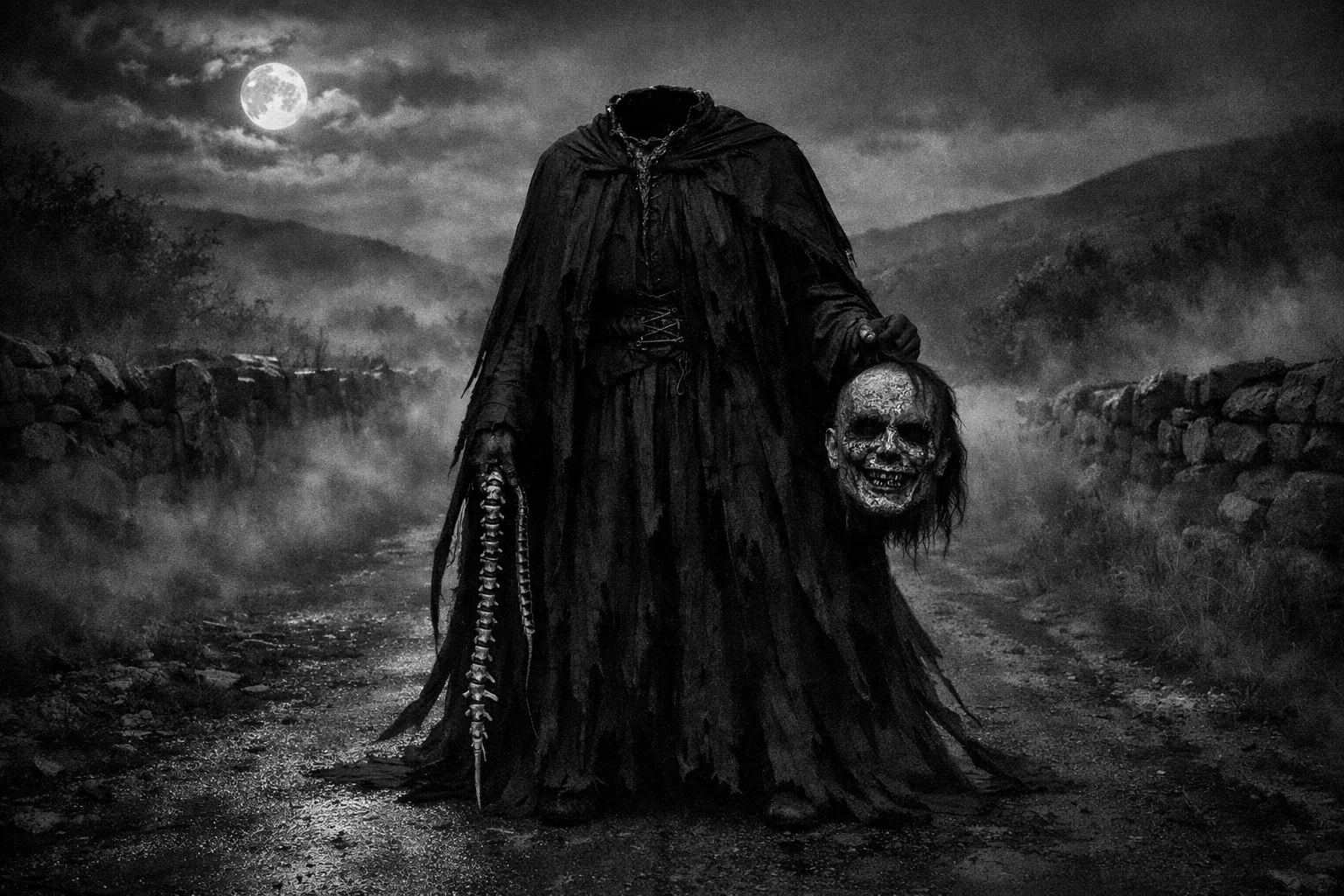
In some versions of the story, the Dullahan drives the Coiste Bodhar, a silent coach pulled by six black horses. It does not have its head on its shoulders, but instead carries it in its hand or on the saddle. The head has the texture of stale cheese or moldy dough, with a wide, frightening grin stretching from ear to ear.
The Dullahan’s eyes are small, black, and always moving like “flies,” allowing it to see far across the dark countryside. As a bringer of death, the Dullahan is not a human ghost but a supernatural being whose only purpose is to collect souls.
No physical barrier can stop the Dullahan. Gates and doors open by themselves as it comes near. Anyone who tries to watch the Dullahan risks being blinded or having a basin of blood thrown on them, marking them as the next victim.
Tired of Bad Luck, Dark Spirits, and Toxic Vibes Draining Your Life?
Limited-Time: Up to 25% OFF!
Natural Black Tourmaline Crystal Healing Pendant – Genuine raw tourmaline • Absorbs & transmutes negativity • Guards against psychic attacks & hauntings • Deep spiritual cleansing for home & body • Purifies chakras & spaces from bad vibes. A portable force field—essential for sensitive souls in chaotic times.

Genealogy
The Dullahan does not have a family tree because it is a solitary supernatural being, not a living creature. Still, its roots lie to ancient Irish mythology.
| Relation | Identity |
| Predecessor/Avatar | Crom Dubh (The Dark Crooked One), an ancient fertility god |
| Affiliation | The Unseelie Court of Faeries |
| Associated Beings | The Banshee (fellow omen of death), Pooka (metamorph spirit) |
You may also enjoy:
Who Is Aim in Demonology? The Demon Prince of Fire and Ruin
August 12, 2025
Kelpie: The Deadly Water Horse That Feeds on Human Victims
December 9, 2025
Asag: The Grotesque Plague-Bringer Demon of Mesopotamia
September 30, 2025
Who Was Qingu in Babylonian Mythology?
August 27, 2025
Is Maple Hill Cemetery Really Haunted at Night?
May 12, 2025
Complete Guide to Vermont Bigfoot Sightings (1861–2025)
August 8, 2025
Etymology
The name Dullahan comes from the Irish word Dúlachán, meaning “dark man” or “dark individual.” In western Ireland, it is also called Gan Ceann, which means “without a head” (gan means without, ceann means head). These names show the creature’s dark nature and its most obvious feature.
Historically, the name is connected to the darker side of Celtic paganism. Some scholars believe the Dullahan is a leftover from stories about Crom Dubh, an ancient god who required human sacrifice. When Christianity arrived to Ireland in the 6th century, people stopped worshipping Crom Dubh. Still, the idea of a “dark god” who demanded heads persisted in folklore.
Over time, people began to imagine the sacrificial priest or the god as a headless rider. The word Dúlachán became common in the 19th century, thanks to folklorists like Thomas Crofton Croker, who recorded rural stories. In Irish, the term means more than just being headless; it also suggests a spiritual darkness linked to death.
What Does the Dullahan Look Like?
The Dullahan is said to be a tall, imposing man with no head on his neck. He usually wears a long black cloak that flows behind him.
In his right hand, he holds his own head by the hair, lifting it like a lantern to light his way at night. The head is described as looking like a “large, decayed plum” or “stale dough,” with a pale, ghostly face and a mouth stretched into a jagged, frightening smile.
In his other hand, the Dullahan carries a whip made from a human spine. When he is not on horseback, he rides the Coiste Bodhar, a carriage decorated with funeral items like skulls with candles inside and wheels made from thigh bones. The horses pulling the carriage are just as frightening, sometimes headless or with glowing eyes.
Demons, Ghosts, and Vengeful Spirits
Limited-Time: Up to 22% OFF!
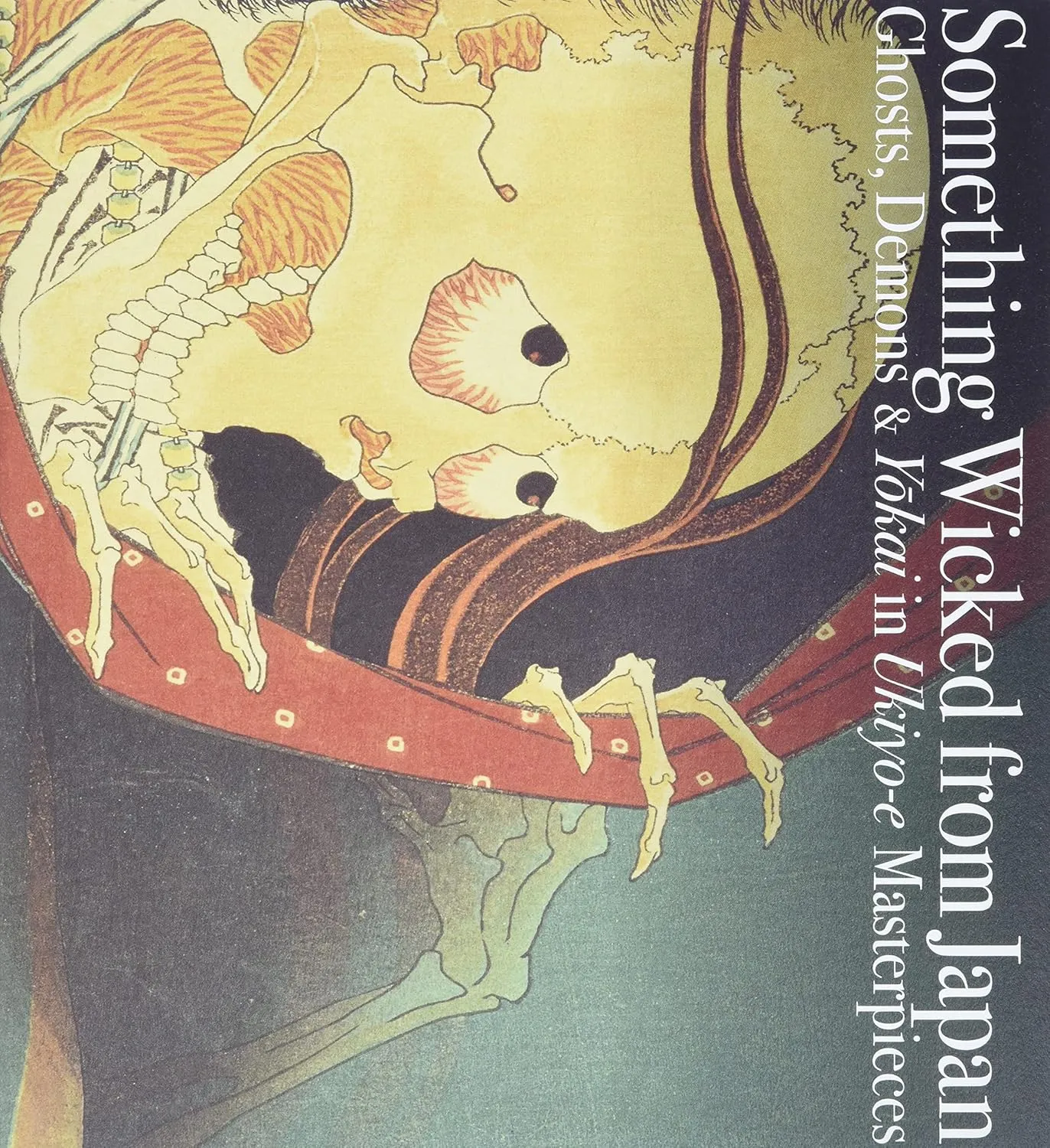
Something Wicked from Japan – 150+ haunting ukiyo-e masterpieces • Yūrei, yōkai, and oni • Blood-soaked legends • Severed heads • Demonic seduction • Erotic horrors & grotesque beauty. The most terrifying (and beautiful) book of Japanese art ever printed.
Mythology
The Dullahan’s story comes from ancient Irish sacrificial rituals. People believed it was the ghostly form of Crom Dubh, a king-god worshipped during the Lughnasadh festival. Sacrifices to Crom Dubh often involved beheading to bring a good harvest. When people stopped worshipping this god, the legend changed to a spirit that carried its own head.
Early stories describe the Dullahan as a silent and unstoppable force. Unlike the Banshee, who cries to warn families about death, the Dullahan is the one who actually collects souls. It belongs to the Unseelie Court, a group of faeries usually unfriendly to humans.
Legends say the Dullahan is most active during big festivals like Samhain, when the line between the living and the dead is at its thinnest. These stories show the Dullahan as a guide for souls, but it is much more aggressive than other death spirits in European myths.
Legends
The Blindness of Hans Christie
The night was thick with a damp fog as Hans Christie made his way along the solitary road leading toward County Down. The hour was late, and the only sound was the rhythmic thud of his own boots against the packed earth.
Suddenly, a low, rhythmic rumbling began to vibrate through the ground, accompanied by the distant, wet cracks of a whip. Christie, assuming a local coach was rushing toward the village, stepped aside into the tall grass to allow it passage.
As the vehicle drew near, the air grew unnaturally cold, and the sound of the horses’ hooves remained eerily silent despite their furious pace. When the carriage pulled alongside him, Christie looked up and was met with a sight that froze the blood in his veins. The driver was a tall, broad-shouldered monster in a charcoal cloak, but where a head should have been, there was only a jagged, stump-like neck.
The creature held its own head high in its right hand, the eyes darting about with a frantic, fly-like motion. Before Christie could turn away, the Dullahan lashed out with a long, pale whip made from a human spinal column. The whip caught Christie across the face with a stinging heat. He collapsed into the ditch, his vision swimming in darkness.
Though he survived the night, Christie found that his right eye had been struck completely blind, a permanent punishment for the hubris of watching the death-herald on its journey.
You may also enjoy:
Who Is Malphas? The Great President of Hell
August 25, 2025
Children Vanished: The Werewolf of Eschenbach Case
June 18, 2025
Why Gusion Is Feared in Demonology
August 21, 2025
What Is Redcap? The Bloodthirsty Goblin of Scottish Folklore
February 5, 2026
The Forgotten Werewolf Case of Henry Gardinn
June 19, 2025
Japanese Horror: The Terrifying Ghost of Aka Manto
June 4, 2025
The Calling of James Flynn
In the rugged landscape of Sligo, a farmer was navigating the winding paths home after a successful day at the fair. The moon was a thin sliver, offering little light, when he spotted a dark, stationary mass further up the road.
Sensing an ill omen, the farmer scrambled behind a dry-stone wall, peering through a small gap between the rocks. The Dullahan sat atop a massive black stallion that stood perfectly still, its breath rising in thick, sulphurous plumes of steam.
The farmer watched, trembling, as the headless rider raised its severed head by the hair, lifting it high above the saddle like a lantern. The head’s mouth, a hideous cavern of yellowed teeth and grey flesh, began to twitch. The eyes scanned the valley below until they seemed to fix on a distant farmhouse. In a voice that sounded like the tearing of old parchment, the head spoke a single name: “James Flynn.”
As the final syllable left the creature’s lips, both horse and rider dissolved into a black mist that was swept away by a sudden wind. The farmer later learned that at that exact moment, James Flynn, a young man of robust health, had dropped dead in his kitchen without a mark on his body.
Ever Wondered About the Secret Lives of Greek Gods and Heroines?
Limited-Time: Up to 32% OFF!
The Classical Mythology Encyclopedia: Gods, Heroes, and Heroines – 1,000+ entries • Epic tales of Olympus • Goddesses, monsters, and divine intrigues • Ancient rituals & timeless legends. This is Nancy LoCicero’s ultimate guide to the myths that inspired Western civilization.
The Golden Savior
A traveler near Galway once found himself pursued by the rhythmic, heavy gallop of a horse that seemed to gain ground with impossible speed. No matter how much he spurred his own mount, the shadow behind him loomed larger, and the terrifying scent of decayed flesh filled the air.
Remembering the whispered warnings of the village elders, the man realized he was being hunted by the Dullahan. He knew that once the rider drew level and stopped, his life would be forfeit.
In a fit of desperation, the traveler reached into his waistcoat and pulled out a small gold coin, a remnant of his day’s earnings. As the headless rider prepared to pull alongside him, the man flung the coin over his shoulder onto the road. The moment the gold struck the earth, a piercing, metallic shriek erupted from the Dullahan.
The black stallion reared up, its eyes flashing with terror, and the rider pulled the reins back with such force that the horse retreated into the darkness. The traveler did not look back again until he reached the threshold of his home, saved by the only substance the herald of death cannot abide.
The Blood Marking of the Voyeur
In a village in County Cork, a group of young men, fueled by drink and bravado, decided to wait by the graveyard gates to catch a glimpse of the Coiste Bodhar, the silent coach. They believed the old stories were merely superstitions meant to keep children indoors.
As the clock struck midnight, a heavy silence fell over the area, and the smell of stagnant water filled their nostrils. Out of the darkness appeared a carriage constructed of bone and blackened wood, drawn by six headless horses.
The young men stood their ground, laughing, until the Dullahan atop the coach paused. The creature did not speak a name; instead, it reached into a large basin at its side and threw a torrent of thick, clotted blood over the group. The liquid was unnaturally heavy and carried the stench of the grave. Terrified, the men fled to their homes, but the blood could not be washed away from their clothes or skin for seven days.
Within a month, each of the men who had stood at the gate suffered a catastrophic misfortune, ranging from the loss of their livestock to the burning of their barns, serving as a grim reminder that the Dullahan is not a spectacle to be sought.
The Gates of No Return
A local legend in the Midlands tells of a wealthy landlord who built high iron gates and stone walls around his estate to keep out all intruders, including the spirits he so feared.
One winter night, the watchman heard a sound like a rushing wind. He looked toward the main gate and saw the Dullahan approaching on its black horse. The watchman prepared to shout a warning, but he watched in silence as the heavy iron bolts and chains of the gate turned of their own accord, the metal groaning as if pushed by invisible hands.
The creature rode through the obstacle as if it were made of smoke. The landlord, hearing the commotion, looked out from his balcony only to see the headless monster standing in the courtyard. The rider lifted its head, and the landlord fell dead before the spirit could even utter his name.
This story is often cited to illustrate that no mortal fortification—be it stone, iron, or wood—can provide sanctuary once the Dullahan has set its sights on a house.
Dullahan vs Other Monsters
| Monster Name | Origin | Key Traits | Weaknesses |
| Dullahan | Ireland | Headless, carries head, spinal whip | Gold |
| Banshee | Ireland | Female spirit, wailing omen of death | Iron (traditional faerie weakness) |
| Headless Horseman | USA/Germany | Headless rider, often Hessian soldier | Running water (in some lore) |
| The Grim Reaper | Europe | Skeletal, carries a scythe, hooded | None (is an inevitable force) |
| Pooka | Ireland | Shapeshifter, brings good/bad luck | Iron, specific charms |
| Nuckelavee | Scotland | Skinless horse-human hybrid | Fresh water |
| Ankou | Brittany | Skeleton in a cart, collects souls | None |
| Dybbuk | Jewish Folklore | Strange spirit, possesses living | Exorcism rituals |
| Revenant | Europe | Visible ghost/corpse, seeks revenge | Fire, decapitation |
| La Llorona | Mexico | Weeping woman near water | Religious artifacts |
The Dullahan is similar to the Banshee and the Ankou because all three are seen as omens or collectors of death. But this monster stands out for its gruesome appearance, especially because it carries its own head and uses human remains, like a whip made from a spine.
The American Headless Horseman from Sleepy Hollow is usually a ghost looking for his lost head. Still, the Dullahan is a faerie who is naturally headless or carries his head to see better. The biggest difference is that the Dullahan is afraid of gold, which is not a weakness for most other death spirits.
You may also enjoy:
What Is a Marid? The Demon That Defies Heaven
October 3, 2025
The Complete List of All Haunted Places in Alaska
November 20, 2025
What Is a Vila? The Beautiful Yet Deadly Spirit of Slavic Myth
September 11, 2025
15 Most Terrifying Haunted Hotels in Alabama
October 6, 2025
What Is Abada? Cryptid, Mysterious Animal, or Just a Legend?
November 12, 2025
The Myrtles Plantation Haunting: Real Ghost Encounters
October 22, 2025
Powers and Abilities
The Dullahan has many supernatural powers that help it act as a messenger of death. Its main ability is knowing exactly when and where someone will die. It is very strong, but it rarely fights directly, preferring to use its magical abilities to scare or mark people.
- Death Speech: The ability to end a person’s life simply by speaking their name aloud.
- Supernatural Sight: By holding its head aloft, the Dullahan can see across vast distances and through the darkest nights to locate its target.
- Intangibility/Passage: No physical lock or gate can stay its progress; barriers automatically open or dissolve as the creature approaches.
- Spinal Whip: A weapon made of a human spine that can cause blindness or leave permanent, necrotic scars on those who watch the creature.
- Blood Marking: The ability to manifest large quantities of blood to drench those who interfere with its journey, marking them for future misfortune or death.
Can You Defeat a Dullahan?
There is no way to kill a Dullahan, since it is a force of the faerie world and represents death itself. Still, it can be driven away. The Dullahan has a strong fear of gold. Even a small piece of gold, like a ring, coin, or tooth filling, will make it turn back and disappear.
If you hear the Dullahan’s coach or horse coming, the best thing to do is stay inside and keep your eyes closed. If you are outside, putting a piece of gold on the road or showing it to the rider will stop the Dullahan from calling your name. But once it says a name, there is no way to undo the death sentence.
Conclusion
The Dullahan is still one of the most memorable and frightening figures in Irish mythology. As a headless messenger of fate, it connects old pagan sacrifices with newer stories about the “silent coach.” The Dullahan does not judge or haunt people; its only job is to bring death, making it a source of fear for anyone traveling Ireland’s dark roads.
Other monsters might be stopped with silver or iron. Still, only gold can drive away the Dullahan, showing how unique it is among faeries. The Dullahan is a strong symbol of the “dark man” who waits at the end of every life, reminding us that some things are beyond our control and that everyone’s name will be called in the end.