The Mpisimbi is a rare and mysterious animal said to live in the thick forests of East and Central Africa. People have described it as a strange predator with features of both big cats and scavengers, making it one of Africa’s most puzzling cryptids.
Summary
Overview
| Attribute | Details |
| Name | Mpisimbi |
| Aliases | Leopard-hyena, Nsui-fisi (regional equivalent) |
| Cryptid Credibility Index | Low to Moderate |
| Threat Level | Predatory; known to raid crops and livestock |
| Habitat | East and Central African forests and scrublands |
| Height / Weight Range | Estimated 2–3 feet (60–90 cm) at the shoulder; 100–150 lbs (45–68 kg) |
| Physical Traits | Feline build, leopard-like spotting, robust hyena-like features |
| Core Sighting Corridor | Central Africa and the East African interior |
| First Sighting | Documented in the early 20th century (c. 1927) |
| Species | Felid (unidentified) |
| Type | Terrestrial, nocturnal predator |
| Movement | Quadrupedal; agile hunter |
| Behavior & Traits | Elusive, crop-raiding, primarily carnivorous but known to consume sugar cane |
| Evidence | Eyewitness accounts and hunter reports |
| Possible Explanations | King cheetah variation, misidentified leopard, or extinct feline strain |
| Status | Actively debated; no recent confirmed sightings |
Who or What Is Mpisimbi?
The Mpisimbi is an unknown predator reported by both local people and European explorers in Africa. It is often called a “leopard-hyena” because it looks like both animals. Unlike most big cats, it is said to eat crops such as sugarcane and grains.
Captain William Hichens brought attention to the Mpisimbi after hearing stories about it during his travels. Unlike other African cryptids often thought to be prehistoric, the Mpisimbi is usually seen as a biological oddity, possibly a unique subspecies of a known cat or a rare genetic variant that science has not yet classified.
This Book Turns the Entire United States Into One Giant X-Files Map
Limited-Time: Up to 38% OFF!
J.W. Ocker traveled the country collecting the weirdest local legends and marks the real-world locations where the Beast of Bray Road, the Dover Demon, the Wendigo, and hundreds more have been spotted. Part travel guide, part bestiary, 100% nightmare fuel.

What Does Mpisimbi Look Like?
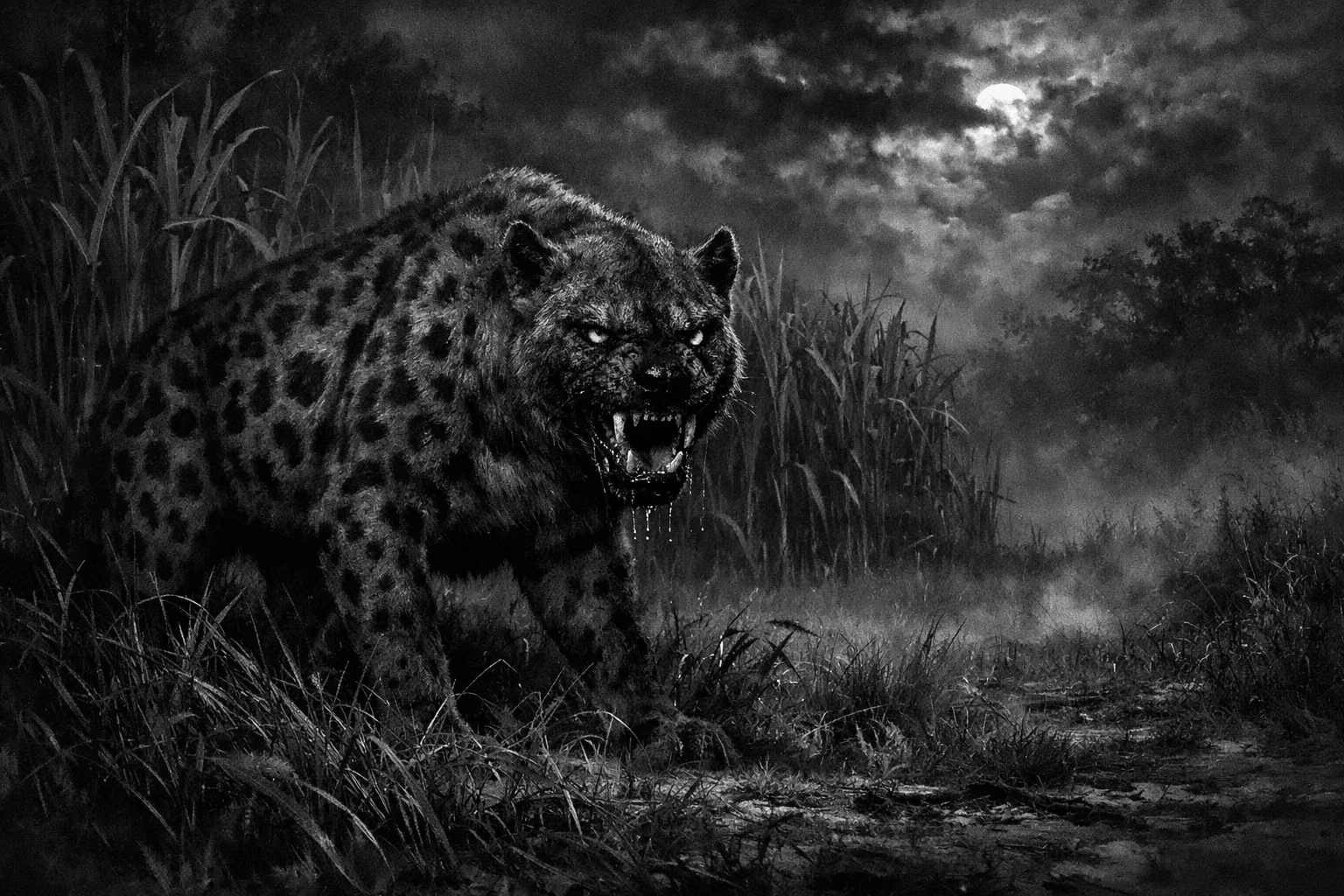
People describe the Mpisimbi as having a cat-like shape, about the size of a large leopard. Its fur is said to have spots or rosettes. Still, the pattern is usually denser or longer than a typical leopard’s. The most noticeable feature is its head, which is said to be stronger and more sloped, similar to a hyena.
Some reports say the animal has strong jaws and a thick neck. Although it mainly eats meat, the Mpisimbi is also known for using its teeth to break tough plant stalks. Its tracks look like those of other big African cats, but the prints are sometimes deeper, which suggests it is heavier.
You may also enjoy:
The Complete List of All Haunted Places in Arizona
November 18, 2025
Complete Guide to Kentucky Bigfoot Sightings (1960–2025)
July 28, 2025
Skunk Ape Sightings: Myth, Hoax, or Real Creature?
July 2, 2025
What Is a Vila? The Beautiful Yet Deadly Spirit of Slavic Myth
September 11, 2025
Habitat
The Mpisimbi is believed to live in the dense scrublands and forests of Central and East Africa. These areas give a night-hunting animal plenty of places to hide from people. The land is full of thick plants, river forests, and fields near farms, where the creature is said to steal crops.
These regions have a tropical climate, with high humidity and heavy rainfall during certain seasons. This environment supports many prey animals, but also makes it hard to track or study the Mpisimbi. The animal is thought to be very territorial, living in remote areas with few people. Still, it sometimes sneaks onto farms at night.
Mpisimbi Sightings
There are only a few recorded reports of the Mpisimbi, mostly from the early 1900s.
| Date | Place | Witness Details | Description | Reliability |
| c. 1927 | East Africa | Captain William Hichens | A leopard-hyena observed raiding sugar cane | Moderate: Experienced hunter |
| Early 1900s | Central Africa | Local guides and trackers | A spotted predator with a thick neck and hyena-like head | Low: Oral tradition |
Captain William Hichens (East Africa, 1927)
The main written records about the Mpisimbi come from Captain William Hichens, a British colonial officer who worked in Tanganyika (now Tanzania) in the 1920s.
Hichens, who sometimes used the name “Fulahn,” was an experienced hunter. He often had to track and stop lions and leopards that threatened villages. He learned about the Mpisimbi legend while working in the East African interior.
In 1927, Hichens wrote a piece titled “On the Trail of the Brontosaurus,” in which he described several mysterious animals from the area. He called the Mpisimbi a “leopard-hyæna” and said it stood out because of its strange eating habits.
Hichens said the animal was a danger to livestock and also a “raider of grain and sugarcane.” This surprised him, since leopards and hyenas do not usually eat crops.
Hichens said he tried to hunt the Mpisimbi several times but never caught it. Even though he was a skilled hunter, the animal was very hard to find and only showed up at the edges of his trips.
He said he never caught a specimen, but local people insisted the Mpisimbi was different from the more common nsui-fisi (the king cheetah variant). His main reason for studying the animal was to help protect local crops from what seemed to be a smart and adaptable predator.
People Swore They Saw Something Impossible… This Book Shows You the Photos, Tracks, and DNA
Limited-Time: Up to 18% OFF!
Gorgeous full-color illustrations meet hard evidence: hair samples that don’t match any known animal, sonar hits in Loch Ness, night-vision footage, and survivor testimonies. Kelly Milner Halls separates hoax from holy-crap-this-might-be-real for every major cryptid still out there.
Evidence & Investigations
Most of the evidence for the Mpisimbi comes from eyewitness stories and local folklore. There are no photos, bones, or DNA linked to the animal. Captain Hichens’ reports from the 1920s are the main written records, and he noted that local tribes saw the Mpisimbi as different from the usual leopard (Panthera pardus) and spotted hyena (Crocuta crocuta).
Cryptozoologists like Karl Shuker have looked into these claims by comparing them to known animals. They often ask if the Mpisimbi could be a mistaken identity or a rare mutation. Even after several trips into the African interior in the mid-1900s, no physical evidence has been found to support the claim that it is a separate species.
Theories
The King Cheetah (Acinonyx jubatus) Genetic Variant
One of the main scientific theories is that the Mpisimbi was actually a local group of king cheetahs. In the early 1900s, people thought the king cheetah was a separate species, possibly a mix between a leopard and a hyena, because of its unusual coat with big stripes and thick fur.
This matches what people say about the Mpisimbi’s appearance. In some parts of East Africa, the same local name was used for both the king cheetah and the Mpisimbi. Since Western science did not recognize the king cheetah as just a genetic mutation until 1981, people like Hichens probably thought they were seeing a totally new species.
You may also enjoy:
August 20, 2025
Who Is Malphas? The Great President of Hell
August 25, 2025
Werewolves: Myths, Madness, or Monsters?
June 10, 2025
Is Busby’s Stoop Chair Curse Really Deadly?
May 26, 2025
Complete Guide to Mississippi Bigfoot Sightings (1721–2025)
August 1, 2025
The “Nsuifisi” or Anomalous Hyena Theory
One local theory from Tanganyika claims that the Mpisimbi was a special type of hyena, possibly now extinct, that learned to act more like a cat. This idea comes from its strong, sloped back and thick neck, which are typical of hyenas.
But reports that the animal could climb and had a cat-like face do not fit with normal hyena behavior. Some researchers think it might have been a Spotted Hyena with a rare skin condition or mutation that changed its spots to look like rosettes, making people think it was a mix of animals.
The Berg-Lieu or Mountain Leopard Theory
This theory says the Mpisimbi was a type of leopard that lived in high forests and developed a heavier body and new eating habits to survive in certain East African climates. Unlike leopards from the savanna, these forest cats may have raided farms for crops like sugar cane because they needed extra food or saw an easy chance.
The theory also suggests that the animal looked like a hyena because it had a thicker coat and stronger front legs, which are traits seen in other cats that live in the mountains.
Surviving Dinofelis or Machairodont
A less common theory has that the Mpisimbi might have been a remnant group of Dinofelis, a type of “false saber-toothed cat” that lived in Africa until the early Ice Age. These animals were bigger and stronger than today’s leopards, with shorter, stronger legs and thick necks, which could explain why people thought they looked like hyenas.
Most scientists believe Dinofelis has been extinct for over a million years. However, some people think the thick, unexplored jungles of Central Africa could have been a last hiding place for a small group that disappeared in the 1900s.
Comparison with Other Similar Cryptids
| Cryptid | Region | Appearance | Primary Behavior |
| Nunda | Tanzania | Giant grey cat | Predatory attacks on humans |
| Mngwa | East Africa | Stalking cat-like beast | Nocturnal hunting |
| Dingonek | Kenya | Walrus-headed feline | Aquatic and terrestrial |
| Onza | Mexico | Leggy, cougar-like cat | Elusive predator |
| Queensland Tiger | Australia | Striped feline | Arboreal hunter |
| Water Lion | Central Africa | Aquatic predator | Attacking hippopotamuses |
| Beast of Gevaudan | France | Wolf-like large cat | Mass killings of livestock |
| Marozi | Kenya | Spotted forest lion | High-altitude dwelling |
You may also enjoy:
Who Is Abezethibou? The Fallen Angel of the Red Sea
August 13, 2025
Is the Jersey Devil Real? Eyewitness Accounts and Chilling Encounters
September 24, 2025
Popobawa Sightings: Inside Zanzibar’s Most Feared Cryptid
November 12, 2025
Impundulu: The Strange Bird That Drinks Blood
May 21, 2025
Why the Kitsune Is the Most Dangerous Yokai in Japanese Folklore
September 10, 2025
Is Mpisimbi Real?
Whether the Mpisimbi really existed is still debated among cryptozoologists. Without physical evidence like fur or bones, most scientists do not accept it as a real species. Still, the detailed reports from skilled hunters like Captain Hichens make the story more believable than many other legends.
It is possible that the Mpisimbi was a real animal. Still, it was probably a rare type of cheetah or a leopard that people misidentified. The story of the Mpisimbi reminds us of how much of Africa’s wildlife was unknown in the early colonial days. Without new evidence, the Mpisimbi remains a mystery from the past.