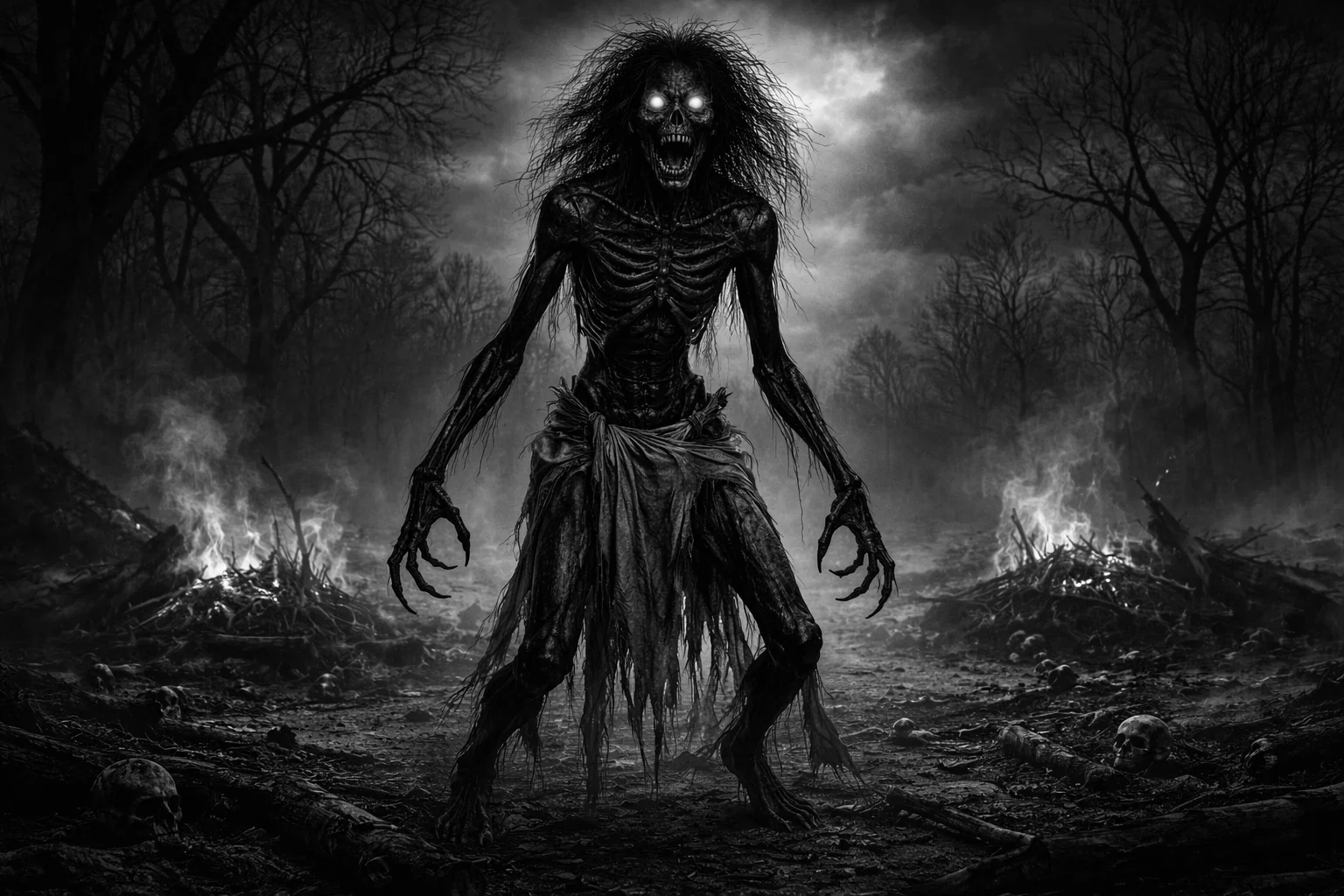
Pisachas are evil, flesh-eating spirits found in Hindu and Vedic mythology. They are considered lower-level supernatural beings and are often mentioned with Rakshasas and Bhutas. Pisachas are known for haunting cremation grounds and taking control of people’s minds.
Pisachas also appear in Buddhist traditions as one of the eight groups of non-human beings (Ashtagatayah). If you want to learn about their role in the Pali Canon or Mahayana texts, you should check the Buddhist Demons category.
Summary
Key Takeaways
| Attribute | Details |
| Names | Pisacha, Pishacha, Peesacha, Pisaca |
| Title | Flesh-eaters, Eaters of Raw Flesh (Kravyada), Night-stalkers |
| Gender | Male and Female (Pisachi) |
| Role | Possession of humans, scavengers of the dead, spreaders of disease |
| Clan | Descendants of Kashyapa or Krodha; often grouped with Pretas |
| Followers | Lesser spirits, ghosts, and those who died violent deaths |
| Powers | Invisibility, shape-shifting, mental manipulation, inducing insanity |
| Appearance | Dark-skinned, bulging veins, protruding red eyes, emaciated limbs |
| Etymology | Likely derived from ‘pis’ (to adorn or mold) or ‘pish’ (to grind/crush) |
| Associated Figures | Kashyapa, Krodhasha, Kubera, Shiva |
| Weaknesses | Mantra recitations, iron, certain herbs, lamps (light) |
| Opposing Deva/Avatar | Shiva (as Lord of Ghosts), Agni, Indra |
| Pantheon | Hindu (Vedic and Puranic) |
| Primary Sources | Rig Veda, Atharva Veda, Mahabharata, Garuda Purana |
Who or What is Pisacha?
Pisachas are considered the lowest and most unpleasant of all demonic spirits. Unlike powerful Asuras who fight for control in cosmic battles, Pisachas stay close to the earth and feed on impurity. Stories say they were created from darkness or from leftover negative human karma.
People fear Pisachas because they can take over a person’s mind or body, especially when someone is weak or vulnerable. They live in empty places, such as abandoned houses, forests, and cremation grounds. Pisachas are said to feed on human flesh and the life force of people they make sick or drive mad.
Demons, Ghosts, and Vengeful Spirits
Limited-Time: Up to 22% OFF!
Something Wicked from Japan – 150+ haunting ukiyo-e masterpieces • Yūrei, yōkai, and oni • Blood-soaked legends • Severed heads • Demonic seduction • Erotic horrors & grotesque beauty. The most terrifying (and beautiful) book of Japanese art ever printed.
Pisacha Meaning
The origin of the word Pisacha is debated in Sanskrit literature. Most experts think it comes from the Sanskrit word ‘pish,’ meaning ‘to crush,’ ‘to grind,’ or ‘to mold.’ This fits their reputation for crushing the life out of victims or eating the remains of the dead.
Another theory links the name to ‘pishita,’ which means ‘flesh.’ So, Pisacha can also mean ‘flesh-eater.’ In early Vedic times, the word described spirits that stole the essence from offerings.
Over time, the word Pisacha was also used to name a Prakrit language called Paishaci, known as the ‘language of the ghosts.’ This dialect was used in ancient India, especially in the lost epic Brihatkatha. The term Pisacha may have also referred to some marginalized tribes in the northwestern part of the Indian subcontinent.
You may also enjoy:
Swiatek: Murder, Cannibalism, and a Wolf’s Curse
June 18, 2025
Forks of Cypress Haunting: Eerie Columns and the Curse of 6/6/66
September 22, 2025
How to Pronounce “Pisacha” in English
Pisacha is pronounced as pi-SHAA-chuh. The first part sounds like ‘pin,’ the second part is stressed with a long ‘a’ as in ‘father,’ and the last part has a soft ‘ch’ as in ‘church.’
What Does a Pisacha Look Like?
Pisachas are described as frightening and ugly. They are usually shown as very thin, with skin stretched over their bones, and their color is as dark as burnt wood or night clouds. Their veins stand out all over their bodies, making them look unnatural.
Pisachas are known for their blood-red, bulging eyes that glow in the dark. Their hair is messy, rough, and often sticks up or is reddish-brown. They have long, sharp claws and jagged, stained teeth. Many stories say they can change shape, but in their true form, they smell like rotting meat.
Unlike the more royal-looking Rakshasas, Pisachas do not wear jewelry or proper clothes. They are usually naked or wear only the torn cloth from funeral shrouds.
Origins
Pisachas are mentioned in the oldest Hindu scriptures, showing they have been part of religious stories since the Vedic period. They are often called the ‘refuse’ of creation, appearing after the Devas and Asuras.
In Hindu cosmology, Pisachas represent the tamasic, or dark and ignorant, aspect of nature. They represent people’s fears of the night and the unknown parts of death.
Ever Wondered About the Secret Lives of Greek Gods and Heroines?
Limited-Time: Up to 32% OFF!
The Classical Mythology Encyclopedia: Gods, Heroes, and Heroines – 1,000+ entries • Epic tales of Olympus • Goddesses, monsters, and divine intrigues • Ancient rituals & timeless legends. This is Nancy LoCicero’s ultimate guide to the myths that inspired Western civilization.
Birth
Different Puranas tell different stories about how the Pisachas were born. The Mahabharata and some Puranas say they are the children of the ancient sage Kashyapa and his wife Krodhasha, whose name means ‘anger.’
Other stories, such as those in the Padma Purana, say that Brahma created Pisachas from the unstable parts of his shadow during creation. No matter the version, their birth is always tied to impurity or anger, showing they live outside normal society and rules.
Family
Pisachas are seen as part of a bigger group of ‘night-stalkers.’ Their closest relatives are Rakshasas (demons) and Yaksas (nature spirits). In Puranic stories, they are listed with the Asuras but have a much lower status.
| Relationship | Entity |
| Parents | Kashyapa (Father) and Krodhasha or Arishta (Mother) |
| Siblings | Rakshasas, Vanaras, and various classes of Asuras |
| Spouse | Pisachi (Female counterparts) |
| Children | Lesser malevolent spirits and goblins |
Asura-Deva Conflicts
Pisachas do not usually lead big battles against the Devas. Still, they serve as the ‘infantry of darkness’ in cosmic fights. In major battles from the Puranas, they follow orders from more powerful Asuras. After the fighting ends, Pisachas are known to feed on the bodies of fallen soldiers.
Pisachas mainly clash with the Devas by trying to steal sacrificial offerings. Vedic hymns often call on gods like Indra and Agni to keep Pisachas away from sacred fires or from taking the Soma juice meant for the gods.
Role in Hindu Cosmology
In Hindu cosmology, Pisachas are at the lowest level of sentient beings. They stand for Tamas, which means darkness and laziness. Their existence warns people against unrighteous acts, as some believe that those who steal, overeat, or skip funeral rites may be reborn as Pisachas.
Pisachas are controlled by Lord Shiva, who is called Bhutanatha, or Lord of Spirits. By living on the edge of the living world, they help keep balance by cleaning up both physical and spiritual waste.
Was Pisacha Ever Mentioned in Vedic Texts?
Yes, Pisachas are clearly mentioned in the Vedas, especially in the Atharva Veda, where they are portrayed as a serious threat to people’s health and homes.
| Source | Quote |
| Rig Veda 1.133.5 | “Burn the Pisachas, O Maghavan, with the heat of thy bolt; destroy the race of every Rakshasa.” |
| Atharva Veda 4.36.8 | “The Pisachas that have entered this man, the eaters of raw flesh, those I drive away.” |
You may also enjoy:
Pisacha in Epics and Puranas
In the Mahabharata, Pisachas serve as part of the armies of various kings and sometimes serve Kubera, the god of wealth. They are often grouped with Bhutas and Pretas.
| Source | Quote |
| Mahabharata 2.10 | “And many Rakshasas and Pisachas… waited upon the lord of treasures (Kubera).” |
| Garuda Purana 2.22.13 | “Those who die by suicide or accident, without the performance of rites, become Pisachas.” |
Powers and Abilities
Pisachas have powers that affect the mind more than the body. They do not have the huge powers of demon kings like Ravana. Still, ordinary people cannot easily see or defeat them without spiritual help.
- Possession (Avesha): The ability to enter the human body and control its actions, often causing the victim to speak in strange tongues or act violently.
- Mental Affliction: They can induce Unmada (insanity), depression, and intense anxiety in their targets.
- Metamorphosis: They can take the form of animals or even deceased relatives to lure victims into secluded areas.
- Invisibility: They remain unseen to the human eye, manifesting only as shadows or sudden temperature drops.
- Disease Projection: They are said to carry “spiritual pathogens” that manifest as physical wasting diseases.
People Swore They Saw Something Impossible… This Book Shows You the Photos, Tracks, and DNA
Limited-Time: Up to 18% OFF!
Gorgeous full-color illustrations meet hard evidence: hair samples that don’t match any known animal, sonar hits in Loch Ness, night-vision footage, and survivor testimonies. Kelly Milner Halls separates hoax from holy-crap-this-might-be-real for every major cryptid still out there.
Pisacha Myths, Legends, and Stories
The Possession of the Brahmana in the Garuda Purana
In the Garuda Purana, there is a narrative concerning a learned Brahmana who neglected his daily prayers and purity rituals. Because of his negligence, a Pisacha found an entry point into his aura.
The entity did not kill him but instead drove him to perform acts contrary to his nature, such as eating meat and frequenting impure places. The story is a didactic tool to highlight the protective power of the Sandhyavandanam (twilight prayers), which acts as a barrier against such entities.
The Pisacha in the Story of the Brihatkatha
There is a legend about the poet Gunadhya and the Pisacha race. The story says Gunadhya learned the ‘language of the Pisachas’ (Paishaci) while living in the forest with them. He used this language to write the Brihatkatha, a huge collection of stories.
According to legend, only the Pisachas could truly appreciate the work, showing a rare cultural side to their story.
Pisacha vs Other Asuras
| Asura Name | Associated Trait | Clan/Origin | Key Traits/Powers |
| Ravana | Conquest/Ego | Rakshasa | Ten heads, invincibility boon |
| Mahishasura | Stubbornness | Asura | Shape-shifting (Buffalo) |
| Hiranyakashipu | Tyranny | Daitya | Near-immortality |
| Bahasura | Gluttony | Rakshasa | Immense physical strength |
| Vritra | Drought | Asura | Blocking the cosmic waters |
| Andhaka | Blind Passion | Asura | Multiplying from blood drops |
| Tarakasura | Ambition | Daitya | Boon of death only by a child |
| Madhu | Chaos | Asura | Born from Vishnu’s earwax |
| Kaitabha | Chaos | Asura | Born from Vishnu’s earwax |
| Bali | Sacrifice/Pride | Daitya | Ruler of the three worlds |
You may also enjoy:
The Terrifying Face of Tisiphone, Avenger of Blood Crimes
September 1, 2025
The Myrtles Plantation Haunting: Real Ghost Encounters
October 22, 2025
Sleipnir: The Terrifying Eight-Legged Horse of Norse Mythology
September 12, 2025
Rank Among Asuras
Pisachas are at the bottom of the Asura and Rakshasa ranks. Even other demons see them as ‘unclean.’ While Daityas can be generals or kings, Pisachas are more like scavengers or minor troublemakers. Because they are closer to the human world, people worry about them more often than about the powerful Asuras who live in the lower realms.
Mystical Correspondences
| Attribute | Details |
| Planet | Rahu (North Node of the Moon) |
| Zodiac Sign | Scorpio (Sign of secrets and death) |
| Element | Earth (Impure/Low vibrations) |
| Direction | South-West (Nairitya) |
| Color | Charcoal Black or Muddy Brown |
| Number | 8 (Associated with Rahu and suffering) |
| Crystal/Mineral | Hessonite (Gomed) |
| Metal | Lead |
| Herb/Plant | Mustard Seeds (used to drive them away) |
| Animal | Hyena or Vulture |
| Trait/Role | Possession and Consumption |
Pisachas are linked to the planet Rahu, which is said to control illusions, addictions, and sudden mental problems. This connection explains their effect on the human mind.
Since Rahu is a shadow planet, Pisachas are said to thrive in dark places, especially when the moon is not visible. They are also linked to the South-West direction, which is connected to Nirriti, the goddess of decay. This makes them symbols of bad luck and decay.
Pisachas are connected to the heavy side of the earth element. Unlike the Devas, who are linked to purifying fire, Pisachas are tied to damp grave soil or the stale air of ruins.
Pisachas are symbolized by the colors black and brown, which stand for darkness and decay. In exorcism rituals, people use mustard seeds and lead to hold down or drive away the spirit, helping to remove it from a person’s body.
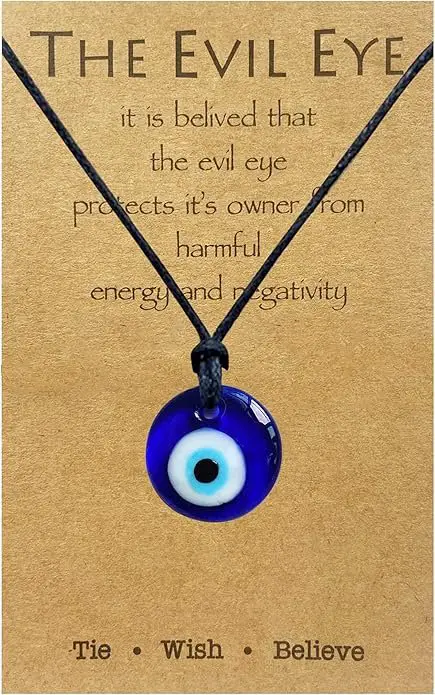
Why Do So Many Successful People Secretly Wear a Little Blue Eye?
Limited time offer: 28% OFF. For thousands of years, the Turkish Evil Eye has quietly guarded wearers from the unseen effects of jealousy and malice. This authentic blue glass amulet on a soft leather cord is the real thing – beautiful, powerful, and ready for you.
Pisacha’s Symbols
Pisacha symbols include the Kapaala (skull-cup) and the Shakti-trika (a broken or upside-down trident).
Unlike the Devas, who have clean weapons, the Pisachas are shown with severed limbs or torn shrouds. In tantric art, a special yantra with intersecting triangles is used to protect against them by trapping their energy.
Worship and Boons
Pisachas are not usually worshipped in mainstream Hinduism. Instead, people try to appease them so they will go away. In some Tantric and folk traditions, especially in Kerala and Bengal, people leave small offerings of meat or alcohol at crossroads to appease Pisachas.
Pisachas rarely give out boons. Instead, they usually receive boons from Shiva or Brahma that allow them to exist until the end of an age. People do not ask Pisachas for favors, since any ‘gift’ from them is thought to be a hidden curse.