The Selkie is a shapeshifter from the folklore of Scotland’s Northern Isles, Ireland, and Iceland. It can shed its seal skin to become human on land, living between the sea and the shore. Unlike more dangerous sea creatures, the Selkie is usually shown as a tragic creature, trapped on land when its skin is stolen. This leads to stories of forced marriages and a deep longing to return to the ocean.
Summary
Key Takeaways
| Attribute | Details |
| Names | Selkie, Selchie, Silkie; Scots for “seal.” |
| Nature | Supernatural shapeshifter. |
| Species | Marine Humanoid / Pinniped. |
| Appearance | A large seal in water; a strikingly beautiful human on land. |
| Area | Scotland (Orkney, Shetland), Ireland, Faroe Islands, Iceland. |
| Creation | Born to Selkie parents; sometimes cited as fallen angels or drowned souls. |
| Weaknesses | Loss of seal skin; vulnerability to iron in some regional variants. |
| First Known | Oral traditions dating back centuries; documented in 18th-century folklore collections. |
| Myth Origin | Celtic and Norse maritime folklore. |
| Strengths | Metamorphosis, exceptional swimming, enhanced beauty in human form. |
| Habitat | Coastal waters, sea caves, and secluded rocky shores. |
| Diet | Fish and cephalopods while in seal form. |
| Protection | Hiding or destroying the seal skin to prevent the creature’s return to the sea. |
Who or What Is a Selkie?
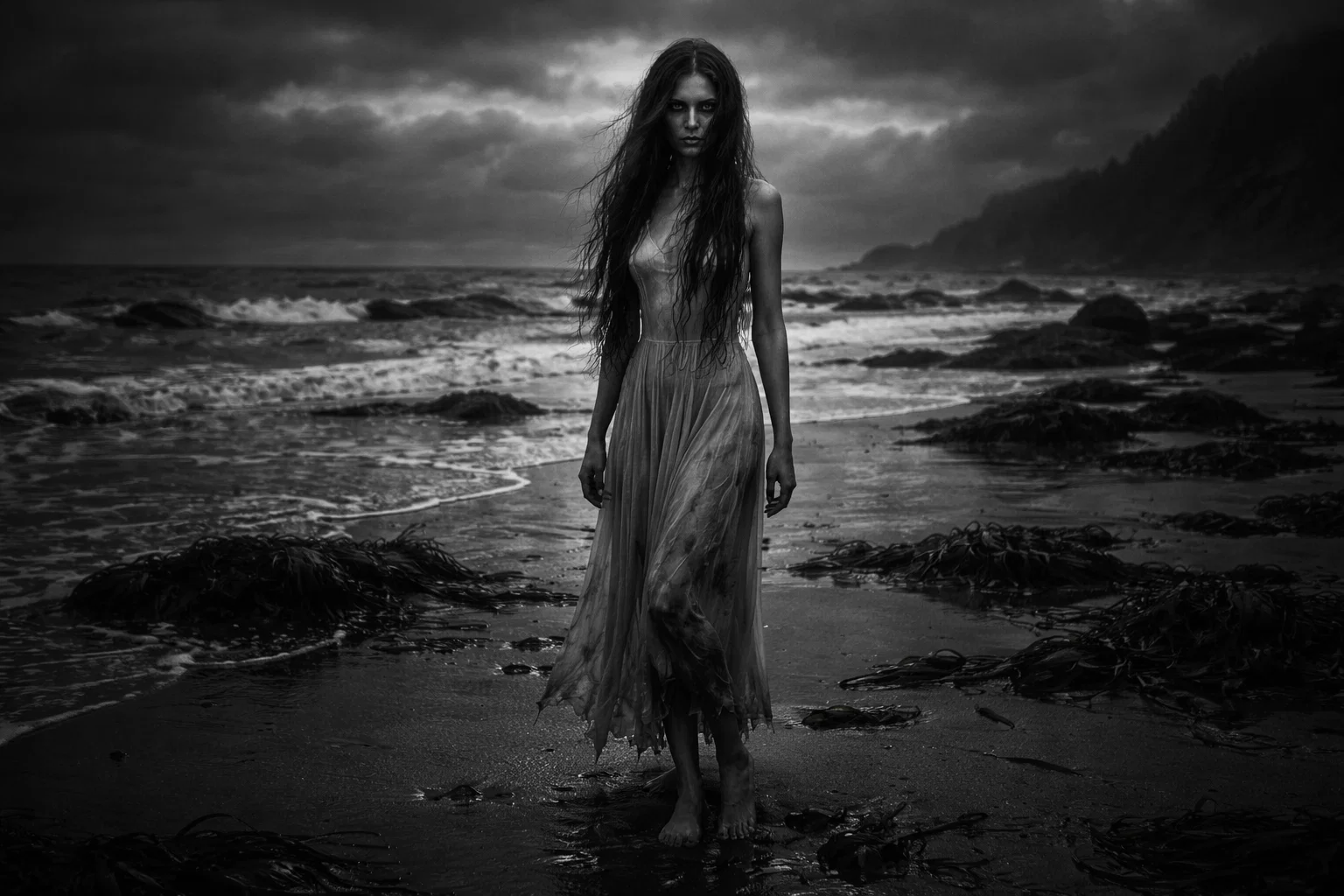
The Selkie is a legendary creature that lives as a seal in the sea but can become human by taking off its skin. This change often happens during certain moon phases or summer celebrations, when Selkies are said to dance on quiet beaches. In human form, they are described as more beautiful than ordinary people, which often attracts unwanted attention from those who see them.
Although Selkies are sometimes compared to mermaids, they differ because they are either seals or humans, not a mix of both. They are usually shown as gentle and shy, but also deeply sad at times. Most stories focus on the ‘seal-wife’ theme, where a man steals a female Selkie’s skin while she is human, forcing her to stay with him because she cannot return to the sea without it.
Ever Wondered About the Secret Lives of Greek Gods and Heroines?
Limited-Time: Up to 32% OFF!
The Classical Mythology Encyclopedia: Gods, Heroes, and Heroines – 1,000+ entries • Epic tales of Olympus • Goddesses, monsters, and divine intrigues • Ancient rituals & timeless legends. This is Nancy LoCicero’s ultimate guide to the myths that inspired Western civilization.
Genealogy
| Relation | Identity |
| Ancestry | Often regarded as a distinct species of “hidden folk” or fallen angels. |
| Offspring | Children born of a human and a Selkie; often possessed webbed fingers or toes. |
| Spiritual Kin | Finfolk (in Orkney lore), though often viewed as distinct or rival entities. |
Etymology
The word Selkie comes from the Scots word ‘selch,’ meaning ‘seal,’ which itself comes from Old English ‘seolh.’ In Shetland and Orkney, people often call them ‘selkie folk’ or ‘seal folk.’ These names highlight that Selkies are based on real seals, especially the Grey Seal and the Common Seal found in the North Atlantic.
Historically, the name is also associated with the wider Germanic language family, where seals were important to people living by the sea. In Faroese and Icelandic stories, these beings are called ‘kópakonan,’ meaning ‘the seal woman,’ which highlights the focus on female Selkies in many legends.
In the 19th century, folklorists like Samuel Hibbert and Walter Traill Dennison changed the spelling to match local Scottish dialects. Changing ‘selch’ to ‘Selkie’ made the name sound more familiar and fits with stories of Selkies living among people in coastal villages.
What Does a Selkie Look Like?
As a seal, the Selkie looks just like a large seal, often a grey seal. Folktales frequently mention their dark, soulful eyes as a sign of their hidden intelligence. When they come onto land and remove their skins, they become humans who are graceful and strikingly attractive.
Male Selkies are usually described as handsome, with dark hair and a charm that attracts lonely women by the sea. Female Selkies are said to have long, flowing hair and pale skin. Many stories mention that children born to Selkies and humans have a thin webbing between their fingers and toes, called the ‘seal’s web,’ which some families in Orkney and Shetland claim to have inherited.
You may also enjoy:
What Is an Afreet? Origins, Powers, and Myths
January 26, 2026
Who Is the Demon Caim in the Ars Goetia?
August 20, 2025
What Is A Paranormal Cold Spot and Why Does It Happen?
January 7, 2026
Mythology
Selkie myths are closely tied to the North Atlantic region. Some stories say Selkies are fallen angels who ended up in the sea rather than in Hell or on land. Other tales suggest they are the souls of people who drowned, allowed to become human once a year to visit their old lives.
In Orkney and Shetland stories, Selkies are just one type of sea creature and are sometimes linked to the Finfolk, who are more dangerous and magical. Unlike the Finfolk, who hunt and kidnap people, Selkies are usually the ones who suffer because of humans.
Losing their seal skin is the main tragedy in Selkie stories. Without it, a Selkie is trapped on land and often becomes a loyal wife or husband until the skin is found again. Eventually, the Selkie always returns to the sea, drawn back by a powerful need to go home.
Legends
The Seal Wife of Mikladalur
On Kalsoy, an island in the Faroe Islands, there is a well-known story about a young farmer from Mikladalur. He heard that on the Twelfth Night, seals would come ashore, shed their skins, and dance as humans in a large sea cave.
To see if this was true, he hid among the rocks and watched. Many seals came ashore, took off their skins, and started to dance. He was drawn to one especially beautiful woman. Before she could go back to the sea, he stole her skin and locked it away, making her come with him to his farm.
The woman stayed with him for years and had several children. He always wore the key to the chest on a chain around his neck. One day, while fishing, he realized he had left the key at home. When he got back, his wife was gone. She had found her skin, put it on, and returned to the sea.
Before leaving, she made sure her children would be cared for, but she never became human again. The legend says she was later killed in a seal hunt, which brought a curse on the men of Mikladalur.
People Swore They Saw Something Impossible… This Book Shows You the Photos, Tracks, and DNA
Limited-Time: Up to 18% OFF!
Gorgeous full-color illustrations meet hard evidence: hair samples that don’t match any known animal, sonar hits in Loch Ness, night-vision footage, and survivor testimonies. Kelly Milner Halls separates hoax from holy-crap-this-might-be-real for every major cryptid still out there.
The Goodman of Wastness
In the Orkney Islands, there is a story about the Goodman of Wastness, who saw Selkies dancing on the shore. He grabbed one of their skins and hid it under his house. The woman whose skin he took had to marry him.
Although she was a good wife, she spent her time looking out at the sea. Years later, her youngest daughter found a ‘dirty piece of fur’ under the floorboards and showed it to her mother. The mother knew right away it was her skin. She said a tearful goodbye to her children and disappeared into the waves. People say her Selkie husband was waiting for her, and they swam away together.
Selkie vs Other Monsters
| Monster Name | Origin | Key Traits | Weaknesses |
| Mermaid | Global / Greek | Half-human, half-fish; lures sailors. | Dehydration; mirrors. |
| Finfolk | Orkney | Dark sorcerers; kidnap humans for spouses. | Silver; salt (in some lore). |
| Kelpie | Scotland | Horse-like water spirit; drowns victims. | Control via its bridle. |
| Sirena | Philippines | Sea creatures with beautiful voices. | Religious artifacts. |
| Rusalka | Slavic | Undead water spirits; vengeful. | Fern leaves; iron. |
| Mami Wata | West Africa | Water deity; often holds a snake. | Disrespecting her shrines. |
| Ningyo | Japan | Fish-like with human faces; grants longevity. | Being captured/eaten. |
| Siren | Greece | Bird-like or fish-like; lethal song. | Wax in ears; being ignored. |
Selkies are much more gentle and less dangerous than Kelpies or Finfolk. Kelpies try to drown people, but Selkies mostly want to stay away from humans. Unlike Mermaids, Selkies are not half-human, half-fish; they have two separate forms.
Their weakness is also different: instead of being scared off by iron or holy symbols, Selkies can be controlled if someone steals their ‘second skin,’ which connects their two lives.
What If the Scariest Children’s Book Ever Written Was Never Meant for Children?
Limited-Time: Up to 51% OFF!
Alvin Schwartz collected these stories from graveyards, backroads, and old people who swore they were true – then paired them with Stephen Gammell’s grotesque, dripping, eyeless illustrations that look like they crawled off the page. Three complete books of pure nightmare fuel in one volume.
Powers and Abilities
A Selkie’s main power is its perfect metamorphosis. This isn’t magic, but a real change where it sheds its outer skin. As a seal, it has all the skills of a sea animal, like diving deep and surviving in cold water. As a human, it has a charm that makes people find it irresistible.
- Metamorphosis: The ability to transition between seal and human forms by removing or donning a seal skin.
- Enhanced Beauty: In human form, they possess a physical allure that often borders on the supernatural.
- Aquatic Mastery: Extraordinary swimming speed and the ability to hold their breath for extended periods.
- Precognition: In some Irish variants, Selkies are believed to have limited foresight regarding storms and tides.
You may also enjoy:
The Nandi Bear: Africa’s Terrifying “Brain-Eating” Cryptid
November 11, 2025
Why the Jemison-Van de Graaff Mansion Haunting Terrifies Visitors
September 23, 2025
Complete Guide to Wyoming Bigfoot Sightings (1967–2025)
August 10, 2025
Who Is Zagan, Hell’s Great Transformer?
May 28, 2025
Can You Defeat a Selkie?
You rarely need to ‘defeat’ a Selkie in a fight, since they are not usually aggressive. Instead, ‘defeating’ a Selkie means capturing it. The only way to keep a Selkie on land is to take its seal skin. Without it, the Selkie cannot go back to the sea.
Some traditions say you can keep Selkies away with iron, which is often used to protect against ‘faerie’ folk in Northern Europe. But the surest way to stop a Selkie from returning to the sea, or to take away its power, is to burn its skin. If the skin is burned, the Selkie stays human forever, but usually becomes heartbroken and may die from sadness.
Conclusion
The Selkie is still one of the most moving figures in sea folklore, showing the struggle between home life and the wild sea. Unlike monsters that hunt people, the Selkie reflects human feelings, like loss, captivity, and the wish for freedom. These stories are an important part of life in the Northern Isles. They are often used to explain the mysterious roots of some families or the soulful nature of seals on the coast.
In the end, the Selkie myth warns about the dangers of trying to own someone. Whether it’s a ‘seal-wife’ forced into marriage or a male Selkie looking for a human partner, the story always centers on the pelt. The pelt has their identity, and losing it stands for losing oneself, which is why Selkies continue to fascinate people.