The Eloko, or Biloko, are legendary beings from the folklore of the Mongo people in the Democratic Republic of the Congo. They are said to be small, hostile creatures living deep in the rainforest. Local stories describe them as the spirits of ancestors who hold grudges against the living.
Eloko are mostly known for being hostile to humans and for their strong hunting skills. Myths say that meeting one is often deadly because they possess supernatural powers that allow them to overpower anyone who enters their territory.
Summary
Overview
| Attribute | Details |
| Name | Eloko (singular), Biloko (plural) |
| Aliases | Forest spirits, Mongo dwarves |
| Cryptid Credibility Index | Low; primarily categorized as mythological or folkloric spirits. |
| Threat Level | Extremely aggressive and predatory. |
| Habitat | Dense tropical rainforests of the Congo Basin, particularly hollow trees. |
| Height / Weight Range | Approximately 2–3 feet (0.6–0.9 m); weight is not specified in traditional accounts. |
| Physical Traits | Grass-like clothing, large mouths capable of swallowing humans, lack of hair, and bell-wearing. |
| Core Sighting Corridor | Central Africa, specifically the Democratic Republic of the Congo. |
| First Sighting | Documented in oral traditions of the Mongo people for centuries. |
| Species | Humanoid (Spirit-based). |
| Type | Terrestrial, nocturnal, carnivorous. |
| Movement | Bipedal; agile forest navigation. |
| Behavior & Traits | Aggressive, elusive, uses a bell to charm or lure victims. |
| Evidence | Oral tradition and cultural folklore. |
| Possible Explanations | Misidentified forest animals (e.g., chimpanzees) or cultural metaphors for forest dangers. |
| Status | Active in local folklore and mythology. |
Who or What Is Eloko?
The Eloko are supernatural beings in the mythology of the Mongo people of Central Africa. Unlike other mysterious creatures thought to be unknown animals, Eloko are seen as spirits of the dead.
People believe these spirits did not find peace and stayed in the forest, appearing as small, physical creatures. They are known for guarding the forest’s resources and fiercely protecting their territory.
In Mongo culture, the Eloko symbolize the dangers of the wild. They are seen as fierce hunters who go after humans, not just as forest creatures. Stories say they live inside old hollow trees. People believe you can hear them coming by the sound of a magical bell, which they use to lure travelers or hunters. If someone is drawn in by the bell, the Eloko is said to attack and eat them.
This Book Turns the Entire United States Into One Giant X-Files Map
Limited-Time: Up to 38% OFF!
J.W. Ocker traveled the country collecting the weirdest local legends and marks the real-world locations where the Beast of Bray Road, the Dover Demon, the Wendigo, and hundreds more have been spotted. Part travel guide, part bestiary, 100% nightmare fuel.

What Does the Eloko Look Like?
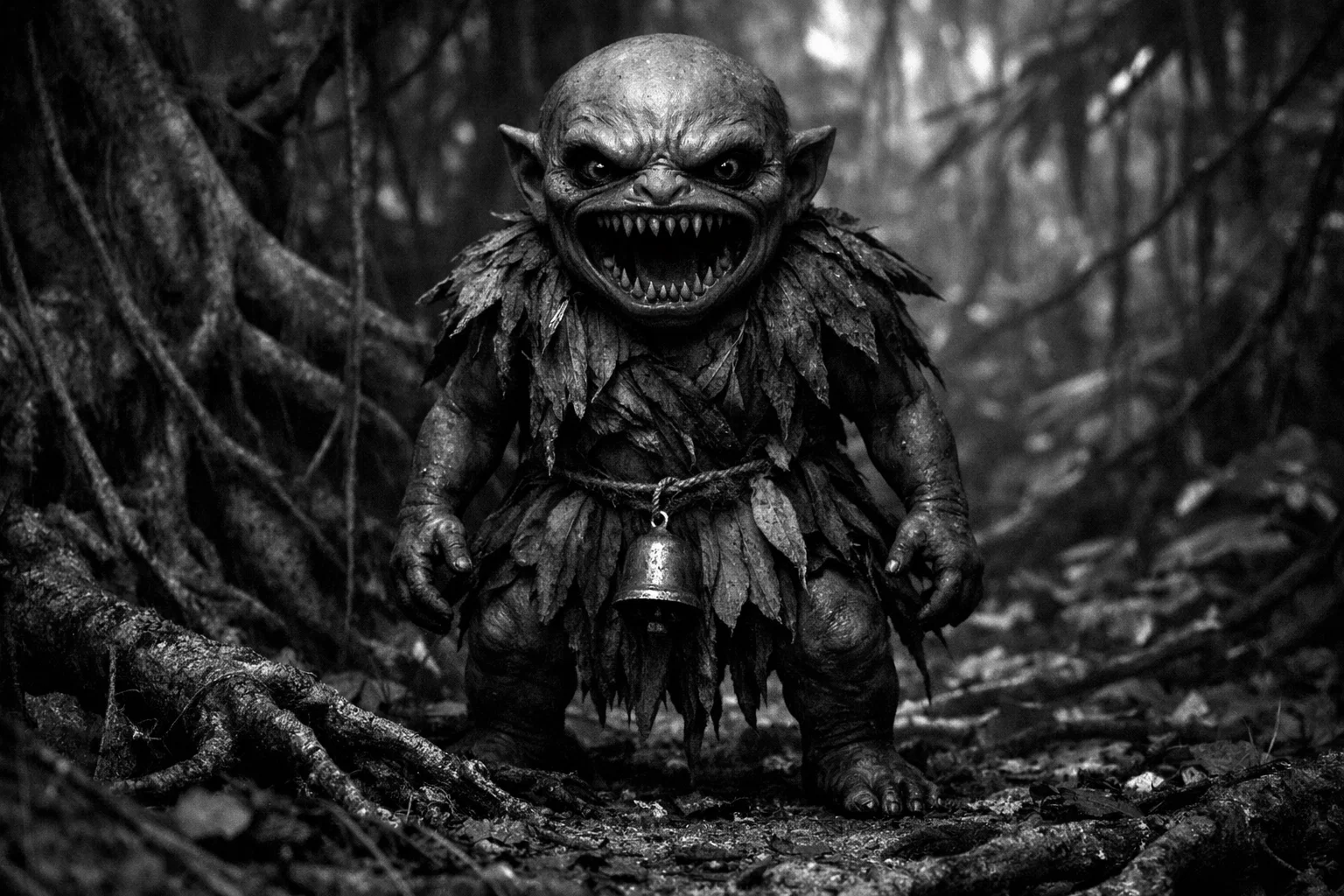
Eloko are described as small, human-like creatures about two to three feet tall. Even though they are short, they are said to be very strong and look intimidating. They usually have hairless, smooth, or leathery skin. One of their most noticeable features is a large mouth, which some stories say can open wide enough to swallow a person or a big animal.
These strange cryptids are said to wear clothes made from leaves and grass, helping them blend into the jungle. They do not use normal tools or weapons, but they almost always carry a small, magical bell. This bell is an important part of who they are. Some stories also say they have sharp eyes and features that set them apart from humans or known apes.
You may also enjoy:
Halphas Demon in Ars Goetia – Rank, Powers, and Lore
August 11, 2025
Rahab: Leviathan’s Twin and the Forgotten Demon Prince
September 30, 2025
The Trans-Allegheny Asylum Haunting: Ghosts, Lobotomies, and Madness
October 25, 2025
Who Is Astaroth, the Great Duke of Decay?
May 8, 2025
Habitat
Eloko are said to live in the Congo Basin, home to the world’s second-largest tropical rainforest. This area is very humid, thick with vegetation, and has a tall canopy that blocks sunlight from reaching the ground. The creatures are believed to stay in the most remote and untouched parts of the jungle, far from people and farms.
In this environment, Eloko are thought to live inside hollow trees, especially the large hardwoods found in the African interior. Living in these trees helps them stay hidden from both prey and people who might stumble on them. They share the forest with many animals, like elephants, leopards, and great apes.
However, traditional stories say that Eloko do not interact with these animals. Instead, they focus on hunting humans who wander too far into the forest.
Eloko Sightings
| Date | Place | Witness Details | Description | Reliability |
| Pre-colonial Era | Congo Basin | Mongo Hunters | Encounters with small bell-ringing figures in trees. | Low: Folkloric oral tradition. |
| Early 20th Century | Equateur Province, DRC | Local villagers | Small beings seen near hollow trees at dusk. | Low: Anecdotal accounts. |
| Mid-20th Century | Mai-Ndombe District | Forestry workers | Reports of hearing rhythmic bell sounds in deep forest. | Medium: Consistent cultural reports. |
The Oral Traditions of the Mongo (Centuries-old)
The most detailed stories about seeing the Eloko come from the oral histories of the Mongo people. In these tales, hunters say they hear a musical ringing that does not belong in the wild. Those who follow the sound claim to see a small creature dressed in green. According to tradition, only the strongest medicine men or shamans have the spiritual power to survive meeting an Eloko.
The One Book That Turned “Monster Hunting” From Joke to Actual Science
Limited-Time: Up to 46% OFF!
Bigfoot, Loch Ness, Chupacabras, Mothman, Yeti, and dozens more – the original A-to-Z encyclopedia with 100+ fully researched cryptids, eyewitness accounts, expedition histories, and the evidence that made skeptics sweat. Loren Coleman and Jerome Clark’s 1999 classic that launched a thousand investigations.
Reported Encounters in the Deep Basin (Equateur Province)
During the 20th century, villagers and hunters in Equateur Province sometimes reported seeing Eloko. These stories usually involve someone going alone into a forbidden part of the forest and spotting a small, human-like creature watching from the bushes.
These cryprids are almost always said to carry a bell. Even though there are no photos, the similar descriptions from different communities show that this is an important part of local culture.
Evidence & Investigations
There is no physical evidence, like bones, clear photos, or hair, to prove that Eloko exist as real animals. Since their stories are based on spirits, most Western researchers view them as folklore rather than as unknown creatures like the Mokele-mbembe.
However, studies among the Mongo and nearby tribes show that Eloko are important in local customs and rules. Anthropologists say that belief in the Eloko helps keep inexperienced hunters away from dangerous parts of the rainforest. There have been no official scientific searches for the Eloko, since most people see them as a cultural way to explain the dangers of the Congo’s interior.
Theories
Relict Hominid Theory
Some researchers think the Eloko might be based on memories of an ancient human species or an unknown group of small people who once lived in the Congo Basin. Because these people were hard to find and defended themselves, stories about them may have turned into legends about spirits.
You may also enjoy:
Typhon: The Father of All Monsters in Greek Mythology
November 14, 2025
Who Is Astaroth, the Great Duke of Decay?
May 8, 2025
What Is an Afreet? Origins, Powers, and Myths
January 26, 2026
Rusalka: The Haunting Water Spirit That Lures Victims to Their Death
September 11, 2025
Misidentification of Great Apes
Another common theory is that people who think they see Eloko are actually seeing chimpanzees or bonobos. In the dark rainforest, a walking ape, seen from afar, could look like a small person. What people call ‘grass clothing’ might really be matted fur or moss on the animal, and the ‘large mouth’ could be a normal primate threat display.
Cultural Personification of Forest Hazards
This idea says that the Eloko is a way for people to picture the real dangers of the Congo. The ‘bell’ symbolizes the forest’s confusing sounds, and the creature’s deadly side represents real threats like predators, disease, and getting lost. In this way, the Eloko legend teaches people to respect and be careful in the wild.
People Swore They Saw Something Impossible… This Book Shows You the Photos, Tracks, and DNA
Limited-Time: Up to 18% OFF!
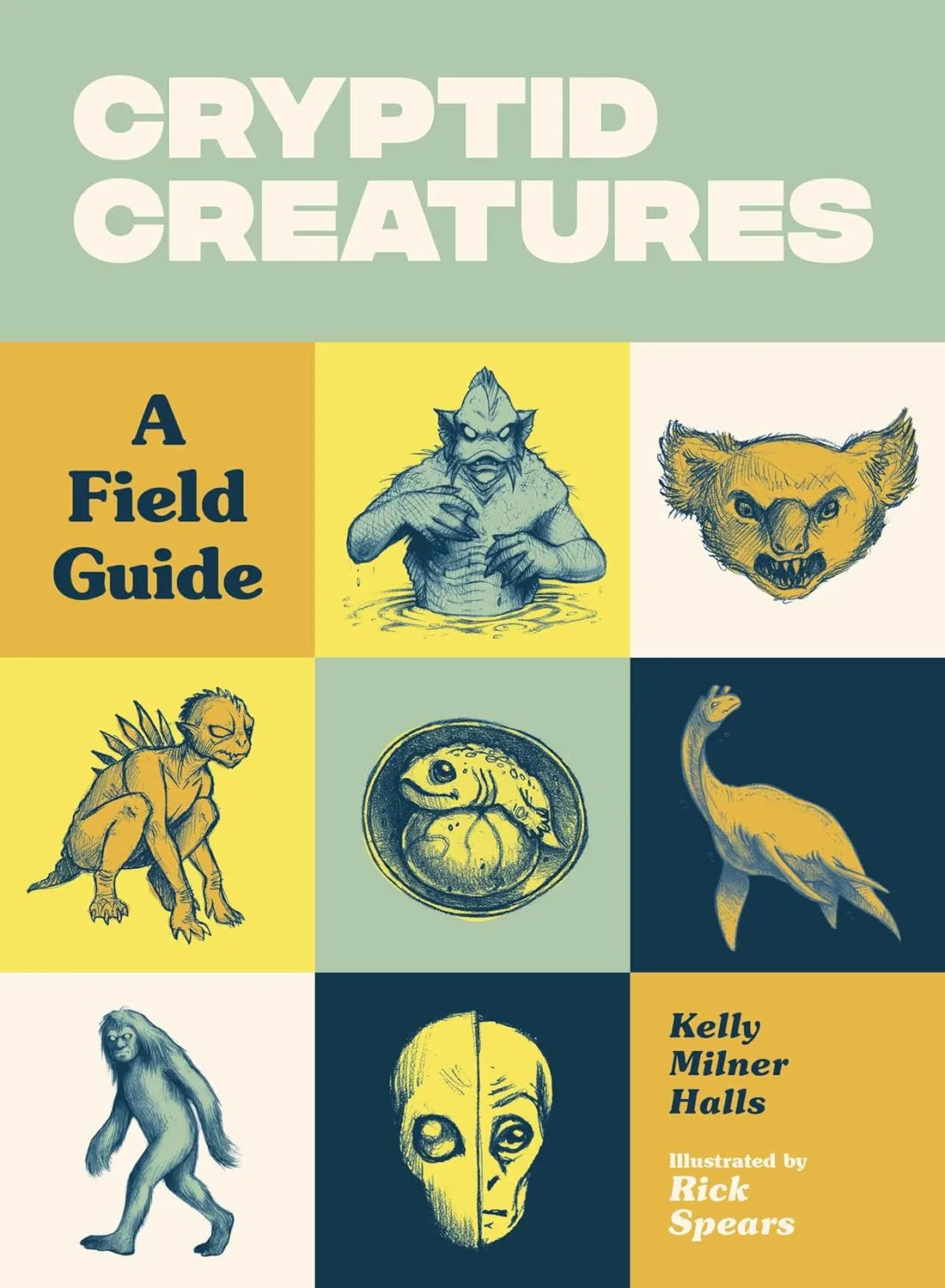
Gorgeous full-color illustrations meet hard evidence: hair samples that don’t match any known animal, sonar hits in Loch Ness, night-vision footage, and survivor testimonies. Kelly Milner Halls separates hoax from holy-crap-this-might-be-real for every major cryptid still out there.
Comparison with Other Similar Cryptids
| Cryptid | Region | Appearance | Behavior |
| Agogwe | East Africa | Small, reddish-haired humanoid | Elusive, forest-dwelling |
| Ebu Gogo | Indonesia | Small, hairy, wide-mouthed | Voracious, vocalizes in murmurs |
| Duende | Latin America | Dwarf-like, wears a hat | Mischievous, forest-dwelling |
| Menehune | Hawaii | Small, muscular humanoid | Secretive builders |
| Tikoloshe | South Africa | Small, gremlin-like | Malevolent, spirit-based |
| Orang Pendek | Sumatra | Short, bipedal primate | Elusive, herbivorous |
| Pukwudgie | North America | Small, grey-skinned | Aggressive, shapeshifting |
| Nimerigar | North America | Small, aggressive humanoid | Hostile toward humans |
| Kukundakari | West Africa | Dwarf-like forest spirit | Protective of nature |
Is Eloko Real?
Whether the Eloko is ‘real’ depends on how you define reality. Biologically, there is no proof that a two-foot-tall creature with a magical bell lives in the Congo. Since there are no remains or footprints, it is unlikely to be an unknown animal.
But from a cultural and anthropological view, the Eloko is a real part of the Mongo people’s world. It acts as a guardian of the forest and represents the presence of ancestors.
Whether the legend comes from old encounters with extinct humans or is just a way to explain the dangers of the jungle, the Eloko is still an important part of Central African folklore. It stands for the mysterious and sometimes dangerous nature of one of the world’s last wild places.