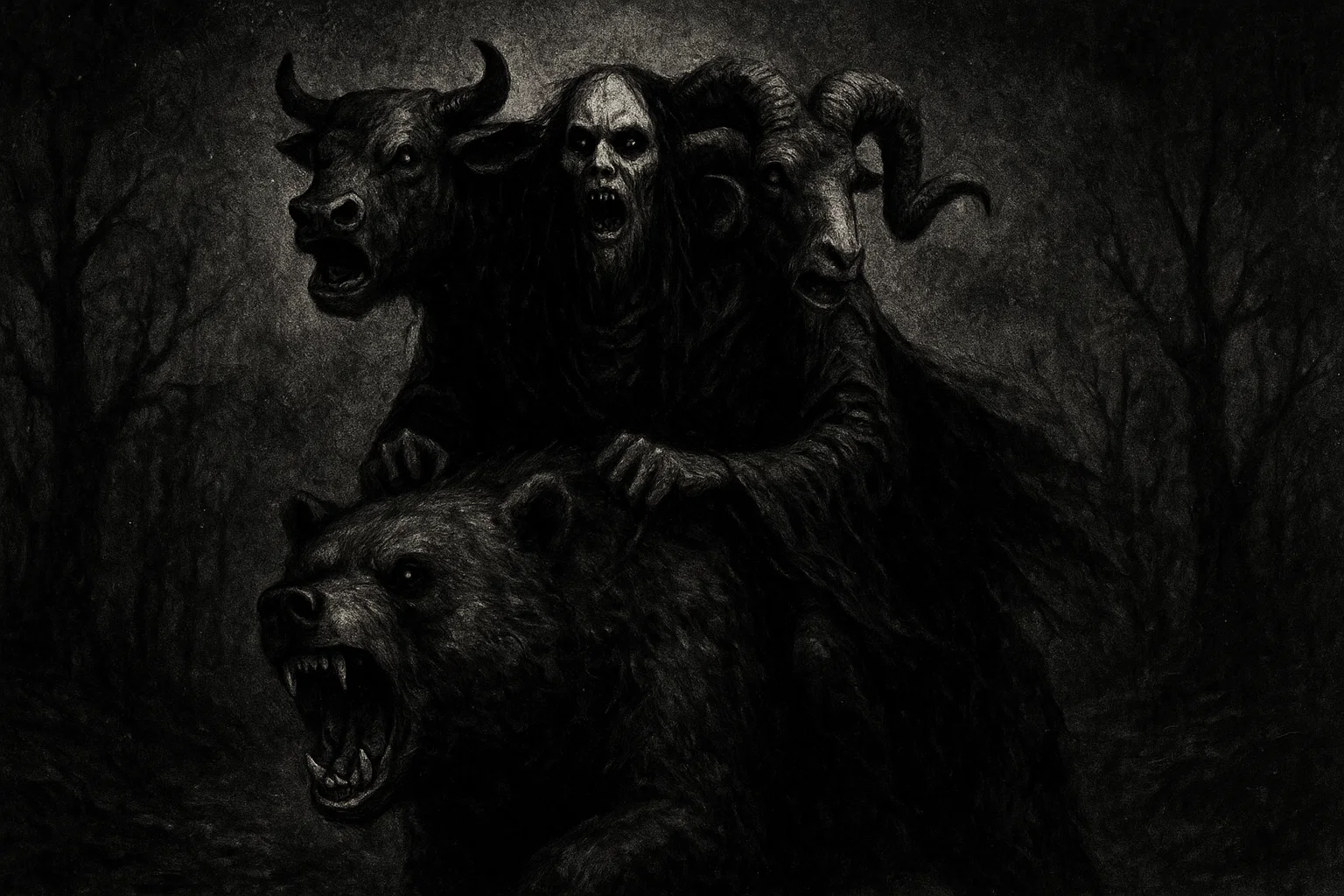
Balam is a well-known demon, primarily found in early modern grimoires and occult books. He is described as a powerful and fearsome king in the infernal hierarchy, leading many legions of spirits. Balam is known both for his destructive abilities and for revealing secret knowledge, especially about time and hidden actions.
The demon has a strange, multi-headed body and a hoarse, rough voice that matches his intense and unsettling nature. People seek him out for his powers of invisibility and perfect foresight, but his frightening appearance is said to scare those who are not ready to face him.
Summary
Key Takeaways
| Attribute | Details |
| Name | Balam, Balan, Balaam. |
| Title | King of Hell, Terrible King, Mighty King. |
| Gender | Male. |
| Origin | First detailed extensively in 16th-century demonology texts such as the Pseudomonarchia Daemonum; likely derived from the biblical entity of Balaam. |
| Appearance | A three-headed entity (bull, man, ram) with flaming eyes and a serpent’s tail, riding a giant bear and carrying a hawk. |
| Hierarchy | King. |
| Superior Demon | Generally listed under the authority of Lucifer or Belial in various grimoires. |
| Servitors | Commands forty legions of inferior spirits. |
| Associated Figures | Balaam (the biblical prophet), King Solomon. |
| Powers | Grants perfect knowledge of the past, present, and future; bestows invisibility; makes men witty or provides them with sharp mental faculties. |
| Weaknesses | Sacred names of God, specific protective circles, and the intervention of the opposing angel. |
| Opposing Angel/Saint | Haziel. |
| Equipment/Tools | Carries a hawk or goshawk on his fist. |
| Pantheon | Christian Demonology / Goetic Tradition. |
| Notable Myths | Inclusion in the Lesser Key of Solomon as the 51st spirit. |
Etymology
The name Balam is widely considered by scholars of historical demonology to be a corruption or derivative of the name Balaam, the non-Israelite prophet mentioned in the Book of Numbers in the Hebrew Bible. In the biblical narrative, Balaam is a diviner who is asked to curse the Israelites, but instead blesses them after being intervened on by an angel and his speaking donkey.
Over time, Balam shifted from a human diviner to a demon as medieval and Renaissance theologians sought to fit nonhuman spiritual figures into a structured infernal hierarchy.
The name Balam is often linked to the Semitic word “Bela,” meaning “to swallow” or “to devour,” which highlights his destructive side. In some cases, the name is also tied to the idea of being a “lord” or “possessor,” much like the title Baal used for West Semitic gods.
In the specific context of the Ars Goetia, the spelling Balam distinguishes the spirit as a specific king with localized powers over truth and invisibility. However, the phonetic and historical link to the biblical sorcerer remains the most academic explanation for his terminology.
Ever Wonder What This Knowledge Was So Dangerous They Had to Forbid It by Law?
Limited-Time: Up to 71% OFF!
From love-binding spells that never fail to curses that follow bloodlines, from reading death in tea leaves to summoning shadows that answer questions – every forbidden practice they tried to erase is here, raw and unfiltered, exactly as it was whispered in the dark for generations.
What Does the Demon Balam Look Like?
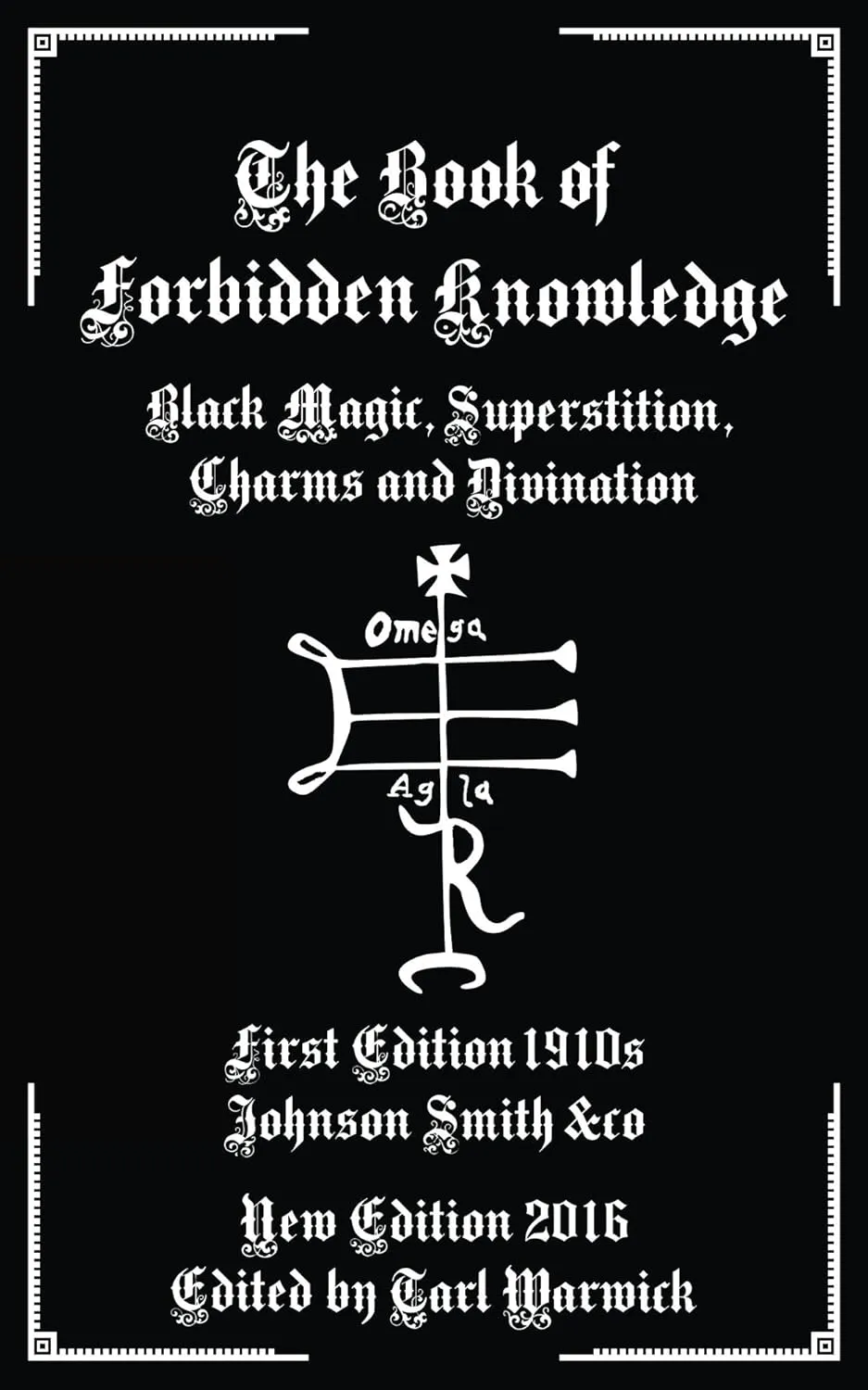
Goetic texts describe Balam’s appearance in detail, showing him as a monster with three heads: one of a bull, one of a man, and one of a ram. These heads are thought to represent strength, intelligence, and stubbornness or sacrifice.
Balam’s eyes are said to be flaming, giving off a scary light that shows his supernatural vision. He has a serpent’s tail, which often stands for cunning and ancient power in demon stories. Instead of walking, he rides a huge, angry bear.
He carries a goshawk or hawk on his fist, showing his role as a hunter or watcher from above. His voice is especially hoarse, which is often mentioned as a feature frequently noted when describing the meeting.
Historical Mentions
Pseudomonarchia Daemonum (Johann Weyer, 1577):
“Balam, rex magnus & terribilis, prodit tribus capitibus, primo bubulo, altero humano, tertio arieting: caudam habet colubrinam, oculos flammeos, equitat in urso, ficedulam portat in manu: raucam edit vocem: respondet perfectè de præteritis, præsentibus & futuris: reddit homines invisibiles & prudentes: quadraginta legiones huic subsunt.”
Pseudomonarchia Daemonum (English Translation):
“Balam is a great and a terrible king, he commeth foorth with three heads, the first of a bull, the second of a man, and the third of a ram, he hath a serpents taile, and flaming eies, he rideth upon a beare, and carrieth a goshawke on his fist, he speaketh with a hoarse voice, answering perfectlie of things present, past, and to come, hee maketh men invisible and wise, hee governeth fortie legions of spirits.”
The Lesser Key of Solomon (S.L. MacGregor Mathers, 1904):
“The Fifty-first Spirit is Balam. He is a Terrible, Great, and Powerful King. He appeareth with three Heads: the first is like that of a Bull; the second is like that of a Man; and the third is like that of a Ram. He hath the Tail of a Serpent, and Flaming Eyes. He rideth upon a furious Bear, and carrieth a Goshawk upon his Fist. He speaketh with a hoarse Voice, giving True Answers of Things Past, Present, and to Come. He maketh men to go Invisible, and also to be Witty. He governeth 40 Legions of Spirits.”
The Discoverie of Witchcraft (Reginald Scot, 1584):
“Balam is a great and a terrible king, he commeth foorth with three heads, the first of a bull, the second of a man, and the third of a ram, he hath a serpents taile, and flaming eies, he rideth upon a beare, and carrieth a goshawke on his fist, he speaketh with a hoarse voice, answering perfectlie of things present, past, and to come, hee maketh men invisible and wise, hee governeth fortie legions of spirits.”
Dictionnaire Infernal (Collin de Plancy, 1863 edition, original French):
“Balan, grand et terrible roi aux enfers. Il paraît avec trois têtes, celle d’un taureau, celle d’un homme et celle d’un bélier. Il a une queue de serpent et des yeux qui jettent des flammes. Il monte sur un ours et porte un épervier sur le poing. Sa voix est rauque. Il répond sur le passé, le présent et l’avenir. Il enseigne les ruses, les finesses et le moyen de voir sans être vu. Il commande quarante légions. Il était autrefois de l’ordre des dominations.”
You may also enjoy:
Fafnir the Lindworm: Poison-Breathing Dragon of Norse Sagas
September 12, 2025
Who Is Pazuzu? The Terrifying Demon of Mesopotamia
August 26, 2025
Complete Guide to New York Bigfoot Sightings (1840–2025)
August 5, 2025
Jormungandr: The Midgard Serpent Destined to End the Gods
September 12, 2025
The Werewolf of Morbach: Truth or Terrifying Legend?
June 25, 2025
Dictionnaire Infernal (1863 edition, English translation):
“Balan, great and terrible king in hell. He appears with three heads, that of a bull, that of a man, and that of a ram. He has a serpent’s tail and eyes that dart flames. He mounts on a bear and carries a sparrow-hawk on his fist. His voice is hoarse. He answers about the past, the present, and the future. He teaches ruses, finesse, and the means to see without being seen. He commands forty legions. He was formerly of the order of Dominations.”
The Book of Oberon (Daniel Harms et al., based on a 16th-century manuscript):
“Balam is a great King and a terrible, appearing with three heads: the first is like a Bull, the second like a Man, and the third like a Ram. He hath a serpent’s tail and flaming eyes. He rideth upon a bear and carrieth a hawk on his fist. He speaketh with a hoarse voice, answering perfectly of things past, present and to come. He maketh men invisible and also witty. Under him are forty legions of spirits.”
The One Book They Took Out of Your Bible
Limited-Time: Up to 90% OFF!
Banned for centuries, now fully restored with the real names of the fallen angels intact. Discover why 200 Watchers descended, taught forbidden knowledge, created the Nephilim giants, and triggered the Flood – the missing scripture that changes everything you thought you knew about Genesis.
Balam’s Powers and Abilities
Balam is distinguished by his control over prophecy and time. Unlike other demons who focus on destruction, Balam’s power lies is the mind and how people perceive reality. His primary ability is to provide accurate answers about the past, present, and future. This can tempt individuals with forbidden knowledge and the opportunity to transcend conventional limits.
Balam can also render people invisible, facilitating secrecy and deception. He can make people clever or wise, but this often leads to pride or using intelligence for bad purposes. Controlling forty legions shows he has a lot of power in the infernal world and can command many spirits.
Powers and Abilities Breakdown
| Power/Ability | Description | Source | How It Tempts/Corrupts |
| Temporal Revelation | Accurate knowledge of past, present, and future events. | Ars Goetia | Encourages humans to seek control over destiny and skip divine providence. |
| Invisibility | The ability to hide a person from physical sight. | Pseudomonarchia Daemonum | Facilitates theft, espionage, and avoidance of consequences. |
| Mental Augmentation | Granting wit and cunning to the practitioner. | The Discoverie of Witchcraft | Fosters arrogance and the use of intellect to manipulate others. |
Why Do So Many Successful People Secretly Wear a Little Blue Eye?
Limited time offer: 28% OFF. For thousands of years, the Turkish Evil Eye has quietly guarded wearers from the unseen effects of jealousy and malice. This authentic blue glass amulet on a soft leather cord is the real thing – beautiful, powerful, and ready for you.
How to Counter Balam’s Powers
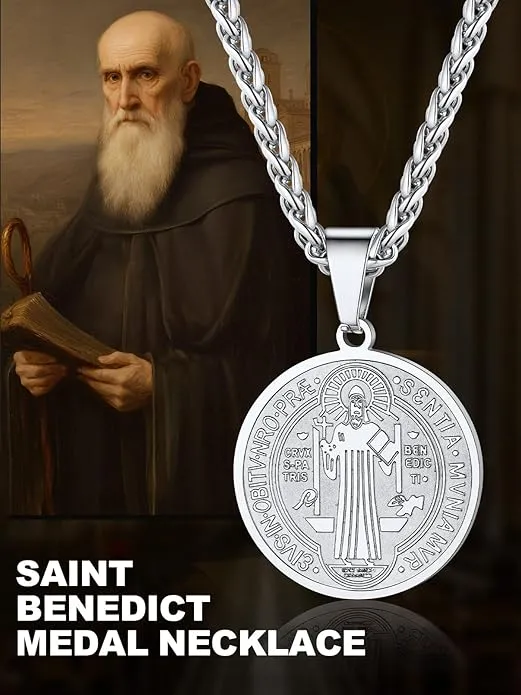
To protect against Balam, people use traditional blessed items and set up sacred boundaries. Spiritual defenders have long recommended Holy Water and blessed salt to make barriers that demons cannot cross. The Saint Benedict Medal is a well-known amulet used to keep away powerful infernal kings by calling on spiritual protection.
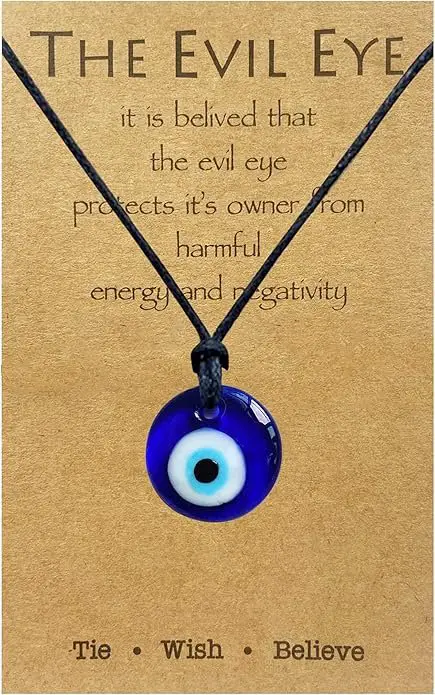
Plants like Rue and Hyssop are used in cleansing rituals to get rid of the heavy energy linked to Balam. If someone feels affected by him, such as being obsessed with the future or wanting to hide things, it is best to talk to a priest or a spiritual expert. The Turkish Evil Eye (Nazar) is also used to protect against the harmful gaze of such beings.
Balam’s Role in the Hierarchy of Hell
In the complex and organized system of the infernal realm, Balam is ranked as a King. This title is not merely for show; it indicates he has real authority over a specific area or role.
The Dictionnaire Infernal says Balam was once a high-ranking angel from the Order of Dominations. In Heaven, these spirits managed lower angels. As a fallen King, Balam still uses these skills to control secrets, knowledge about time, and invisibility.
Relationships with Superior Demons
Although Balam is a King, he is not the top ruler of the infernal kingdom. Most goetic and Christian demonologies say Balam works under the main leaders of the underworld, often called the Infernal Trinity or the chief monarchs.
- Lucifer: As Emperor of Hell, Lucifer is Balam’s highest superior. Balam is an oracle and strategist, using his perfect knowledge of past and future events to advise on actions in both the heavenly and earthly worlds.
- Belial: Some sources, such as 17th-century manuscripts, report that Balam has a courtly relationship with Belial. Both are Kings, but Belial is often regarded as occupying a more subordinate role within the hierarchy. At the same time, Balam acts as a special advisor on secret operations and time manipulation.
- Paimon: In the Ars Goetia, Balam and King Paimon are equals. They respect each other’s territories. Paimon leads through arts and sciences, while Balam leads through prophecy and secrecy.
Servitors and Ruled Spirits
Balam is a general in the infernal army, leading forty legions of spirits. In occult tradition, each legion has about 6,666 spirits, so Balam commands over 260,000 spirits in total.
The main grimoires do not name these spirits individually, but they are grouped by what they do:
- Spirits of Invisibility: Many of Balam’s spirits work to control light and how things are seen. They are responsible for making someone invisible when Balam gives this power.
- Chroniclers of Time: Since Balam gives true answers about all times, he uses spirits who act as recorders. They collect information from the past and present to help him see everything clearly.
- The Bear-Guard: In stories, the furious bear Balam rides is seen as a powerful servant demon. It represents the wild rage Balam has fully controlled, showing his ability to rule brute force with his intelligence.
The Only Medal Officially Recognized for Driving Out Demons
Limited-Time: Up to 25% OFF!
U7 St. Benedict Medal Necklace • Full ritual inscription in Latin • Instant shield against Satan & fallen angels • Stops nightmares, bad luck & spiritual attacks • Matte black steel for everyday concealed carry. The most powerful Catholic talisman you can legally own.
Astrological Associations and Symbolism
Balam is usually linked to the Sun, like most Kings in goetic tradition. This is interesting because it connects a dark, rough-voiced being to the bright Sun, showing his role in revealing the past and future. His metal is gold, and his element is earth, which ties his powers to real human history.
| Association | Symbol/Value |
| Planet | Sun |
| Metal | Gold |
| Element | Earth |
| Color | Yellow or Gold |
| Zodiac Sign | Sagittarius |
| Number | 51 (Order in Goetia) |
Balam’s Sigil
Balam’s sigil is a complex geometric symbol used in Renaissance magic as his unique signature. People believed the sigil focused his energy. Traditionally, it was engraved on a gold lamen to show his rank as King. Without the sigil, it was thought Balam would not appear or would not be forced to tell the truth.
You may also enjoy:
Who Is Leraje, the Demon of Gangrene and Battle?
August 22, 2025
What Is Igopogo, the Monster of Lake Simcoe?
May 20, 2025
The Loveland Frog Mystery: Real Cryptid or Local Hoax?
September 25, 2025
Is the Lukwata Real or Just an African Legend?
November 11, 2025
The Nain Rouge: Detroit’s Dwarf Cryptid and Omen of Disaster
September 25, 2025
Associated Symbols and Offerings
| Symbol/Item | Association/Meaning | Use in Rituals |
| Bear | Brute force and ferocity. | Symbolizes the mount of the King. |
| Hawk | Vigilance and far-seeing sight. | Represents his mastery over information. |
| Frankincense | Solar incense. | Used to appease or attract high-ranking solar spirits. |
Similar Demonic Entities
| Demon Name | Gender | Primary Religion | Type / Class | Sphere of Influence | Weaknesses |
| Paimon | Male | Christian Demonology | King | Arts, sciences, secret things | Sacred names, Host |
| Asmodeus | Male | Jewish / Christian | King / Prince | Lust, gambling, wrath | Fish liver smoke, Raphael |
| Agares | Male | Christian Demonology | Duke | Languages, earthquakes | Consecrated circles |
| Barbatos | Male | Christian Demonology | Duke / Earl | Animal speech, treasures | Holy water, salt |
| Gusion | Male | Christian Demonology | Duke | Honor, dignity, future | Iron, silver |
| Aamon | Male | Christian Demonology | Marquis | Feuds, reconciliation | Sacred invocations |
| Belial | Male | Judaism / Christian | King / Prince | Lawlessness, worthlessness | Divine judgment, Michael |
| Purson | Male | Christian Demonology | King | Hidden things, creation | Protective amulets |
| Vepar | Female | Christian Demonology | Duke | Storms at sea, putrefaction | Salt, fire |
| Zagan | Male | Christian Demonology | King / President | Transformation, deceit | Truth-telling spells |
Conclusion
Balam is still a fascinating entity in demonology because he started as a biblical prophet and became a powerful king of the underworld. His control over time and perfect knowledge shows the human wish to go beyond natural limits, even through dark ways.
Even though Balam looks frightening and has a hoarse voice, stories about him show a strict, though evil, order in the infernal world. Learning about his traits and how people try to protect themselves from him helps us understand human fears and the lasting impact of goetic traditions.